


I spent weeks testing the best AI tools for Shopify to see which ones actually help you sell more and deal with fewer support headaches. Here’s what I found.
If you run a Shopify store, you know the feeling. Your marketing starts to click, traffic is picking up, and then... everything else picks up, too. You’re swamped with customer questions, abandoned carts are mocking you from your dashboard, and your support inbox is a special kind of nightmare.
How are you supposed to scale that personal touch that got customers to love you in the first place?
This is where AI tools for Shopify are supposed to help. A good one can act like a 24/7 sales assistant and support agent, giving every single shopper a personalized experience without you having to be everywhere at once. But with a million options out there, which ones deliver?
I got my hands dirty with the top contenders to see which platforms actually make a difference. This isn't just a feature list; it's a real-world look at what it's like to use these tools to grow a store.
What are the best AI tools for Shopify?
At their core, AI tools for Shopify are apps that use artificial intelligence to automate jobs, personalize customer chats, and generally make your store run a lot smoother. It’s not about replacing people; it’s about giving you and your team superpowers.
They usually do one of a few things:
-
AI Chatbots: These are your front-line helpers. They sit on your site and talk to visitors, answer questions about products, point shoppers in the right direction, and handle the boring post-purchase stuff like tracking orders.
-
Support Automation Platforms: These tools connect to your helpdesk (like Zendesk or Gorgias) to answer common questions on their own, help your human agents write replies faster, and just generally keep your support queue from getting out of control.
-
Personalization Engines: These watch how customers browse your site and use that info to recommend other products they might like. It helps create that "they get me" feeling for each shopper.
The real benefit? They let you give every visitor a high-touch, personal experience, whether you have one customer browsing or a thousand.
How we chose the best AI tools for Shopify
To find the good stuff, I judged each tool on a few practical things. This wasn't about who had the slickest marketing, but what actually works for a real store.
-
How well does it actually talk to Shopify?: Can the tool see your product catalog, check an order's status in real-time, and even start a return? Or is it just scraping your website for info? The difference is massive.
-
How easy is it to set up?: How quickly can you go from signing up to being live? I gave extra points to tools that let you do it all yourself, without getting trapped in a long sales process or needing a developer.
-
How smart is the AI (and can you tweak it)?: How good is the AI from the get-go? And how much can you customize its personality, its answers, and the information it uses?
-
Does it make you money or save you money?: I looked for clear features designed to increase sales (like upsells) and cut costs (like handling common support questions).
-
Is the pricing honest?: Is it easy to understand what you'll pay? Or will you get hit with surprise fees for every little "resolution" the AI handles? Predictable costs are a must.
Quick comparison of the best AI tools for Shopify in 2026
For those of you who just want the bottom line, here’s a quick summary. We’ll get into the nitty-gritty details next.
| Tool | Best for | Key Shopify feature | Starting price (annual) |
|---|---|---|---|
| eesel AI | All-in-one sales & support automation | Deep product catalog integration & automated order actions | From $299/mo (500 credits) |
| Freshdesk | Scaling support teams | AI-powered ticketing and knowledge base | $15/agent/month |
| Prediko | AI inventory forecasting & replenishment | Shopify-native AI forecasting, Buying Table & purchase order management | From $49/month |
| LiveChat | Live agent assistance with AI | Product Cards in chat | $49/agent/month (Team plan) |
| Drift | B2B marketing & sales on Shopify | Real-time lead qualification & routing | Custom (High) |
| Crisp | Startups looking for an affordable omnichannel tool | E-commerce integrations (Shopify, WooCommerce) | $95/month (Essentials) |
A detailed look at the 6 best AI tools for Shopify
It can be a pain to find the right AI tool, so I’ve broken down the top options based on my testing. Here’s a straight-up look at what each one is good for and where it might not be the right fit for your Shopify store.
1. eesel AI
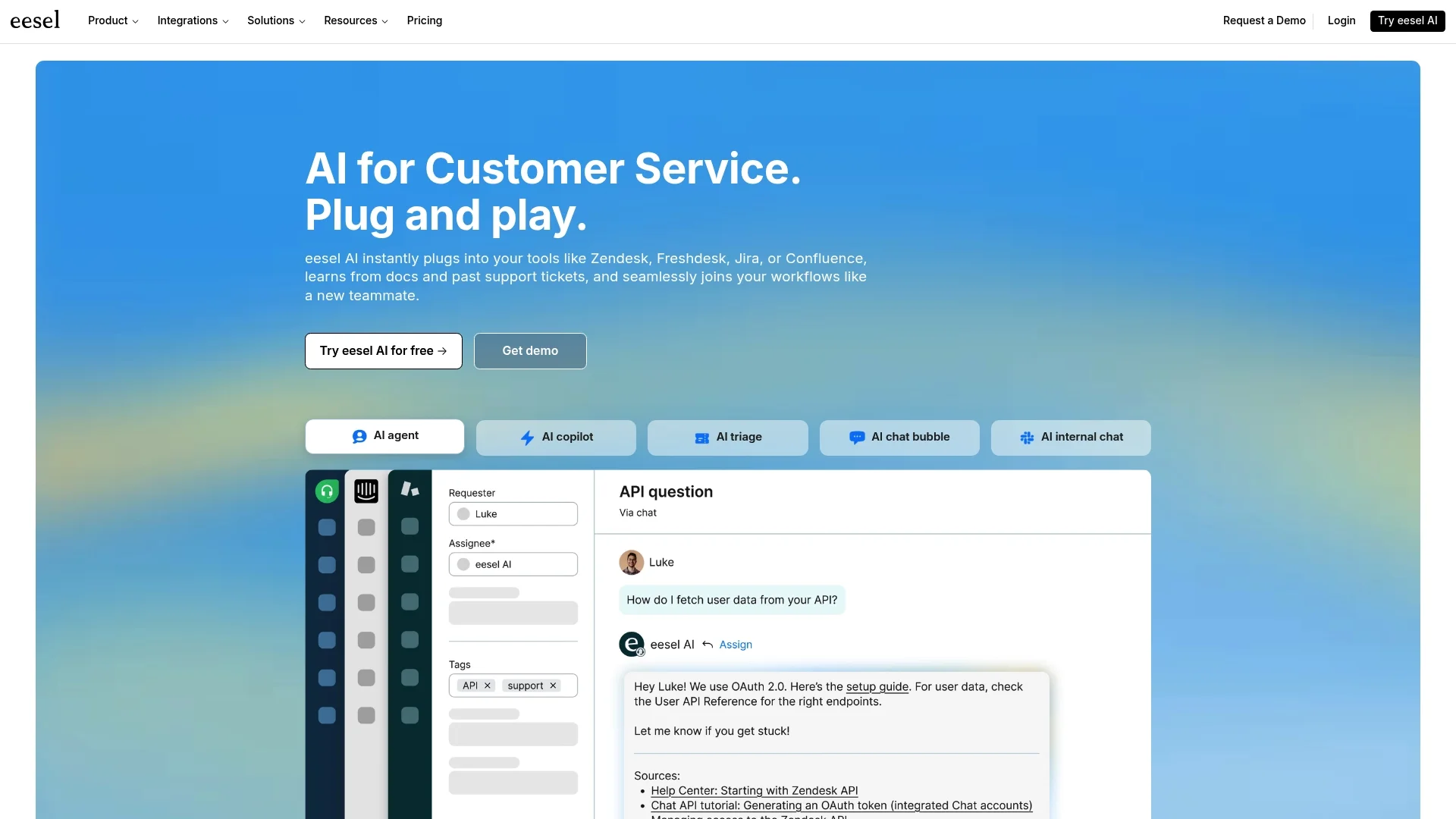
eesel AI's Sales Chatbot is built specifically for e-commerce. It plugs right into your Shopify store and instantly learns everything about your products, customers, and orders. This isn't just another chatbot; it’s a genuine 24/7 digital sales assistant that gives shoppers personalized recommendations and handles all the post-purchase questions on its own.
It's number one on my list because it has the deepest and most useful Shopify integration I came across. While other tools can talk about your store, eesel AI can actually do things in your store, like look up an order or start a return for a customer. The best part? The whole setup is self-serve. I was up and running in a few minutes without having to talk to a single salesperson.
You can see this on live stores in eesel's published customer stories. IC Intracom runs one chat per brand on its Shopify stores, answering spec, stock and compatibility questions from about 2,100 Shopify product records. Question Beauty, a cosmetics brand, looked up 290 Shopify orders in a month before answering delivery questions, and replies in the language the customer wrote in.
Pros:
-
Seriously simple setup: You connect it to Shopify, and it learns your catalog with one click. No code, no demos, no waiting around.
-
Drives revenue on autopilot: It shows interactive product carousels right in the chat and has "add to cart" buttons that make it easy for people to buy.
-
Handles real support jobs: It automates order tracking, returns, and cancellations, which frees up a huge amount of time for your team.
-
Clear pricing: The plans are straightforward and based on your needs. You won't get a surprise bill for the number of "resolutions" your AI performs.
Cons:
- As a specialized tool, it focuses specifically on providing a deep, native Shopify experience.
Pricing: One fixed monthly price sized to your volume, from $299/month for 500 credits up to $1,749/month for 5,000. A ticket or chat is 1 credit however long it runs, with no per-seat fee, and there's a free plan with 100 credits and no card.
2. Freshdesk
Freshdesk is a well-known, mature helpdesk platform that uses its AI, "Freddy," to automate common support tasks. It’s excellent at what it was made for: managing a high volume of support tickets coming in through email and other channels. It's a reliable choice for thousands of companies worldwide.
This is a good option for Shopify stores whose biggest priority is an organized support inbox that stays efficient as they grow. Freddy AI does a great job of sorting new tickets, sending out standard replies, and suggesting knowledge base articles to answer simple questions.
Pros:
-
Fantastic features for organizing and managing a large queue of support tickets.
-
The AI is very good at automating the repetitive, admin side of email support, helping teams stay productive.
-
It has a free plan, which can be a decent starting place for very small businesses.
Cons:
-
The platform is primarily focused on providing a high-quality ticketing experience, making it an excellent choice for businesses that prioritize support efficiency.
-
While the Shopify integration provides extensive context, it is built to empower agents within the core helpdesk environment.
-
Freshdesk uses a flexible usage-based pricing model for its AI agent sessions, which allows your costs to scale alongside your store's growth.
Pricing: Paid plans start at $15/agent/month. Freshdesk offers tiered plans to match different team sizes, with the option to add Freddy AI Agent sessions as needed. For a more predictable cost that works alongside your helpdesk, you can look at the eesel AI for Freshdesk integration.
3. Prediko
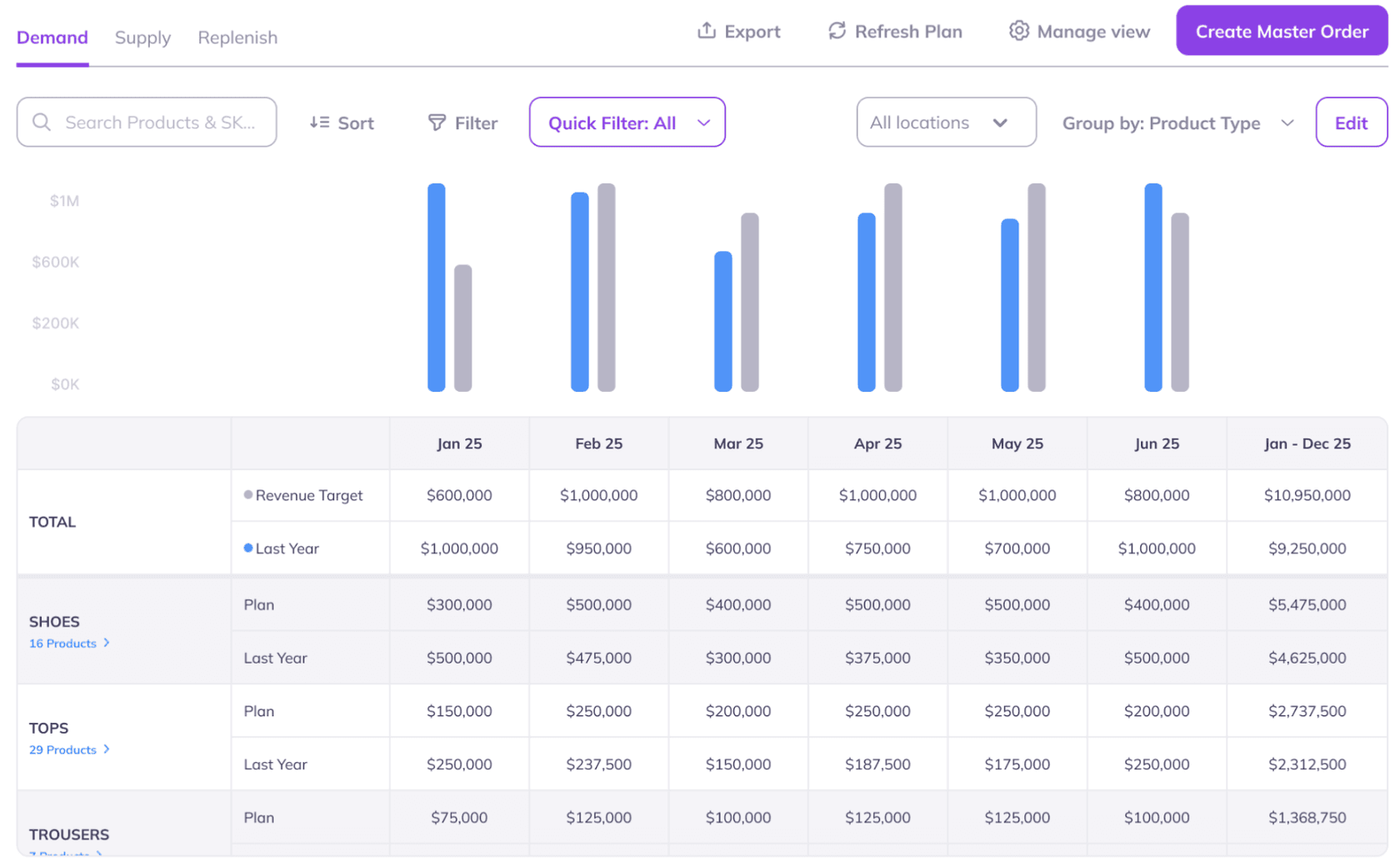
Prediko is an AI-powered inventory planning and management platform built specifically for Shopify brands. It helps merchants forecast demand, plan replenishment, manage purchase orders, and track raw materials without relying on spreadsheets.
Prediko connects directly with Shopify and automatically syncs product, sales, and inventory data. Its AI forecasting models account for sales history, seasonality, promotions, growth trends, and other demand signals to recommend what to order, when to order it, and how much to buy.
A standout feature is Prediko's Buying Table, which turns forecasts into a prioritized list of purchasing actions. Brands can also manage purchase orders, BOMs, raw materials, inventory reports, and multi-location inventory from the same platform.
Pros
- Built specifically for Shopify: Native Shopify integration with automatic syncing of products, sales, and inventory.
- AI demand forecasting: Forecast demand at SKU, category, location, and company level.
- Actionable Buying Table: Shows what to reorder, when to reorder, and recommended quantities.
- Purchase order management: Create, send, track, and receive POs directly in Prediko.
- Raw material planning: Manage BOMs, components, and production requirements alongside finished goods.
- Replenishment alerts: Proactively identifies potential stockouts and excess inventory.
- Multi-location support: Plan inventory across stores, warehouses, and fulfillment locations.
- Fast implementation: Shopify brands can connect their store and start planning without lengthy ERP-style implementations.
Cons
- Shopify-focused: Primarily built for brands operating on Shopify.
- Best suited for growing brands: Very small stores with simple inventory needs may not need the full feature set.
Pricing
Prediko uses revenue-based pricing starting at $49/month, with plans increasing as a brand grows. A 14-day free trial is available, so Shopify merchants can connect their store and test forecasting, replenishment, and inventory planning before subscribing.
4. LiveChat
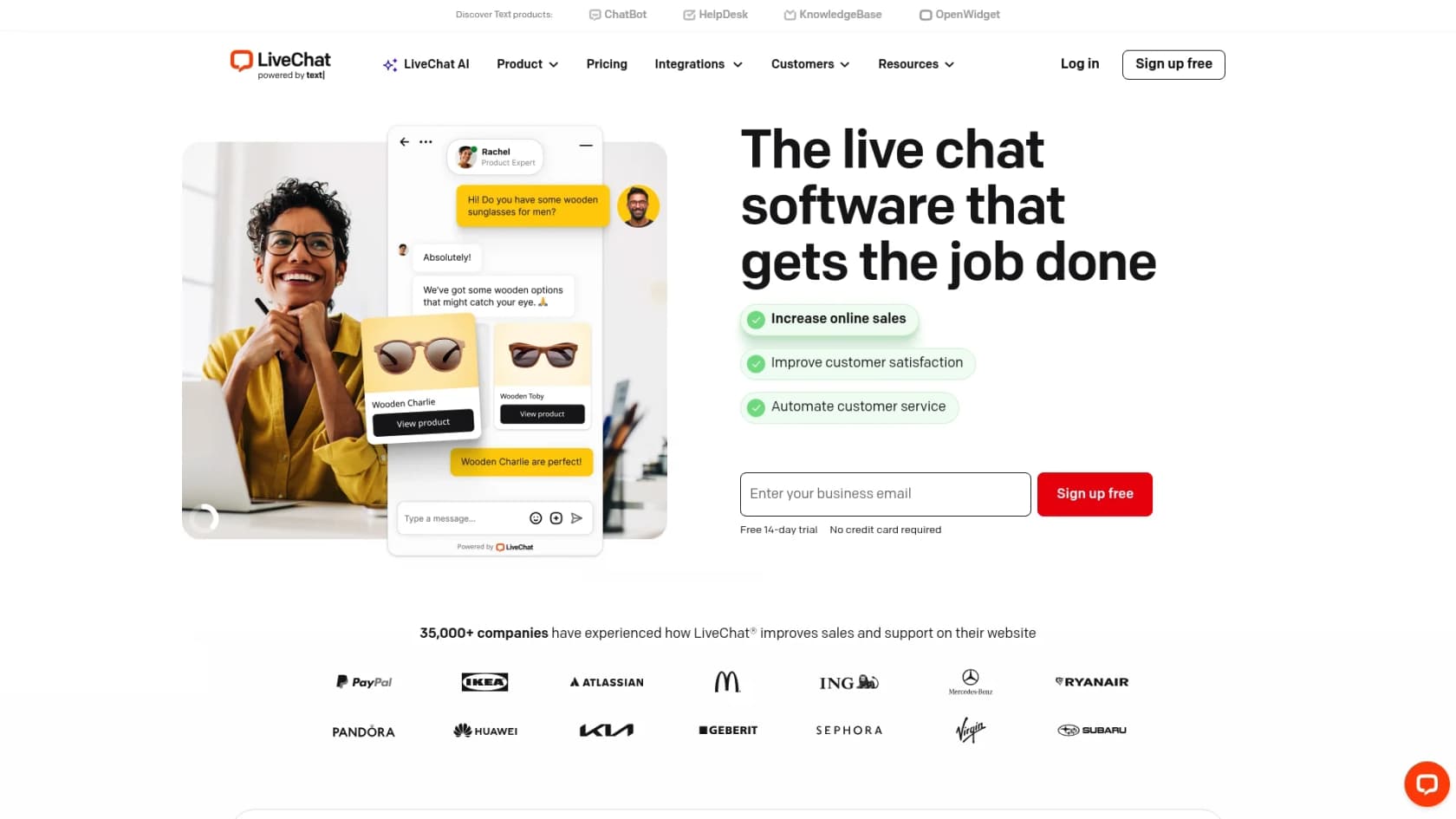
LiveChat has been in the game for a long time, and they’ve smartly used AI to help human agents rather than replace them. This makes it a great choice for stores that want to keep a human-first support team but need tools to make them faster and more effective.
The Shopify integration is pretty solid, giving your agents a direct view of a customer's cart and order history right in the chat. The "Product Cards" feature is a nice touch, letting agents quickly share product details in a clean format.
Pros:
-
It's perfect for teams that want to help, not automate, their human support.
-
The Shopify integration gives agents useful context so they can answer questions better.
-
AI features like reply suggestions and chat summaries are great for boosting agent productivity.
Cons:
-
The AI here is an assistant, not an independent agent. It can't handle conversations on its own 24/7, so you’re still tied to your team's schedule.
-
The platform is much more focused on support efficiency than it is on automating sales and driving conversions.
Pricing: The Team plan, which has the features you'll want, starts at $49/agent/month when billed annually.
5. Drift
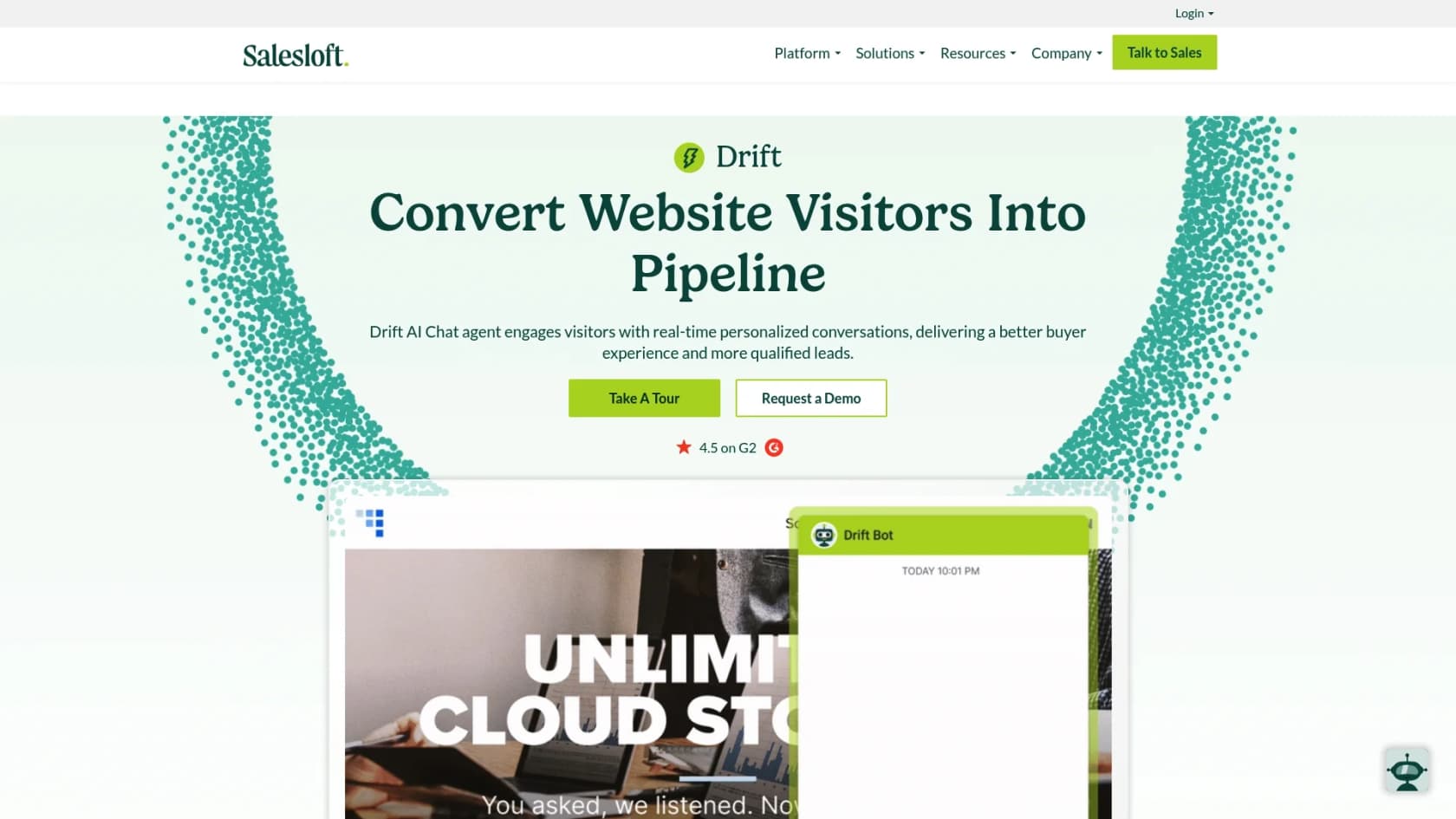
Drift is a conversational marketing tool built to do one thing very well: capture and qualify leads. It's a beast at spotting high-value visitors (especially from target companies) and starting real-time conversations to book meetings for a sales team.
If you run a B2B or wholesale business on Shopify Plus, Drift is one of the most powerful tools you can get. It’s designed to engage important accounts the second they land on your site and get them to the right salesperson instantly.
Pros:
-
Best-in-class for B2B lead qualification. It’s what they’re famous for.
-
It can identify visitors from key accounts even if they don't fill out a form, giving your sales team a huge leg up.
-
Fits perfectly into complex B2B sales and marketing setups.
Cons:
-
Its entire focus is on generating leads for a sales team, not on helping a B2C customer find the right t-shirt or check on an order. It’s the wrong tool for most B2C stores.
-
It's a complex, enterprise-level platform with a price tag to match.
Pricing: Not public. You’ll have to book a demo and get a custom quote.
6. Crisp
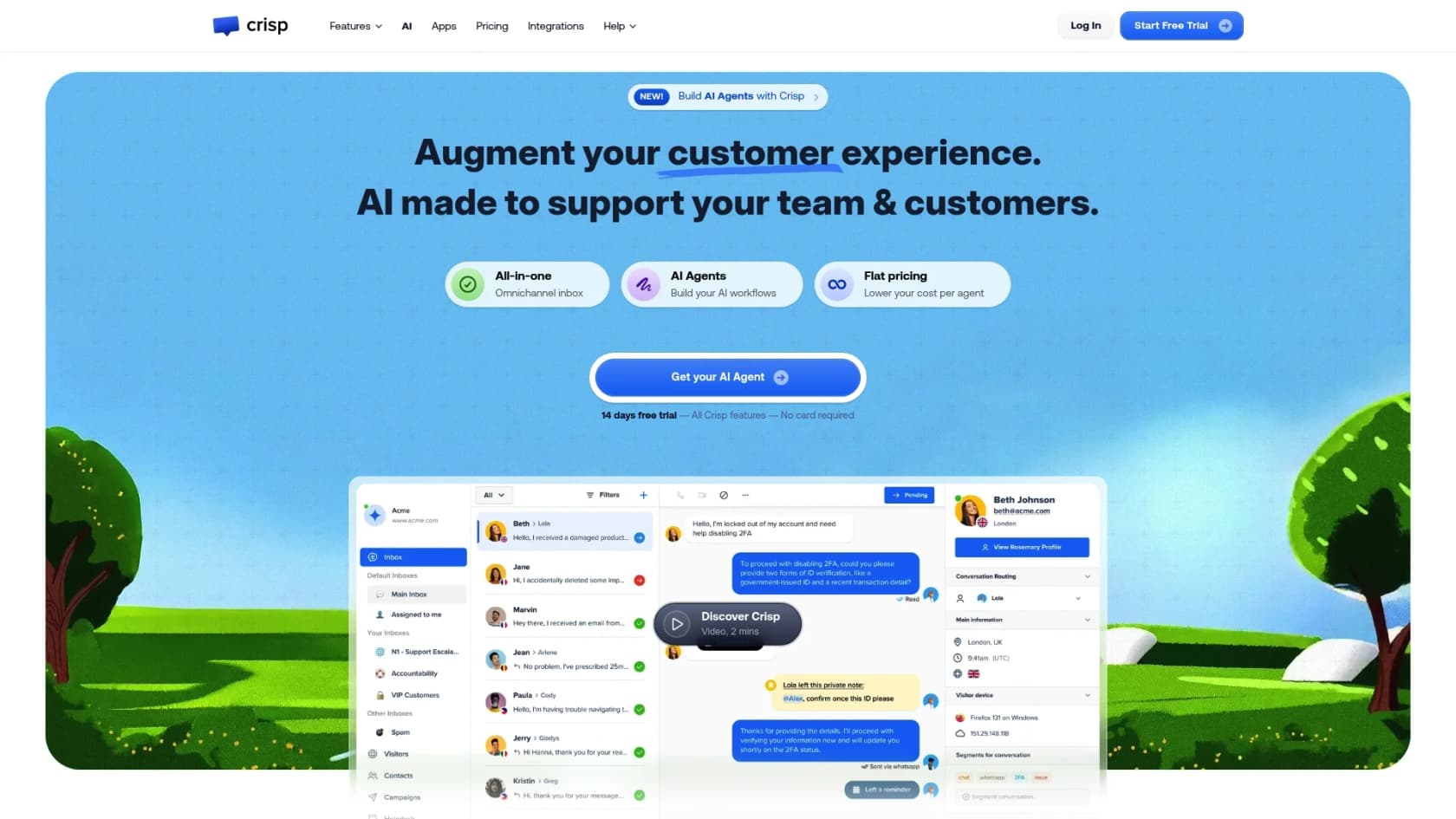
Crisp packs a lot into an affordable package. It gives you a shared inbox, chatbot, and knowledge base in one tool. For a new Shopify store on a tight budget, it’s a really appealing option.
The platform has a simple Shopify integration that pulls in basic customer and order info for your agents. What really makes Crisp stand out is its pricing: a flat rate for your whole team, not per person. This makes it a fantastic, predictable choice for small teams that expect to grow.
Pros:
-
Very affordable with a flat-rate price that’s great for budgeting.
-
Combines a shared inbox, chatbot, and knowledge base in one tool.
-
The Shopify integration gives agents the basic context they need for support chats.
Cons:
-
The AI and automation features are not nearly as advanced as the more specialized tools on this list.
-
Its Shopify integration is basic; it can't handle more complex tasks like processing a return or an exchange.
Pricing: The Essentials plan, which gets you the chatbot and key integrations, is $95/month per workspace.
Unlock your Shopify store's potential with AI
AI tools aren't a luxury for Shopify stores anymore; they're pretty much essential for keeping up and scaling your business without burning out. The right tool will feel like you've hired the perfect salesperson and support agent who works 24/7, never gets tired, and makes every customer feel important.
While every tool on this list is good at something, the best choice for most Shopify merchants is a platform that mixes sales and support into one smart, automated experience.
For a solution that offers a deep Shopify integration, a setup you can actually do yourself, and a clear impact on both your sales and your support costs, eesel AI really stands out. It’s built by people who get what e-commerce brands need to grow.
Ready to see how an AI sales assistant can transform your store? Try the eesel AI Sales Chatbot on Shopify today.
Frequently asked questions
How do I even begin to choose the best AI tools for Shopify for my specific business needs?
Start by identifying your biggest pain points, whether it's overwhelming support queries, low conversion rates, or a need for better personalization. This helps narrow down tools that are specifically designed to address those challenges effectively.
How difficult is it to set up and integrate the best AI tools for Shopify with an existing store?
The ease of setup varies significantly by tool. Many modern AI platforms, especially those built for e-commerce, offer self-serve setups that integrate with Shopify in minutes without needing code or developers. Always look for deep, native integrations.
Can the best AI tools for Shopify genuinely increase my sales and conversion rates, or are they mostly for support?
Absolutely. While many excel at support, the most effective tools also act as 24/7 sales assistants. They can provide personalized product recommendations, answer product questions, and even facilitate direct purchases within the chat to boost conversions.
What kind of ongoing maintenance or training is required once I've implemented the best AI tools for Shopify?
This also varies by tool. Some AI solutions are designed to learn continuously from your store data, requiring minimal manual input after initial setup. Others might need occasional review of their knowledge base or fine-tuning of their responses.
How important is real-time product catalog integration when evaluating the best AI tools for Shopify?
It's crucial. Tools that integrate deeply with your product catalog can provide accurate, up-to-date information on inventory, pricing, and product details. This prevents the AI from giving outdated information and enhances the customer experience.
Is it possible to test the effectiveness of the best AI tools for Shopify without risking my live customer interactions?
Yes, some advanced AI platforms offer "risk-free testing" features. These allow you to evaluate the AI's performance against your historical customer conversations before deploying it live, giving you confidence in its capabilities.