
What an AI content refresh tool actually is
Here's the problem it's built for. You have a back catalogue of posts, some of them genuinely good, and they're slowly sliding down the rankings while you spend all your energy publishing new ones. Nobody on the team has the hours to go back, figure out which old posts are slipping, and rewrite them properly. So they keep slipping.
An AI content refresh tool is the thing that works that back catalogue for you. Point it at a page (or a whole site), and it surfaces what's decaying, pulls in what's changed since you wrote it, and drafts an updated version that keeps the parts that still rank while fixing the parts that don't. The good ones treat it as a rewrite job grounded in your real page, not a fresh generation that throws away everything the URL already earned.
That's a different job from an AI content generator that invents new posts, and different again from the content creation tools most people reach for first. Refreshing is about getting more out of the work you already did, which is why it belongs in the same maintenance bucket as a regular content audit rather than the new-content pipeline.
Why refreshing old content beats writing new
The case for it is almost embarrassingly strong, and the best proof is companies reporting on their own blogs. When HubSpot ran a systematic refresh program it calls "historical optimization," it more than doubled monthly leads from the posts it updated and lifted their organic views by an average of 106%. The reason it bothered is the more striking number: at the time, 76% of its monthly blog views came from posts published in earlier months, not the new ones it was shipping at a furious pace.
Ahrefs found the same thing on a single post. It took a 2018 article that "never got more than an estimated 350 organic visits per month," rewrote and republished it, and watched traffic triple, a 302% uplift on one page from one refresh. That's the shape of the opportunity: your biggest wins are often hiding in URLs you already own.
Practitioners have figured this out without the case studies. In a widely-discussed r/DigitalMarketing thread on what's actually working in SEO right now, refreshing old content was tactic number one:
"Update old content first. Go to Google Search Console. Find pages ranking between position 8-20. These are almost there. Update them: Add new info, Fix outdated stats, Improve clarity, Add a short FAQ section. This alone can push pages to page 1. Most agencies I've spoken with say refreshing old posts is still one of the easiest wins."
A marketer on r/TechSEO put a number on what that's worth, describing a site he'd neglected for a year: after a couple of months of updating old posts, "the site crossed 1K daily page views, up from 400-600 views a day," and monthly income roughly tripled. His takeaway was blunt: "Update content people." This is the same instinct behind treating SEO content as something you maintain, not something you ship and forget.
Content decay is quiet, and now it's two-dimensional
The reason refreshing gets ignored is that the problem is invisible until it's bad. Ahrefs calls it content decay and describes it as exactly the slow leak it is: "Every piece of content you've ever published is slowly dying," a gradual decline in rankings and traffic that happens over months and is easy to miss until you've lost real ground. There's no alert, no penalty email, just a line that drifts down while you're looking at the new stuff.
In 2026 there's a second leak running alongside the first. Ahrefs flags that a page can lose its Google ranking and drop out of AI answers independently, so you can still sit on page one and yet be absent from ChatGPT and Google's AI Overviews. That changes what "refreshed" even means: the goal isn't only to climb the blue links, it's to stay quotable to the engines that increasingly answer the question without a click. Writing for that second audience is its own discipline, closer to semantic SEO content than to keyword stuffing.
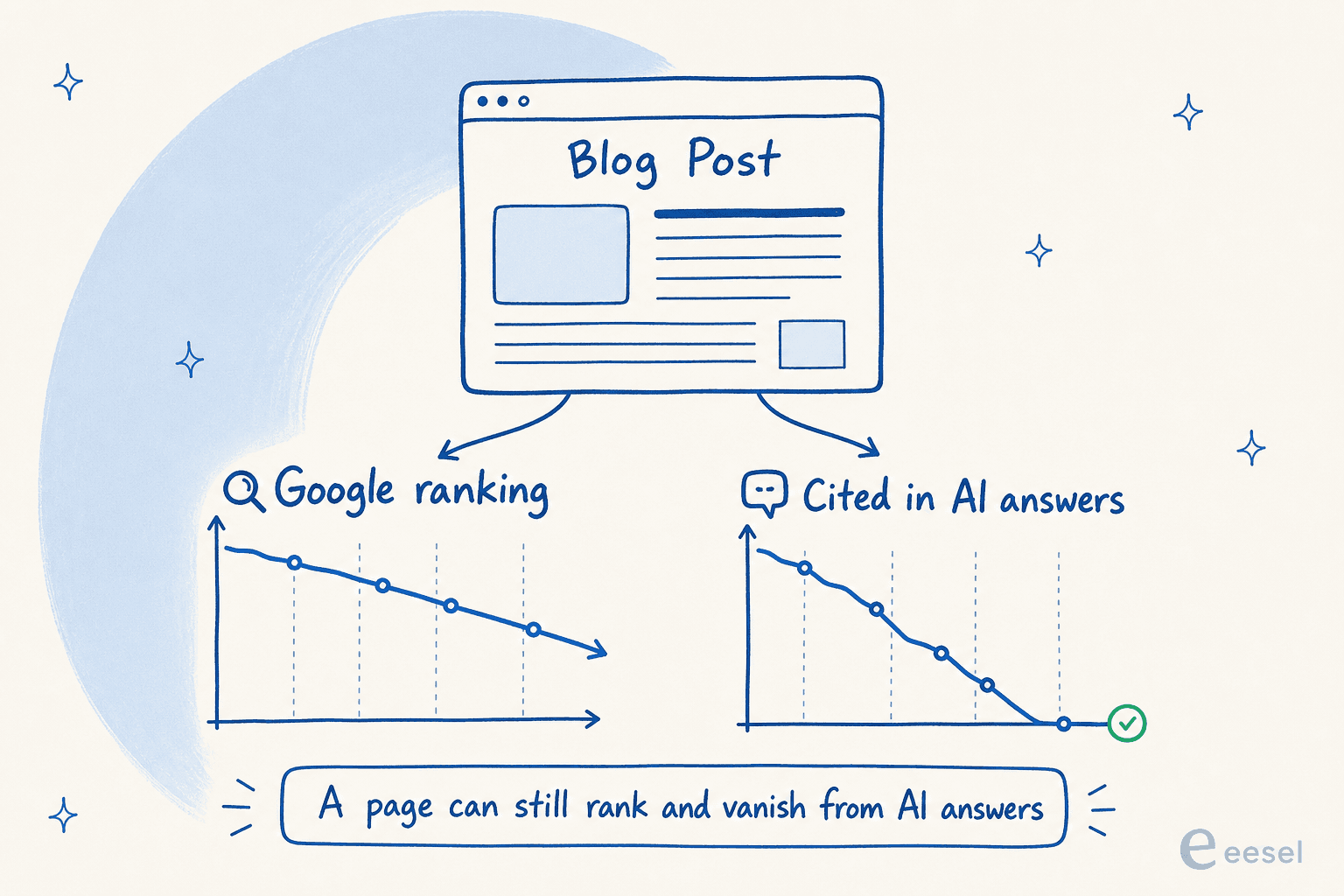
The practical upshot: a refresh tool worth using has to optimize for both axes, which is why a thin reword that bumps the date helps neither. If you want the deeper version of this, my notes on SEO content optimization and scaling SEO content safely go further than I can here.
What a real refresh tool does (the loop)
Strip away the marketing and a content refresh is a loop, the same one a careful SEO runs by hand, just automated. It's worth seeing the whole cycle before you judge any tool against it.
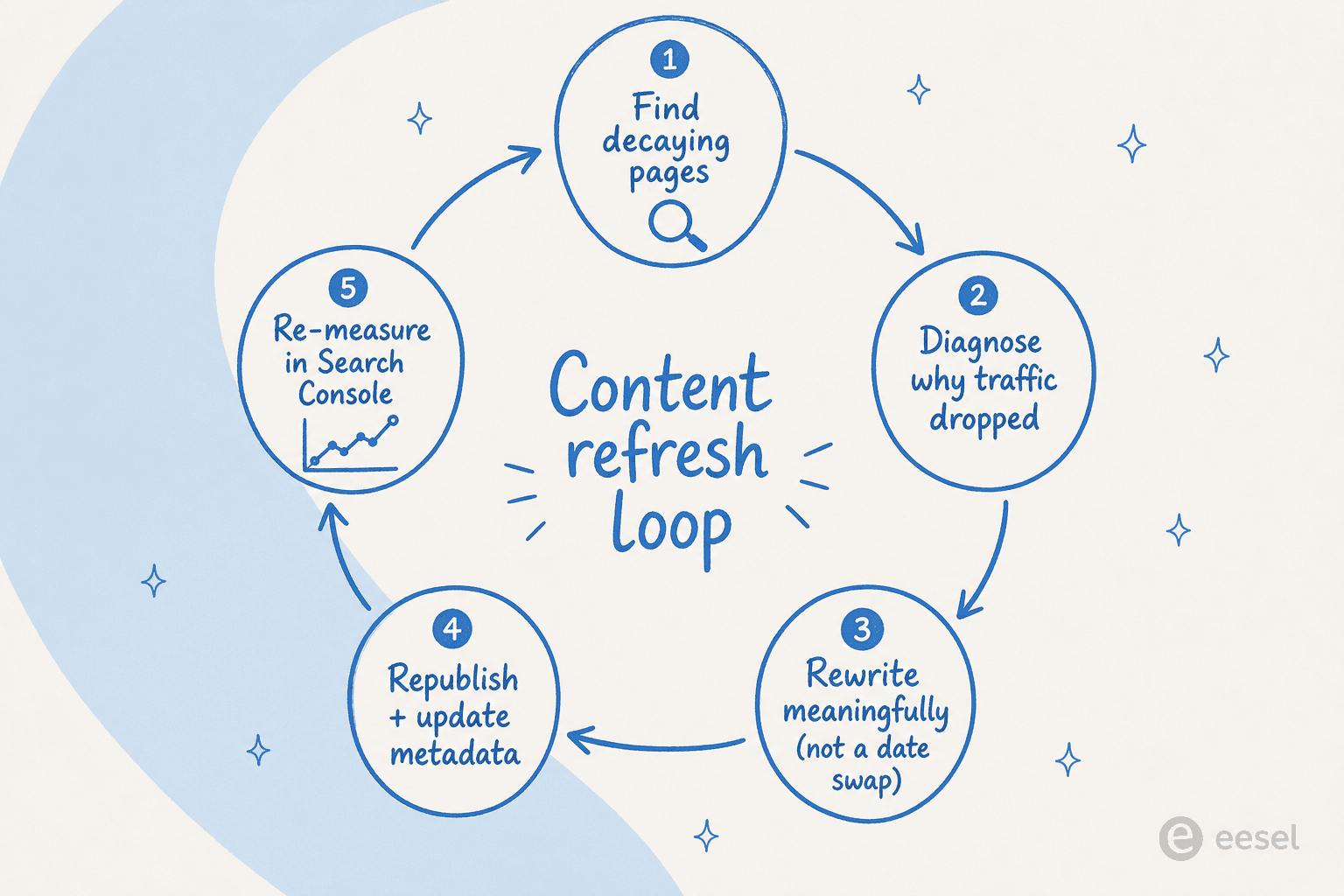
The first step is the one tools are best at: finding what decayed. A practitioner in that same r/TechSEO thread described the manual version, which is honestly clever:
"You can do a basic content decay report using GSC too. Look up your site's queries in the search report, and compare '6 months to the previous period'. Sort by click difference ascending, and you'll see which pages have lost the most clicks in the most recent 6 months."
That's a real workflow, and it's also exactly the kind of repetitive diagnostic a tool should own so you don't have to. From there the loop is: diagnose why a page slipped (intent shifted, a competitor went deeper, the stats went stale), rewrite the parts that need it, republish with updated metadata and internal links, then re-measure so you know whether it worked. The rewrite step is the one that separates a real AI SEO content writer from a spinner, and the re-measure step is the one everyone skips. Done properly, the loop folds neatly into a wider content ops workflow rather than living as a one-off project.
Where these tools quietly break
I get to be specific here, because content generation and publishing is what I work on. I run eesel's content engine, and this post came out of it, so most of what I know about where these tools fail came from watching real ones fail across thousands of generations, in the places nobody demos.
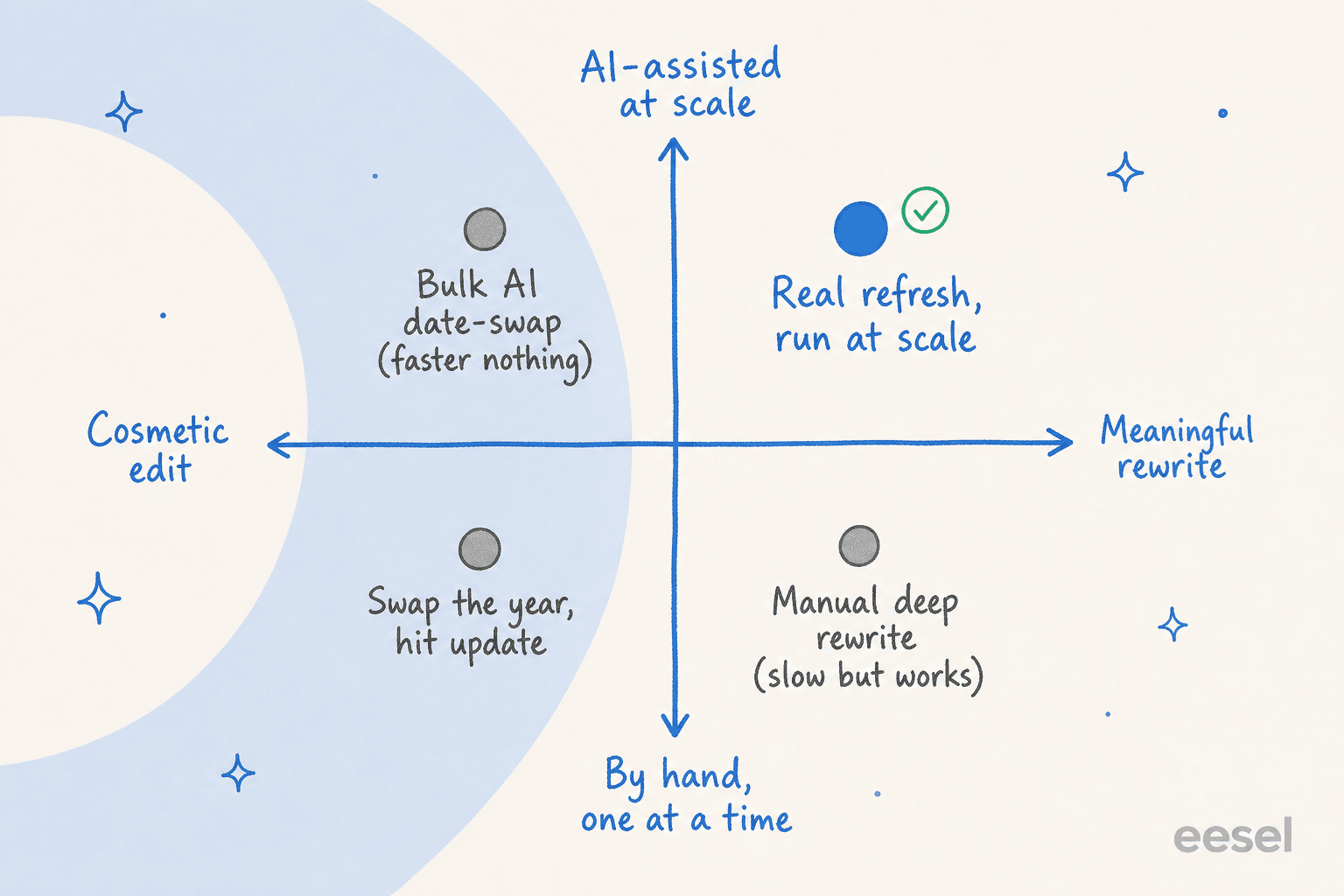
The first and biggest trap is the date-swap that does nothing. A WordPress practitioner on r/wpbeginner_engage named the failure mode perfectly:
"They update the title, tweak the year, swap one paragraph, fix a few links, hit update, and then wait for magic. Usually nothing happens. Old content does decay if you ignore it, and WordPress site owners should probably stop treating content maintenance like a typo-fixing session."
That's the danger with any tool that makes refreshing feel cheap: you turn it into a bulk find-and-replace on publish dates, and you've automated the production of changes Google ignores. Faster cosmetic edits are still cosmetic edits.
The second is the brand-voice cliff. The temptation with any tool that drafts at volume is to stop reading the output, and a refresh program is where this bites hardest because you're touching dozens of pages that already sound like you. Lean on a tone dropdown instead of your real writing and you'll flatten a back catalogue that took years to build a voice. The fix is training on your own brand voice, and reading the diffs before they go live.
The third, and the one I keep coming back to, is the CMS wall. A licensed therapist running our blog writer told us her AI-optimized posts were perfect in the app but she "can't even copy and paste the blog as is" into her website builder without losing the formatting and the FAQ structure. The refresh was done and stranded. If a tool can't get the updated post back into your live site cleanly, every upstream step was wasted motion, which is why CMS integration and auto-publishing deserve more weight in your decision than the rewrite demo does.
The throughline: a refresh tool is only as good as its weakest stage, and the weakest stage is almost never the writing.
What good looks like
So if you're shopping for one, here's the checklist I'd actually use, in priority order:
- It finds the decay for you. Surfacing the pages losing clicks, ideally tied to your Search Console data, so you refresh the right URLs instead of guessing. This is the heart of any real content audit.
- It rewrites meaningfully, grounded in your page. The update should keep what still works and genuinely improve the rest, not paraphrase the whole thing into beige. Pair it with knowing how to fact-check AI content.
- It holds your brand voice. Trained on your real writing, so the tenth refreshed post still sounds like the first.
- It optimizes for AI answers too. Not just blue-link rankings, because the second audience is the one growing.
- It gets the post back live cleanly. Clean export or native publishing into your CMS, so you're not re-pasting and re-formatting by hand.
You can stitch this together from separate apps, an audit tool here, a content generator there, a publishing plugin somewhere else, and plenty of teams do. The cost is the seams: every handoff is a place the page context gets lost or the voice resets. If you go that route, weight your evaluation toward the stages that hurt, finding decay and publishing, not the drafting demo every vendor leads with. My comparison of AI content platforms is a reasonable starting point for the standalone options.
How I'd actually run a refresh with AI
In practice, refreshing a back catalogue is four moves, and they map onto how I'd set up any AI content pipeline.
- Pull your decay list from Search Console. Compare the last six months to the previous period, sort by lost clicks, and start with the pages sitting in positions 8-20. Those are the cheapest wins.
- Brief the tool like a colleague. Tell it the page, the angle, what's gone stale, and your non-negotiables. The best tools take a plain-language brief instead of a form.
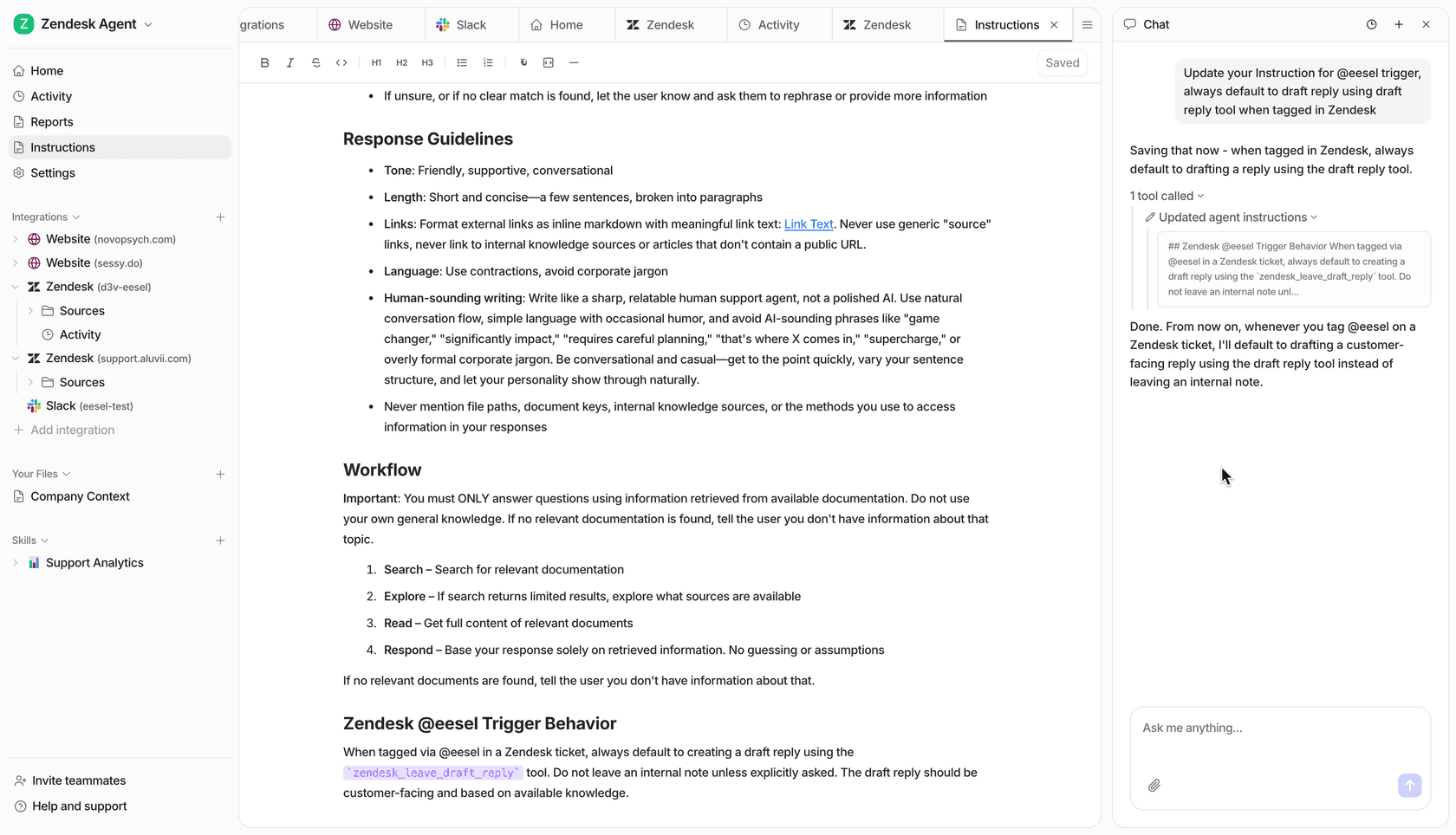
- Let it ingest the old post and rewrite, then read it. This is the step people skip and shouldn't. One marketer at a tour-operator software company used our writer for exactly this, asking it to "ingest that and write to it, making any improvements you deem necessary," then to compare the draft against a sibling article and de-duplicate any near-identical phrasing. That's the level of editing a refresh deserves, and it's the spirit of a real content editing pass.
- Republish cleanly and put it on a schedule. Push the update to your CMS without losing structure, then set a recurring job so decay never piles up again. Being able to refresh SEO content automatically on a cadence is what turns a one-off cleanup into maintenance.
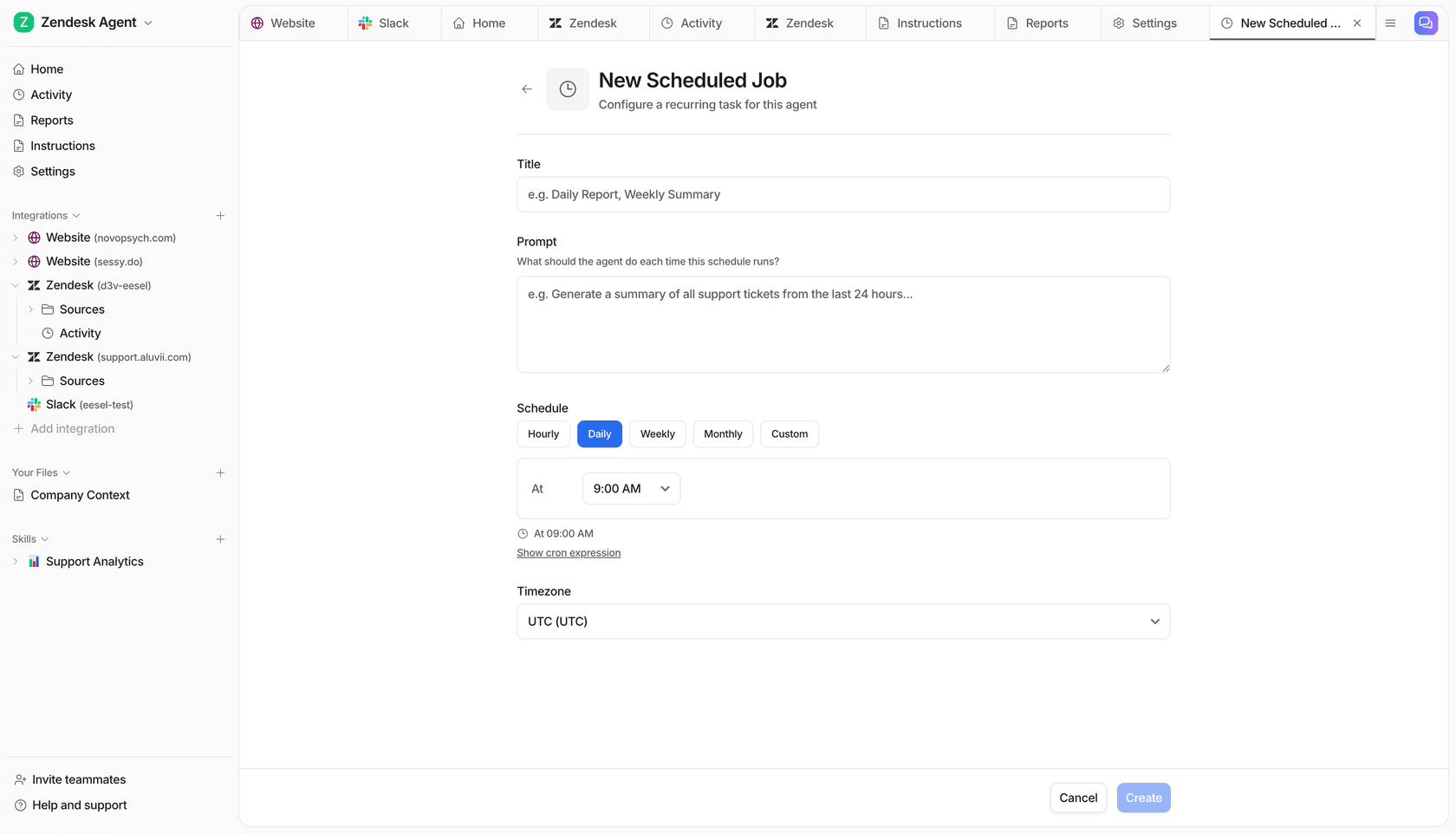
That last step is where running this on a platform beats a one-shot generator. You brief an eesel teammate once, the way you'd brief a good blog writer, and the brief and voice travel with every refresh it runs, so post number fifty still matches your standards. Then you watch the numbers come back to confirm the work landed.
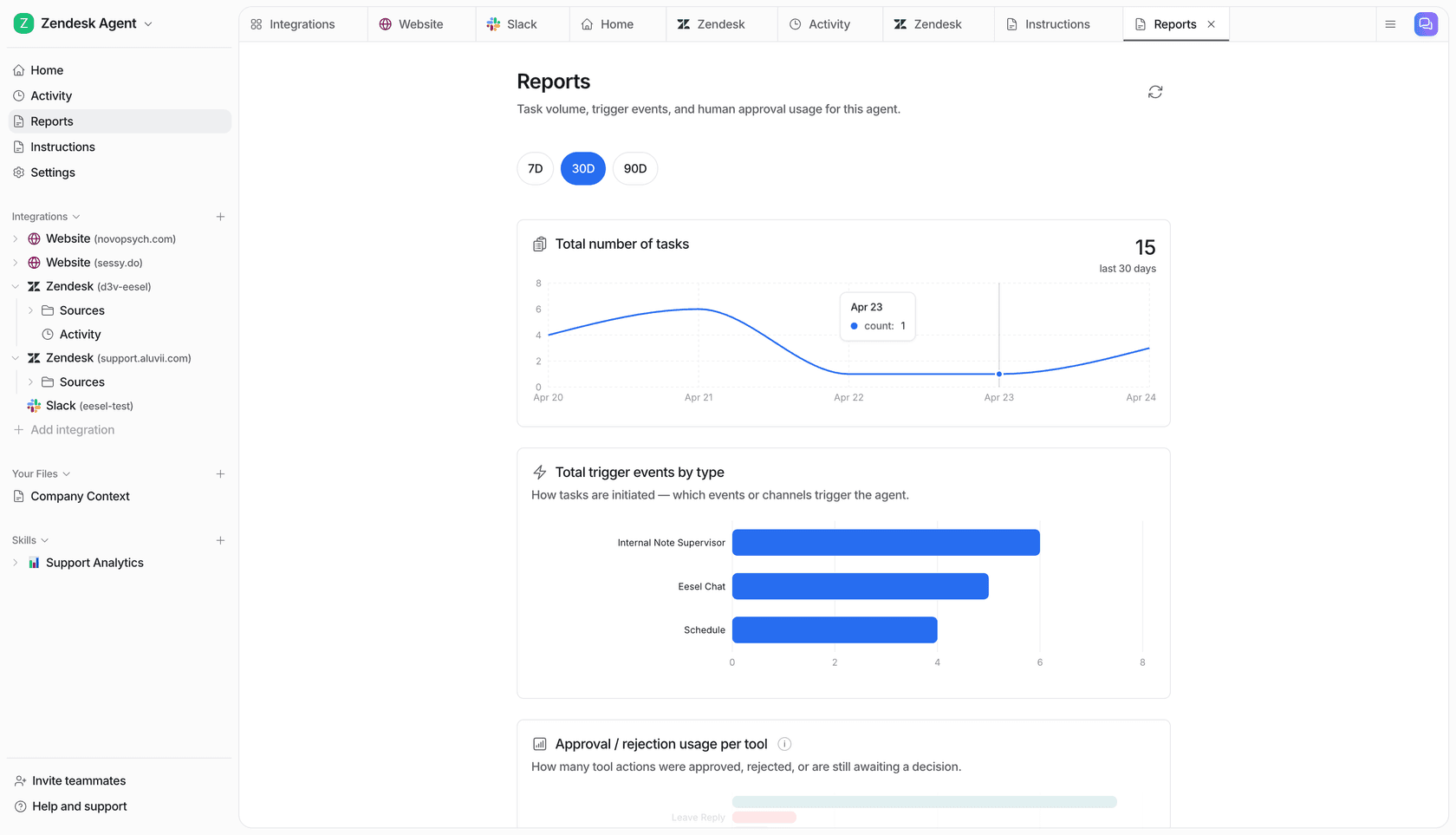
It's the same setup I'd point an agency content team to, and the same logic behind prioritizing SEO content: do the highest-decay pages first, keep the standard consistent, and measure. If raw throughput is what you're chasing across a big catalogue, that's where an AI blog writing tool built for scale earns its keep.
Try eesel for content refreshes
I'll be upfront that I work here, so take the recommendation with that in mind. But the reason I'd reach for eesel on this specific job is that it owns the whole refresh loop instead of just the rewrite. eesel's AI blog writer can ingest an existing post, rewrite it in your trained brand voice with fresh research, and produce a publish-ready update, so the page, the voice, and the publishing target stay connected from one refresh to the next.
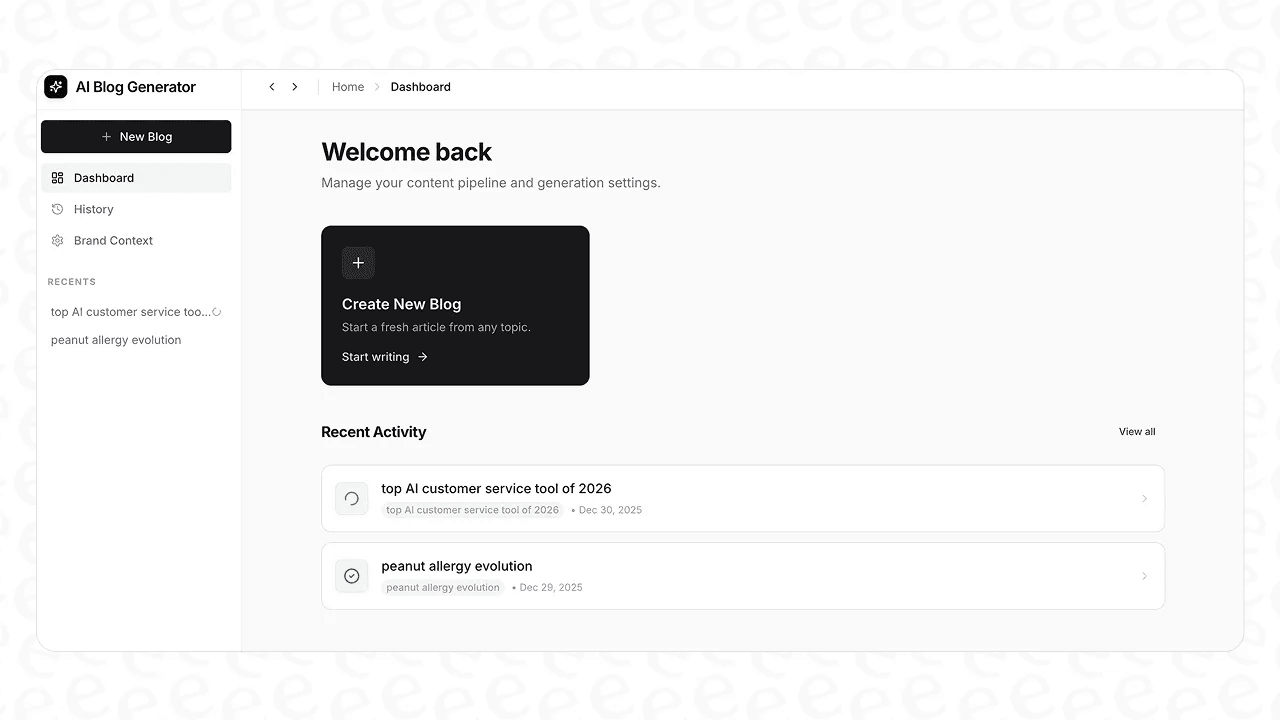
It's the same engine we run our own blog on, traffic dip and all, and it plugs into your existing tools rather than asking you to move. You can try eesel free, no credit card, and run one real decaying page through it before you decide. Judge it on whether that page recovers, since that's the only part that ever mattered.
Frequently Asked Questions
What is an AI content refresh tool?
An AI content refresh tool finds your existing pages that are losing rankings and traffic, then helps you rewrite and update them instead of starting from scratch. The useful ones do real work, adding new information and fixing stale sections, not just swapping the year in the title. For the manual version of the same job, see my guide to refreshing content for SEO.
Does refreshing old content actually recover lost traffic?
Yes, and it is often the highest-leverage SEO work you can do. HubSpot's own historical-optimization project lifted organic views on updated posts by an average of 106%. The catch is that the edits have to be substantial, which is why a real content audit beats a cosmetic pass. My walkthrough on prioritizing SEO content covers which pages to refresh first.
Will an AI content refresh tool make my posts sound generic?
It can, if all it does is reword. The fix is grounding every update in your real page and training the tool on your own brand voice rather than a tone slider. It also helps to learn how to fact-check AI content before you republish at volume.
How often should I refresh my blog content?
Watch the data, not the calendar. Pages sliding from positions 8 to 20 in Search Console are the ones to update first, and high-traffic posts deserve a check every few months. You can refresh SEO content automatically on a schedule so decay never piles up.
How much does an AI content refresh tool cost?
Standalone refresh apps usually run on monthly seats or credit packs; platform tools like eesel charge per generated piece instead. eesel's AI blog writer starts free, and the live numbers are on the pricing page. The honest unit to compare is cost per published update, not per credit.
Can the refreshed post publish straight to my CMS?
This matters more than the rewrite, and it is where most tools quietly fail. A refreshed post stranded in an app because the formatting breaks on paste into a restrictive website builder helps nobody. Look for clean export or native auto-publishing, and check CMS integration before you scale a refresh program.


Article by
Kurnia Kharisma Agung Samiadjie
Kurnia is a software engineer and writer at eesel AI with two years of SEO experience, writing about AI tools, helpdesk software, and customer support. He pairs a developer's understanding of how these products are built with search-driven research into what actually ranks and resonates with the people searching for them.