
Content marketing requires a steady flow of quality, SEO-friendly articles to gain traction with search engines. The traditional content pipeline often involved using one tool for keyword research, another for writing, a separate one for stock photos, and then the manual job of assembling it all in a CMS. This process could be fragmented and time-consuming.
A more streamlined approach is the AI content pipeline tool. This is a platform that automates the entire workflow, from an initial idea to a published post, reducing the need to switch between applications. Tools like the eesel AI blog writer are enabling teams to create a complete, ready-to-publish article from just a single keyword.
What is an AI content pipeline tool?
An AI content pipeline tool is a single platform that automates the entire content creation process, from the initial idea right through to publishing.
This represents a significant step up from basic AI writers like ChatGPT. While those tools are effective for generating text, the user is still responsible for other tasks like research, SEO, finding images, and assembling the final piece. An AI content pipeline tool is designed to handle all of these steps.
The goal is to move from a manual process toward an automated system that produces on-brand content consistently.
Using a standard AI writer can be compared to hiring a freelance writer: you provide a topic and receive text in return. Using an AI content pipeline tool is more like having an entire content marketing manager who handles everything from strategy and creation to optimization and visuals. It encompasses the entire process, as this comparison shows.
Core features of a modern AI content pipeline tool
Not all of these tools are built the same. A proper AI content pipeline tool needs a few key features to be effective. It's not just about generating words; it's about delivering a finished article that's ready to go live.
Let's look at the must-have features.
- Integrated research and ideation: A good tool doesn't just wait for you to feed it a topic; it helps you determine what to write about. This means it should handle keyword analysis and pull real-time information from sources like Reddit. This helps match what people are actually searching for and adds social proof to your content.
- Context-aware content generation: The best tools don't just produce generic text; they learn your brand. By analyzing your website, they can understand your voice, products, and audience. This allows product mentions to sound natural and helpful, rather than like an advertisement.
- Automatic asset creation and media embeds: A complete pipeline tool understands the importance of visuals and creates them to accompany the article. This can include AI-generated images, custom infographics, comparison tables, and even finding and embedding relevant YouTube videos to keep readers engaged.
- Built-in SEO and AEO optimization: Content is only useful if it can be found. The tool needs to optimize for search engines (SEO) and the new AI Answer Engines like Google AI Overviews and Perplexity (AEO). This involves automatically using keywords in headings, writing meta descriptions, and structuring the content in a way that AI is more likely to use as a source.
- One-click publishing and integration: The final step should be simple. A solid pipeline tool should connect with platforms like WordPress, Webflow, or Shopify. This allows you to publish the finished article without the manual work of copying, pasting, and reformatting everything.
Here’s a quick summary of how these features work together:
| Feature | Benefit |
|---|---|
| Integrated Research | Finds topics people are searching for and adds authentic social proof. |
| Context-Aware Generation | Writes on-brand content with natural-sounding product mentions. |
| Automatic Asset Creation | Builds a complete, visually interesting post with images and videos. |
| SEO & AEO Optimization | Helps you rank on Google and get cited by AI Answer Engines. |
| One-Click Publishing | Skips the manual formatting and gets your content live faster. |
Comparing popular AI content pipeline tools
As AI has become more popular, many tools have emerged that claim to simplify content creation. However, they all work a bit differently. Let's look at a few of the main players and see how they compare.
eesel AI blog writer: End-to-end content automation

First on the list is the eesel AI blog writer. It was designed from the start to be an end-to-end AI content pipeline tool. The premise is straightforward: provide a keyword and get back a blog post that's ready to publish.
Key Features & How it Works:
- Full Automation: The process is very simple. You provide a keyword and your website's URL, and the tool handles the rest. It manages research, writing, SEO, and visual assets automatically. It even pulls in social content like Reddit quotes and YouTube videos to make the article more engaging.
- Context-Aware Research: The tool automatically determines the type of blog post you need. If you're writing a comparison, for instance, it will find and include pricing information. For a product review, it will look for technical specs.
- AEO Optimization: eesel AI is built with the future of search in mind. The content it creates is structured to appear in AI Answer Engines, which increases the chances of being featured in summaries on Google, ChatGPT, and Perplexity.
- Proven Results: The team at eesel used their own tool to publish over 1,000 blog posts, growing their organic impressions from 700 to 750,000 per day in just three months.
Pricing:
- You can try it for free.
- The Early Bird plan is 50 blog generations for $99/mo.
Limitations: It is designed to work alongside a person, not to replace them. The goal is for the AI to handle about 95% of the work, leaving a human for the final strategic review and approval.
Jasper: A comprehensive content platform
Jasper is a well-known name in AI content, built for marketing teams. They recently introduced "Content Pipelines" to help automate the content lifecycle. It's a platform designed to unify brand voice and workflows.
Key Features:
- Jasper IQ: This is the central brain of the platform. It combines general marketing knowledge with your specific brand voice, audience details, and product info from Jasper IQ.
- Ecosystem of Tools: Jasper is a collection of tools, including Agents, Studio (a no-code AI app builder), Canvas (for collaboration), and Grid (for creating content in a spreadsheet format).
- Security: For larger companies, Jasper provides enterprise-level security features, including SOC 2 compliance.
Pricing:
- The Pro plan is $59 per seat per month (billed annually) or $69 month-to-month.
- They also have a Business plan with custom pricing for teams needing API access and other advanced features.
Limitations & eesel AI as an Alternative: Jasper offers a comprehensive suite of tools that allows for highly customizable workflows. Users can design and build their own content pipelines, a role Jasper refers to as a "Content Engineer." This flexibility is suitable for teams that require deep customization. However, this approach involves a setup process and manual placement of assets like images. For teams seeking a more automated, out-of-the-box solution, the eesel AI blog writer provides a direct path from keyword to a complete, publish-ready article with visuals included.
Is Domo an AI content pipeline tool?
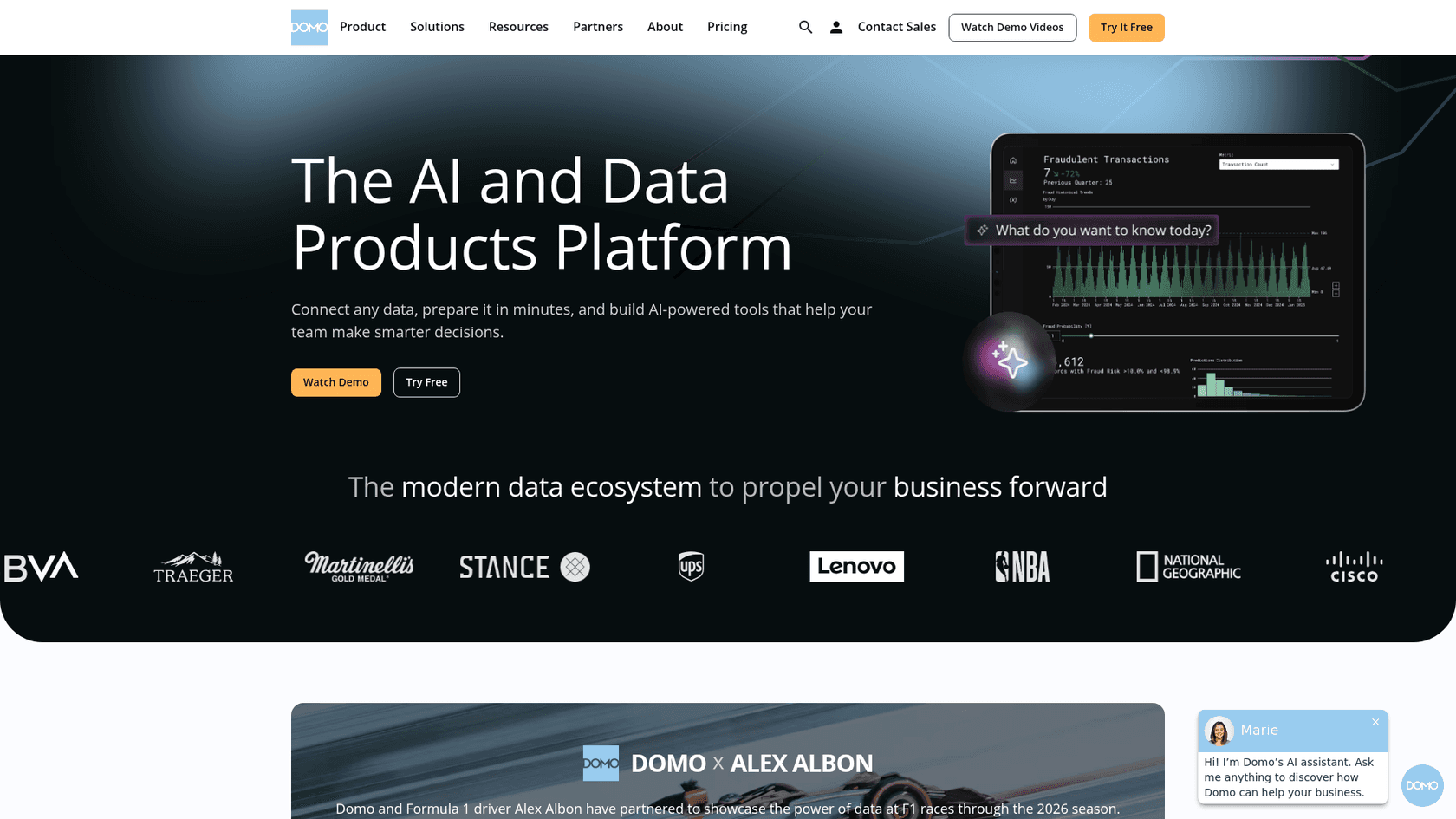
Domo is another platform that comes up in AI discussions, but it serves a different purpose. Domo is a business intelligence platform for working with data, not a tool for creating content. Its function is to help teams use data to make better decisions by connecting and visualizing information from Domo's platform.
Key Features:
- Data Integration: Domo's main strength is connecting data from different places. It can pull information from over 1,000 sources, like Salesforce and SAP, and prepare it for analysis.
- AI for Analytics: Its AI features are focused on finding patterns in your business data. These findings are then used to create dashboards and set up automated workflows.
- Low-Code Tools: It gives business users tools to build their own data apps and dashboards without needing to be expert coders.
Pricing:
- Domo has a 30-day free trial, but its paid plans are based on consumption.
- You have to contact their sales team for specific pricing. Some Reddit users have discussed price changes since the company switched to a credit pricing model.
Limitations & eesel AI as an Alternative: To clarify, Domo is an AI data pipeline tool, not an AI content pipeline tool. It automates the flow of data for analysis, not the creation of blog posts, as explained in their definition of a data pipeline tool.
While Domo can help your business understand its market, a different tool is needed to act on that information. That's where a tool like the eesel AI blog writer fits in. It creates the SEO content required to reach customers. The two platforms solve completely different problems.
How to build your content strategy with an AI content pipeline tool
Just having the tool isn't enough. To get the most out of an AI content pipeline, you need a strategy to guide it.
The issue isn't really the AI tool, it's your content production workflow. I've been scaling content for my SaaS with Claude and it keeps performing the best but only if you break longer pieces into 3-4 separate prompts instead of trying to get 2000+ words in one shot.

- Start with your goals: First, know what you're aiming for. Is it more organic traffic? Better rankings for certain keywords? A faster publishing schedule? Clear goals will help you measure success.
- Define your brand and audience: AI is great at scaling, but it needs a solid foundation. You need to define your brand voice, target audience, and main messages. Once that's clear, an AI can replicate it consistently.
- Focus on workflows, not just tasks: Think beyond generating a single article. Map out a repeatable process for how you'll choose topics, create content, review it, and get it published. This is where a true AI content pipeline tool stands out compared to a simple AI chatbot.
- Keep a human in the loop: The best approach combines the speed of AI with human judgment. Let the AI handle the heavy lifting: the research, drafting, and creating visuals. Then, have a person come in for the final review, fact-checking, and adding unique insights.
Visualizing how a content pipeline works can make the process clearer. The video below explains how to build a systematic content pipeline that can help your channel or blog run more efficiently, reinforcing the strategic principles we've just discussed.
The future of content marketing
Content marketing is evolving quickly. The older, manual methods of creating content are becoming less efficient. The shift is toward integrated, automated systems that help teams produce higher-quality content, faster.
A true AI content pipeline tool is more than a simple writer; it’s an entire workflow in one package. It handles everything from research and asset creation to optimization and publishing. For any team that wants to scale their content, improve its quality, and see real growth in 2026, using the right tool is a necessity.
Turn your keywords into revenue
Tired of content chaos? It’s time to streamline your process. The eesel AI blog writer can turn a single keyword into a complete, SEO-optimized blog post, with images, quotes, and links, in just a few minutes.
Stop juggling different tools and start publishing content that ranks. Try it for free.