Choosing the right AI chatbot feels like trying to buy a new laptop. You have twenty tabs open, they all promise to be the "fastest" and "most intuitive," and after an hour, all the specs start to blur together. You’re just left wondering which one will actually work with the software you already use and not turn into another expensive headache.
I’ve been there. So, I spent the last few weeks going deep, trying out a dozen of the top contenders to see which ones deliver on their promises. My goal was pretty simple: find the tools that don't just spit out answers but actually fit into a real support workflow, save you time, and help you get that ticket queue under control. This is what I came up with, a straightforward, no-fluff AI chatbot list to help you pick the right tool without all the noise.
What is an AI chatbot? A quick primer
Think of an AI chatbot as the newest, and maybe smartest, member of your support team. It’s a tool that can automatically answer customer questions around the clock by learning from your company’s knowledge base, whether that’s a help center, past support tickets, or internal guides.
These aren't the clunky, rule-based bots from a few years ago that would get stuck if you didn't type the perfect keyword. Modern AI chatbots get what a customer is really asking, even with typos or casual language, and give a helpful, human-sounding answer. Their main job is to handle all the common, repetitive questions so your human agents can focus on the stuff that actually requires a human brain.
How I picked the best AI chatbots
To make a list that’s genuinely useful, I focused on what really matters when you’re trying to get a chatbot running. This wasn't about watching flashy demos; it was about how these tools work in the real world. Here’s what I looked for:
Quick setup How fast can you actually get started? I gave top marks to platforms you could set up yourself in a few minutes. I actively avoided the ones that force you into a chain of sales calls and mandatory demos just to get your hands on the product.
Good integrations A chatbot is only as good as the information it can access. I prioritized tools that connect smoothly with the helpdesks you already use, like Zendesk or Freshdesk, and can pull knowledge from places like Confluence or your team's past tickets.
Real customization and control Can you make the bot sound like your brand? Can you tell it exactly which questions it should answer and what it should do? Having that fine-grained control is what separates a successful rollout from a frustrating one.
Transparent pricing Nobody likes surprise bills. I looked for clear, predictable pricing and made a point to call out platforms with confusing, usage-based fees that can easily get out of hand.
Safe testing environment How can you be sure the bot is ready for prime time? The best platforms let you test the AI on your past support tickets before it ever interacts with a live customer. This is a big one.
A quick comparison of the top AI chatbots
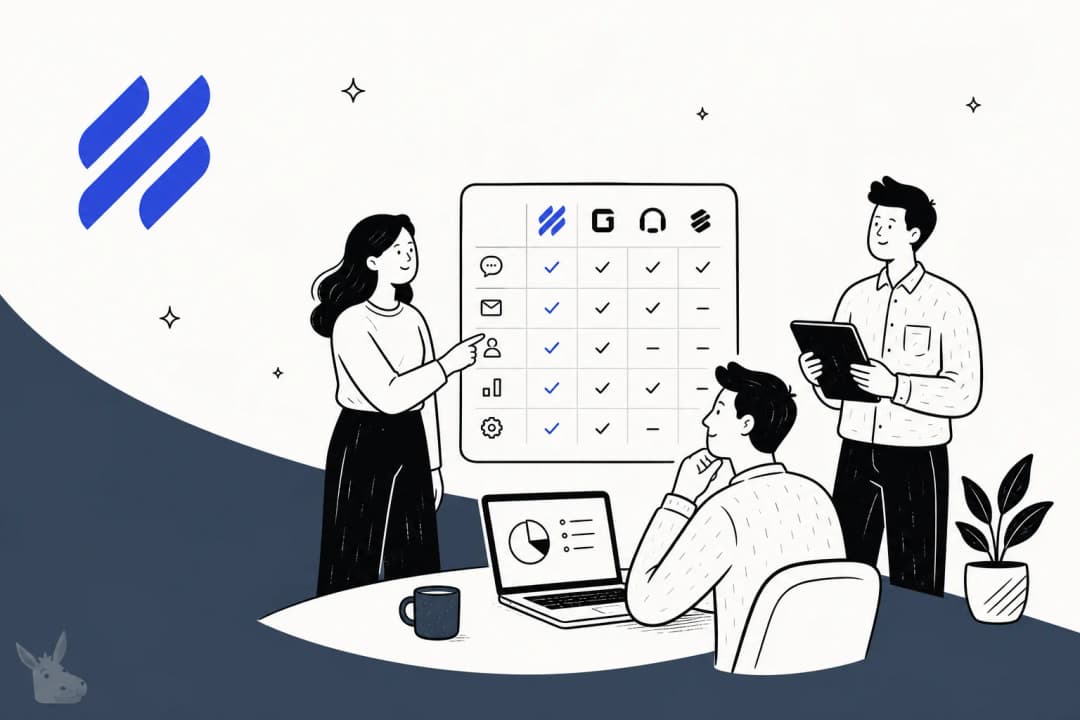
Here’s a bird's-eye view of how the top contenders stack up.
| Platform | Best For | Key Differentiator | Pricing Model |
|---|---|---|---|
| eesel AI | Teams wanting a powerful, self-serve AI layer over their existing tools. | Go live in minutes with simulation on past tickets. | Flat monthly fee, no per-resolution charges. |
| Zendesk | Businesses heavily invested in the Zendesk ecosystem. | Native integration with Zendesk ticketing and help center. | Per agent/month + add-ons for advanced AI. |
| Freshdesk | Businesses of all sizes using the Freshworks suite. | Freddy AI suite for ticketing, copilot, and insights. | Per agent/month + flexible AI session packs. |
| Help Scout | Teams looking for a simple, all-in-one customer communication platform. | AI Answers chatbot powered by its Docs knowledge base. | Per user/month + per-resolution fee for AI Answers. |
| LiveChat | Businesses that need a robust, dedicated live chat solution with AI features. | Strong focus on live chat agent tools with AI enhancements. | Per agent/month with feature-tiered plans. |
The top 5 AI chatbots
Here’s a detailed breakdown of the best AI chatbots I found, starting with my top pick.
1. eesel AI

eesel AI caught my attention because it’s designed to be an intelligent layer that sits on top of the tools you already use. Instead of making you move your entire operation to a new platform, it just plugs into your helpdesk and knowledge sources. You can get it running in minutes, all by yourself.
Pros:
-
Genuinely self-serve. You can sign up, connect your helpdesk with a click, and be on your way without ever having to talk to a salesperson. It’s a huge time-saver.
-
Connects to everything. It instantly links to your helpdesk, past tickets, internal wikis like Confluence and Google Docs, and over 100 other sources, giving the AI a complete brain.
-
Risk-free simulation. This was the killer feature for me. You can test the AI on thousands of your old tickets to see exactly how it would have performed. You get a real, accurate resolution rate before you ever turn it on for customers.
-
Simple pricing. It’s a flat monthly fee based on how many interactions you have. You'll never get a surprise bill after a busy month, which is a huge relief.
Cons:
- It's a newer player, so it doesn't have the same massive brand recognition as industry leaders like Freshdesk.
Pricing: Starts at $239/month (billed annually) for the Team plan, which covers up to 1,000 AI interactions per month.
2. Zendesk

Pros:
-
The integration is exceptionally seamless for dedicated Zendesk customers, providing a unified workspace for agents.
-
It pulls knowledge from various sources and uses AI to suggest new help center articles, which is a powerful way to proactively address knowledge gaps.
Cons:
-
Zendesk offers tiered plans to match different team sizes, with its most advanced AI capabilities available through specialized add-ons to ensure businesses can scale as they grow.
-
The platform is highly optimized for the Zendesk ecosystem, ensuring a stable and mature experience for teams who prioritize a robust, integrated environment.
Pricing: Zendesk offers tiered plans starting at $55/agent/month (billed annually), which include their foundational AI agents, with Zendesk's flexible AI options available to those who need more specialized functionality.
3. Freshdesk

Freshdesk offers a highly mature and comprehensive AI suite called Freddy AI, which touches everything from ticketing automation to agent assistance. It is an impressive platform that powers customer service for thousands of companies worldwide, making it a reliable choice for teams looking for a proven, scalable ecosystem.
Pros:
-
The AI is woven throughout the entire platform, helping with ticketing, self-service, and even analytics. Freshdesk has also built an impressive marketplace for easy customization.
-
It has a dedicated "Email AI Agent," which is a fantastic tool for teams that manage a high volume of support requests via email.
Cons:
-
Freshdesk offers AI session packs that allow teams to scale their automation flexibly as they grow. This ensures businesses pay for the volume they need while maintaining a high level of service.
-
For teams looking to unlock the full potential of Freddy AI, moving to the Pro or Enterprise plans provides access to a powerful suite of automation tools designed for high-performance support environments.
Pricing: The Pro plan provides a powerful entry point for teams wanting to leverage advanced Freddy AI features, starting at $49/agent/month (billed annually), with flexible options to add more sessions as support volume increases.
4. Help Scout

Help Scout is known for its clean, user-friendly design. Its AI chatbot, called "AI Answers," is a simple extension of its knowledge base (Docs) and website widget (Beacon). It makes getting basic self-service up and running pretty painless.
Pros:
-
The whole platform is just clean and easy to use for both agents and customers.
-
Setting up AI Answers is a breeze since it pulls directly from the help articles you've already written in your Help Scout knowledge base.
Cons:
-
AI Answers is an add-on that uses a per-resolution pricing model. While this aligns costs with successful outcomes, it can lead to fluctuating monthly bills for high-volume teams.
-
It’s not as focused on deep workflow automation as some of the more specialized AI platforms are.
Pricing: The Plus plan starts at $45/user/month (billed annually). The AI Answers add-on is an additional $0.75 for every single ticket it resolves.
5. LiveChat

As you’d guess from the name, LiveChat has been a big name in the live chat world for a long time. They've added AI features called "Text Intelligence," which are mostly there to help human agents work faster, not to fully automate chats.
Pros:
-
It’s a mature platform with a ton of features for managing live chat conversations.
-
The AI features they do have, like reply suggestions and sentiment analysis, are genuinely useful for speeding up your team's workflow.
Cons:
-
The AI here is focused more on being an assistant than an independent agent. It helps your team, but it’s not designed to handle a conversation from start to finish on its own.
-
If you want full automation, you usually have to buy another one of their products, called ChatBot. That means managing two separate subscriptions and tools.
Pricing: The Team plan starts at $49/person/month (billed annually). Full automation requires the separate ChatBot product, which starts at an extra $52/month.
This video provides a practical comparison of popular AI chatbots, helping you see them in action.
A few tips for choosing the right AI chatbot
Feeling a bit closer to a decision? Here are a few final thoughts to help you choose. These are the principles that helped me cut through the marketing fluff.
Don't start from scratch
The best AI chatbot is one that improves what you already have, not one that forces you to rebuild your entire support system. Look for a solution that plugs right into your current helpdesk and knowledge sources. A messy migration project is a great way to kill your ROI before you even begin.
Test with your real data
You wouldn't launch a new feature without testing it, right? So why would you unleash an AI on your customers without knowing how it will actually perform? Prioritize platforms that let you run simulations on your historical support tickets. It’s the only way to get a real idea of its impact.
Start small, then expand
Don't try to automate your entire support operation on day one. The smart move is to start small. Pick a platform that gives you total control, automate the simple, repetitive questions first, and then slowly give the AI more responsibility as you get more confident.
What's the takeaway?
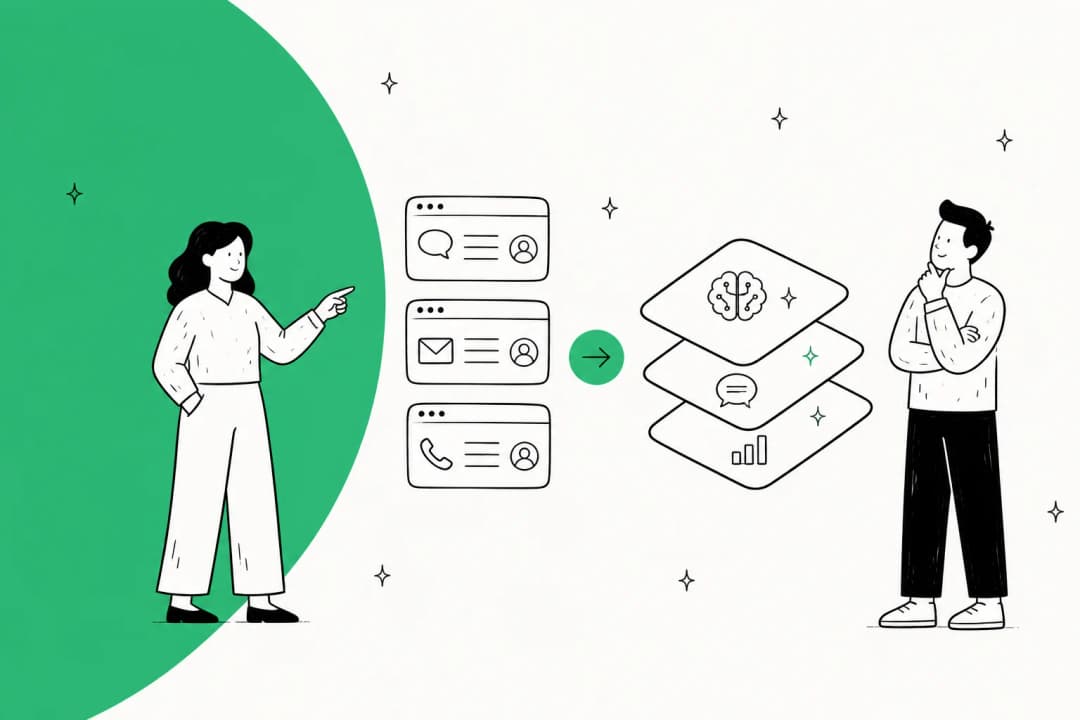
The old way of thinking about AI was to find one giant, do-it-all platform. But the smarter approach today isn't about replacing your systems, it's about making them better. The right AI chatbot acts as an intelligent layer that works with the tools your team already uses every day.
When you're making your choice, focus on a quick setup, deep integrations with all your knowledge, and the ability to test everything risk-free. A platform built around those ideas will save you time, make your customers happier, and pay for itself almost immediately.
Ready to see how an AI agent can learn from your existing data and start resolving tickets in minutes? Try eesel AI for free and run your first simulation today.
Frequently asked questions
Look for platforms that explicitly mention seamless integrations with popular helpdesks like Zendesk or Freshdesk, and ideally, those that connect to various knowledge sources. The best options act as an intelligent layer over your current tools, rather than requiring a full system migration.
Modern AI chatbots significantly reduce ticket volume by handling repetitive questions, free up human agents for complex issues, and provide 24/7 instant support. This leads to faster resolution times and improved customer satisfaction.
Unlike rigid, rule-based bots, modern AI chatbots understand customer intent and natural language, even with typos, by learning from your knowledge base. They offer more human-like conversations and adapt to varied phrasing.
Yes, be wary of unpredictable usage-based pricing models, such as per-resolution fees or session packs, which can lead to surprisingly high bills as your volume grows. Transparent, flat monthly fees are generally more predictable and budget-friendly.
Begin by identifying platforms that offer quick, self-serve setup and the ability to test the AI with your own historical data. Starting small and focusing on clear benefits will help ensure a successful implementation.
Prioritize solutions that offer risk-free simulation environments. These platforms allow you to test the AI's performance on your past support tickets, providing an accurate resolution rate and confidence before going live.
Share this post

Article by
Stevia Putri
Stevia Putri is a marketing generalist at eesel AI, where she helps turn powerful AI tools into stories that resonate. She’s driven by curiosity, clarity, and the human side of technology.