An AI blog writer link building strategy that actually works

Kenneth Pangan

Stanley Nicholas
Last edited February 1, 2026
Expert Verified

Link building is a necessary part of SEO, but the traditional ways of doing it are slow and often feel like a waste of time. The data shows this isn't just a feeling, either. A whopping 94% of online content gets zero external links. With a constant stream of generic AI articles flooding the internet, earning a quality link is tougher than ever.
It’s time for a different plan. Instead of pouring all your energy into manual outreach, you need a strategy that puts content first. The idea isn't just to publish more articles, but to use a smart AI tool to create specific types of content, which we call linkable assets, that other websites actually want to reference.
With the right approach and a tool like the eesel AI blog writer, you can scale up the production of these assets. You'll build a link-building engine that works for you, not the other way around.
What is an AI blog writer link building strategy?
An AI blog writer link building strategy is the process of using an AI content platform to systematically create and publish content designed specifically to attract backlinks.
This is a big shift in thinking. It’s not about writing a blog post and crossing your fingers that people link to it. It’s about being intentional. You figure out what kinds of content, like data reports, detailed guides, or statistical roundups, are regularly cited by journalists, bloggers, and industry experts. Then, you use AI to produce that high-value content efficiently, at a scale a human team could never match.
This strategy has a few main parts:
- Creating Linkable Assets: You move away from generic blog posts and start producing resources that provide unique value others will want to reference.
- Scaling Production: AI removes the bottleneck of human writing speed, allowing you to publish consistently and build topical authority in your niche much faster.
- Quality and Authenticity: To get links from high-authority sites, your content can't sound like a robot wrote it. You need an AI writer that produces well-researched, human-sounding content that includes real data, citations, and social proof.
Why old-school link building tactics are failing
While the goal of earning authoritative links is the same, many of the old tactics are providing worse results over time. The internet has changed, and the data shows a clear shift away from these time-consuming activities.
Manual outreach has a low return on investment
We’ve all been there, spending hours writing personalized emails only to get a few replies. This is a common experience because the process is so intensive. One Reddit user breaks down just a part of the manual work involved:

The issue is that website owners and editors are buried under generic link requests. This "outreach fatigue" means even great content can get lost in the noise.
Paying for links is a risky strategy
Buying links might feel like a shortcut, but it's a gamble that can earn you a penalty from Google. Besides that, it's not a cheap option anymore. An industry survey from this year found that the average cost for a single high-quality backlink is now $508.95.
For most businesses, this isn't a sustainable long-term plan. The focus should be on earning links by providing real value, not just buying your way up the rankings. It's safer, more effective, and builds a better foundation for your brand.
Why "great content" is no longer enough
For years, the standard SEO advice has been to "just create great content." While the intention was good, that advice is now outdated. With thousands of articles published every day, even truly excellent content can get lost and ignored.
The numbers don't lie. An analysis of a huge content dataset revealed that 94% of all online content has zero backlinks. Your content needs to be more than just "great." It needs to be a valuable, citable resource. This is the piece that most modern content strategies are missing.
The new playbook for link building
The rules have changed. With the growth of AI-powered search features like Google's AI Overviews, visibility is no longer just about ranking in top ten blue links. It's about being cited as an authoritative source that powers these new AI answers.
Build topical authority, not just keywords
Instead of trying to rank for a single keyword, your goal should be to become the go-to resource for an entire topic. This means building a deep library of connected content that covers a subject from all sides. As SEO expert Ann Smarty mentioned in a recent podcast, building this kind of topical authority is essential for being found and referenced by AI and other AI search engines.
When your site has strong topical authority, you're seen as more credible. This makes you a much more likely source for a backlink from journalists and experts looking for reliable information.
Treat brand mentions as a ranking signal
It's not just about clickable links. Google holds a patent on what it calls "implied links," which are basically unlinked brand mentions. A recent survey also found that 80.9% of SEO specialists believe these mentions affect search rankings.
The plan here is to get your brand, data, and insights featured in authoritative content across the web, whether it's linked or not. Creating citable assets naturally increases the chances of your brand being mentioned, which adds to your site's credibility and makes you a prime candidate for citation in AI Overviews.
Create content designed for citation
This is the heart of the strategy. You need to shift from writing standard blog posts to creating "citation-worthy" assets. These are pieces of content that other creators can easily use to make a point, back up a claim, or add value to their own audience.
Here are a few types of linkable assets you can focus on:
- Data-led reports: Publish original survey data or compile unique industry research.
- Statistical roundups: Gather and organize key statistics on a topic, making it easy for others to find and cite data.
- Visual assets: Create shareable infographics, charts, or maps that simplify complex information.
- In-depth guides and glossaries: Become the single best resource for a complex topic.
- Templates and checklists: Provide practical, downloadable resources that solve a specific problem for your audience.
How to execute a link building strategy with AI
Knowing what to do is one thing, but actually doing it is another. Here’s a straightforward, step-by-step process for turning these ideas into a real-world link-building engine, using an advanced AI writer as the core of your workflow.
Step 1: Ideate linkable assets
First, you need to decide what resources to create. Don't just brainstorm blog post titles; think about what kind of resource would be genuinely useful to others in your niche. You can use SEO tools like Ahrefs to find content that already has a lot of backlinks and look for ways to create something even better.
While the classic "Skyscraper Technique" can be a good starting point, just making your content longer isn't enough. You need to add unique value. Consider creating assets like:
- Data Studies & Surveys: Run a simple industry survey and publish what you find.
- In-depth Guides & Glossaries: Create the definitive resource for a complex topic.
- Calculators & Interactive Tools: Develop a simple tool that helps a user solve a problem.
- Expert Roundups: Gather quotes from industry experts on a current topic.
- Comparison Matrices: Build detailed, side-by-side comparisons of tools or products in your field.
Step 2: Use eesel AI to scale content production
Coming up with ideas is often the easy part. The real challenge is execution. An effective AI blog writer can solve this problem. While basic tools like ChatGPT can produce generic text, the eesel AI blog writer is built to create complete, publish-ready assets designed to attract links.
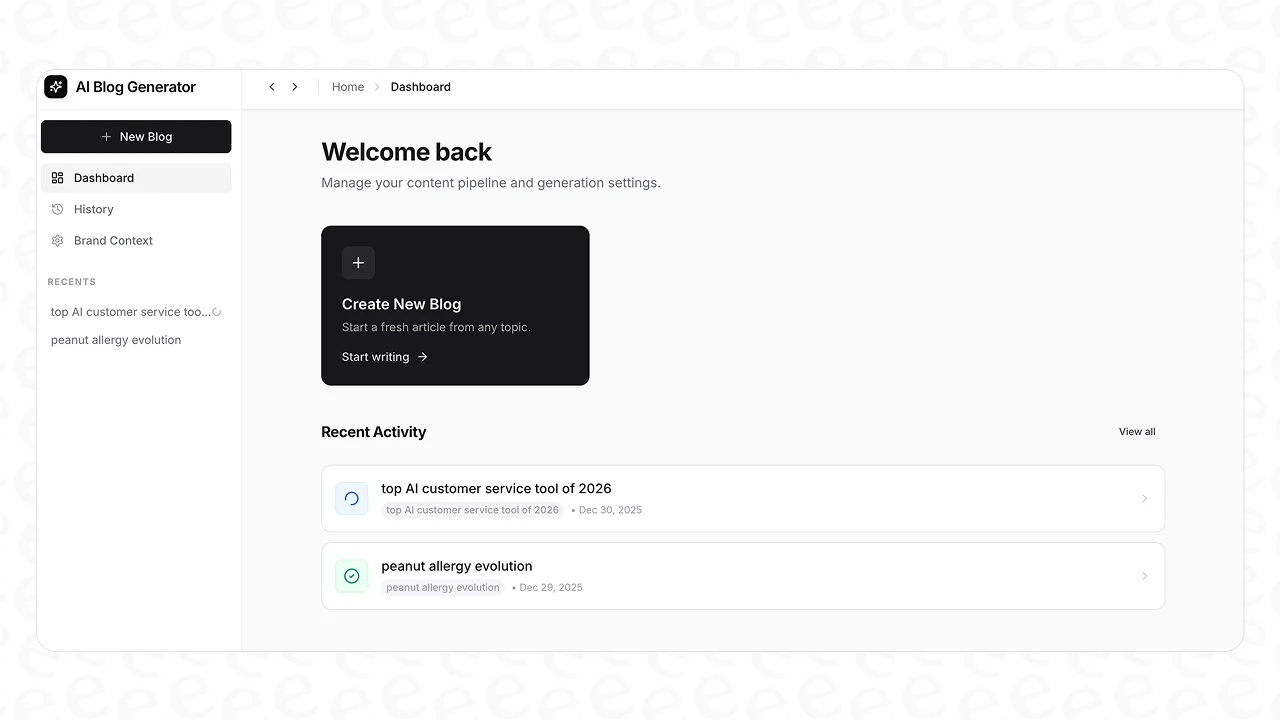
It goes beyond simple text generation with a few key features for this strategy:
- Automatic Asset Generation: The platform automatically creates and embeds relevant videos, infographics, and data tables directly into the blog post. This is a huge help for creating visually appealing, link-worthy content without spending hours on design.
- Deep Research & Sourcing: It conducts context-aware research to produce factually accurate content with proper citations. This is vital for earning trust and getting links from authoritative websites.
- Authentic Social Proof: It can integrate real quotes and insights from Reddit forums, adding a layer of human experience that makes your content feel more authentic.
This is the exact platform we used to grow our own organic impressions from 700 to 750,000 per day in just three months by publishing over 1,000 optimized blog posts.
Step 3: Promote your assets with targeted outreach
Once you have a high-value asset, outreach becomes much simpler and more effective. You're no longer just asking for a favor; you're offering another creator a valuable resource that can improve their own content.
Instead of sending mass emails, you can focus on a few smart outreach tactics:
- Broken Link Building: Use a tool to find pages linking to outdated or dead resources, and suggest your superior, up-to-date asset as a replacement. You're helping the site owner fix a problem.
- Pitching Journalists: If you've created a data-driven report, share your key findings with journalists and writers who cover your industry.
- Listicle Inclusion: Find "best of" lists and make a clear case for why your resource or guide should be included.
For a deeper dive into modern link-building tactics that you can supercharge with AI, check out the video below. It covers a range of actionable strategies that complement the asset-creation approach.
This video details 19 AI link building tactics to enhance your AI blog writer link building strategy.
Link building starts with better content
Effective link building in 2026 is less about how many cold emails you can send and more about having a scalable content strategy. The foundation of that strategy is the consistent creation of high-value, linkable assets that people naturally want to share and cite.
While this kind of content production once required a huge team and an even bigger budget, modern AI tools have made it accessible to everyone. The trick is to use an AI writer that does more than just generate text. You need a tool that can create complete, well-researched, and media-rich content that earns backlinks on its own.
Stop chasing links and start attracting them. Generate your first post free and see how quickly you can build a library of linkable assets.
Frequently Asked Questions

Share this post
Article by
Kenneth Pangan
Writer and marketer for over ten years, Kenneth Pangan splits his time between history, politics, and art with plenty of interruptions from his dogs demanding attention.