A practical guide to blog writing for brand building

Kenneth Pangan

Stanley Nicholas
Last edited January 20, 2026
Expert Verified

The internet is a noisy place. Standing out feels tougher than ever, and a strong brand is a crucial lifeline. It’s how people recognize you, what they expect from you, and why they choose you over someone else. One of the best ways to build that kind of brand is with a blog.
A blog is more than just a content repository; it's a direct conversation with your audience. It’s where you build trust, show you know your stuff, and carve out a unique identity. This guide covers the basics of using your blog to build a brand that resonates. We'll touch on everything from strategy to creation, and even how AI can help you scale without sounding like a robot. We've done it ourselves, growing our blog from 700 to 750,000 daily impressions in just three months using the eesel AI blog writer.
What is brand building and why is it effective?
First, let's define brand building. It goes way beyond a slick logo or a nice color scheme. It's the ongoing work of shaping how people perceive you. It’s about being known for something specific, whether that's your deep expertise, your reliability, or just having a unique voice.
So, why is a blog such a great tool for this job?
Unlike an ad which can interrupt, a blog post helps. It answers a question, solves a problem, or offers a fresh take on something. That helpfulness is what builds trust, and you can't have a strong brand without trust.
Here’s a quick look at the benefits:
- Demonstrate your expertise. A blog is your stage to share what you know, get into the weeds of your industry, and show people you're a voice worth paying attention to.
- Get the right traffic. When you write SEO-friendly posts that answer actual questions, you pull in people who are already looking for your solutions. This isn't just any traffic; it's an audience that's pre-qualified and interested.
- Create a community. Good content gets people talking. Comments, shares, and discussions around your posts turn your blog from a publication into a community hub for people who care about your brand.
- Put a face to the name. A consistent voice and a bit of personality can make your company feel less like a corporate machine and more like a group of actual humans. People connect with other people, not with logos.
Core components of effective brand-building blogs
Before you write, establishing a solid foundation is key. Focusing on these three areas can help your blog build a real brand rather than just adding to online noise.
Define your brand voice and niche
First, define who you are and who you're talking to.
- Voice and Tone: Think of your brand as a character. How does it talk? Is it buttoned-up and professional? Casual and funny? Super technical? Whatever you land on, stick with it. Consistency builds a personality that readers can recognize and connect with.
- Niche Specialization: You can't be the expert on everything. If you try to cover too much ground, your message gets watered down. Instead, pick a specific area and own it. You'll build authority much faster by being the go-to resource for one thing than a generalist for many.
- Target Audience: You have to know who you're writing for. It's important to visualize them clearly. What are their biggest headaches? What questions are they Googling at 2 AM? Creating a simple persona for your ideal reader helps you write content that speaks directly to their problems, which makes it way more valuable.
Create a content strategy that builds authority
With your voice and niche sorted, it's time to make a plan. Writing posts sporadically can lead to burnout and less effective results.
- Topic Clusters: Instead of chasing one-off keywords, think in "topic clusters." This involves creating a big, comprehensive "pillar" post on a broad subject, then writing several smaller "cluster" posts on related sub-topics. All the smaller posts link back to the main one, telling search engines that you're an authority on the whole subject.
- Keyword Research: Don't just grab keywords with high search numbers. You need to understand the why behind the search. Is the person trying to buy, learn, or compare? Your content has to match that intent to actually be useful.
- Answer Engine Optimization (AEO): People are getting answers differently now. With things like Google AI Overviews, providing direct answers is key. Structure your content with clear questions in the headings and give straight-to-the-point answers. This is huge for staying visible, especially since Gartner predicts search engine volume will drop 25% by 2026 as AI answers take over.
- Content Calendar: Consistency is everything. A content calendar helps you plan your topics and maintain a regular publishing schedule. Your audience starts to expect it, and search engines see your site as active and reliable.
Write and format for engagement
Now, let's discuss the writing process. Online audiences often scan content, so your formatting should accommodate this behavior.
- Writing for the Web: Keep it simple. Short paragraphs, clear sentences, and lots of headings (H2s and H3s) are your friends. This makes your content scannable, so readers can find what they need without getting lost.
- Storytelling: Data is fine, but stories stick. Weaving in real examples, case studies, or personal anecdotes makes your content more memorable and helps you connect with readers on a human level. It turns a dry post into something people actually enjoy reading.
- Visuals and Social Proof: Avoid large blocks of text. Break up your content with images, charts, and tables. To add another layer of credibility, you can even pull in authentic social proof. Quoting real Reddit discussions or forum comments shows you're tapped into the real conversations happening in your space.

How to scale blog writing with AI
A challenge with using a blog for brand building is the significant time investment required. Manually researching, outlining, writing, and optimizing every post is a huge commitment if you want to stay consistent.
This is where having an AI partner can make all the difference.
The eesel AI blog writer is a platform designed to address this challenge. It’s about generating complete, publish-ready blog posts that are well-researched, SEO-optimized, and actually sound like your brand, all from a single keyword.
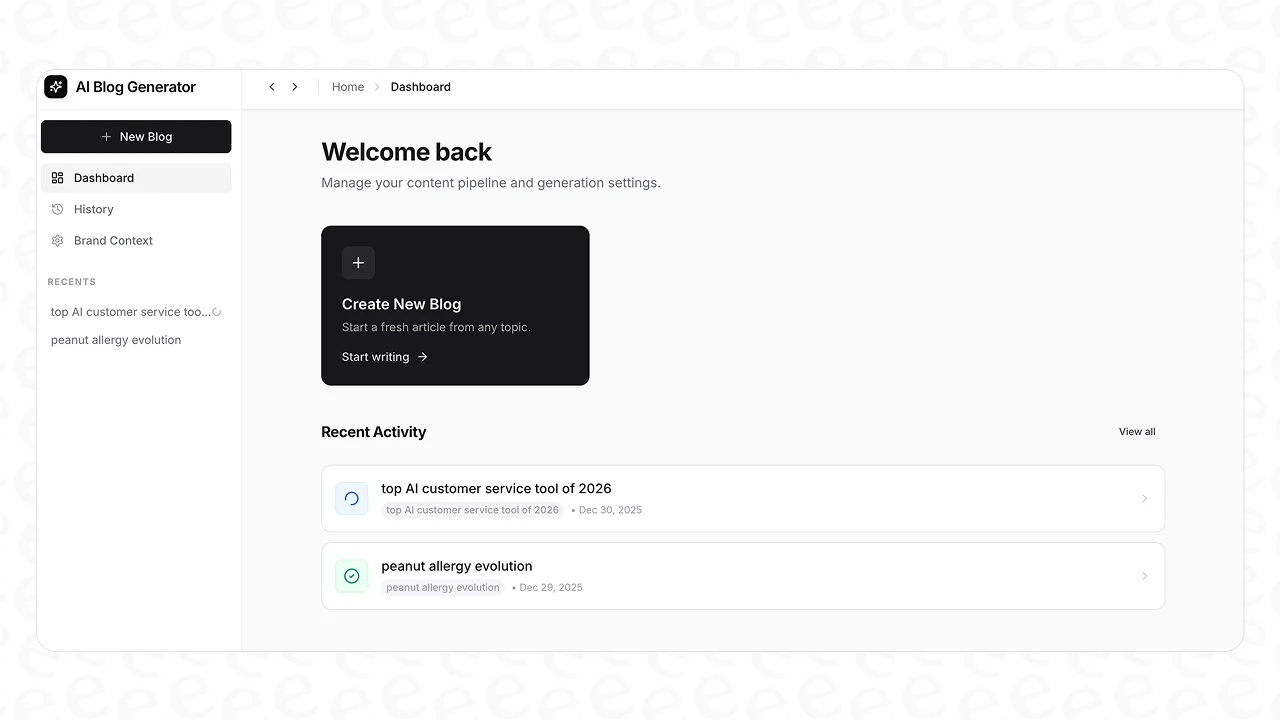
Here’s how it helps you build your brand more efficiently:
- It Captures Your Brand Context: The AI learns from your website to get a feel for your products, messaging, and tone. This lets it weave in product mentions and brand-specific language that sounds natural, not forced.
- It Generates All the Assets Automatically: A good blog post needs more than just words. The eesel AI blog writer automatically creates and includes images, data tables, and other media to make your posts more engaging from the start.
- It Finds Authentic Social Proof: To help you build trust, the tool can find and embed real quotes from Reddit. This adds a human element that most AI-generated content is missing.
There is one major flaw with all 'AI' writers however. The semantic linking profile that it uses is the same across most 'AI' articles. Google can determine this by looking at the top results for your search query and look at how each article is written. You can't determine this unless you know what to look for... If you drop 100 A.I articles on a site then chances are the site won't rank.
- It Handles the Deep Research and Citations: The platform does the tedious research for you. It also automatically adds internal and external links to credible sources, which boosts your post's authority and SEO.
We used this tool to grow our own blog from 700 to 750,000 daily impressions in three months after publishing over 1,000 optimized posts.
Promote your blog to amplify your brand's reach
Publishing your post is just the beginning. You can write the best article in the world, but if no one reads it, it won't do much for your brand. Promotion is how you get your work in front of the right eyeballs.
Here are a few channels to focus on:
- Social Media: While straightforward, it's more than just posting a link. Share your articles on the platforms where your audience actually spends their time, and stick around to join the conversation. You can also repurpose your blog content into smaller formats like Twitter threads or LinkedIn carousels to give it a longer life.
- Email Marketing: Your email list is a valuable asset. It's a direct line to people who have already said they want to hear from you. Use a newsletter to let subscribers know about new posts, share extra insights, and build a loyal following over time.
- Backlink Building: This involves getting other respected sites in your field to link to your content. A great way to do this is by guest posting, which means writing an article for another blog. It sends traffic your way and builds your credibility by association.
| Channel | Effort | Impact on Brand Authority | Best For |
|---|---|---|---|
| Social Media | Low-Medium | Medium | Community Building |
| Email Newsletter | Medium | High | Nurturing Loyalty |
| Guest Posting | High | Very High | Establishing Expertise |
| Internal Linking | Low | Medium | SEO & User Experience |
Seeing these strategies in action can provide a clearer picture. For a deeper dive into how blogging directly contributes to brand growth and helps you connect with your audience, the following video offers some valuable insights from creative professionals.
This video offers valuable insights from creative professionals on how blogging directly contributes to brand growth.
Start building your brand one post at a time
Using your blog to build a brand isn't a quick fix. It’s a long-term play that pays dividends through consistency, real value, and a clear voice. It takes a deliberate approach, from your content strategy all the way to how you promote every article.
While it can be a lot of work, you don't have to do it all manually. Modern tools can take over the time-sucking parts like research and drafting, so you can stay focused on the bigger picture.
The most important thing is to just get started. If you're curious what brand-aligned, publish-ready content looks like, you can generate your first complete blog post for free with the eesel AI blog writer and see the quality for yourself.
Frequently Asked Questions

Share this post
Article by
Kenneth Pangan
Writer and marketer for over ten years, Kenneth Pangan splits his time between history, politics, and art with plenty of interruptions from his dogs demanding attention.