How to set up multi-location business hours in Zendesk

Stevia Putri
Last edited March 2, 2026
Managing a global support team means your customers expect help regardless of what time zone they're in. But if your Zendesk account is still running on a single schedule, you're measuring response times unfairly and potentially routing tickets to teams that aren't even online.
Setting up multi-location business hours in Zendesk lets you define different working periods for different teams, regions, or customer tiers. The challenge? This feature is only available on Enterprise plans, and even then, the setup involves more than just flipping a switch.
Here's exactly how to configure business hours for multiple locations, what to do if you're on a lower-tier plan, and how to avoid the common pitfalls that trip up most Zendesk admins.
Understanding Zendesk's Business Hours Landscape
Before diving into setup, you need to understand what you're working with. Zendesk actually has three different systems that deal with business hours, and they don't talk to each other:
- Zendesk Support Schedules: Control ticket SLAs, automation timing, and trigger conditions
- Zendesk Chat Operating Hours: Manage when your chat widget appears online (configured separately)
- Zendesk WFM Locations/Shifts: Handle agent scheduling and workforce management (requires WFM add-on)
This article focuses on Support Schedules, since that's what most folks mean when they ask about multi-location business hours.
Here's the critical limitation: multiple schedules are only available on Enterprise plans. On Growth, Professional, or Support Professional, you get exactly one schedule. Period.
| Plan | Schedule Limit |
|---|---|
| Suite Growth | 1 schedule |
| Suite Professional | 1 schedule |
| Support Professional | 1 schedule |
| Enterprise | Unlimited schedules |
Source: Zendesk help documentation
If you're on a single-schedule plan and need multi-location functionality, you've got three options: creative workarounds (covered later), upgrading to Enterprise, or adding an AI layer that handles routing intelligently without relying on schedule conditions. Tools like eesel AI can help fill some of these gaps by handling intent-based routing rather than time-based routing.
Setting Up Your First Schedule
Before you can use multiple schedules (or work around not having them), you'll need to know how to create a basic schedule. Here's the process on any Professional+ plan.
What you'll need:
- Admin access to your Zendesk account
- Professional plan or higher
Step 1: Navigate to the Schedules Page
Go to Admin Center > Objects and rules > Business rules > Schedules.
Step 2: Create a New Schedule
Click Add schedule. Give it a clear, descriptive name like "Support Team - US East" or "APAC Customer Success." Select the appropriate time zone. This time zone setting is crucial; it determines when your business hours actually occur relative to your customers.
Step 3: Configure Weekly Business Hours
In the Weekly schedule section, you'll see a visual interface with time blocks for each day. You can drag time blocks to adjust start and end times, extend or shrink blocks in 15-minute increments, remove hours by clicking the X, or add hours to a closed day by clicking anywhere on that row.
Important constraints to remember:
- Each interval must be at least one hour long
- You can't have intervals that cross midnight. If your hours span midnight (like 10 PM to 6 AM), you need to create two separate intervals
Step 4: Add Holidays
Click the Holidays tab, then Add holiday. Give it a name and select start and end dates. You can schedule holidays up to two years in advance, and they can span multiple days.
Note: Holidays cover full calendar days, not just your business hours. If Monday is a holiday, it's considered a holiday for the entire 24-hour period. You cannot set partial-day holidays.
Step 5: Save Your Schedule
Click Save. Your schedule is now active and will be used for all business hours calculations in your account.
Creating Multiple Schedules on Enterprise Plans
If you're on Enterprise, you can create unlimited schedules. Here's how to use them effectively.
The first schedule you create becomes your default schedule. It applies to all tickets unless you specifically assign a different one. To assign different schedules to different tickets, you'll need to use triggers.
Setting Up Triggers for Schedule Assignment
- Create your additional schedules following the same process above
- Go to Admin Center > Objects and rules > Business rules > Triggers
- Click Add trigger
- Set conditions that determine which tickets get which schedule
- Add the action Ticket: Set schedule and select the appropriate schedule from the dropdown
Common trigger conditions include:
- Brand is X (for multi-brand setups)
- Group is Y (for team-based routing)
- Organization tags (for VIP customer tiers)
Real-World Example: Three-Region Setup
Let's say you have support teams in New York, London, and Singapore. You'd create three schedules:
- "US East - New York" (America/New_York timezone, 9 AM - 6 PM EST)
- "EU Central - London" (Europe/London timezone, 9 AM - 6 PM GMT)
- "APAC - Singapore" (Asia/Singapore timezone, 9 AM - 6 PM SGT)
Then create triggers that assign schedules based on customer location or ticket source. A ticket from a German customer might get the London schedule, while a ticket from Australia gets the Singapore schedule.
Real-World Example: VIP Customer Tier
For VIP customers who pay for 24/7 support:
- Create a "VIP - 24/7" schedule that's always open
- Tag your VIP customer organizations appropriately
- Create a trigger: "If Organization tags contains 'vip', set schedule to 'VIP - 24/7'"
This ensures VIP tickets are measured against 24-hour SLAs while standard tickets follow business-hour SLAs.
Integrating Business Hours with SLAs and Automations
Once you've got schedules set up, you can leverage them across your Zendesk workflow.
Using Business Hours in SLA Policies
When creating an SLA policy, you can set Hours of operation to either Business hours or Calendar hours. For most teams, business hours is the right choice because it sets realistic expectations based on when you're actually working.
If you have multiple schedules on Enterprise, each ticket uses the schedule applied to it. This means your European customers can have SLA targets based on European business hours while US customers follow US hours, even if the same team handles both.
Automation Conditions
Zendesk provides several schedule-aware conditions for automations:
- Hours since created/open/pending/etc. (business) - Calculates time only during your business hours
- Ticket: Within business hours? - Yes/No based on when the ticket event occurred
- Ticket: On a holiday? - Yes for the full calendar day of any scheduled holiday
These are powerful for time-based workflows. For example, you can auto-solve pending tickets after 48 business hours of customer inactivity, or escalate urgent tickets that come in outside business hours.
Common Pitfalls to Avoid
- The "is" condition timing issue: Using "Hours since solved is 24" is unreliable because automations run on an hourly cycle and might miss the exact moment. Always use "Greater than" instead.
- Missing nullifying conditions: Without a way to prevent repeated execution, your automation will run every hour on every matching ticket. Always include a tag-based nullifier.
- The 28-day limitation: "Hours since" conditions can't look back more than 672 hours (28 days). Automations won't fire for ancient tickets.
- Closed ticket immutability: Once a ticket is Closed, automations can't modify it.
For more on combining business rules with schedule conditions, check out our guide to Zendesk business rules schedule conditions.
Workarounds for Single Schedule Limitations
If you're on Growth or Professional and need multiple schedule functionality, you've got a few options before upgrading to Enterprise.
Workaround 1: Creative Trigger Conditions
You can simulate multiple schedules using time-based triggers. For example:
- Create triggers that check the current time and assign tickets to different groups based on hour ranges
- Use tags to mark tickets that came in during specific time windows
- Combine "Within business hours?" conditions with other criteria to approximate schedule-based routing
This isn't as clean as true multiple schedules, but it can handle basic routing needs.
Workaround 2: Multiple Groups with Views
Instead of trying to manage everything through schedules, organize your workflow around groups:
- Create separate groups for each team/region
- Use views filtered by group plus time conditions to show agents only the tickets they should handle
- Set up triggers to assign tickets to the right group based on criteria other than schedule
Workaround 3: AI-Powered Routing
This is where we come in. Instead of relying solely on time-based rules, you can use AI to route tickets based on their content:
- Our AI Triage can automatically tag, route, and prioritize tickets based on what the customer is actually asking about
- Intent-based routing doesn't care about schedules; it sends tickets to the right team based on issue type, sentiment, and urgency
- You define escalation rules in plain English (like "If the refund request is over 30 days, escalate to billing")
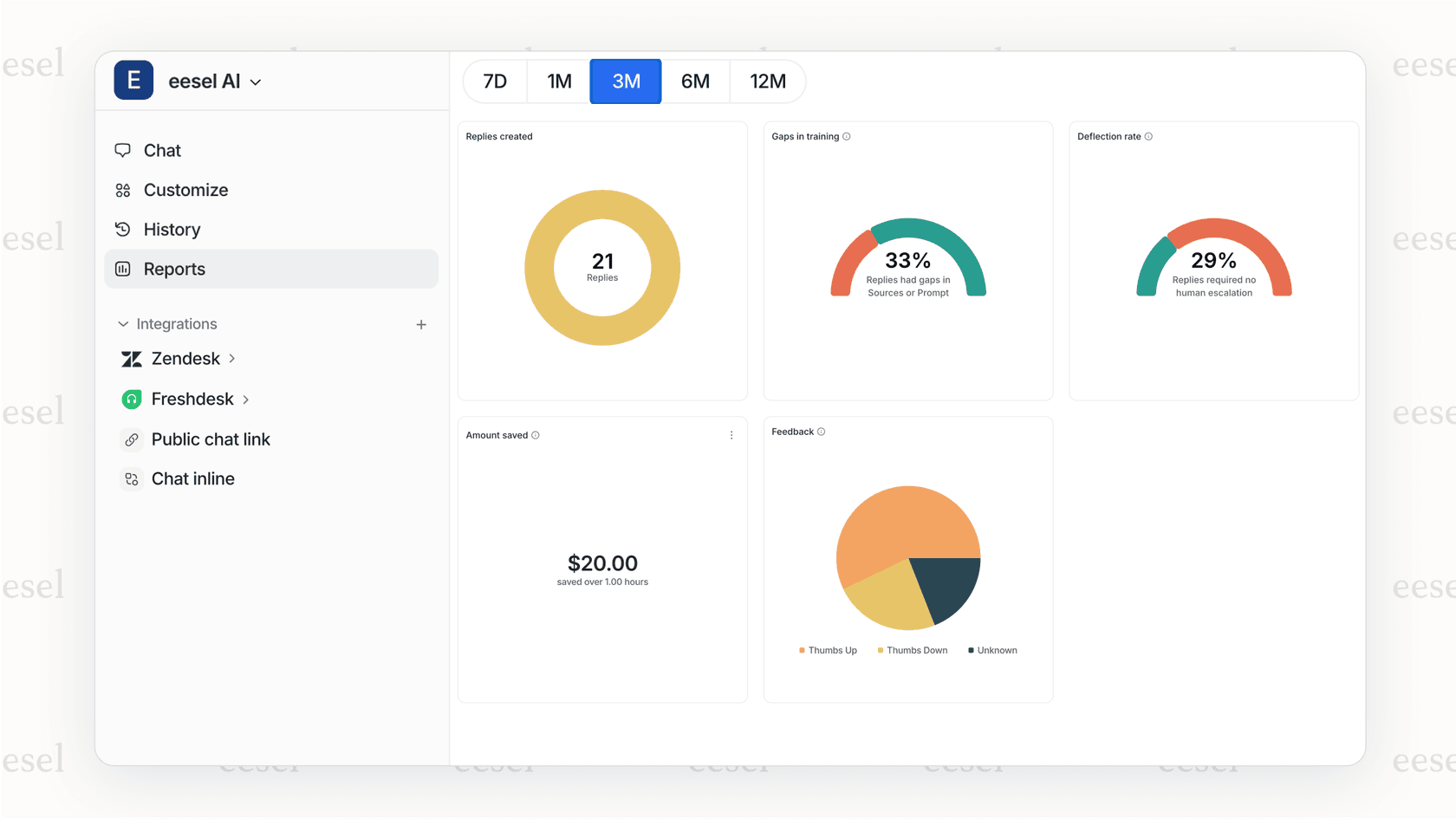
This approach complements Zendesk's scheduling rather than replacing it. Your schedules handle "when," and AI handles "what."
When to Upgrade to Enterprise
Sometimes the workarounds aren't enough. Here are signs you genuinely need multiple schedules:
- You're managing multiple brands with significantly different operating hours
- You have global team coverage and need accurate SLA tracking across time zones
- You offer different service tiers (like VIP 24/7 support vs. standard business hours)
- You need complex holiday calendars by region
If you're hitting these limits regularly, the Enterprise upgrade might be worth it. But we'd suggest considering alternatives first:
- Process adjustments: Can you restructure your groups or workflows to work within a single schedule?
- AI automation: eesel AI's pricing starts at $299/month, which might solve your routing problems without a full Zendesk upgrade
- Third-party integrations: Some workforce management tools can integrate with Zendesk to handle complex scheduling
The math depends on your specific situation. If you're on Professional and considering Enterprise primarily for multiple schedules, weigh the upgrade cost against what an AI layer could accomplish instead.
Troubleshooting Common Issues
Even with proper setup, things can still go wrong. Here are the most common problems and how to fix them.
Automation Not Firing
If your schedule-based automation isn't working:
- Check that you're using "Greater than" not "is" for time conditions
- Verify you have a nullifying condition to prevent repeated execution
- Confirm the ticket isn't already Closed (automations can't modify closed tickets)
- Check that the ticket has a schedule assigned (on Enterprise)
SLA Breaches During Holidays
Remember that holidays cover full 24-hour days. If you have a 4-hour SLA and a ticket comes in at 11 PM the night before a holiday, it might breach before the holiday officially starts depending on your exact configuration.
Timezone Confusion
Zendesk stores times in UTC internally. When you see "Time of call" in ticket notes, it's in UTC. Your schedules use the timezone you configured, but reporting can be confusing if you're not aware of the UTC conversion happening behind the scenes.
Chat vs. Support Hours Mismatch
This trips up almost everyone. Your Zendesk Support schedule has nothing to do with your Zendesk Chat operating hours. They're configured in completely different places. If your chat widget shows offline but your agents are working tickets, you've probably configured Support hours but not Chat hours.
Schedule Not Applying
If tickets aren't getting the right schedule:
- Check trigger order (triggers fire sequentially, and an earlier trigger might be overriding yours)
- Verify your trigger conditions are actually matching (test with a sample ticket)
- Confirm the ticket isn't being created with a schedule already assigned
Streamlining Multi-Location Support with eesel AI
Zendesk's business hours feature handles the "when" of your support operation. It defines when your team is available and helps you measure performance against realistic timeframes. But it doesn't handle the "what" (what's in the ticket, what the customer needs, what action to take).
That's where we come in. eesel AI integrates directly with Zendesk to add intelligent, content-based automation on top of your time-based rules:
- Our AI Agent can handle frontline support autonomously, escalating only what you define
- AI Triage tags, routes, and prioritizes based on ticket content, not just metadata
- You define behavior in plain English, not complex trigger conditions
Think of it this way: Zendesk schedules make sure tickets are handled during working hours. eesel AI makes sure the right tickets get to the right people based on what customers are actually asking. Together, they create a complete automation strategy that covers both timing and intent.
If you're already using Zendesk business rules and schedule conditions, adding an AI layer can help you handle the edge cases and exceptions that rules alone can't address. You can see eesel in action or check out our existing guide on Zendesk business hours for more on combining time-based and AI-powered automation.


Frequently Asked Questions
Share this article

Article by
Stevia Putri
Stevia Putri is a marketing generalist at eesel AI, where she helps turn powerful AI tools into stories that resonate. She’s driven by curiosity, clarity, and the human side of technology.