How to convert Zendesk email to chat: A complete guide for 2026

Stevia Putri
Last edited March 5, 2026
Have you ever had a customer start a conversation on your website chat, then disappear before you could respond? Maybe they closed their browser, got distracted, or simply didn't want to wait in a queue. When they come back later, they often have to start over, repeating information they've already shared. It's frustrating for them and inefficient for your team.
Zendesk's continuous conversations feature solves this problem by bridging the gap between chat and email. When a customer abandons a messaging conversation, the system automatically sends them an email notification when you respond. They can continue the conversation via email or return to the website, all within the same ticket thread.
In this guide, I'll walk you through exactly how to set up Zendesk email to chat functionality. We'll cover the requirements, configuration steps, and best practices to ensure a smooth experience for both your customers and agents.

What you'll need to get started
Before you can enable continuous conversations, make sure you have the following in place:
- Zendesk Suite OR Support + Chat on a Team plan or higher. The feature isn't available on the basic Support Team plan alone.
- Agent Workspace activated. This unified interface is required for continuous conversations to work properly.
- At least one agent with Chat access. You'll need someone who can handle messaging conversations. See Zendesk's staff roles documentation for details on assigning Chat permissions.
- A configured support email address. This is where the continuous conversation notifications will come from.
- Understanding of messaging vs chat. This distinction matters more than you might think.
If you're not sure whether your current setup supports continuous conversations, check your plan details in the Admin Center. See Zendesk's pricing page for plan comparisons. You can also explore how eesel AI integrates with Zendesk to extend these capabilities even further.
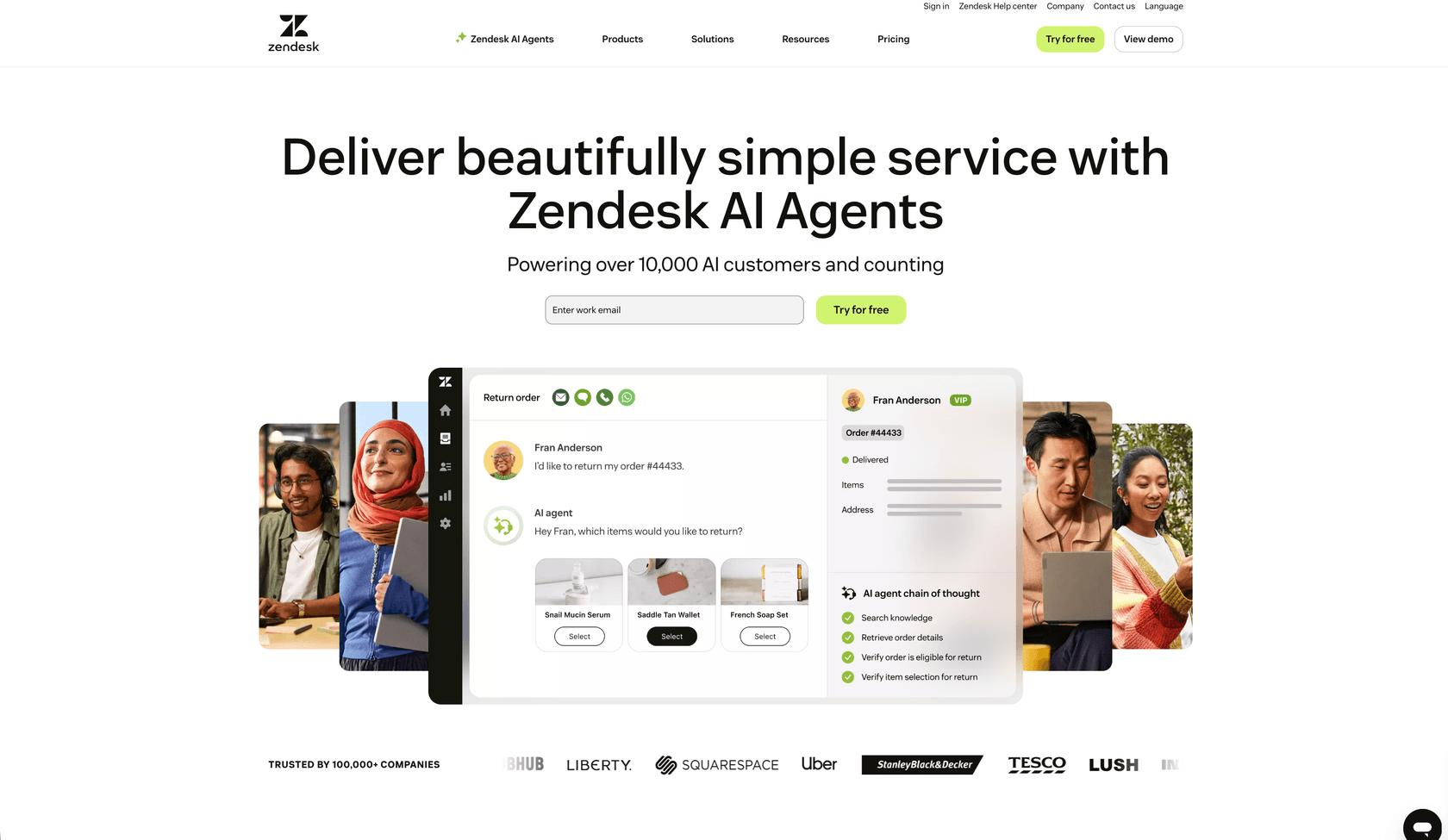
Step 1: Understand the difference between chat and messaging
Here's where many people get confused. Zendesk has two different conversation products, and only one supports continuous conversations.
Zendesk Chat is the legacy product. It's session-based and real-time. If a customer closes their browser, the conversation ends. When they return, they start fresh with no history. Think of it like a phone call: once you hang up, it's over.
Zendesk Messaging is the modern replacement. It's persistent and asynchronous, more like WhatsApp or Facebook Messenger. Customers can leave and return to conversations without losing context. The conversation history stays intact across sessions and devices.
Continuous conversations only works with Zendesk Messaging. If you're still using the legacy Chat product, you'll need to upgrade first. Zendesk has been actively migrating customers to Messaging, so you might already be using it without realizing.
To check which version you have, look at your widget. Messaging widgets typically have a more modern interface with conversation history visible. You can also check your Admin Center: if you see "Messaging" settings, you're on the new platform.
For a deeper dive into Zendesk's omnichannel capabilities, check out our guide on Zendesk omnichannel support. You can also review Zendesk's Agent Workspace documentation for setup details.
Step 2: Enable continuous conversations in Admin Center
Once you've confirmed you're using Zendesk Messaging, enabling continuous conversations is straightforward.
Navigate to Admin Center > Objects and rules > Tickets > Settings. Scroll down to find the Continuous conversations section and click to expand it.
You'll see a checkbox labeled "Switch messaging conversations to email." Select it and save your settings.
When you activate this feature, Zendesk automatically creates a trigger called "Request email for continuous conversations." This trigger runs after a conversation has been idle for 5 seconds and sends a request for the customer's email address. You can find and modify this trigger in the Messaging triggers page if you need to.
If you already collect email addresses at the start of conversations, you might want to deactivate this trigger to avoid duplicate requests. But for most setups, leaving it active ensures you capture email addresses from customers who haven't provided them yet.
For detailed navigation tips, see our guide on how to navigate Zendesk's Admin Center. See also Zendesk's continuous conversations documentation for official setup instructions.
Step 3: Configure the email request trigger
The auto-created trigger handles most of the work, but you should understand how it functions and when to adjust it.
The "Request email for continuous conversations" trigger activates when a conversation has been idle for 5 seconds. It sends a message asking the customer for their email address so they can receive notifications when you respond.
When to keep it active:
- You don't currently collect email addresses at the start of conversations
- You want to maximize the number of customers who can receive email follow-ups
- Your abandonment rate is high and you want to recover those conversations
When to deactivate it:
- You already have a pre-chat form collecting email addresses
- You're using another method to capture customer contact information
- You find the additional prompt creates friction in the conversation flow
To modify the trigger, go to Admin Center > Objects and rules > Business rules > Messaging triggers. Find "Request email for continuous conversations" and adjust the conditions or actions as needed.
Test the trigger behavior by starting a test conversation and letting it sit idle. You should see the email request appear after the configured timeout.
Step 4: Test the end-to-end experience
Before rolling this out to customers, run through a complete test to make sure everything works as expected.
Start by opening your website and initiating a conversation through the messaging widget. Type a message as if you were a customer asking for help.
Now abandon the conversation by closing your browser tab or navigating away. Wait a few minutes (the exact timing depends on when the conversation is deemed inactive, which varies based on your settings).
Check your email. You should receive a notification from your Zendesk support address with the agent's response. The email includes the number of unread messages, a snippet of the conversation, and instructions for continuing.
Reply to the email directly. Then log into your Zendesk Agent Workspace and verify that your email response appears in the conversation thread, clearly marked as having been sent via email.
Finally, return to your website and open the messaging widget again. You should see the full conversation history, including your email reply.
If any step doesn't work as expected, double-check your email configuration and trigger settings.
Best practices for email-to-chat workflows
Now that you have continuous conversations enabled, here are some tips to get the most out of it.
Know when to use continuous conversations vs side conversations. Continuous conversations are customer-facing: they let customers switch between chat and email. Side conversations are agent-facing: they let your team collaborate internally or with external partners via email or Slack from within a ticket. Don't confuse the two.
Set clear expectations in your messaging widget. Let customers know they can leave and come back, or that they'll receive an email if they close the browser. This reduces anxiety about losing their place in line.
Watch out for duplicate notifications. If you're using the out-of-office message trigger, you might want to deactivate it when using continuous conversations. Both triggers can send emails to customers, creating confusion.
Train your agents on the unified view. Agents should know that responses might come via email or messaging, and both will appear in the same conversation thread. The channel indicator shows which method the customer used.
Monitor your conversation abandonment rates. Continuous conversations should reduce the number of completely abandoned chats. Track this metric to measure the impact of the feature.
For more on side conversations and when to use them, see our guide on Zendesk side conversations via email or Slack. Note that side conversations require a Suite Professional plan or higher.
Common issues and troubleshooting
Even with proper setup, you might encounter some issues. Here's how to handle the most common ones.
Email notifications not sending. Check that the associated ticket status isn't Closed. Continuous conversations won't send emails for closed tickets, even if there are unread messages. They will send for Solved tickets, though.
Conversations not threading properly. Make sure the customer's email address in the messaging conversation matches the email they're replying from. If they use different email addresses, Zendesk might create separate tickets.
Mobile limitations. Remember that continuous conversations only works with the Web Widget, not mobile devices. If your customers primarily use mobile apps, this feature won't help them.
Accented characters in email addresses. Zendesk doesn't support accented characters in email addresses for continuous conversations. If a customer has an email like "josé@example.com," they won't be able to use this feature. See Zendesk's continuous conversations help article for the full list of limitations.
When to escalate to Zendesk support. If you've verified your configuration and the feature still isn't working, contact Zendesk support. They can check backend settings that aren't visible in your Admin Center.
Enhancing Zendesk with AI automation
Zendesk's continuous conversations solve the channel-switching problem, but you can take your support automation even further with AI.
At eesel AI, we've built an AI teammate that integrates directly with Zendesk to handle the heavy lifting before conversations even reach your agents. Here's how we complement Zendesk's native features:
AI Agent for frontline support. Our AI Agent can handle common questions immediately, escalating only complex issues to your human team. This reduces the volume of conversations that need continuous conversation follow-ups in the first place.
AI Triage for smart routing. When a conversation does need human attention, our AI Triage automatically tags, prioritizes, and routes it to the right team based on the content. This means faster responses when customers do come back via email.
Continuous learning. The AI learns from every interaction, improving its responses over time. It analyzes your past tickets and help center articles to understand your business and communicate in your brand voice.
Setting up the integration takes minutes, not weeks. Connect your Zendesk account, and the AI immediately starts learning from your existing data. You can run simulations on historical tickets to see how it performs before going live.
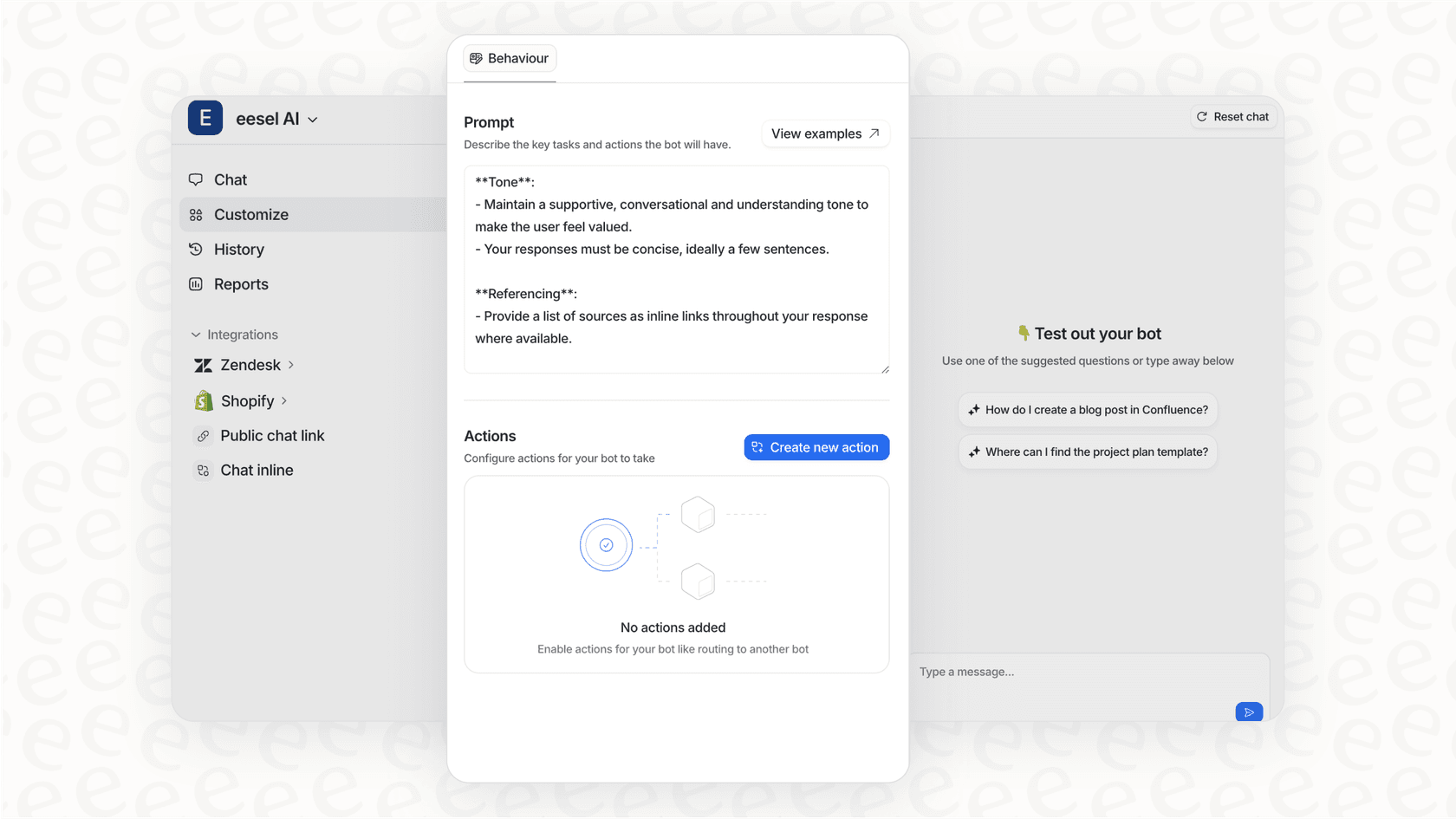
Learn more about our AI Agent or explore our customer support automation solutions.
Start using Zendesk continuous conversations today
Zendesk's continuous conversations feature bridges the gap between real-time chat and asynchronous email support. By letting customers continue conversations via email when they abandon the messaging widget, you reduce friction and improve the overall support experience.
Let's recap what you need to implement this:
- Zendesk Suite or Support + Chat on Team plan or higher
- Agent Workspace activated
- Messaging (not legacy Chat) enabled
- A few minutes to configure the settings in Admin Center
Once enabled, test the workflow thoroughly before announcing it to customers. Train your agents on how the unified conversation view works, and monitor your abandonment rates to measure success.
If you're looking to take your Zendesk automation further, consider adding AI to handle routine inquiries before they ever reach a human agent. Our Zendesk integration gets you up and running in minutes, with an AI that learns your business and communicates in your voice.
Ready to reduce response times and improve customer satisfaction? Start with continuous conversations, then layer on AI automation to handle the conversations that don't need human attention at all.


Frequently Asked Questions
Share this article

Article by
Stevia Putri
Stevia Putri is a marketing generalist at eesel AI, where she helps turn powerful AI tools into stories that resonate. She’s driven by curiosity, clarity, and the human side of technology.
