Zendesk automation order priority: a complete guide for 2026

Stevia Putri
Last edited February 24, 2026
When your urgent tickets sit in the queue for hours because a trigger fired in the wrong sequence, you quickly realize that automation order isn't just an admin detail. It's the difference between a smooth workflow and chaos.
Understanding Zendesk automation order priority matters because it determines which rules fire when, and more importantly, whether the actions from one rule affect the next. Get the order wrong and you'll have triggers overwriting each other's changes, automations firing unexpectedly, and tickets that fall through the cracks entirely.
This guide breaks down how Zendesk processes your business rules, why the sequence matters, and how to organize your setup for predictable results. We'll also look at how eesel AI can complement your existing triggers when rule-based automation starts hitting its limits.
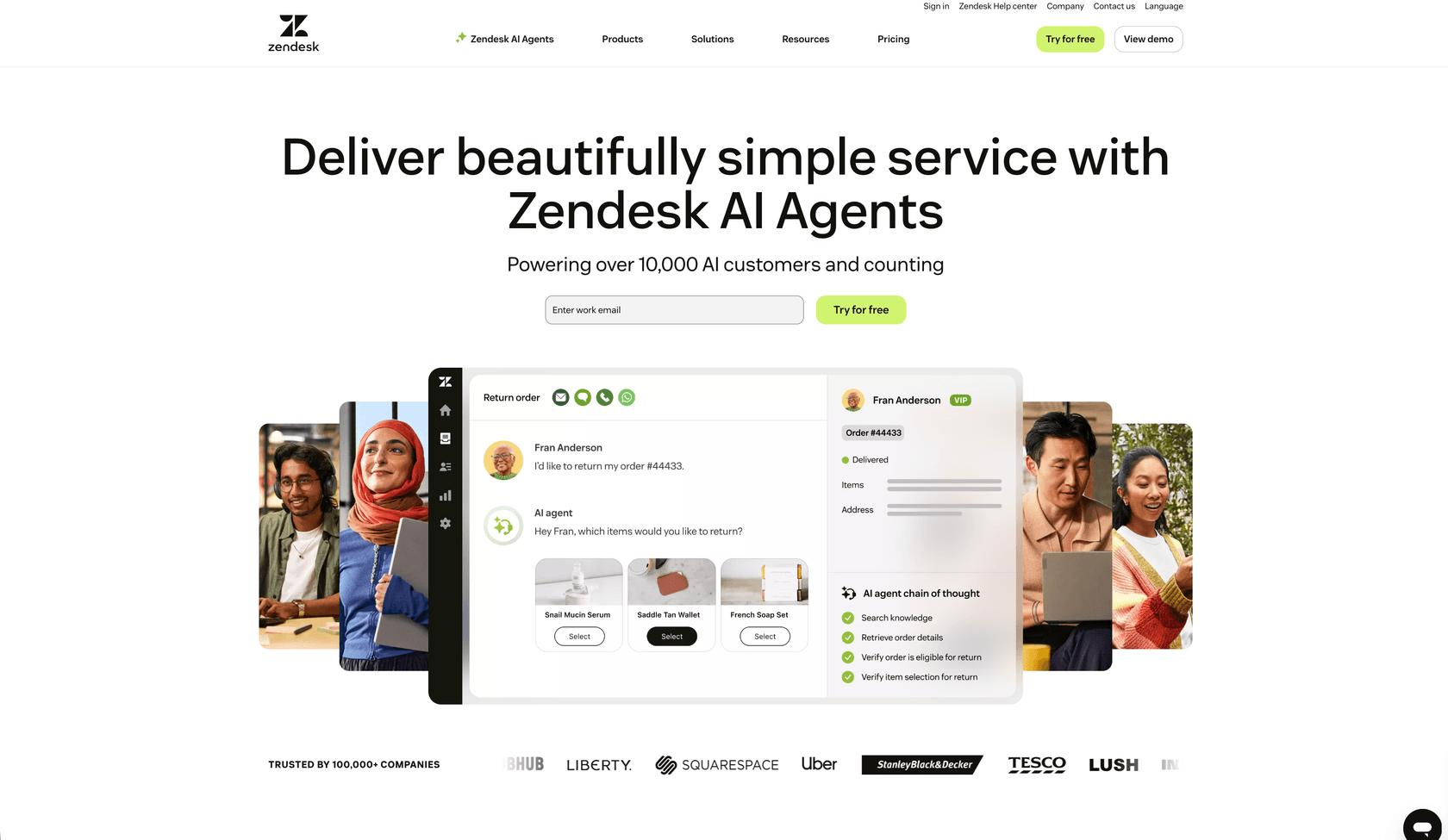
How Zendesk processes automations and triggers
Before diving into order and priority, let's clarify the two types of business rules in Zendesk. They work differently, and that difference shapes how you should organize them.
Triggers are event-based. They fire immediately when a ticket is created or updated. When a customer submits a request, Zendesk checks every trigger in sequence from top to bottom. If a trigger's conditions match, it executes its actions right then. This happens in real-time, before the ticket ever reaches an agent's view.
Automations are time-based. They run once every hour on all non-closed tickets, checking whether their conditions are met. Unlike triggers, they don't respond to immediate events. Instead, they watch for time-based criteria like "hours since pending is 24" or "hours until SLA breach is 2."
Here's where order gets interesting. Both triggers and automations execute from top to bottom based on their position in the Admin Center list. But with automations, there's a cascading effect that's easy to miss.
Let's say you have three automations running in this order:
- Automation #1: If status is pending greater than 48 hours, notify assignee
- Automation #2: If status is pending greater than 48 hours, change priority to High
- Automation #3: If priority is High, notify escalation group
When the automation cycle runs, #1 fires first and sends the notification. Then #2 fires and changes the priority to High. Now here's the key: when #3 runs in that same hour, it sees the updated priority from #2 and fires too. The actions of one automation affected another automation in the same cycle.
This cascading behavior is powerful when you understand it. But it creates confusion when you don't expect earlier automations to change the conditions for later ones. That's why thinking through your automation order priority matters from the start.
The SANE framework for organizing automation order
After setting up hundreds of Zendesk instances, consultants have developed frameworks for organizing business rules. The SANE framework (Sort, Assign, Notify, Escalate) provides a logical sequence that prevents conflicts and makes your setup easier to maintain.
Sort (categorization and defaults)
Your first triggers should establish what the ticket is about. This includes setting default values for fields that everything else depends on.
Start with triggers that:
- Set default priority (usually Normal) if none is specified
- Set default ticket type (usually Question)
- Apply your business schedule for SLA calculations
- Categorize based on keywords, requester organization, or channel
Why this comes first: downstream triggers and automations depend on these values. If you try to route based on priority before priority is set, your routing logic fails. If you set priority after routing, your SLA calculations might be wrong.
Our guide on how to set Zendesk trigger priority by keyword covers the categorization step in detail.
Assign (routing to teams)
Once tickets have their basic properties set, the next phase handles assignment. It's where tickets get routed to the right groups or agents based on what you determined in the Sort phase.
Triggers in this phase:
- Assign to groups based on category or form
- Apply skills-based routing if you're using that feature
- Set the auto-routing tag if you're using omnichannel routing
The key principle here is that assignment should happen after categorization but before notifications. You want to know who will handle the ticket before you start sending alerts about it.
Notify (communications)
Only after tickets are categorized and assigned should you send notifications. This sequence ensures that notification triggers have access to all the ticket properties they might reference.
Common notification triggers:
- Auto-replies to customers with relevant help center articles
- Confirmation emails for ticket creation
- Alerts to assigned agents
- Updates to external systems via webhooks
Placing notifications last in your trigger order prevents situations where you notify the wrong group because the assignment trigger hasn't run yet.
Escalate (time-based actions)
Escalations happen through automations, not triggers, because they're time-based. These run hourly and handle:
- Reminders for pending tickets
- Escalation when SLAs are about to breach
- Auto-closure of solved tickets after a waiting period
- Follow-up notifications for unresolved issues
Automations should follow the same logical progression as triggers. Your escalation automations will work more predictably if your trigger setup has already categorized and assigned tickets correctly.
ALL vs ANY: understanding automation conditions
The logic inside your triggers and automations matters as much as their order. Zendesk gives you two condition sections, and understanding how they interact prevents common mistakes.
The ALL section uses AND logic. Every condition you add here must be true for the trigger to fire. If you have three conditions in ALL, and only two match, nothing happens.
The ANY section uses OR logic. At least one condition here must be true, but they don't all need to match. It's useful when you want to catch multiple scenarios with the same action.
Here's the part that trips people up: Zendesk processes these sections as (ALL conditions) AND (ANY conditions). The ALL section and ANY section work together, not independently.
For example, if you have:
- ALL: Ticket is Created, Priority is Normal
- ANY: Subject contains "refund", Subject contains "billing", Subject contains "payment"
The trigger only fires if the ticket is newly created AND has Normal priority AND has at least one of those keywords in the subject. The ALL conditions set the baseline requirements. The ANY conditions add flexibility within those requirements.
A common mistake is trying to use ANY for completely unrelated conditions. You might want to catch tickets that are either about refunds OR come from VIP customers. But if you put "Subject contains refund" and "Organization is VIP" in the same ANY section, you create a problem. A ticket from a non-VIP customer about a refund would match. But so would a VIP customer asking about anything else entirely. The ANY section only requires ONE condition to match, not the specific combination you intended.
The solution is separate triggers for separate purposes. One trigger for refund-related tickets. Another trigger for VIP customers. Each with its own focused logic.
Also worth noting: Zendesk requires at least one condition in the ALL section. You can't create a trigger with only ANY conditions.
Best practices for automation order priority
Beyond the SANE framework, several principles help keep your automation setup maintainable and effective.
One trigger does one job. It's tempting to bundle related actions into a single trigger. A trigger that sets priority, assigns to a group, adds tags, and sends a notification seems efficient. But when you need to change one of those actions six months later, you risk breaking the others. Single-purpose triggers are easier to troubleshoot and modify.
Use nullifying conditions to prevent loops. Triggers can create infinite loops if you're not careful. A trigger that fires on "Ticket is Updated" and then updates the ticket will trigger itself again. Prevent this by adding conditions that exclude tickets that have already been processed. Common approaches include checking for specific tags ("priority-set") or status values that indicate the trigger already ran.
Set defaults before categorization. Before you try to categorize tickets by keywords or source, make sure basic fields have values. A default priority trigger should run before your keyword-based priority triggers. This ensures every ticket has a priority value, even if your categorization logic misses something.
Test before activating. Zendesk's trigger preview shows which existing tickets would match your conditions. Use this to catch logic errors. Then create a test ticket that matches your conditions and verify the trigger fires as expected. Check the ticket's event log to confirm which triggers ran and what actions they took.
Document your logic. Maintain a simple spreadsheet mapping triggers to their purposes, conditions, and actions. When you have dozens of triggers, this documentation becomes essential for onboarding new admins and troubleshooting issues. Include notes about why certain triggers exist and what business problem they solve.
Review monthly. Zendesk shows which triggers have fired recently. Check this data to identify triggers that never fire (potential candidates for deletion) and triggers that fire constantly (potential candidates for optimization). Your workflow needs change over time, and your triggers should reflect current priorities.
Common automation order problems and solutions
Even with good organization, specific problems come up repeatedly. Here's how to recognize and fix them.
Conflicting triggers overwriting each other's changes. You have Trigger A setting priority to High, and Trigger B setting priority to Normal. Both conditions match, so both fire. The last one in the execution order wins, which might not be what you intended.
The fix is either consolidating these into a single trigger with more specific logic, or carefully ordering them so the more specific trigger runs last. If Trigger B is your "VIP customers get High priority" rule, make sure it runs after your default priority rules.
Automations firing in unexpected sequences. You set up an automation to notify managers when priority becomes High, but it's not firing. The issue might be that your "change priority to High" automation runs after your "notify on High priority" automation in the list. Remember that automations see state changes from earlier in the same hour.
The fix is reviewing your automation order. The automation that changes properties should run before the automation that reacts to those changes.
Rules not firing at all. You created a trigger but it never seems to work. The most common cause is ALL conditions not being fully met. Check that field values match exactly, including case sensitivity for tags and exact spelling for custom field values. Also verify that your trigger is active and positioned correctly in the list.
Performance issues with many rules. If your Zendesk instance has hundreds of triggers, ticket creation and updates can slow down. Each trigger takes time to evaluate, even when its conditions don't match.
The fix is regular cleanup. Deactivate triggers that haven't fired in months. Merge triggers with identical actions but different conditions using the ANY section. Consider whether some triggers could become automations instead, since those run hourly rather than on every ticket update.
When to consider AI-powered triage with eesel AI
Rule-based automation works well for known patterns. If a ticket subject contains "refund," route to Billing. If the requester is in the VIP organization, set High priority. These are deterministic rules. They work or they don't.
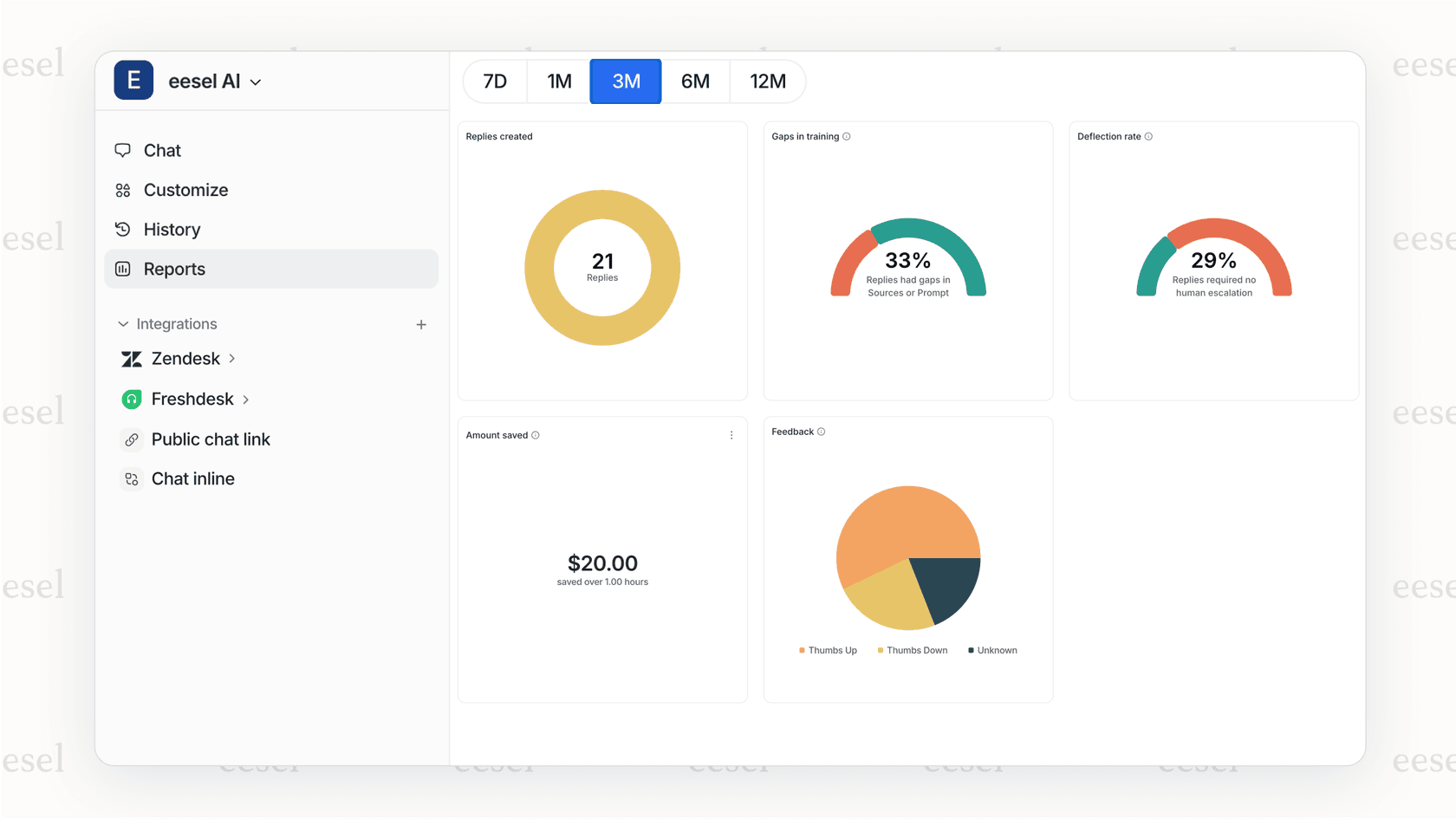
But real support isn't always that clean. Customers describe problems in different ways. Urgency depends on context that keywords can't capture. The customer who writes "I can't log in and my boss needs this report today" needs urgent attention even though they didn't use the word "urgent."
AI-powered triage becomes valuable here. Instead of writing explicit rules for every scenario, you train AI on your past tickets. It learns patterns you might not even realize exist.
We built eesel AI to work alongside your existing Zendesk triggers. You don't have to replace your automation setup. Start with rules for clear-cut scenarios. Add AI where the complexity grows. Over time, you might find that AI handles more of your triage while your triggers focus on specific business logic.
The difference? Rules follow instructions. AI learns from outcomes. If you're interested in exploring how this works, our practical guide to AI and automation in customer support covers implementation strategies that actually work.
Optimizing your Zendesk automation order priority
Getting your automation order right isn't a one-time setup. It's an ongoing practice of organizing, testing, and refining.
The key principles to remember:
- Both triggers and automations execute top-to-bottom
- Actions from earlier rules affect conditions for later rules in the same cycle
- Organize using the SANE framework: Sort, Assign, Notify, Escalate
- Keep triggers focused on single purposes
- Use nullifying conditions to prevent loops
- Document your logic for future maintainers
If your current setup has grown organically over time, consider doing a quarterly review. Check which triggers fire regularly and which ones have gone silent. Look for opportunities to consolidate similar triggers or split complex ones into simpler components. Test any changes in a sandbox environment before applying them to production.
And when your rule-based automation starts feeling like you're playing whack-a-mole with edge cases, that's a sign you might benefit from AI assistance. Try eesel AI free or book a demo to see how intelligent prioritization works alongside your existing Zendesk automation order priority setup.

Frequently Asked Questions
Share this article

Article by
Stevia Putri
Stevia Putri is a marketing generalist at eesel AI, where she helps turn powerful AI tools into stories that resonate. She’s driven by curiosity, clarity, and the human side of technology.
