A practical guide to well-researched blog writing

Stevia Putri

Katelin Teen
Last edited January 20, 2026
In a world overflowing with AI-generated text, truly credible blog posts are the ones that actually get noticed. They build trust with your readers, earn authority with search engines, and ultimately, help you rank higher. Let's face it, generic content just doesn't cut it anymore.
But here's the problem. Manually researching, writing, and sourcing assets is a huge time sink, stopping content teams from scaling up. On the other hand, many generic AI tools may require significant editing and fact-checking, often producing a first draft that needs substantial revision.
What is well-researched blog writing?
Well-researched blog writing is the process of finding, checking, and gathering information to create content that is credible, thorough, and gives readers exactly what they're looking for. It’s about providing real value and completely answering a reader’s question, not just rehashing what’s already on the first page of Google.
You can think of it as having three key pillars:
- Credibility: Using sources you can trust, citing real data, and including expert opinions to back up what you're saying.
- Depth: Going beyond the basics to offer advice people can actually use, nuanced details, and a unique point of view.
- Originality: Adding your own experience, a fresh analysis, or a new angle that people won't find anywhere else.
An infographic detailing the three pillars of well-researched blog writing: credibility, depth, and originality.
This approach is vital for both SEO (Search Engine Optimization) and AEO (Answer Engine Optimization). Search engines give a lot of weight to content that shows what Google calls E-E-A-T: Experience, Expertise, Authoritativeness, and Trustworthiness. Well-researched posts build your authority on a topic and are much better prepared for both traditional search and the new wave of AI Answer Engines like Google AI Overviews.
The traditional process of well-researched blog writing
Step 1: Exploring ideas
This first stage is all about discovery. You're brainstorming topics and using tools like Google Keyword Planner or Ahrefs to figure out what people are actually searching for, how often, and what they expect to find.
The main headache here is that this initial phase is often slow and manual. Teams can end up chasing topics that are either too competitive to rank for or just don't have enough interest, wasting time and money before a single word is even written.
Step 2: Finding credible sources
Once you have a topic, the real research starts. This means finding and saving relevant articles, studies, industry reports, videos, and even forum discussions on places like Reddit to gather a wide range of information.
Checking those sources is the next big step. You have to look at publication dates, author credibility, and potential biases to avoid sharing bad information. This is where many writers get lost in a "research rabbit hole", spending hours sifting through countless tabs and documents. While tools like Notion Web Clipper or Pocket can help organize findings, it still takes a lot of manual work to make sense of it all later.
Step 3: Competitor analysis
With your research gathered, it's time to see what you're up against. SERP (Search Engine Results Page) analysis involves manually going through the top-ranking articles for your keyword to see what Google thinks is important and, more importantly, to find gaps in their content.
The goal is to spot what competitors missed. Did they skip a key step? Is their data old? Is there a common question they didn't answer? You outrank them by creating a more complete and valuable article. The problem is, building a better outline manually takes a lot of analytical effort and can take hours, pushing back the actual writing even further.
Challenges with generic AI for well-researched blog writing
While tools like ChatGPT and Jasper can generate text quickly, they function more as first-draft assistants rather than end-to-end research and content creation platforms for authoritative content.
Keep in mind those AI tools are just built on top of OpenAI, Anthropic etc, so you're getting the same results, just in a different interface for a marked up price.

The challenge of originality and timeliness
Generic large language models (LLMs) are trained on fixed datasets, which means their knowledge has a cutoff date. For instance, some versions of ChatGPT's training data end in July 2023. Even though they can perform live web searches, this information is typically used for short-term context rather than deep understanding.
This limitation can sometimes lead to these tools rephrasing what's already ranking. The result can be generic, repetitive posts that lack a unique voice or new insights. This type of content may not have the E-E-A-T qualities that Google looks for, making it less likely to rank well.
Text-only output and lack of assets
A key consideration with many generic AI writers is that they primarily produce text. This leaves the user to manually find or create essential assets that make a blog post engaging and credible, such as images, charts, data tables, and video embeds.
The need for manual fact-checking and editing
Generic AIs can sometimes generate incorrect information, also known as "hallucinations". This means every claim, statistic, or source may need to be manually checked, which can add significant time to the content creation process. Community forums contain examples of users finding inaccurate information in AI-generated text.
On top of that, the content they produce often needs substantial editing to match a brand's voice and sound natural. This adds another layer of manual work, turning what could be a time-saver into a lengthy editing task.
How eesel AI automates the process of well-researched blog writing
Deep, context-aware research
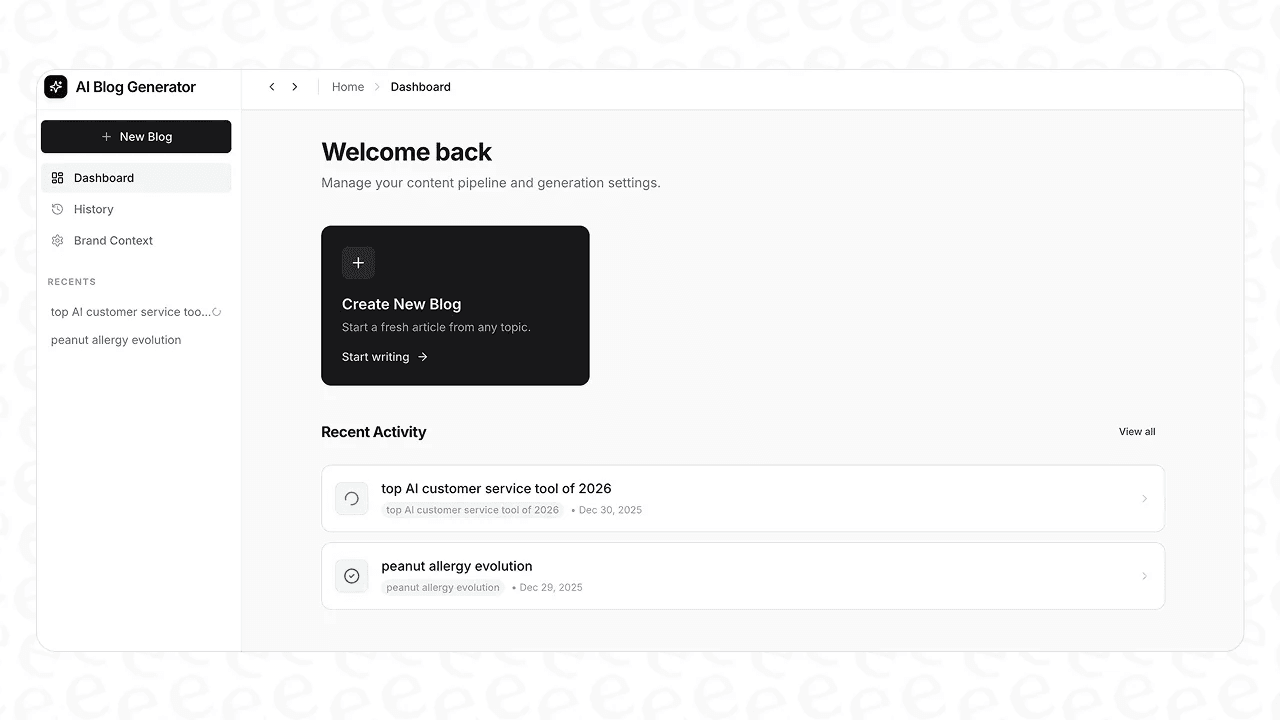
eesel AI does more than just follow a simple prompt. When you give it a topic, it analyzes the type of blog you want and performs context-aware research, pulling relevant, real-time information from the web. For example, it automatically gathers pricing data and feature lists for comparison posts or finds user testimonials and expert opinions for reviews.
It also handles brand integration automatically. Just provide your website URL, and the platform fetches your brand context to weave product mentions into the content naturally and accurately, without ever sounding forced.
Integrating real-world proof
Unlike text-only generators, eesel AI creates a complete blog post with all the necessary assets included. This means AI-generated images, infographics, data tables, and charts that support the text and keep readers engaged.
One key difference is the automated integration of relevant Reddit quotes and YouTube videos. This adds a layer of authenticity and human experience that many generic AI tools cannot match. It provides real social proof right inside your content, which helps build reader trust and demonstrates authority.
From draft to publish-ready content in minutes
Every article generated by eesel AI is optimized for performance. The structure, headings, and content are designed not just for traditional search engines but also for AI Answer Engines like Google AI Overviews and Perplexity. This makes sure your content stays visible in the future of search.
Most importantly, the output is refined to sound like a human wrote it. This drastically cuts down the editing time compared to other AI tools. The goal isn’t to give you a rough draft that needs hours of work; it’s to deliver a publish-ready article you can confidently post.
To see how these principles of research and structure come together in practice, it can be helpful to watch an expert walk through their entire process. The video below provides a comprehensive look at how to build a high-quality blog post from the ground up, covering many of the manual steps that platforms like eesel AI now automate.
Stop researching and start publishing
Well-researched blog writing is how you stand out and drive real organic growth. But doing it manually is a slow process, and generic AI often creates more work than it saves by producing shallow content that doesn't rank.
The eesel AI blog writer automates this entire workflow, from deep research to asset creation. It allows content teams to scale up the production of high-quality, asset-rich content that actually performs in search. Instead of spending hours researching your next post, you can generate a complete, publish-ready article in minutes.
Try the eesel AI blog writer for free and see the difference for yourself.

Frequently Asked Questions
Share this article

Article by
Stevia Putri
Stevia Putri is a marketing generalist at eesel AI, where she helps turn powerful AI tools into stories that resonate. She’s driven by curiosity, clarity, and the human side of technology.
