Should I use AI to write my blog posts? A realistic guide

Stevia Putri
Last edited January 9, 2026

It feels like AI is everywhere you look these days. Tools like OpenAI's ChatGPT have worked their way into just about everything we do, from brainstorming emails to drafting entire reports. So, it's not a shock that every content creator is asking the same thing: "Should I use AI to write my blog posts?" It’s a pretty big deal if you're trying to grow a business or a personal brand.
The potential upside is huge. Think about it: you could scale your content production almost instantly, pushing out posts every day instead of once a week. But the potential downside feels just as scary. We’ve all stumbled upon that bland, robotic AI content that has zero personality. It's often riddled with mistakes and completely lacks the unique voice that makes your brand yours.
Blogs don't take off if there is no personality behind it, and AI has no personality.

This guide is going to give you a straight-up, no-fluff look at the whole situation. We'll cover the real benefits, the major drawbacks to keep an eye on, and a smarter way to use AI in your content workflow. It’s not just about if you use AI, but how. The right tools can make all the difference, and the right strategy is how we took our own blog from 700 to 750,000 daily impressions in just three months.
The debate: Should I use AI to write my blog posts?
When people mention "AI blog writing," they're typically referring to large language models (LLMs) like OpenAI's GPT-5.2 that generate text. These models have come a long way from just checking your grammar; now they can whip up anything from a basic outline to a complete first draft.
Of course, this makes everyone a little nervous about what search engines think. The good news is that Google's position is pretty straightforward: they want high-quality, helpful, and original content that shows expertise, experience, authoritativeness, and trustworthiness (E-E-A-T). They honestly don't care if a human, an AI, or a team of both wrote it, as long as it meets that standard.
The issue arises when AI is used to generate low-quality content at scale in an attempt to manipulate search rankings. That's a huge red flag and violates Google's spam policies on scaled content abuse. The takeaway is simple: make great content for your readers, not just for search engine bots.
Advantages of using AI for blog writing
If you start seeing AI as a partner instead of a replacement for a writer, you'll find some pretty great benefits. This isn't about cutting corners; it's about working smarter and being more creative.
Overcome writer's block and generate ideas instantly
We’ve all had that moment, just staring at a blinking cursor on a blank screen. Writer's block is the worst. This is where an AI can be a fantastic brainstorming buddy. You don't have to wait around for an idea to hit you; you can just get started.
For example, you can give a tool like ChatGPT a general topic like "customer service automation," and it will instantly give you an outline, a few different angles to consider, or a list of common questions. It helps you get past that initial hurdle and gives you something to work with, making the whole process feel less intimidating.
Streamline research and summarize information
Great content comes from solid research, but sifting through articles and reports can take forever. An AI can be like a research assistant, making this part of the job much faster. It can summarize long articles, find key stats in reports, and give you a quick overview of a topic you don't know much about.
But, and this is a big but, you still have to fact-check everything yourself. AI models can "hallucinate," which is a nice way of saying they make stuff up. They're built to sound convincing, not to be 100% accurate, so they might invent facts, sources, or quotes that seem real but are completely fake. Use AI to kick off your research, but don't trust it to be the final authority.
It saves time, but it doesn't save *that* much time if you're doing it right.
Increase content velocity and scale production
For a lot of businesses, the hardest part of content is just being consistent. Writing one amazing blog post is great, but writing three a week is a whole different challenge. This is where AI can really shake up your process.
When you let AI handle the first drafts, your writers and marketers can spend their time on more important things, like editing, adding your brand's unique perspective, and sharing personal stories. This lets you produce more content without needing a bigger team or a larger budget. You're basically moving your team's focus from the boring parts of writing to the parts that actually add value.
Risks of using AI for blog writing
However, using generic AI tools without a clear strategy can introduce challenges. Relying on them to write posts from scratch can lead to risks that may affect your brand, audience trust, and SEO performance.
Factual errors and AI "hallucinations"
This is probably the biggest and most worrying risk. AI models are designed to guess the next word in a sentence, not to check if what they're saying is true. This can lead to what people call AI hallucinations, where the AI confidently makes statements that are completely false.
You might have heard about the lawyer who used ChatGPT for legal research and ended up citing a bunch of fake court cases the AI just made up. It’s a stark reminder of what can happen when you blindly trust what an AI tells you. Publishing wrong information on your blog probably won't get you sued, but it will definitely wreck your credibility with your audience.
Generic content that lacks a brand voice
AI models learn from a giant mix of text from all over the internet. Because of this, the content they create tends to sound like an average of everything it has ever processed: generic, a little repetitive, and with no real personality. It's missing the stories, the unique viewpoint, and the specific voice that makes your content interesting and memorable.
But, even when it gets used to you and your writing style, it still lacks your complete voice.
If you lean too heavily on this kind of content, your blog will sound just like everyone else's. You won't connect with your readers or position your brand as an expert. People connect with brands and creators that have a distinct, human voice, and that's something a generic AI can't fake.
Poor SEO performance from flawed keyword research
Let's be blunt: general AI chatbots are not SEO tools. They can't access real-time search data, so they don't know a keyword's search volume, its difficulty, or why someone is searching for it in the first place.
You could ask an AI for a list of keywords, and it might give you something that looks good. But those keywords could have zero people searching for them each month, which means you're writing content that nobody will ever see. Without proper keyword research based on actual data, your content is doomed from the start.
How the eesel AI blog writer works
The solution is not to avoid AI, but to use a tool built for this specific purpose. While a generic chatbot provides raw text, a specialized AI content platform is designed to create complete, high-quality articles.
The eesel AI blog writer was designed for this exact purpose. It’s not here to replace you; it’s here to give you the ability to produce great content on a larger scale. It’s the same tool we used to grow our own blog from 700 to over 750,000 daily impressions in a few short months. Here’s how it approaches content generation.
Deep, brand-aware research
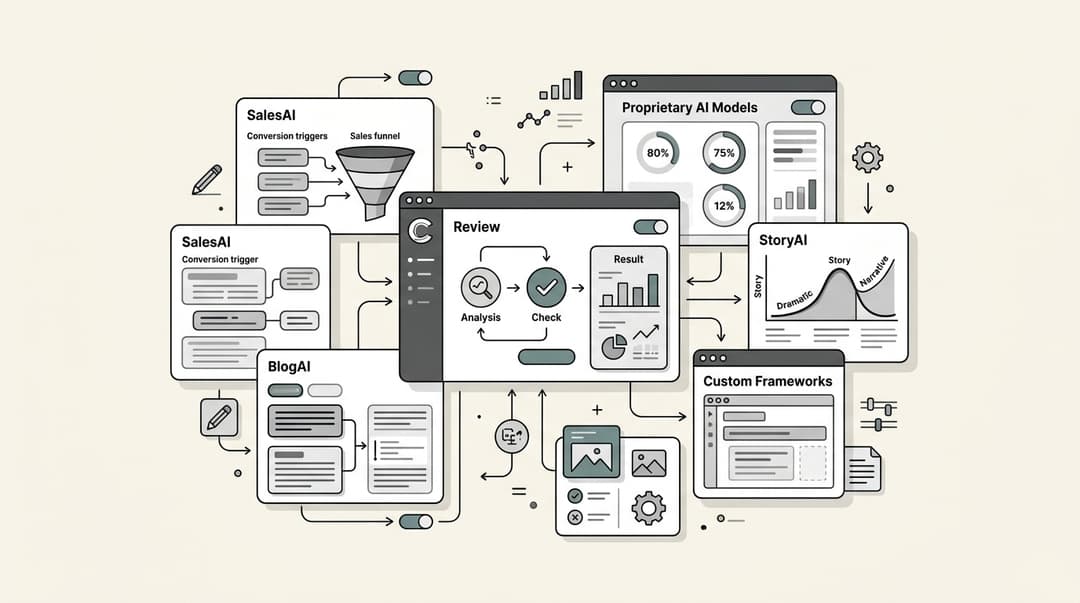
Generic AI models draw from a broad range of internet data, which can result in content that lacks a specific point of view. The eesel AI blog writer functions differently by incorporating context. When you provide your website URL, it analyzes your business, brand voice, and products.
This means that when it writes, it can naturally mention your services and adopt an authoritative tone that sounds like it came from your company. You get well-researched content that fits your niche and aligns with your brand identity.
Complete posts with assets, not just text
A standard chatbot typically provides a block of text, leaving the user to handle formatting, image sourcing, and media integration. This process can require significant extra time and effort.
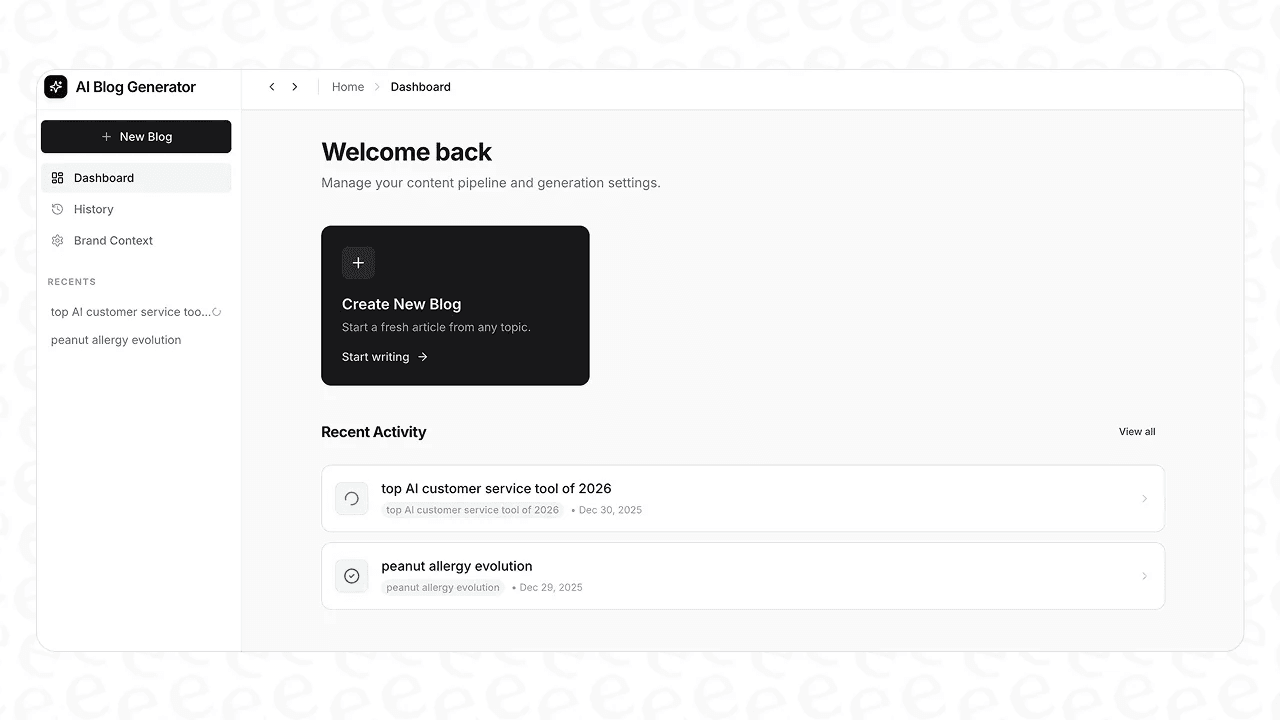
In contrast, the eesel AI blog writer generates a complete blog post from a single keyword, including headings, an introduction, a conclusion, and FAQs. It also adds AI-generated images and tables, and can embed relevant YouTube videos and Reddit quotes to add social proof. This approach delivers a media-rich post that is ready to publish.
Optimization for search and answer engines
Content from a generic AI may not be optimized for modern SEO or the new AI-powered search results. The eesel AI blog writer is designed for both Search Engine Optimization (SEO) and Answer Engine Optimization (AEO).
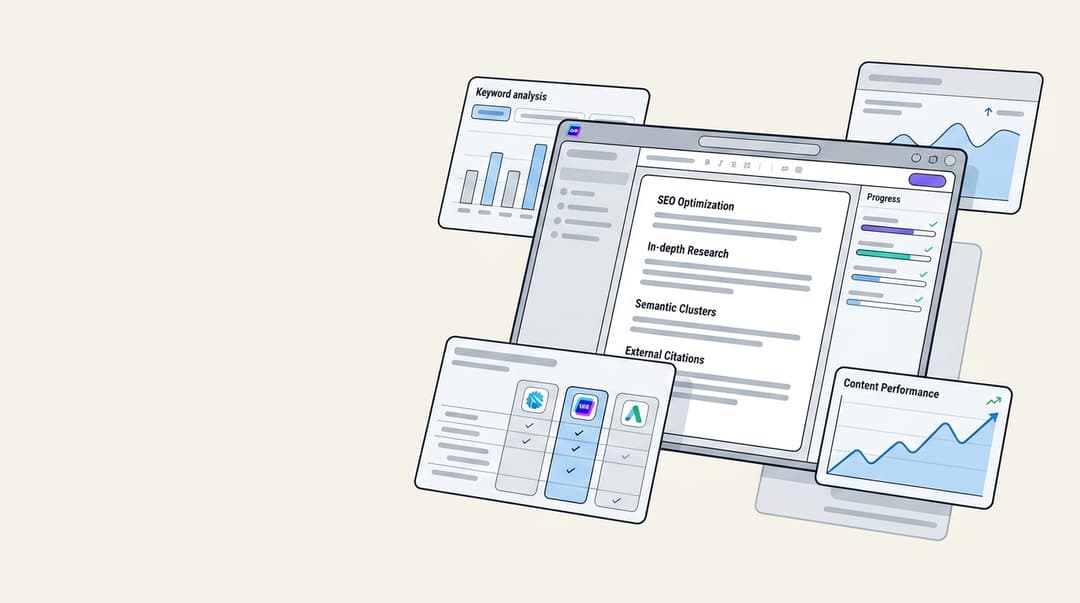
It works your target keywords into the content naturally and structures everything so search engines can easily read and understand it. It's also designed to show up in Google's AI Overviews, Perplexity, and other answer engines that are changing how we find information. This sets up your content to rank in traditional search and get featured in the new AI-driven answers, making your content strategy ready for the future.
For a deeper dive into how to use AI effectively for blogging, check out this video which breaks down a realistic workflow for integrating AI into your content strategy.
Final thoughts on using AI for blog posts
So, let's get back to the main question: should you use AI to write your blog posts? The answer is yes, but with a big condition. You should only do it if you use AI as a collaborator, not a magic wand. If you simply copy and paste unedited text from a generic tool, the content may not perform well or resonate with your audience.
Using AI as an assistant for writing instead of relying 100% on it to write posts is much better in my experience.
The risks are very real. Factual mistakes, a bland tone, and poor SEO can hurt your brand's reputation and be a waste of time and resources.
The trick is to use a tool that was made for this specific task, one that helps with the heavy lifting like research, drafting, and creating assets. When you mix the speed of AI with your own human insight and voice, you get the best of both worlds. You can create top-notch content that connects with readers, ranks well, and helps your business grow.
Ready to see what a specialized tool can do? Try the eesel AI blog writer for free and turn a keyword into a publish-ready, SEO-optimized post in minutes.

Frequently Asked Questions
Share this article

Article by
Stevia Putri
Stevia Putri is a marketing generalist at eesel AI, where she helps turn powerful AI tools into stories that resonate. She’s driven by curiosity, clarity, and the human side of technology.