A practical guide to sales copywriting techniques that actually work

Stevia Putri
Written by

Stevia Putri

Reviewed by

Katelin Teen

Last edited February 1, 2026

Expert Verified

Image alt text

Great sales copy isn't about magic words or secret formulas. It's a smart combination of psychology, a solid plan, and clear communication. The goal is simple: persuade someone to do something, whether that's clicking "buy now" or scheduling a demo. However, a common challenge is focusing too much on product features rather than customer needs. This can lead to copy that doesn't connect, resulting in poor engagement and lost sales.

This guide is designed to help you fix that. We'll walk through the core principles, psychological triggers, and practical sales copywriting techniques you can use to write content that genuinely resonates with people.

And let's be honest, applying these techniques consistently can feel like a lot of work. That's where modern tools can help you scale your efforts. At eesel, we used our own eesel AI blog writer to grow our organic traffic from 700 impressions a day to over 750,000 in just three months. It works by turning a single keyword into a persuasive, publish-ready article with these principles already baked in.

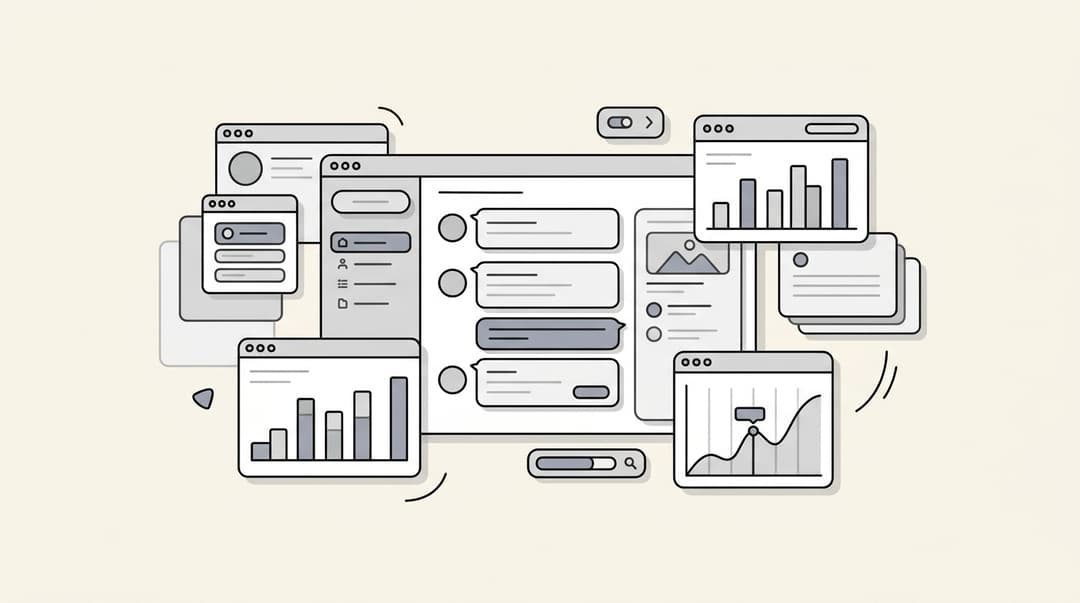
The eesel AI blog writer dashboard, a tool for implementing sales copywriting techniques at scale.

What is sales copywriting?

What do we mean by "sales copywriting"? At its heart, it’s the art of writing with a single, clear goal: to persuade a reader to take a specific action. This action could be making a purchase, signing up for a trial, or downloading an ebook. The main point is that its purpose is to drive conversions and generate revenue.

It’s a bit different from general content writing. As the team at weBOUND marketing explains, content writing is more about informing, entertaining, and building a long-term relationship with your audience. Think of things like blog posts, newsletters, and social media updates. Copywriting, on the other hand, is about getting an immediate response. The two definitely work together. Good content builds trust, and good copywriting helps turn that trust into action.

The psychology behind persuasive sales copywriting techniques

The best copy doesn't just sound nice; it connects with the reader on a psychological level. It taps into fundamental human behaviors to build trust and gently nudge people toward taking the next step.

Start by understanding your audience's pains and desires

You can't write persuasive copy if you don't know who you're talking to. To be effective, you have to start with a deep understanding of your audience's biggest challenges, their fears, what they hope to achieve, and what truly motivates them. You can't solve a problem you don't fully grasp.

Pro Tip
Here's a practical tip: go where your customers hang out. Dig into customer reviews, sift through support tickets in your help desk (like Zendesk or Freshdesk), and browse forums on sites like Reddit. Pay close attention to the exact words people use to describe their problems and their ideal solutions. This is an absolute goldmine for writing copy that feels like you're reading their minds.

Use the classic AIDA framework to structure your message

The AIDA model is a classic for a good reason. Developed way back in 1898, this framework (Attention, Interest, Desire, Action) is a time-tested way to guide a reader through the mental journey of making a buying decision, as explained by the experts at Copyhackers. The infographic below breaks down each stage.

An infographic explaining the AIDA model (Attention, Interest, Desire, Action) as one of the core sales copywriting techniques.

  • Attention: You have to grab them immediately with a headline or hook that makes them pause. With over 58% of Google searches ending without a click, that first impression is critical.
  • Interest: Once you have their attention, you need to keep it. You can do this by sharing relevant information, facts, and benefits that speak directly to their needs.
  • Desire: This is where you transition from simple interest to a genuine want. Show them how your solution can completely change their situation for the better. Focus on the emotional outcome, not just the logical features.
  • Action: Finally, tell them exactly what to do next. Don't be vague. Give them a single, clear call to action (CTA).

Cialdini's 7 principles of persuasion for sales copywriting techniques

Dr. Robert Cialdini's book Influence is pretty much the definitive guide to persuasion, and his principles are the building blocks of great copywriting. The team at CXL breaks them down. Here are the seven principles and how you can apply them to your writing:

  1. Reciprocity: People feel an obligation to give back when you give them something of value first. Offering a free checklist, template, or ebook is a great example.
  2. Commitment & Consistency: We have a natural desire to be consistent with our past decisions. A free trial is a perfect example; it's a small commitment that makes the larger commitment of a purchase feel more natural.
  3. Social Proof: We trust what we see other people doing. This is why testimonials, case studies, and displaying your user count are so effective.
  4. Authority: We tend to listen to credible experts. Citing data, showing off industry awards, or getting an expert endorsement can build instant authority.
  5. Liking: It's simple: we're more easily persuaded by people we like. A relatable "About Us" page or showing that you share your customers' values can go a long way.
  6. Scarcity: We want things more when we think they're in short supply. Limited-time offers or messages like "only 3 left in stock" tap into this.
  7. Unity: We are more easily influenced by people we feel share an identity with us. Using industry-specific language or creating an exclusive community for your users are great ways to create this sense of "we're in this together."

7 powerful sales copywriting techniques to drive conversions

Once you have a handle on the psychology, you can start using these specific techniques to write copy that turns curious readers into happy customers.

  1. Tell compelling stories: We are all wired to respond to stories. A narrative about how a customer succeeded with your product or the story of why your company was founded is much more memorable than a boring list of features.
  2. Focus on benefits, not just features: This is a classic for a reason. Always apply the "So what?" test. For every feature you list, ask yourself, "So what does that actually mean for the customer?" (For example, Feature: AI drafts replies for your support team. Benefit: You can onboard new agents faster, and they'll feel more confident from day one).
  3. Use "power words" to trigger emotion: Some words just have more impact than others. Sprinkling in words like "Proven," "Instantly," "Secret," or "Effortless" can create a sense of value and urgency that makes people pay attention.
  4. Create urgency and scarcity (ethically): Deadlines and limited availability can be strong motivators because they tap into our Fear of Missing Out (FOMO). But as copywriting expert Sarah Turner warns, you have to be honest. Fake scarcity will destroy trust instantly.
  5. Leverage social proof with authentic voices: Don't just post generic testimonials. Use direct quotes from glowing reviews, happy tweets, or positive comments on forums. This adds a layer of authenticity that builds a ton of trust, especially since 97% of customers say reviews influence their buying decisions.
  6. Address objections head-on: Every potential customer has concerns, whether they're about price, complexity, or security. Address these potential issues directly in your copy, perhaps in an FAQ section. It shows you're transparent and helps reduce their anxiety about making a purchase.
  7. Write in a conversational tone: Write like you talk. Use simple language, shorter sentences, and address your reader as "you." This makes your copy feel less like a corporate announcement and more like a helpful, one-on-one conversation, making your brand feel much more approachable.
TechniqueWhat it isWhy it works
StorytellingWeaving a narrative around your product or brand.Makes your message memorable and emotionally resonant.
Benefits over FeaturesHighlighting outcomes instead of technical specs.Answers the customer's core question: "What's in it for me?"
Power WordsUsing emotionally charged words to create impact.Triggers an immediate psychological response and adds weight.
Urgency & ScarcitySetting deadlines or limiting availability.Overcomes procrastination and encourages immediate action.
Social ProofFeaturing testimonials, reviews, and case studies.Builds trust by showing that others have found value and success.
Objection HandlingAddressing potential customer concerns upfront.Reduces friction in the buying process and builds credibility.
Conversational ToneWriting in a simple, direct, and human way.Makes your brand feel more approachable and relatable.

How to scale your sales copywriting techniques with the eesel AI blog writer

Applying all these techniques across dozens or even hundreds of blog posts is a huge task. It takes a lot of time, and it's difficult to maintain quality and consistency when you're trying to scale.

Reddit
IMO opinion, AI is like most tools. Garbage in, garbage out. You can’t throw a Kw at it and expect a week written article. You still need to research proper KWs. You need to study the SERPs. You still need to perfect a great outline. Once all that is done, AI is a crutch, it can assist you. Stuck in your outline, but have a general idea what you want to write. Throw it into AI. Maybe you like the results, maybe you don’t. But it will usually prompt you. Just my two cents.

That's where the eesel AI blog writer can help. It's a platform designed to generate high-quality, persuasive blog content that already has these principles built in. You just enter a keyword, add your website for context, and choose your tone.

Here’s how it ties into the techniques we've discussed:

  • Deep Research for Authority: The AI doesn't just scratch the surface. It conducts deep research and automatically adds citations and internal links, building authority and credibility directly into the article.
  • Built-in Social Proof: It automatically finds and embeds real quotes from Reddit and relevant YouTube videos, seamlessly weaving authentic social proof into your content without you having to do any of the work.
  • Automatic Asset Generation: The platform creates infographics, charts, and tables to help tell a visual story, making complex information easier to understand and much more persuasive.
  • Human-Like Conversational Tone: After more than a year of refinement, our AI generates content that has a genuinely human and conversational feel. It avoids the robotic, generic text that many other tools produce.
  • Answer Engine Optimization (AEO): Your content is also automatically optimized for AI answer engines like Google AI Overviews and Perplexity, ensuring you remain visible as search technology continues to change.
    A view of the eesel AI blog writer's features which help automate sales copywriting techniques, including social proof and asset generation.
    A view of the eesel AI blog writer's features which help automate sales copywriting techniques, including social proof and asset generation.

Why not see for yourself? You can generate your first blog free and see just how quickly you can create a complete, SEO-optimized post that's ready to convert.

Common mistakes to avoid in your sales copywriting techniques

As you start using these techniques, try to avoid these common mistakes:

  • Vague Headlines: If your headline doesn't grab attention or clearly state what the reader will get out of it, they'll just scroll past.
  • Forgetting the CTA: You've done all the work to persuade them, but then you don't tell them what to do next. Always include a single, clear call to action.
  • Using Too Much Jargon: Don't try to sound smart by using industry-specific language that your audience might not understand. It just creates a barrier.
  • Focusing on "We" Instead of "You": Your copy should never be about how great your company is. It should always be about the customer, their problems, and how their life will improve after using your solution.

For a deeper dive into practical examples and formulas, it can be helpful to see these techniques in action. The video below from Brian Dean offers a complete tutorial, breaking down how to apply these concepts to your own writing.

This complete tutorial from Brian Dean breaks down how to apply sales copywriting techniques with practical examples and formulas.

Putting your sales copywriting techniques together

At the end of the day, effective sales copywriting is a learnable skill. It's a powerful mix of psychology and strategy that, when done correctly, can have a major impact on your business's growth. By understanding your audience, applying frameworks like AIDA, and using proven techniques, you can start turning your words into real conversions.

Writing persuasive copy is crucial for growing a business. For teams looking to scale their content without sacrificing quality, the eesel AI blog writer offers a powerful way to generate on-brand, persuasive content in minutes. Give it a try for free and see what it can do for you.

Frequently Asked Questions

For beginners, the best techniques to start with are focusing on benefits over features (always ask "so what?"), using a conversational tone (write like you talk), and incorporating social proof like customer testimonials. These are straightforward to implement and build a strong foundation of trust with your audience.
You can measure success by tracking key metrics related to your goal. For a sales page, this would be the conversion rate (purchases or sign-ups). For an email, it would be the open rate and click-through rate. Using A/B testing, where you test one version of copy against another, is also a great way to see which techniques are performing best.
Absolutely. Ethical copywriting is about persuasion, not manipulation. Always be truthful and avoid making false claims. Techniques like scarcity and urgency should only be used when they are genuine (e.g., a real limited-time offer). Building long-term trust is far more valuable than making a quick, dishonest sale.
Storytelling connects with readers on an emotional level, making your message more memorable and relatable. While other techniques might focus on logic (listing benefits) or urgency (creating scarcity), storytelling wraps your product or service in a narrative that helps the customer visualize themselves succeeding with your solution.
Yes, they can be incredibly helpful. AI tools like the eesel AI blog writer can scale your efforts by generating well-researched, structured content that already incorporates many of these techniques. They can handle the heavy lifting of research and drafting, freeing you up to focus on strategy and adding your unique brand voice.
The most common mistake is focusing on the company or product ("we do this," "our features are...") instead of the customer ("you will achieve," "your problem will be solved..."). Your copy should always be centered on the customer's needs, desires, and problems. When you make it about them, it becomes far more persuasive.

Share this post

Stevia undefined

Article by

Stevia Putri

Stevia Putri is a marketing generalist at eesel AI, where she helps turn powerful AI tools into stories that resonate. She’s driven by curiosity, clarity, and the human side of technology.