How to write SEO product descriptions that actually convert

Stevia Putri
Last edited February 1, 2026
Getting your product to the top of Google is a pretty big deal. How big? Well, the number one organic search result snags an average click-through rate of 39.8%. That's a huge slice of potential customers. The problem is, a lot of businesses have fantastic products that never get seen because their descriptions feel like they were written for a dusty old catalog, not for today's shoppers or search engines.
A great SEO product description has to do two jobs at once. It needs to speak the language of search engine algorithms while also making a real connection with a human shopper. It's one part science, one part art.
What are SEO product descriptions?
An SEO product description is the copy on your product page that’s specifically written to do two things really well: inform and persuade a potential customer, and help that page rank higher on Google.
Think of it like this:
- For search engines: It gives them clear signals, like keywords and structured data, so their algorithms can figure out what your product is, who it’s for, and why it’s a good match for certain searches.
- For customers: It’s your digital salesperson. It answers questions, points out the benefits, builds trust, and ultimately convinces someone that your product is the solution they've been looking for.
Pre-writing essentials for SEO product descriptions
Before you type a single word, you need to do a little homework. Getting the prep work right is what separates descriptions that just take up space from ones that actually bring in sales. It really just comes down to understanding who you're writing for and what they're looking for.
Defining your target audience and buyer personas
You can't write a description that resonates if you don't know who you're talking to. That's why figuring out your target audience is step one. This is more than just basic demographics. You should create a buyer persona, which is basically a detailed profile of your ideal customer.
A good buyer persona includes details like:
- Demographics (age, location, income)
- Their pain points and frustrations
- Their goals and motivations
- Their lifestyle and values
For instance, say you sell eco-friendly yoga mats. Your target persona might be an environmentally conscious millennial who cares about sustainability and ethical production. With that in mind, your descriptions shouldn't just talk about grip and thickness; they should use words like "sustainably sourced," "non-toxic," and "ethically crafted" to connect with what they actually care about.
Mastering keyword research
Once you know your audience, you need to figure out the exact words and phrases they're using to find products like yours. This is what keyword research is all about.
According to the folks at Semrush, every product page should target a primary keyword (your main goal) and a few secondary keywords (related terms or variations).
The real gold for product pages, though, is in long-tail keywords. These are longer, more specific phrases, usually three or more words. Think "men's waterproof trail running shoes" instead of just "shoes." Long-tail keywords are great because they tend to have less competition and much higher commercial intent. Someone searching for that specific phrase knows what they want and is probably close to buying.
You also need to understand search intent, which is the "why" behind someone's search. For e-commerce, it usually falls into three buckets:
- Commercial: The user is researching products and comparing their options (e.g., "best eco-friendly yoga mat").
- Transactional: The user is ready to buy something (e.g., "buy Gaiam yoga mat").
- Informational: The user is just looking for information. This is a perfect chance to grab their attention with blog content and start building some brand awareness.
Tools like Semrush's Keyword Magic Tool can help you find keywords that have decent search volume and aren't impossible to rank for, giving you a clear plan for your copy.
8 best practices for writing SEO product descriptions
With your audience and keywords sorted, it's time to write. The goal is to be persuasive and informative without sounding like a pushy salesperson.
Focus on benefits, not just features
This is probably the most important rule in copywriting. A feature is what a product is or has. A benefit is what it does for the customer. People don't buy features; they buy a better version of themselves.
- Feature: This vacuum has nylon bristles.
- Benefit: Effortlessly pulls stubborn pet hair from your carpets, so your home always looks clean and fresh.
Use a consistent brand voice and tone
Is your brand playful and witty? Professional and serious? Technical and precise? Whatever your brand's personality is, make sure it comes through in your product descriptions. A consistent voice across all your pages helps build familiarity and trust with your customers.
Tell a story with sensory and lifestyle copy
Don't just list specs. Use descriptive, sensory words that help the customer imagine themselves using your product. Paint a picture of how it will fit into their life and make it better.
Instead of saying a scarf is made of "high-quality wool," try something like, "Bundle up in this cozy, buttery-soft scarf on a crisp autumn morning." You're not just selling a piece of fabric; you're selling a feeling.
Make it scannable with bullets and short paragraphs
Let's be honest, people don't read online; they skim. Your product description needs to be easy to scan. Break up your text with:
- Short paragraphs: Keep them to 2-3 sentences, tops.
- Bullet points: Use them for key features, specs, or a quick summary of benefits.
- Bold text: Highlight the most important info that you don't want visitors to miss.
A giant wall of text is an instant turn-off. White space is your best friend here.
Incorporate social proof like reviews and testimonials
Nothing builds trust quite like hearing from other happy customers. Social proof is incredibly effective. In fact, user-generated content like reviews can also give your SEO a little boost by adding fresh, unique content to your page.
Weave quotes from reviews right into your descriptions or just make sure your reviews section is easy to find. If a customer said your coffee maker "brews the perfect cup every single time," use that!
Add helpful content like FAQs
A Frequently Asked Questions (FAQ) section is a great way to handle potential objections and answer common questions before they even come up. What's the return policy? How do I clean it? Is it compatible with X?
This is also an SEO goldmine. Search engines love well-structured FAQs and often pull them into featured snippets for question-based searches. That can give you a ton of extra visibility right at the top of the results page.
Optimize for readability on all devices
More people shop on their phones than on desktops now. Your product pages have to look good and be easy to read on a small screen. This means using a clear, legible font, having enough spacing between lines, and making sure there's high contrast between your text and the background.
End with a clear call to action (CTA)
After you've done all the work to convince the shopper, you have to tell them what to do next. Don't leave them hanging. Use a clear, action-oriented button like "Add to Cart" or "Buy Now." It can also be a good idea to include secondary CTAs like "Add to Wishlist" or "Compare" to catch users who might not be ready to buy just yet.
Technical optimization for product descriptions
Amazing copy is only half the battle. You also need to make sure the technical side of your page is set up correctly so search engines can find, understand, and rank your products.
Placing keywords in the right places
Once you have your primary and secondary keywords, you need to place them strategically and naturally throughout the page. Here's a quick checklist:
- Product title / H1 tag: This is the most important spot.
- Page URL: Keep it clean and include your primary keyword (e.g., yoursite.com/eco-friendly-yoga-mat).
- Meta description: This is your ad on the search results page. Make it compelling and include your keyword.
- Body copy: Weave your keywords into the description naturally a few times. Don't just stuff them in there.
- Image alt text: Tell search engines what your product images are about.
An infographic showing where to place keywords on a product page, an important part of how to write SEO product descriptions.
Writing unique descriptions to avoid duplicate content
It's tempting to just copy and paste the description from the manufacturer's website, but this is a huge SEO mistake. When multiple pages have the exact same content, search engines get confused about which one to rank. This is called duplicate content, and it can really hurt your visibility. Always write 100% unique descriptions for every single product.
Put yourself in the shoes of the customer, and pretend you don't know the product at all. If there's anything you aren't sure about the product's details from the description, you need to add it in. One good way of going about it is to feed the description into an empty ChatGPT window and asking it which other details should be included, For SEO optimisation, use a keyword planner.

Using product schema markup for rich snippets
Schema markup (or structured data) is like a cheat sheet you give to search engines. It's a bit of code that explicitly tells them what's on your page, like the product name, price, rating, and availability.
Google uses this information to create "rich snippets" right in the search results. These are the enhanced listings you see with star ratings, prices, and "in stock" labels. There are two main types of product structured data: one for review pages and one for pages where you can actually buy the product.
Adding schema markup can seriously increase your click-through rate because your listing stands out from the others. It can enable eye-catching features like Ratings, Pros and Cons, Shipping info, Availability, and even Price drops.
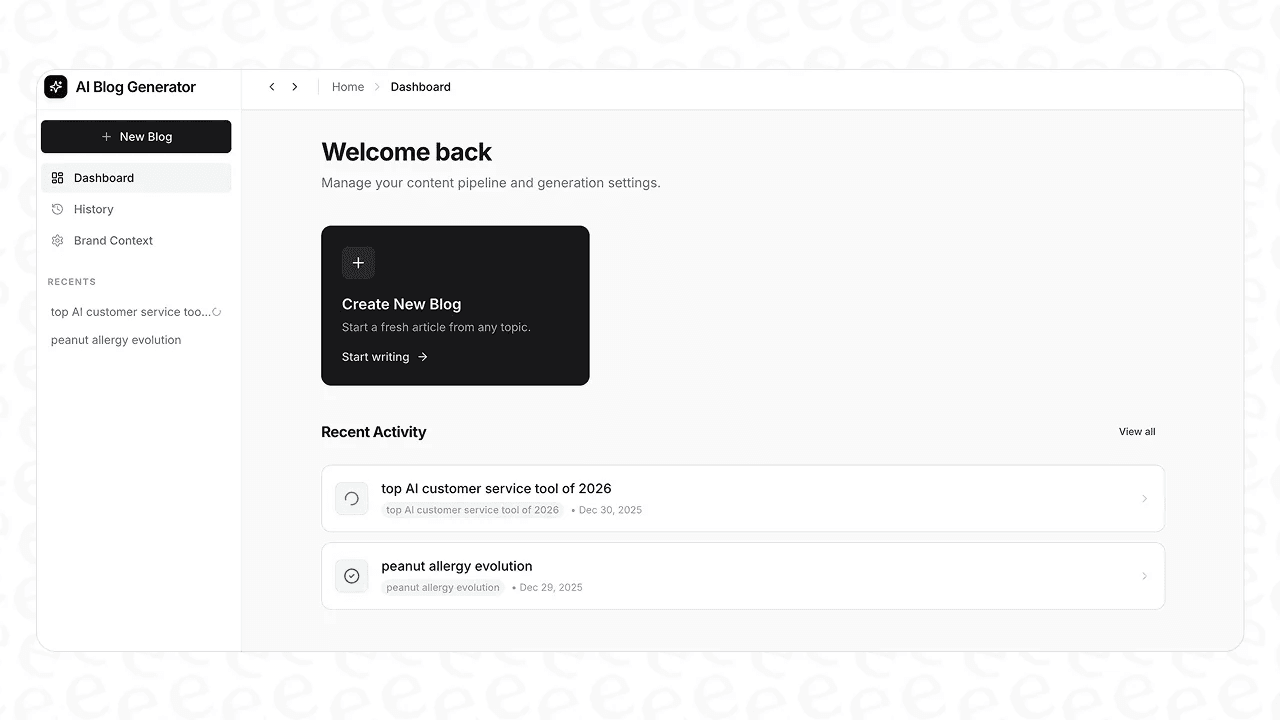
How to scale your content strategy with the eesel AI blog writer
Writing unique, optimized descriptions for every product is a massive undertaking. On top of that, you need a steady stream of blog content to attract new customers and drive traffic to those product pages. It's a classic bottleneck for any growing business.
Key features include:
- Context-aware research: It pulls in relevant, up-to-date data to create content that’s actually deep and valuable.
- Automatic assets: It generates the full post with AI images, charts, and tables included, saving you hours of hunting for visuals.
- Social media integration: It can embed relevant YouTube videos and pull in real quotes from Reddit forums, adding a layer of authenticity and social proof to your articles.
- AEO optimization: It writes content that’s optimized for AI answer engines like Google AI Overviews, helping you get ahead of the curve in search.
The platform offers a free trial. Paid plans start at $99 for 50 blog posts.
For a more visual guide, check out this video that walks through the art of transforming standard product features into compelling descriptions that not only attract search engines but also resonate deeply with potential buyers.
Final thoughts on writing SEO product descriptions
At the end of the day, a great SEO product description is a perfect blend of understanding your audience, creative copywriting, and smart technical setup.
The goal isn't just to rank on Google. It's to create a page that connects with a real person, answers their questions, and gives them the confidence to click that "Add to Cart" button. By following these best practices, you can stop thinking of your product pages as simple listings and start treating them as what they really are: powerful assets that drive organic traffic and grow your business.

Frequently Asked Questions
Share this article

Article by
Stevia Putri
Stevia Putri is a marketing generalist at eesel AI, where she helps turn powerful AI tools into stories that resonate. She’s driven by curiosity, clarity, and the human side of technology.