If you run an ecommerce brand, you know the content treadmill is relentless. You're constantly churning out product descriptions, social media posts, and SEO blogs just to keep up and attract new customers. It's a ton of work, and trying to scale it without a massive team or budget can feel impossible.
What is AI ecommerce content AI?
What are we actually talking about with AI ecommerce content AI? Put simply, it’s using artificial intelligence to help create, optimize, and manage all the content your online store needs.
This isn't just about writing product descriptions, either. The technology can handle the whole content lifecycle. It can generate SEO articles to bring in new visitors, create eye-catching visuals that help customers see your products in their lives, and even clean up your product data to improve your site’s search and filtering.
The goal is to produce content that's not only quick to make but also personalized, optimized for search engines, and sounds like your brand. Different tools have different specialties, whether it’s generating thousands of product details at once or creating a deeply researched blog post from a single keyword.
The core types of AI in ecommerce content
AI-generated product descriptions and data
We've all been there: staring at a blank screen, trying to write a unique description for the 50th t-shirt that's just a different color. AI is a huge help here. These tools can take a dry list of features from a manufacturer and turn it into compelling, benefit-driven copy that actually helps sell the product.
They can generate thousands of unique descriptions in bulk, which is a big win for SEO. It helps you avoid penalties from Google for duplicate content, especially if you have products with many variations. AI is also great for tidying up your backend data. It can standardize product attributes, fill in missing information, and automatically tag products. As the folks at Hypotenuse AI mention, this is really important for making your site's search filters work better and giving customers a smoother experience.
AI-powered SEO blogs and articles
Great product pages are for converting shoppers who are already on your site, but first, you need to get them there. That’s where SEO blogs and articles come in. Today's AI can produce high-quality long-form content that’s well-researched, structured properly, and built to rank on search engines.
It's good to know the difference between basic AI writers and more advanced platforms. The best tools don't just spit out text; they understand SEO, build content with the right headings, and include citations and media to make the articles genuinely helpful.
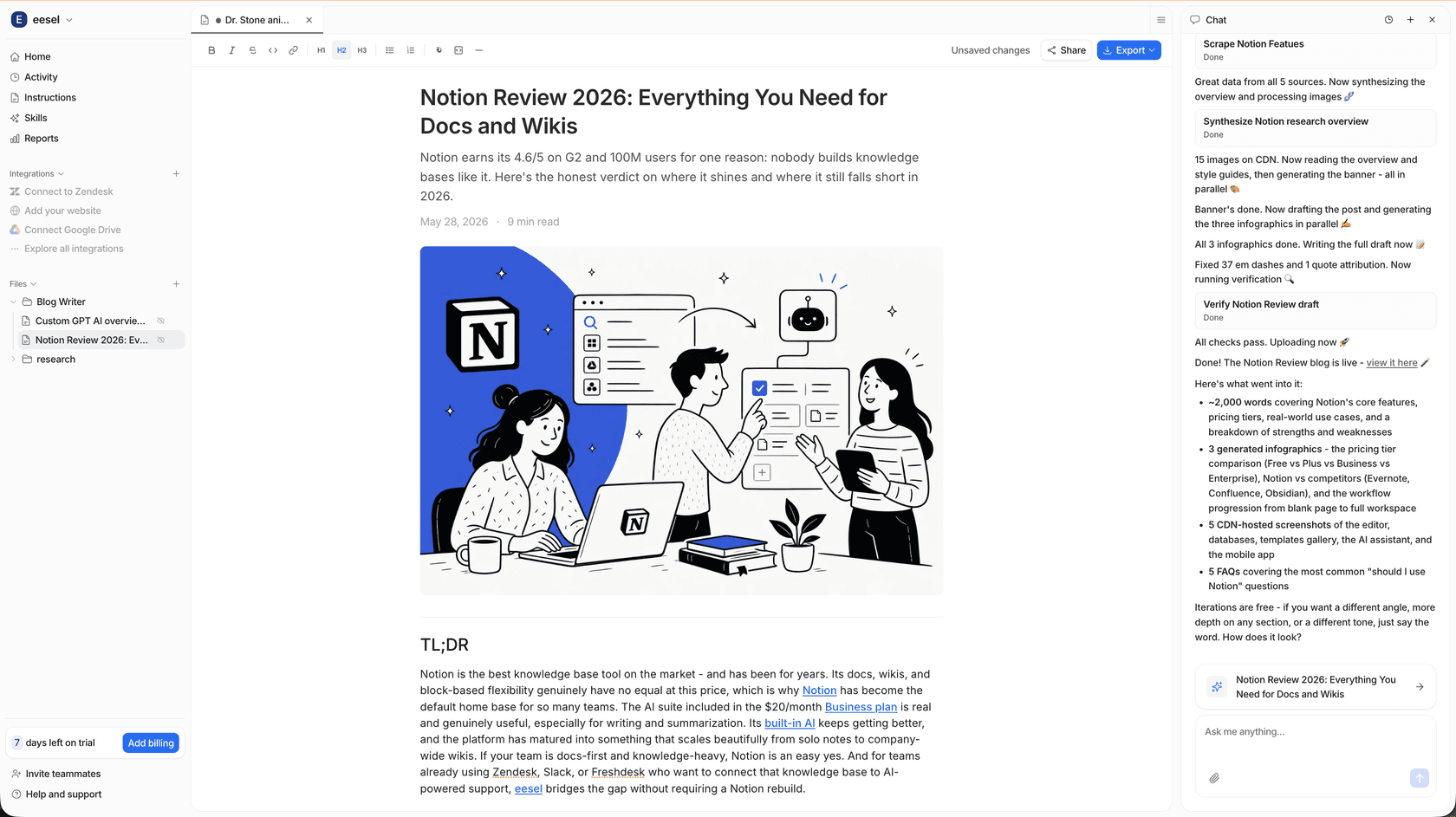
The most advanced tools, like the eesel AI blog writer, are now also optimizing for Answer Engine Optimization (AEO). This means they structure content to be more easily featured in generative search results, like Google's AI Overviews. They can even do things like automatically embed relevant YouTube videos and pull real quotes from Reddit to add a layer of social proof and authenticity.
AI for visual content and photoshoots
Content isn't just words. In ecommerce, visuals are king. AI design tools have gotten so good that they can generate high-quality product photoshoots without you ever needing to book a studio or hire a photographer.
Tools like Flair.ai let you create beautiful lifestyle scenes, place your products on AI-generated models, and even whip up ready-to-use ads for social media. It's a huge time-saver for brands that need a steady stream of fresh visual content. Some platforms, like Hypotenuse AI, also offer AI-powered batch editors that can clean up existing product photos by removing backgrounds, improving resolution, and cropping everything consistently.
Key features in an AI ecommerce content platform
Comprehensive asset generation
The best AI tools today give you more than just a wall of text. They function as content automation engines that deliver a complete, finished asset. Look for platforms that don't just write but also generate relevant images, infographics, comparison tables, and charts. These extras make your content much more engaging and useful.
Also, see if the tool can pull in real-world content. The ability to find and embed relevant YouTube videos or insightful quotes from forums adds a layer of authenticity that builds trust and saves you hours of research.
I have tested most of these too, and found real differences once you get past the surface features. Based on Sprout Score comparisons, Jasper scored higher (8.2) for brand voice and long-form consistency, especially in team use. Surfer SEO scored strong (8.0) in post-publish optimization and SERP alignment, but depends heavily on pairing with another tool like Jasper. Copy.ai lagged a bit (7.4) for structured content workflows, it is fast, but less controllable. Writesonic sat in the middle (7.8), solid for ecommerce and quick drafts but needed a lot of manual editing in B2B use.

Deep SEO and AEO optimization
Good SEO is about understanding what people are looking for, not just jamming a keyword onto a page. A solid AI content platform gets this. It should structure content logically, use keywords naturally in titles and headings, and generate an optimized meta description for you.
And as mentioned before, Answer Engine Optimization (AEO) is the next big thing. A good platform should create content that directly answers common questions, making it a great fit for the new wave of generative search engines.
Brand voice and context awareness
Your content needs to sound like you. The last thing you want is generic AI filler that doesn't fit your brand's personality. The best tools can learn your tone, style, and key messages from your website or from brand guidelines you provide.
According to platforms like Jasper and Hypotenuse AI, a top-tier tool doesn't just write; it writes for your brand. It can even weave in mentions of your products in a way that feels natural and helpful, not like a pushy sales pitch.
A review of top AI ecommerce content tools
Alright, let's dive into some of the top tools out there. Each has its own strengths, so the best one for you depends on your biggest content headache right now.
eesel AI blog writer: For complete, publish-ready SEO content
The eesel AI blog writer is ideal for ecommerce brands looking to scale their content marketing and drive organic traffic. Its main strength is turning a single keyword into a complete, media-rich, and SEO-optimized blog post that is ready to go live.
Key Features:
- All-in-One Generation: It doesn't just give you a draft. You get a fully structured post with an intro, headings, a conclusion, and even an FAQ section.
- Automatic Assets: It automatically creates and includes relevant images, infographics, and tables. This feature alone saves hours of work on every post.
- Social Proof Integration: It pulls in relevant YouTube videos and real Reddit quotes to make your content more credible and interesting.
- Proven SEO Results: This tool was used internally to grow the eesel AI blog's traffic from 700 to 750,000 daily impressions in three months by publishing over 1,000 posts.
Limitations: It is designed primarily for creating new long-form content and is not intended for bulk-editing existing product descriptions at a data level.
Pricing: Pricing is credit-based at $99 for 50 blog posts. A free trial is available to generate sample content.
Jasper: For versatile marketing and ad copy
Jasper is a flexible AI writing assistant that's useful for all kinds of marketing tasks. If your team needs a tool that can handle a wide range of short-form content—from social media ads and email campaigns to website copy—Jasper is a solid option.
Key Features: It has over 100 templates for different content types and uses a feature called "Brand IQ" to learn and adapt to your brand's voice. It also has a collaborative "Canvas" where your team can plan and create content together.
Limitations: Jasper is primarily a text generator. While it produces high-quality copy, users are responsible for sourcing and integrating visuals, tables, and other media to complete a blog post. This differs from all-in-one platforms that generate these assets automatically.
Pricing: Jasper offers a 7-day free trial. The Pro plan starts at $69/month if you pay monthly, or $59/month if you pay annually. They also have custom Business plans.
Hypotenuse AI: For product data enrichment and descriptions

Hypotenuse AI is a specialized platform that excels at the product-centric side of ecommerce content. It's great at generating product descriptions in bulk and automatically enriching your product data by filling in missing information.
Key Features: It’s good at standardizing data, pulling attributes from images, and integrating directly with PIM systems and ecommerce platforms. It's a trusted tool for over 500,000 ecommerce brands.
Limitations: Its primary focus is on product-level content. The platform includes a blog article writer, but it does not specialize in automatically generating integrated assets like infographics or social media embeds, which are features found in other dedicated blog creation tools.
Pricing: All of their e-commerce plans require a custom quote. You'll need to contact their sales team for pricing details.
Flair.ai: For AI-powered product photography
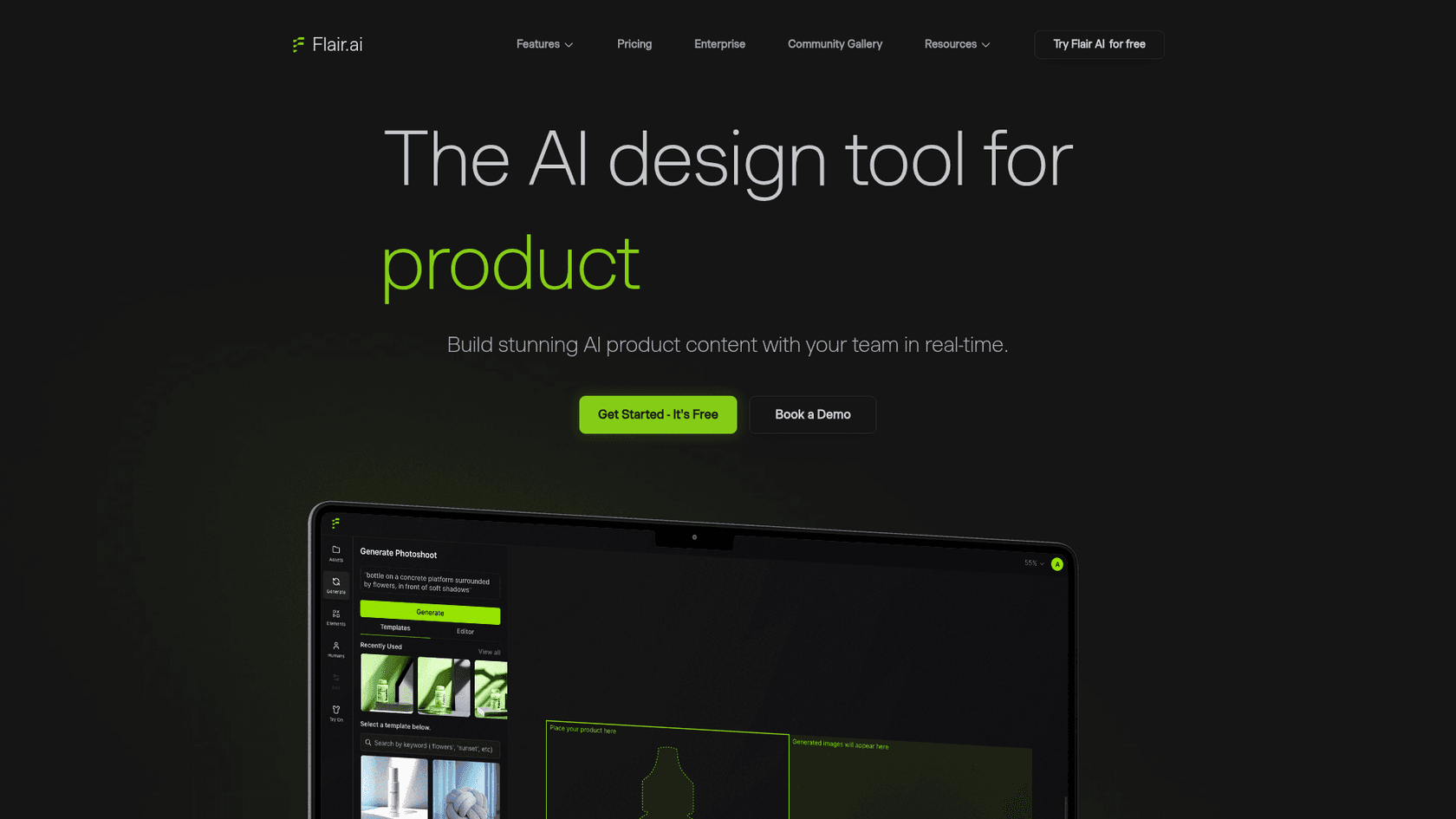
Flair.ai is a leading AI design tool focused entirely on creating visual content for ecommerce. It lets you create professional-looking product photoshoots and marketing assets without the cost and hassle of a physical studio.
Key Features: It has a simple drag-and-drop canvas, can generate AI models for fashion products, and offers tons of templates for creating on-brand scenes for your products.
Limitations: Flair is a dedicated visual tool. It doesn't generate any written content, so you'll need to pair it with a writing tool to build out a complete content strategy.
Pricing: Flair offers a free plan to get you started. Their paid plans start at $8/month.
How to start using AI for your store
Ready to give it a shot? Here's a simple way to get started without getting overwhelmed.
- Find your biggest bottleneck: What's eating up the most time right now? Is it writing SEO blogs? Creating product photos? Pick a tool that solves your most pressing problem first.
- Start with a free trial: Nearly every platform offers a free plan or trial. Use it to generate some sample content and see if the quality and style fit your brand.
- Measure the impact: Keep an eye on the results. Track metrics like time saved, organic traffic growth, or conversion rate improvements to see if it's worth the investment.
A three-step workflow for adopting AI ecommerce content AI: identify your bottleneck, start with a free trial, and measure the impact.
For a deeper look at how leading brands are leveraging these technologies, the video below provides real-world examples of AI systems giving ecommerce stores a competitive edge.
The evolving role of AI in ecommerce
AI is fundamentally changing how ecommerce content gets made. The right platform can automate the content process, from research and writing to creating assets and optimizing for search. It allows brands to scale their content marketing without proportionally scaling their workload or team.
For those interested in exploring these capabilities, tools like the eesel AI blog writer allow you to generate a blog post for free to see the process in action.