How to write blog headlines that get clicks and rank on Google

Stevia Putri

Katelin Teen
Last edited January 20, 2026
We've all been there. You pour hours, maybe even days, into a blog post you're really proud of, hit publish, and then... crickets. It's a special kind of frustrating. And here’s a stat that doesn't help: only about two out of ten people will ever read past your headline. That means your headline is doing almost all the work.
Writing a good one feels like you're walking a tightrope. You need to be creative enough to catch someone's eye, but also direct and keyword-savvy enough for Google's algorithm. One side demands personality, the other demands data. So how do you make them both happy?
The psychology behind clickable blog headlines
Before you start thinking about keywords, you need to think about people. Good headlines tap into basic human psychology to grab attention in an already overflowing feed. It’s not about secret tricks, but more about understanding what makes us all tick.
Why clarity is king in blog headlines
We've all seen those overly clever headlines that try so hard to be witty they forget to be clear. Never, ever sacrifice clarity. If someone has to spend more than a second trying to figure out what your article is about, they’re already gone. Your headline's main job is to instantly tell the reader, "Here's what this is, and here's why you should care."
For example, a headline like "The Content Labyrinth" sounds mysterious, but it tells you nothing. A much better version would be "5 Ways to Simplify Your Content Strategy." One is vague, the other promises a clear solution. Always go with clear.
Sparking curiosity and emotion
Okay, so clarity is important, but boring doesn't get clicks. This is where curiosity comes in. A great headline creates a "curiosity gap", a little space between what your reader knows and what your article promises to tell them. It makes them feel like they're missing out on something if they don't click.
You can also use "power words" to give your headline an emotional kick. Words like "Secret," "Instantly," "Simple," or "Proven" can trigger feelings of exclusivity, urgency, or relief, making your headline that much more tempting.
Answering "what's in it for me?"
This is the golden rule of copywriting, and it's especially true for headlines. Every person scrolling through the internet is subconsciously asking, "What's in it for me?" (WIIFM).
Balancing SEO and human readers
A decade ago, you could get away with stuffing keywords into a headline and calling it a day. Now, you have to please two very different audiences: the search engine algorithms and the actual people who will be reading your stuff. The good news is their interests are starting to line up more than they used to.
Writing headlines for search engines
Google’s job is to give people the most relevant result for their search. Your headline needs to send clear signals that your content is the right choice.
- Keyword Placement: Try to include your target keyword as naturally as you can, ideally toward the beginning of the headline. This is a strong signal to search engines about your topic.
- Search Intent: Your headline has to match why the user is searching. Are they looking for information ("how to"), a comparison ("best"), or a specific brand? A headline that doesn't match the user's intent won't rank, no matter how clever it is.
- Structure and Length: Google usually shows the first 50-60 characters of a headline in search results. If yours is too long, it'll get cut off, and your message might get lost. Keep it concise.
Writing headlines for human readers
While you’re checking off the SEO boxes, don’t forget about the person on the other side of the screen.
- Benefit-driven language: Like we talked about, focus on the value. Use your headline to show the reader exactly what they'll gain from reading your post.
- Brand voice: Your headline is a tiny snapshot of your brand's personality. Are you witty, serious, helpful, or authoritative? Let that come through.
- Emotional triggers: Use those power words we mentioned to make your headline more engaging and shareable. A headline that sparks an emotion is one that gets clicked.
An infographic comparing how to write blog headlines for search engines versus human readers, outlining the key considerations for each audience.
Proven formulas for effective blog headlines
Staring at a blank page is the worst. When you’re stuck, there's no need to reinvent the wheel. These tried-and-true headline formulas work because they’re built on the psychological principles we just covered. Think of them as your creative starting blocks.
The "how-to" formula
This is a classic for a reason. It directly promises a solution to a problem, which is usually why people are searching in the first place.
- Formula: How to [Achieve a Desired Outcome] Without [Common Pain Point].
- Example: "How to Write High-Ranking Content Without an SEO Expert."
The list formula
People love lists. They’re easy to scan and promise a set number of takeaways. The number itself creates a sense of structure and makes the content feel manageable.
- Formula: [Number] [Adjective] Ways/Tips/Tricks to [Achieve a Desired Outcome].
- Example: "11 Simple Tricks to Make Your Blog Headlines Irresistible."
The question formula
A good question headline engages the reader directly and often taps into a fear or curiosity they already have. It makes them think and want to know the answer.
- Formula: Are You Making This [Common Mistake]?
- Example: "Is Your About Page Secretly Driving Away Customers?"
The secret-revealing formula
This formula plays on our desire for inside information. It creates a strong curiosity gap by promising to reveal something not everyone knows.
- Formula: The Secret to [Achieving a Desired Outcome].
- Example: "The Secret to Writing Website Copy Your Competitors Wish They Had."
Here’s a quick summary to keep handy:
| Formula Name | Structure | Example |
|---|---|---|
| The How-To | How to [Achieve Outcome] Without [Pain Point] | How to Write Blog Posts Without Spending Hours Researching |
| The List | [Number] [Adjective] Ways to [Achieve Outcome] | 7 Proven Ways to Get More Clicks on Your Headlines |
| The Question | Are You Making This [Common Mistake]? | Are You Forgetting This Key SEO Step in Your Headlines? |
| The Secret | The Secret to [Achieving a Desired Outcome] | The Secret to Writing Headlines That Go Viral |
| The Case Study | How [Person/Brand] Achieved [Impressive Result] | How We Grew Our Blog Traffic by 750,000 Impressions |
Using AI tools to write headlines faster
Knowing all these rules and formulas is great, but putting them into practice every single time can be a grind. This is where technology can step in to speed things up and get you better results.
Generating headlines and full posts with the eesel AI blog writer
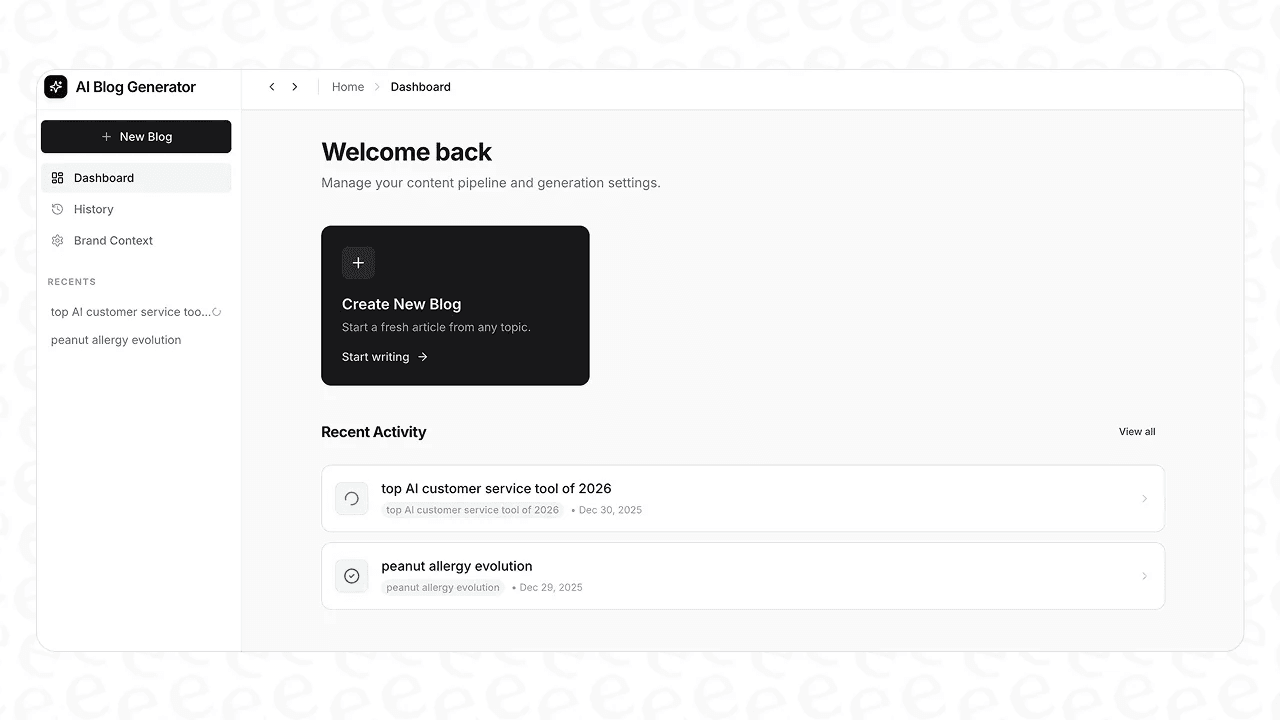
You provide it with a keyword or topic, and it generates a complete, media-rich article, starting with a compelling H1, SEO title, and meta description. Here’s what makes it different:
- Context-aware research: The AI does research based on your topic to ensure the headline and the content are matched and useful.
- Automatic assets and social proof: The blog posts it creates come with AI-generated images, relevant YouTube video embeds, and even real quotes from Reddit forums.
- Built for modern search: It's optimized for both traditional SEO and Answer Engine Optimization (AEO), so your content is ready to perform well in Google's AI Overviews.
It’s free to try, and paid plans start at $99 for 50 blogs.
Other helpful tools for writing headlines
If you prefer a more hands-on approach or want to polish headlines you've already written, a few other AI tools can help.
CoSchedule headline analyzer
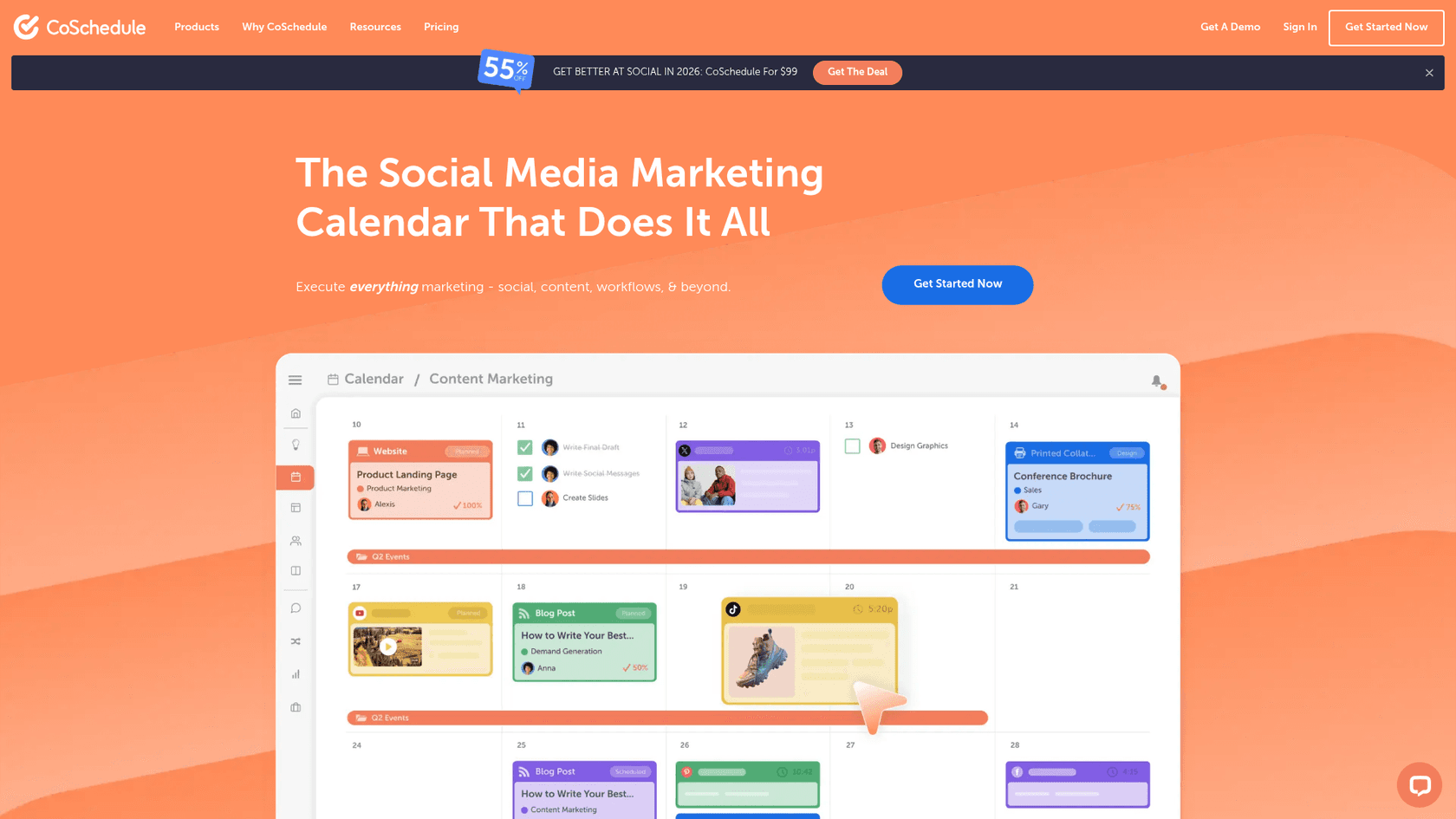
This is a tool for grading your headlines. You paste in a headline, and it provides a score based on factors like word balance, sentiment, length, and clarity. It’s useful for fine-tuning an idea you already have.
- Limitations: It is an analyzer, not a generator, so it helps refine existing headlines rather than creating them from scratch. It does not write the corresponding blog post.
This also proves a point with every single tool out there on the market and that is to NEVER TAKE THEIR OUTPUT OR RESULTS AS THE ULTIMATE TRUTH.

ChatGPT and Jasper for brainstorming
General-purpose AI writers like ChatGPT and Jasper can be useful for brainstorming a list of headline ideas. You can give them a topic and ask for ten different headline angles.
- Limitations: The output from these general-purpose tools may require editing for brand voice and specificity. They can provide a wide range of ideas but may not have the same built-in SEO and content structuring features as specialized blog writing tools. It's important to note that Google's guidelines, as highlighted by representatives like John Mueller, suggest human oversight for AI-generated content to ensure quality.
- Pricing: Both are subscription-based. ChatGPT has a free version, with Plus plans at $20/month. Jasper's plans start at $59/month when billed annually.
Common mistakes to avoid
Before you hit publish, run your headline through this quick mental checklist to make sure you're not falling into any common traps.
The "clever but confusing" mistake
We touched on this before, but it's worth saying again: clarity always wins. If your reader has to pause and think, "Wait, what does that mean?" you've already lost them.
Avoiding the bait-and-switch
Don't write a dramatic, over-the-top headline that your content can't deliver on. Clickbait might get you the initial click, but it destroys trust and sends your bounce rate through the roof when readers realize you didn't keep your promise.
Confusing SEO titles and H1 tags
This is a subtle but important one. Your SEO title (or title tag) is what shows up in Google's search results. Its job is to earn the click. The H1 tag is the main headline on the actual page that the reader sees after they click.
According to a discussion among SEOs on Reddit, these two serve slightly different purposes but should be very similar.
Pro tip
Many SEOs now recommend making your H1 and title tag identical. Why? Because Google often rewrites title tags anyway, and when it does, it frequently pulls from the H1 tag. Keeping them the same gives you more control over what shows up in the search results.
Avoiding generic phrases
Specific headlines almost always do better than general ones. "Photography Tips" is weak. "7 Composition Tricks for Sharper Landscape Photos" is strong. It's specific, it promises a number, and it targets a particular type of photographer. The more specific the benefit, the more compelling the headline.
If you prefer learning through video, here's a great resource that breaks down how to craft headlines that grab attention and encourage clicks, covering many of the principles we've discussed.
Final thoughts
At the end of the day, your headline is the front door to your content. No matter how brilliant your blog post is, it won't matter if no one clicks to read it.
A great headline isn't just a string of words; it's a careful mix of psychology, SEO, and proven formulas. It has to be clear, compelling, and built for both people and search engines.
AI tools can help streamline the process. For example, you can generate a complete, SEO-optimized blog post, including the headline, with the eesel AI blog writer, which is free to try.

Frequently Asked Questions
Share this article

Article by
Stevia Putri
Stevia Putri is a marketing generalist at eesel AI, where she helps turn powerful AI tools into stories that resonate. She’s driven by curiosity, clarity, and the human side of technology.
