How to write a blog bio that builds trust and authority

Amogh Sarda

Katelin Teen
Last edited February 1, 2026
Let's be honest, most of us pour hours into polishing a blog post. We obsess over the intro, hunt for the perfect images, and rewrite the conclusion a dozen times. Then, we slap together an author bio in about 30 seconds. It often feels like a footnote, but that little block of text is your digital handshake. It’s your best shot at building a genuine connection, establishing your credibility, and making readers feel like they’ve found their person.
A great bio signals that they're in the right place and that you're the right guide for their journey. In this guide, we'll break down the essential pieces of a powerful bio, go over the common mistakes pretty much everyone makes, and show you how to tweak it for different platforms. And if you’re just staring at a blank page, don’t sweat it. Tools like the eesel AI blog writer can help you generate human-sounding content that builds that trust from the get-go.
The basics of how to write a blog bio: What it is and isn't
So, what is a blog bio, really? Think of it as a short, punchy summary that introduces you, explains what you're good at, and gives the reader a clear reason to stick around and listen to what you have to say. It’s your elevator pitch for the internet.
But it’s just as important to know what it isn’t.
- It’s not a resume. A resume is a dry, chronological list of your jobs for a hiring manager. A bio, on the other hand, is all about being relevant to your audience. It picks out the parts of your story that matter most to them.
- It’s not your full "About Me" page. Your bio is the movie trailer, not the whole movie. It’s a snapshot meant to grab attention and make someone curious enough to want more. The "About Me" page is where they go for the full story.
This small piece of content does a lot of heavy lifting. It’s a key signal for what Google calls E-E-A-T (Experience, Expertise, Authoritativeness, and Trustworthiness). A well-written bio shows both people and search engines that your content is coming from a real, knowledgeable human.
Foundational elements for how to write a blog bio that's memorable
Every great bio, no matter where it's posted, is built on a few core ideas. Get these right, and you'll have a solid foundation you can adapt for any platform.
How to write a blog bio that starts with your reader
This is the golden rule. The biggest mistake people make is making their bio all about themselves. Instead, flip the script and think about what your ideal reader actually wants to know. What problem are you helping them solve? Frame your skills and experience as direct benefits to them.
For example, instead of saying, "I'm a certified content marketer with ten years of experience," try something like, "I help small businesses grow their traffic" with proven content strategies." See the difference? The first is about you; the second is about what you can do for them.
A simple formula to follow is: I help [your audience] achieve [their goal] through [your method].
How to write a blog bio with a concise and compelling story
Facts are fine, but stories are what stick with people. A little storytelling is what separates a forgettable bio from one that creates a real connection. You don’t need to write a novel, just a quick mention of the journey that led you here.
What personal experience or "aha!" moment makes you the perfect person to write on this topic? Compare a generic statement like "I am a marketing professional" with something more story-driven, like "After a decade in corporate marketing, I realized my real passion was helping small businesses find their voice online." It instantly makes you more human.
How to write a blog bio that showcases your expertise
Remember E-E-A-T? Your bio is the perfect place to show off your credentials without sounding like you’re bragging. The goal is to build trust and show your readers (and Google) that you know your stuff.
Here are a few ways to build credibility:
- Mention relevant qualifications, degrees, or certifications.
- Include any notable achievements, like awards, major publications you've been featured in, or conferences where you've spoken.
- Link to your LinkedIn profile or other professional sites where your work is on display.
Let your personality shine through
Your bio should sound like you. Don't be afraid to let your real tone and voice come through. If you’re funny, add a little humor. If you have a weird hobby, share it. These personal details are what make you memorable.
Something as simple as, "When I’m not digging into SEO data, you can find me trying to keep my houseplants alive," can make you so much more relatable. It’s a common tactic you’ll see in many eye-catching author bios for a reason: it works.
How to write a blog bio for different platforms
Your bio isn't a one-size-fits-all kind of thing. A punchy Twitter bio won't cut it for a detailed LinkedIn summary. Here’s how to adapt your core message for different places.
How to write a blog bio for short-form platforms like social media
- Platforms: Think Twitter, Instagram, and the short author bylines at the end of articles.
- Focus: You need to make a big impact in a tiny space, often under 160 characters.
- Key elements: Keep it simple: who you are, what you do, and a link. Use keywords relevant to your niche (e.g., "SaaS content writer," "SEO strategist") to help people find you.
How to write a blog bio for mid-form platforms like LinkedIn
- Platforms: Your LinkedIn summary, the author box for a guest post, or a speaker bio for an event.
- Focus: Here you can add more professional detail, usually around 100-250 words.
- Key elements: Expand on your accomplishments. These are often written in the third person ("Jane is a...") to give them a more professional and objective feel.
Third person is the preferred POV for biographical shorts - and there should be some basic info on you, but definitely stylize it to match both you and what you submitted. Do you submit horror, bring up some horror interests.

How to write a blog bio for your long-form "about" page
- Platform: This is for your dedicated "About" or "Meet the Team" page on your own website.
- Focus: This is the full story. It’s your chance to connect your backstory, mission, and vision into one narrative.
- Key elements: Weave together your personal and professional journeys. You can include things like client testimonials or case studies and should always end with a clear call to action, like "Book a call" or "Check out my services."
How to write a blog bio fast with the eesel AI blog writer
Feeling stuck? Sometimes the hardest part is just getting started. If you're looking for a way to create a first draft, the eesel AI blog writer is a practical way to get a high-quality draft done in minutes.
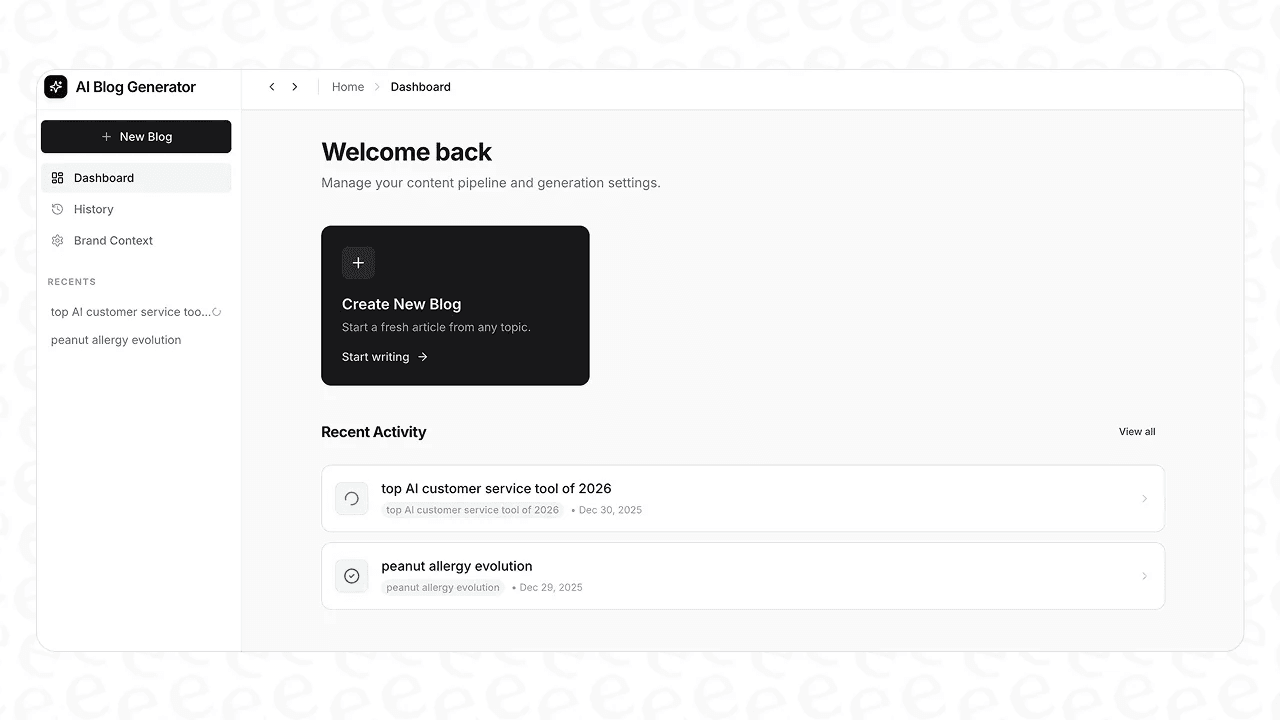
The process is simple and context-aware:
- Start by entering a topic like "professional bio for a content marketer."
- Add your website URL. This gives the AI automatic brand context, so the output sounds like you, not a generic robot.
- In seconds, eesel AI generates a draft that sounds genuinely human.
It’s built to help with common writing challenges:
- Human Tone: The AI has been refined to produce authentic, relatable content.
- Context-Aware Research: The tool understands your goal is to build E-E-A-T. It can even find and embed real quotes from Reddit to add a layer of social proof to your content.
- Automatic Assets: It can suggest images and other media to make your bio or blog posts more engaging.
It's completely free to try, allowing you to generate a draft and see the quality for yourself.
Common pitfalls to avoid when learning how to write a blog bio
Crafting the perfect bio also means knowing what not to do. Here are a few common traps to avoid.
- The Corporate Robot: Ditch the corporate jargon and buzzwords. Terms like "synergize," "leverage," or "results-driven" can make you sound stuffy and push readers away. Keep it simple and clear.
- The "Compare and Despair" Trap: It’s tempting to look at someone else's bio and try to copy their style. Don't. Your bio should be a reflection of you. Find your own voice instead of trying to be someone you're not.
- Forgetting the Call-to-Action (CTA): Never leave the reader hanging. Your bio should always guide them to the next step. Do you want them to read your latest post? Follow you on Twitter? Subscribe to your newsletter? Tell them what to do.
- The "Set It and Forget It" Mistake: Your bio isn't carved in stone. It’s a living document that should evolve as your skills and goals change. Revisit it every few months to make sure it's still accurate.
- Writing for search engines first: While E-E-A-T is important, Google’s own guidance stresses creating "people-first content." Your bio is no exception. Write for your reader, and the SEO benefits will follow.
Getting feedback on how to write a blog bio and refining it
Once you have a draft you feel good about, get a second opinion. We're often too close to our own writing to see where it's confusing or just doesn't land right.
Ask peers in your industry, a mentor you trust, or even a friend who knows you well. They'll be able to tell you if it genuinely sounds like you. Ask them specific questions to get useful feedback. Instead of "What do you think?", try asking things like, "Was there anything in this piece that was confusing?" or "After reading this, is it totally clear what I do and who I help?"
For those who prefer learning through video, watching experts break down the process can be incredibly helpful. This tutorial provides a clear, step-by-step guide to crafting a professional bio that gets noticed and helps you connect with your audience.
Your digital handshake: Refining your bio
Your blog bio is so much more than a few lines of text at the bottom of a page. It's your opportunity to make a great first impression. A powerful bio is always focused on the reader, tells a compelling story, showcases your expertise, and is infused with your unique personality.
Remember that it’s a living document that should grow and change right along with you. So use these tips to start crafting a bio you’re proud of. And if you want a head start, why not generate your draft for free with the eesel AI blog writer?

Frequently Asked Questions
Share this article

Article by
Amogh Sarda
CEO of eesel AI. Amogh Sarda is obsessed with making the ultimate AI for customer service teams. He lives in Sydney, Australia and has previously worked at Atlassian and Intercom. Outside of work he’s usually surfing or on stage doing improv.
