How to transcribe podcasts into blogs with AI: A complete guide

Stevia Putri

Katelin Teen
Last edited February 1, 2026
You've poured hours into creating a great podcast. You've done the research, had insightful conversations, and edited the audio until it's just right. But here's the catch: all that valuable content is pretty much invisible to search engines and off-limits to anyone who prefers reading over listening.
With the number of global podcast listeners expected to reach 584.1 million in 2025, you're missing out on a huge audience if you aren't repurposing your audio into text. Turning your episodes into blog posts unlocks some serious SEO benefits, makes your content accessible to everyone, and helps you connect with people you'd never reach with audio alone.
But let's be honest, manually transcribing and rewriting episodes is a mountain of work. It’s just not a scalable process.
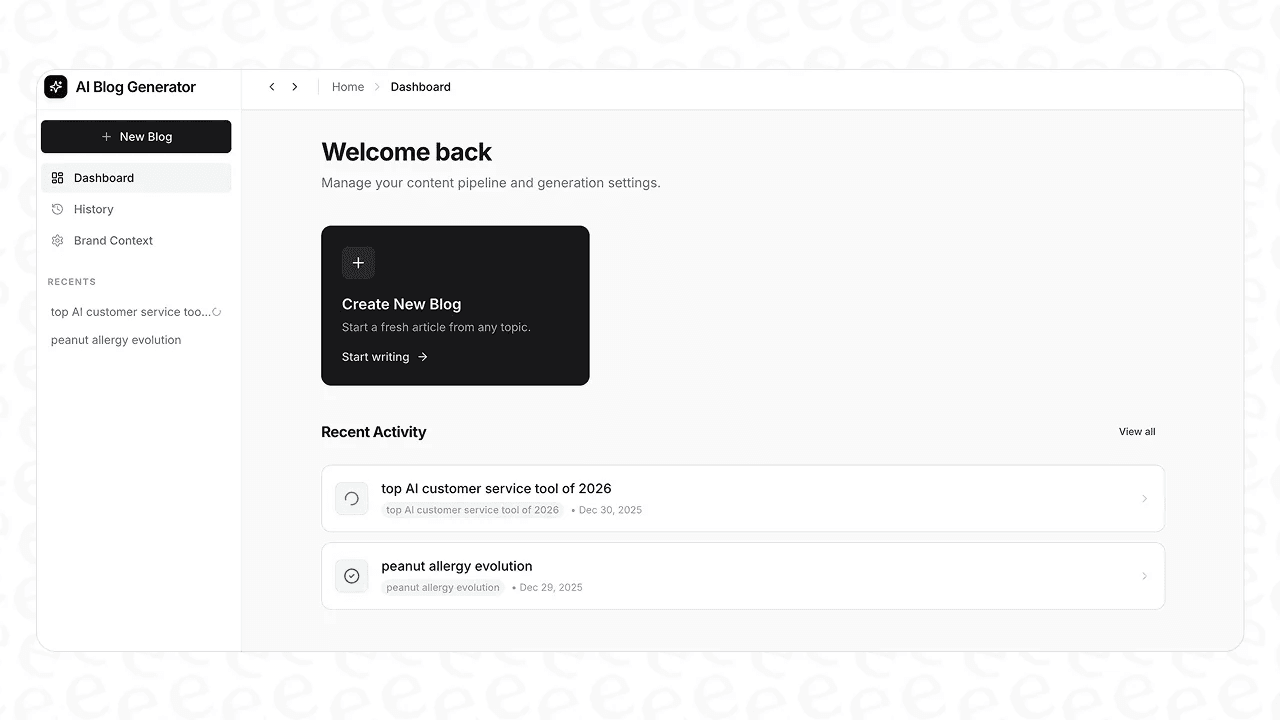
This is where AI can step in. The technology has evolved way beyond basic transcription. Modern tools, like the eesel AI blog writer, can now manage the entire workflow, turning a topic from your podcast into a complete, ready-to-publish blog post.
The evolution of transcribing podcasts into blogs with AI
The whole idea of turning audio into text with AI has changed a lot. The tools you can use today produce wildly different results, so it’s good to know what you’re getting into.
Traditional AI transcription
This is the original method. You upload an audio file, and an AI service gives you back a raw, unedited text file. Tools like Sonix or Otter.ai are common choices for this, but they have their limits. For example, Otter.ai’s free plan only lets you transcribe 30 minutes per conversation, which doesn't quite cover a typical podcast episode.
I’ve tried Sonix for my podcasts. It’s free for a few minutes per month, but it struggles with background noise and multiple speakers. You also have to do quite a bit of cleanup afterward, so it’s better for shorter clips or very clean audio.

The main challenge is that you receive a large block of text. This output is a direct transcription, which typically requires significant manual editing to structure it into a readable blog post with proper formatting.
Modern AI content repurposing
This is a more recent approach. Instead of just transcribing, the AI analyzes, structures, and polishes the content to create a finished blog post that’s ready to go live. The goal isn't just to get the words down; it's to create a final product that’s designed to be read and to rank on search engines. This moves beyond simple transcription toward comprehensive content creation. The infographic below illustrates the difference between these two approaches.
Key benefits of turning podcasts into blogs with AI
It might seem like extra work, but repurposing your podcast content pays off in some big ways. Here’s a breakdown of why it’s worth the effort.
Boost your SEO and online visibility
This is the main one. Search engines can't listen to your audio, but they can crawl and index text. A blog post makes all those deep, nuanced conversations you’re having discoverable on Google.
Transcripts help you maximize your SEO by letting you rank for all sorts of long-tail keywords that pop up naturally in your dialogue. Plus, when other sites quote your content, they’ll link back to your blog post, giving your website’s authority a nice little boost.
Improve accessibility for a wider audience
Making your content accessible is just good practice. Blog posts open up your podcast to people with hearing impairments who can't consume audio content.
But it’s not just about them. You also reach non-native speakers who find it easier to read than listen, or people scrolling on their phone in a noisy coffee shop who can't put in their earbuds. You’re meeting people where they are, in the format they prefer.
Create evergreen content from your audio archive
Podcast episodes tend to have a short shelf life. They get a burst of attention when they’re new, but then they fade into your back catalog. Blog posts are different.
A well-optimized article can keep pulling in organic traffic for years. It gives your old episodes a second life, continuing to deliver value and attract new audiences long after you hit publish. Your audio archive becomes a library of evergreen content that works for you around the clock.
Unlock new content and monetization opportunities
A blog post is a great starting point for even more content. You can easily pull quotes for social media, create email newsletters, or build out infographics. Tools like Podsqueeze are great for spinning off smaller assets like this.
On top of that, blogs open up new ways to make money. You can add affiliate links, run display ads, or feature sponsored content, all revenue streams that are completely separate from your podcast sponsorships.
A comparison of approaches for transcribing podcasts into blogs with AI
So, you're sold on the idea. But what's the best way to actually do it? Different AI workflows offer varying levels of speed, quality, and required effort. Let's break down the main options.
The content generation approach with eesel AI blog writer
This approach offers a direct path to creating an SEO-driven blog post. It's an end-to-end solution that takes a different approach to the traditional process.
Instead of starting with an audio file, you start with your podcast's topic or a target keyword. The eesel AI blog writer then does its own deep research to generate a completely new, original article. This is the exact tool we used to grow our own organic traffic from 700 to 750,000 impressions in just three months.
Here’s what makes it different:
- From Topic to Complete Post: It doesn’t just rehash your audio. It creates a fresh, SEO-optimized asset from scratch, designed to rank for your chosen keyword.
- Automatic Asset Generation: It builds a media-rich article for you, automatically creating and adding relevant images, tables, and infographics to keep readers engaged.
- Authentic Social Proof: It pulls in relevant YouTube videos and actual quotes from Reddit discussions, adding a layer of credibility and human insight you just can't get from a simple transcript.
- Optimized for Search: The final post is optimized for both traditional search engines (SEO) and the new wave of AI Answer Engines like Google AI Overviews (AEO), making sure you’re visible everywhere.
The manual multi-tool approach (AI transcription + LLM)
This is the classic DIY workflow. It’s a two-step process that gives you more manual control but also demands more of your time.
- Step 1: Get a raw transcript. First, you'll use a transcription service like Sonix or Otter.ai to turn your audio into text. Just remember the limitations, Otter.ai’s free plan, for instance, cuts you off after 30 minutes.
- Step 2: Rewrite with a chatbot. Next, you copy that raw transcript and paste it into a chatbot like ChatGPT. You’ll need a detailed prompt, something like: "Turn this podcast transcript into a 1,500-word blog post with an introduction, H2 and H3 headings, and a conclusion."
<quote text="ChatGpt is a great alternative too. It's powerful, but it demands manual work. A podcaster has to:
- Get the transcript from their audio.
- Copy and paste it into ChatGPT.
- Write a very specific, detailed prompt.
- Copy the output.
- Manually format it for their blog (add headings, bold text, etc.)." sourceIcon="https://www.iconpacks.net/icons/2/free-reddit-logo-icon-2436-thumb.png" sourceName="Reddit" sourceLink="https://www.reddit.com/r/podcast/comments/1mxwkns/comment/naehwmy/">
Limitations: This approach gives users full control but is more time-intensive. It requires skill in prompt engineering to guide the AI, and visuals must be created separately. The final text may need significant editing to align with a specific brand voice.
The specialized repurposing tool approach
Then there are tools designed specifically to turn audio and video into different content formats. Think of services like Podsqueeze or VideoToPage.
These tools are great for quickly generating supplementary content. Podsqueeze, for instance, can spit out show notes, newsletters, and social media clips in minutes. VideoToPage creates blog drafts that identify who is speaking and even includes an embedded audio player with timestamps.
Limitations: These tools are effective for generating supplementary content like show notes and social snippets. The blog posts they create are often structured summaries of the original conversation, which may require further optimization to function as a standalone pillar post for competitive keywords.
Comparison of podcast-to-blog AI workflows
| Feature | eesel AI blog writer | Multi-Tool (Transcription + LLM) | Specialized Repurposing Tool |
|---|---|---|---|
| Workflow | Single-step (enter topic) | Multi-step (upload, transcribe, copy, prompt, edit) | Single-step (upload audio/video) |
| Primary Output | Complete, SEO-optimized blog post | Raw text draft requiring manual editing and formatting | Show notes, summaries, social clips, basic draft |
| SEO Optimization | Built-in (SEO & AEO) | Fully manual (requires separate keyword research and optimization) | Basic keyword inclusion based on transcript |
| Asset Generation | Automatic (images, tables, video embeds, quotes) | None (must be created manually) | Limited (audiograms/clips) |
| Best For | Scaling high-quality, evergreen blog content designed to rank and drive organic traffic. | Users who need a basic transcript and enjoy hands-on content creation and prompt engineering. | Podcasters focused on creating supplementary content like show notes and social media snippets quickly. |
For those who prefer a visual walkthrough, the video below offers a great overview of turning podcast episodes into blog posts, highlighting key strategies that can boost your brand's visibility and website traffic.
Best practices for converting podcasts into high-quality blog posts
No matter which tool you use, a few best practices will help you make sure the final product is something people will actually want to read.
Go beyond a direct transcript
A word-for-word transcript is not a blog post. Spoken language is often repetitive and doesn't follow a clean narrative. The goal is to create a new, standalone piece of content that’s inspired by the audio, not just a carbon copy of it.
Structure for scannability
People scan online content; they don't read it word-for-word. Use clear H2 and H3 headings to break up your text. Keep paragraphs short. Use bullet points and bold text to highlight key information. Make it easy for readers to find what they're looking for in a hurry.
Add rich media and visuals
A wall of text is intimidating. Visuals break things up and increase the time people spend on your page. Add relevant images, charts, or screenshots to illustrate your points. If you're using a tool like VideoToPage, embedding the audio player with clickable timestamps is a nice touch that connects the blog back to the original episode.
Edit for a consistent brand voice
Even the best AI-generated text needs a final once-over. Read through the article to make sure it sounds like you. Whether your brand voice is casual, technical, or super formal, a quick human touch ensures the tone is perfect and aligns with all your other content.
Make your content discoverable
Repurposing your podcast into a blog is a smart move for boosting your SEO, reaching a wider audience, and making your content more accessible. And thanks to AI, the process is faster and more scalable than ever.
The tech has moved far beyond simple transcription. Modern tools can now handle the entire content creation workflow, from research and writing all the way to adding visuals and social proof.
The question is no longer if you should be turning your podcast into a blog, but how you can do it most efficiently to get the biggest return on your effort.
Start turning your podcast topics into blogs today
Instead of juggling multiple tools, writing complex prompts, and spending hours editing a raw transcript, you can generate a complete, publish-ready article designed from the ground up to rank in search engines and drive traffic.
Try the eesel AI blog writer for free and see how easily you can transform your best ideas into SEO-optimized blog posts that get real results.

Frequently Asked Questions
Share this article

Article by
Stevia Putri
Stevia Putri is a marketing generalist at eesel AI, where she helps turn powerful AI tools into stories that resonate. She’s driven by curiosity, clarity, and the human side of technology.