How to scale high volume keyword pages without an army of writers

Amogh Sarda
Last edited January 15, 2026
Trying to rank for high-volume keywords can feel like the final boss in an SEO video game. It's the big prize, the one that promises a wave of organic traffic that could seriously change your business. But getting there is a massive grind. Creating hundreds of quality pages takes an incredible amount of time, effort, and cash, which most teams just don't have. You're usually caught between doing everything by hand (which is slow and doesn't scale) or using spammy automation that could get your site penalized.
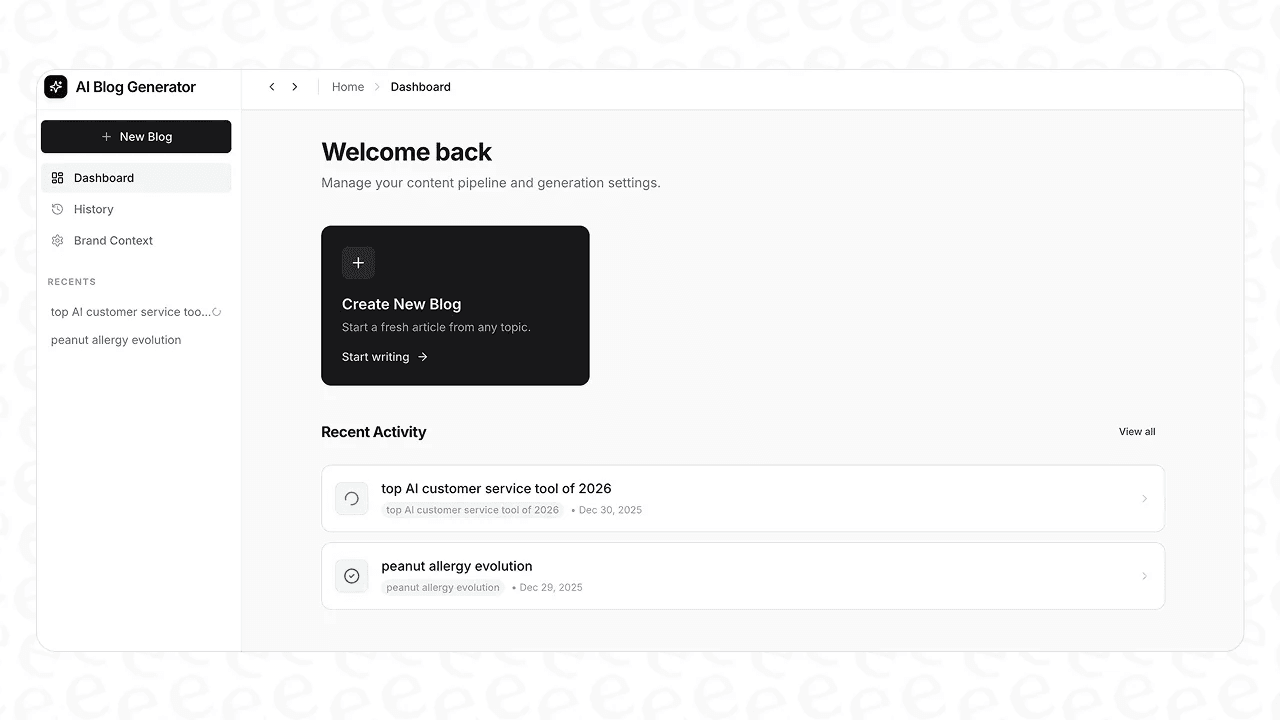
But what if scaling your content was about having a smart, repeatable strategy and the right tools, not just brute force? That's when things start to click. Modern AI has made it possible to generate hundreds of genuinely good pages without needing a huge team. We built the eesel AI blog writer for this exact reason. It's how we grew our own blog from 700 to 750,000 daily impressions in just three months.
Understanding high-volume keywords and their challenges
Before we get into the "how," let's make sure we're on the same page about the "what" and the "why." Here, we'll break down what high-volume keywords actually are and look at the common roadblocks that make scaling content feel like pushing a boulder uphill.
Defining high-volume keywords
"High-volume keywords," sometimes called "head terms," are the broad search queries that get thousands or even millions of searches every month. Think about terms like "project management software" or "email marketing." They're short, super competitive, and represent a huge potential audience.
On the other side, you have "long-tail keywords." These are more specific phrases people search for, like "best project management software for small creative teams." They get much less search volume, but the people using them usually know what they want, which means they're often closer to buying something. A good scaling strategy doesn't just target one or the other. It's about capturing hundreds of these long-tail variations that all circle around a central head term, creating a wide net to catch all kinds of relevant traffic.
Traditional roadblocks to scaling content
So if the strategy is pretty straightforward, why isn't everyone doing it? Because the old way is incredibly difficult. Here are the main hurdles:
- It's a huge resource drain. This is the main problem. To manually create hundreds of well-researched pages, you need a team of writers, editors, and SEOs. The cost and time involved are just too much for most companies.
- Keeping quality consistent is tough. Think about trying to make 500 blog posts sound like they came from the same brand, with the same facts and quality. It's a logistical headache. When you produce more, quality tends to drop.
- SEO gets complicated fast. Every page needs to be optimized with the right headings, keyword placement, internal links, and meta descriptions. Trying to manage all those details across hundreds of pages by hand is a recipe for errors.
- The upfront investment can be massive. Old-school programmatic SEO often means a big one-time development cost to build the templates and databases. You could be out tens of thousands of dollars before you even publish a single page.
The strategic framework for scaling content
Okay, enough with the problems. Let's get to the solution. A solid content scaling strategy isn't about just pumping out content at random; it’s about having a repeatable framework. It all comes down to three things: picking the right creation model, finding scalable keyword patterns, and using a hub-and-spoke structure to keep it all organized.
Choosing a content creation model
When you're creating content at scale, you have a couple of paths you can take.
First, there's Traditional Programmatic SEO (pSEO). This is what giants like Zillow, Zapier, and TripAdvisor do. They create handmade templates filled with data. Think of Zillow's pages for "homes for sale in [city]." It’s the same template, just with different data for each location. This approach is super effective, but it requires serious engineering resources to build and maintain, which puts it out of reach for most businesses.
It's also important not to confuse this with Scaled Content Abuse. This is the junk Google's spam policies are meant to fight. It's about generating tons of unoriginal, low-value content that offers little to no help to users. The goal here is to create genuinely useful content, not to spam search results. Stay far away from this.
This brings us to the modern approach: AI-Powered Scaling. This approach gives you the scale without needing a big dev team. Instead of just plugging data into a fixed template, advanced AI tools can generate unique, well-written, and helpful content for every keyword variation. This is exactly what tools like the eesel AI blog writer are for, offering a streamlined way to create great content at scale.
Identifying keyword patterns and clusters
The key to scaling is finding repeatable formulas. You're looking for keyword patterns you can use again and again. Once you start looking for them, you'll see them everywhere.
Here are a few common examples:
- [Keyword] + "alternative" (e.g., "Salesforce alternative," "Mailchimp alternative")
- "How to" + [do something with a product] (e.g., "How to create a pivot table in Excel")
- [Product] + "vs" + [Competitor] (e.g., "Asana vs Trello")
- [Service] + "in" + [City] (e.g., "plumbers in Brooklyn")
The goal is to find a pattern that fits your business and then build a massive list of variations. This is how you create topic clusters. By grouping all these related keywords, you can systematically cover an entire subject, which is the first step in showing Google you're an expert on that topic.
For a deeper dive into building these clusters, the video below offers a great step-by-step guide on how to group your keywords and structure them for maximum SEO impact.
Building topical authority with the hub-and-spoke model
Once you have your keyword clusters, you need a way to organize them. The hub-and-spoke model is the best way to do this. It's a simple but really effective structure for building topical authority.
Here’s how it works:
- The Hub: This is your main pillar page. It targets a broad, high-volume keyword (like "Content Marketing") and acts as a complete overview of the topic. It's the central point that links out to all your more specific pages.
- The Spokes: These are the individual pages you create at scale. Each one targets a specific, long-tail keyword related to the hub (like "Content marketing for SaaS," "Content marketing tools," or "Measuring content ROI").
The real power is in the interlinking. Every spoke page links back to the hub page, and they also link to each other when it makes sense. This creates a tight web of content that tells Google you're a comprehensive resource on the topic. This structure helps spread link equity (or "PageRank") through the cluster and boosts the authority of every single page.
Executing and automating your strategy with eesel AI
Alright, we've covered the strategy. Now for the fun part: actually doing it. With the framework in place, this section walks you through the practical steps and tools you need. The good news is that modern tools have made it easier than ever to create amazing content at scale.
Generate publish-ready content with the eesel AI blog writer
This is where it all comes together. The eesel AI blog writer is built to solve the scaling problem by automating the whole content creation workflow.
The process is about as simple as it gets. You give it a single keyword from one of your patterns (like "best project management software for startups"), add your website URL so it gets your brand context, and it generates a complete, SEO-optimized blog post in a few minutes.
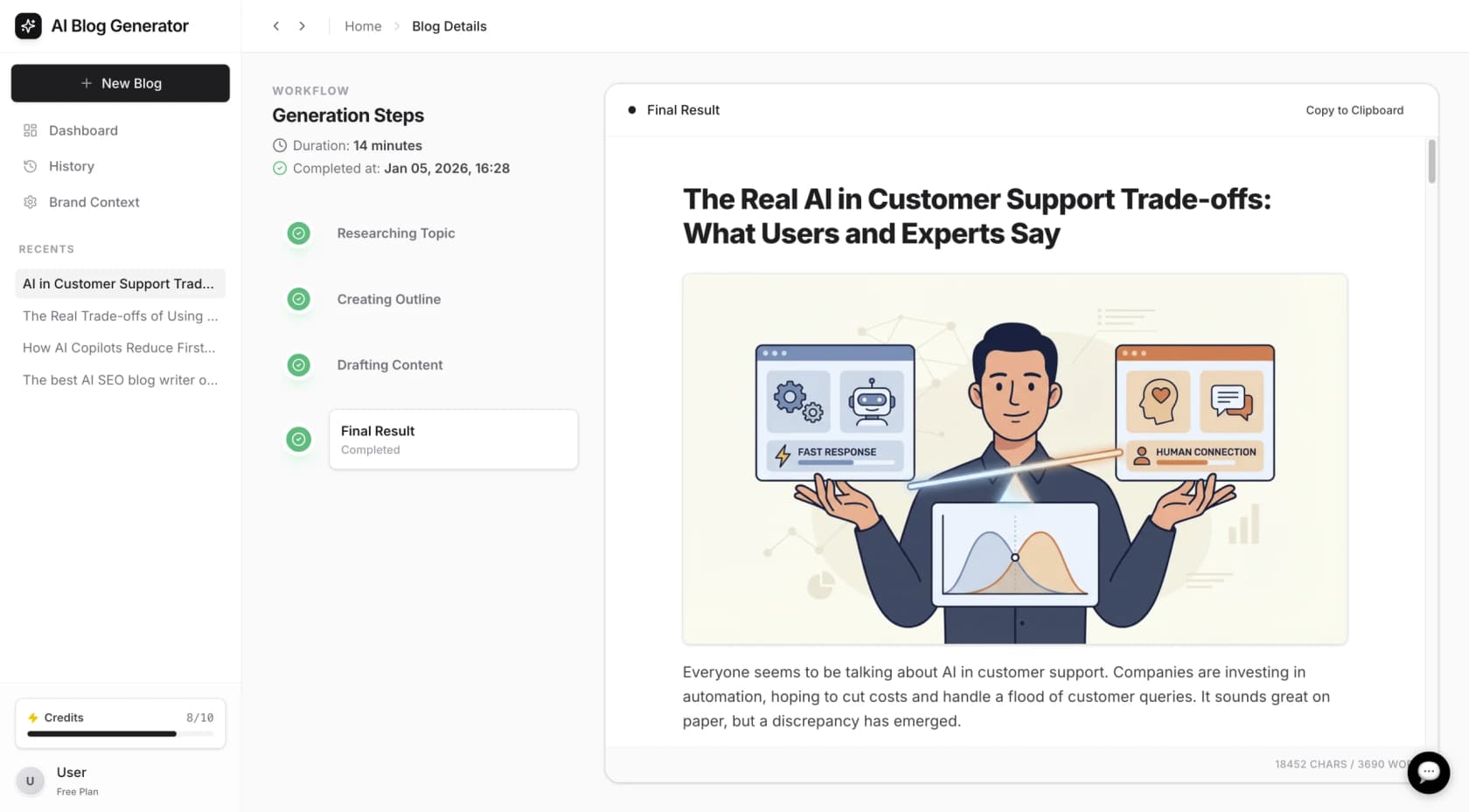
It is designed to produce content that's valuable and ready to go live. Here’s how:
- It produces a fully structured, publish-ready article. Instead of a wall of text you have to spend hours editing, it gives you a finished piece.
- Automatic assets: It automatically creates and embeds relevant assets like images, infographics, and tables. This breaks up the text and makes the content much more engaging.
- Authentic social proof: For extra credibility, it finds and includes real quotes from Reddit threads and embeds relevant YouTube videos. This shows you've done your homework and brings in real-world perspectives.
- Deep research with citations: It automatically adds internal links to your other content and includes external links to credible sources, which helps build trust with readers and search engines.
This isn't just a theory. At eesel, we used this exact tool to go from 700 to over 750,000 daily impressions in just three months by publishing over 1,000 optimized blogs.
Measuring success and refining your strategy
Scaling your content isn't something you can just set up and walk away from. To get the best results, you need to monitor performance and be ready to make tweaks. Continuous measurement and refining your strategy are what turn a good content strategy into a great one.
Tracking key metrics
Google Search Console will be your best friend here. It's the best place to get a clear picture of how your scaled pages are performing.
Here are the key metrics you should be tracking for each page:
- Impressions: How many times is your page showing up in search results? This tells you if you're even in the running.
- Average position: Where does your page usually rank for its target keywords?
- CTR: Of all the people who see your page in the results, what percentage actually clicks on it?
By watching these numbers, you can spot pages that aren't performing well. For instance, if a page gets a lot of impressions but has a very low CTR, the title tag or meta description probably isn't grabbing people's attention. With a tool like eesel AI, you can quickly adjust those elements, republish, and see if things improve.
The role of backlinks in content scaling
For the most competitive keywords, even the best content might not be enough to get you to the top on its own. This is where backlinks come into play.
Backlinks are basically votes of confidence from other websites. When a trusted site links to your page, it tells search engines that your content is valuable. For those super-competitive head terms, a strong backlink profile is often the deciding factor.
Think of link-building as the final piece of the puzzle. Once you've built your foundation of scaled content and it's starting to get some traffic, you can start strategically building high-quality links to your most important hub pages. This can give them the push they need to climb to the top of the search results and unlock a huge amount of traffic.Links are essential if you want your content or web pages to rank. If you’re in a competitive niche, links are going to be the final deciding factor on what ranks and what doesn’t.

Scaling is now within reach
For a long time, figuring out how to scale high volume keyword pages felt like a puzzle only the biggest companies could solve. That's just not true anymore. A successful strategy isn't about hiring more writers; it's about having a smart framework, like the hub-and-spoke model, and picking the right tools for your team.
By finding repeatable keyword patterns and using powerful AI tools like the eesel AI blog writer, any team can start building real topical authority and competing for those valuable keywords. The barrier to entry for large-scale, high-quality SEO has never been lower. The opportunity is there for the taking.
Generate your first scaled blog post for free
Ready to get started? The eesel AI blog writer can take your target keyword and turn it into a complete, SEO-optimized article in just a few minutes.
See for yourself how we scaled our own traffic by over 1000x. It’s completely free to try. Generate your first blog post now and see the quality for yourself.

Frequently Asked Questions
Share this article

Article by
Amogh Sarda
CEO of eesel AI. Amogh Sarda is obsessed with making the ultimate AI for customer service teams. He lives in Sydney, Australia and has previously worked at Atlassian and Intercom. Outside of work he’s usually surfing or on stage doing improv.
