AI has definitely changed how we create content. Being able to generate a blog post in just a few minutes is a huge help. But there's a pretty significant catch: AI models are designed to predict the next word in a sentence, not to understand if that word is factually correct. This can lead to some serious errors, subtle biases, and just plain weird "hallucinations."
The stakes are higher than you might realize. We've already seen lawyers get in trouble with the court for citing fake cases invented by AI. That’s not a good look.
Why it's critical to know how to fact check AI generated content
What is AI fact-checking, really? It's the process of a human verifying all the information an AI tool produces to confirm it's accurate, reliable, and current. Think of yourself as the editor-in-chief for your AI's output.
The main problem is that AI models are fantastic at recognizing patterns and predicting language. They can write convincing, well-structured sentences. But they don't have a built-in truth detector. They assemble words based on statistics, which can create some big risks if you just copy and paste without checking.
- Reputational Damage: It can take years to build trust with your audience, but only one inaccurate post to lose it. If you start publishing content filled with mistakes, people will stop seeing you as a credible source.
- Legal and Ethical Risks: In certain fields, bad information isn't just embarrassing; it can be dangerous. A lawyer who used ChatGPT for legal research submitted a brief with entirely fake legal cases and ended up in hot water with the judge.
- Search Engine Penalties: Google and other search engines are getting better at prioritizing content that demonstrates expertise, authoritativeness, and trustworthiness (E-E-A-T). Publishing low-quality, inaccurate articles can hurt your SEO rankings.
An infographic explaining the risks of not knowing how to fact check AI generated content, including reputational damage, legal risks, and SEO penalties.
Common pitfalls to look for when you fact check AI generated content
AI "hallucinations": When the facts are fabricated
You've probably heard this term. An AI "hallucination" happens when the model generates information that sounds completely believable and is stated with confidence, but is just made up. It's not "lying" like a person would; it's just filling gaps in its knowledge with what it predicts should be there.
This isn't a small problem. An analysis of research papers from NeurIPS, a major AI conference, found over 100 hallucinated citations in papers that had already passed peer review. If experts can be fooled, it’s a good reminder for all of us to be cautious. Hallucinations often occur when a model's training data on a topic is limited or contradictory, so it improvises to finish the thought.
Outdated information and the knowledge cut-off
Many popular AI models are trained on a massive but fixed snapshot of the internet. This means their knowledge has a "cut-off" date, and they are unaware of anything that happened after that time.
This is a big deal if you're writing about fast-moving topics like technology, market trends, or current events. Information that was correct a year or two ago might be totally wrong today. An AI might confidently describe a product feature that no longer exists or cite 2021 statistics as if they're the latest numbers.
Embedded bias and lack of context
Large language models (LLMs) learn from the huge amount of text available on the internet, which, unfortunately, includes all of our human biases. A detailed review showed that these biases can show up as gender, racial, and cultural stereotypes in the AI's writing.
What makes this tricky is that AI bias often depends on the specific context. A Stanford Law School study noted that it's almost impossible for developers to create a single solution that works for everything. This means it's up to the user to review content for subtle biases that could alienate or misrepresent their audience.
"Lost in the middle" context errors
Here’s a sneaky one: AI models can sometimes misunderstand or ignore information just because of where it's located in a source document. MIT research on "position bias" discovered that LLMs tend to focus more on information at the very beginning and very end of a document.
This means important details or nuance buried in the middle of an article can get lost when the AI summarizes it. It might pull a statistic but completely miss the important disclaimer that appeared two paragraphs later.
A step-by-step framework for how to fact check AI generated content
Okay, let's get practical. Here’s a process you can follow to ensure your AI-assisted content is solid, accurate, and ready to publish.
my workflow? i always treat ai output as a first draft that needs heavy verification. for any claims, stats, or specific info, i manually cross-reference against original sources. if it's something i can't personally verify or don't have expertise in, i either don't include it or i'm transparent about it being unverified. takes longer but beats publishing something wrong

Start with a better draft using a context-aware AI
Fact-checking is much easier when you begin with a well-researched first draft. AI tools that generate text from only a keyword may produce content that requires more extensive verification due to potential hallucinations or shallow information.
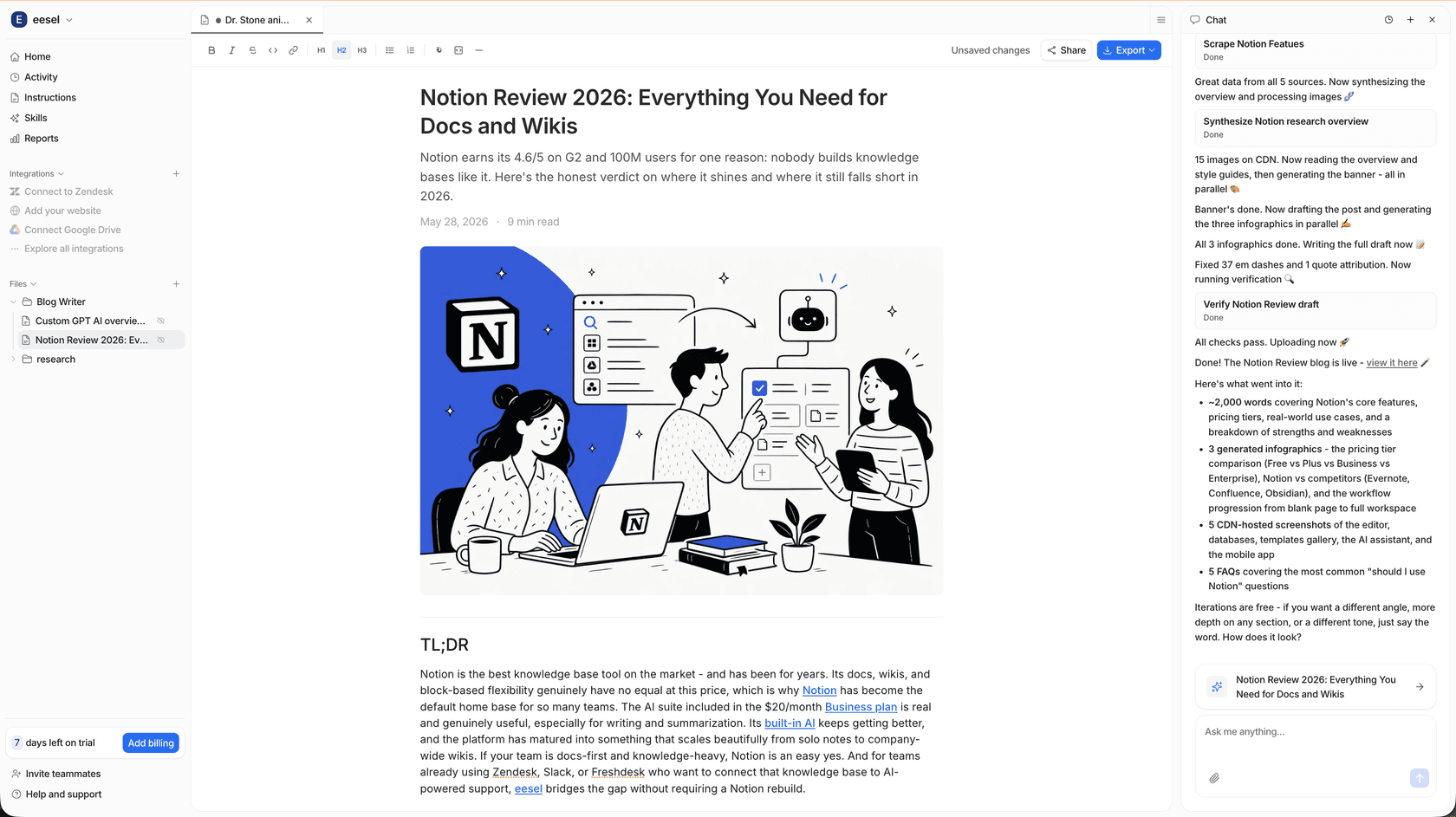
Using a tool built for in-depth research can streamline this process. The eesel AI blog writer is designed for this purpose. It learns your brand context from your website and automates research.
Here’s why that helps with fact-checking:
- It automatically includes citations and external links, so you can see precisely where the information came from.
- It can pull real quotes from Reddit threads, adding genuine social proof that’s simple to verify.
- It generates relevant data tables and infographics, presenting information in a structured, checkable way.
This doesn't replace the need for human review, but it can shift your role from fixing a rough draft to polishing a well-researched article.
Step 1: Break down the content into verifiable claims
First, you need to figure out what you actually need to check. Read through the AI-generated text and pull out every single checkable fact. This is sometimes called "fractionation."
Your list might include:
- Statistics and data points (e.g., "75% of customers prefer...")
- Direct quotes and who said them
- Historical dates or events
- Technical details or product features
- Names of people, companies, or studies
Make a quick checklist of the most important claims. Focus on any hard numbers or direct quotes first, as these are easy to get wrong and can cause the most damage if incorrect.
Step 2: Read laterally to find corroborating sources
Once you have your list of claims, it's time to check them. The best way to do this is "lateral reading". Instead of just reading the AI's text from top to bottom, open several new browser tabs and search for outside confirmation for each claim.
Don't just trust the first source you find. Look for multiple, independent, and reputable sources that confirm the information. Here are a few good places to look:
- General Claims: For stats, facts, or viral stories, start with established fact-checking sites like Snopes or the archives of major news outlets.
- Academic/Technical Claims: If the AI mentions a scientific study, head to a database like Google Scholar to find the original source.
Step 3: Verify every single source and citation
This is a big one. AI models are known for making up sources. They might cite a study that sounds real but doesn't exist, or they might attribute a quote to the wrong person.
It's important to verify every citation from an AI tool. Click every link. If a source is mentioned but not linked, search for it. If you can't find the original document, or if the document doesn't actually support the claim being made, get rid of the claim. It's better to have no source than a fake one.
Step 4: Check for timeliness and internal consistency
As you check your sources, look at the publication dates. Is the information still relevant for your topic in 2026? A statistic from 2019 probably isn't the best evidence for a blog post about current market trends. Always search for the most recent credible data you can find.
After you've checked all the external facts, do one last read-through of the whole article. Sometimes, an AI can contradict itself, saying one thing in the introduction and something completely different later on. A quick scan can help you catch and fix these internal inconsistencies.
Step 5: Involve a subject matter expert (SME)
For some topics, a general fact-check isn't enough. If you're creating content that's highly technical or in a field like medicine, law, or finance, the final step should always be a review by a subject matter expert.
Essential tools and techniques for how to fact check AI generated content
You don't have to do all this work by hand. There are some great tools that can make the verification process quicker and more reliable.
Fact-checking organizations

- Snopes: Often called the original fact-checking site, Snopes is great for looking into urban legends, internet rumors, and viral claims. The BBC even called it the "go-to bible" for fact-checkers.
- FactCheck.org: This is a non-partisan project from the Annenberg Public Policy Center that focuses on claims made in U.S. politics, but their methods are a great model for any fact-checker.
Verifying images and AI-generated media
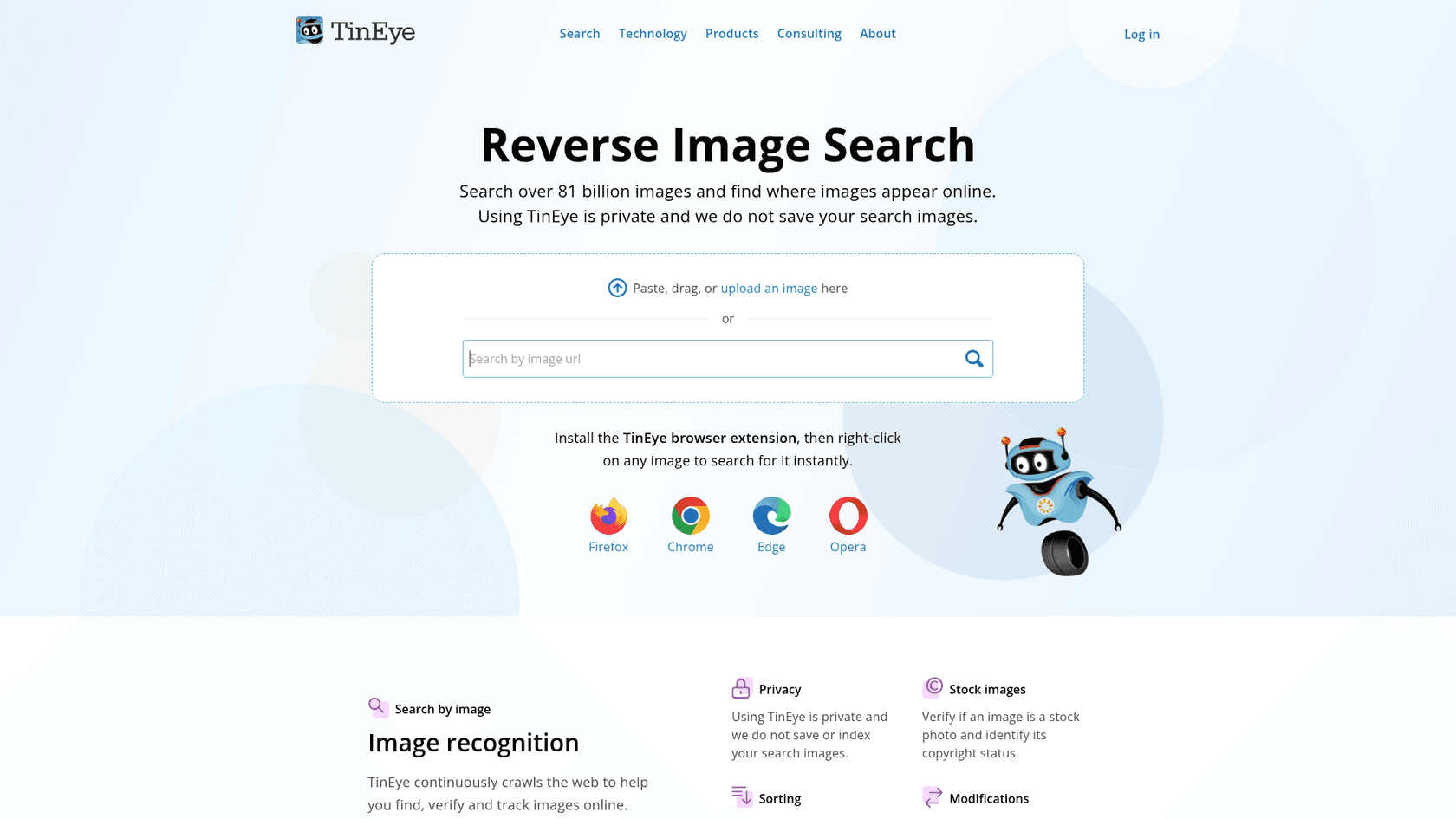
- TinEye: This is a powerful reverse image search engine. It has indexed over 81 billion images and can help you find where an image first appeared and see if it has been modified.
- Google's SynthID: This is an interesting new technology that embeds an invisible digital watermark directly into AI-generated images. You can even upload an image to the Gemini app and ask if it was created by Google's AI.
Finding original sources in digital archives
- Google Books: This is a fantastic resource for searching the full text of millions of books. If a quote is supposedly from a book, you can often find it here.
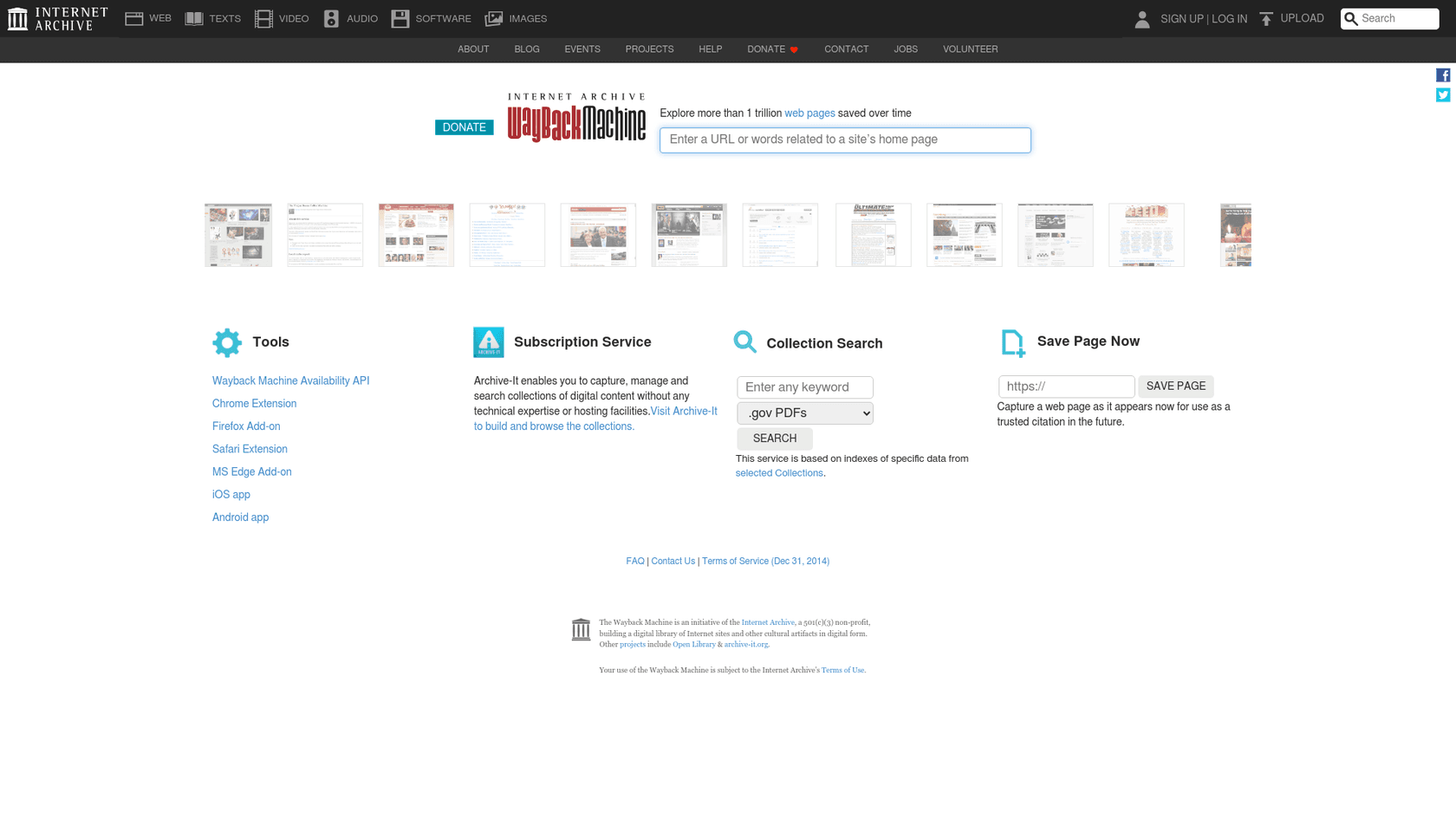
- Internet Archive: Also known as the Wayback Machine, this is a digital library that saves old versions of websites and documents. It's perfect for finding a source that has been taken offline.
While these tools are excellent for text and images, sometimes a video explanation can clarify the process further. The video below offers a great overview of how to approach fact-checking for content generated by tools like ChatGPT, reinforcing many of the techniques we've discussed.
AI is an amazing assistant for creating content, but it is just that, an assistant. It is not a source of truth. At the end of the day, you're the one hitting "publish," and your credibility is on the line.
Human oversight, critical thinking, and a solid fact-checking process are non-negotiable in the age of AI. The best way to view it is as a partnership. Let the AI do the heavy lifting and generate the first 90% of the draft. But that final 10%, the critical review, the contextualization, the verification, is what turns a piece of content from risky AI output into something genuinely valuable. You're the editor-in-chief, and the final call is always yours.
Scale your content without sacrificing quality
The goal is to create more high-quality, trustworthy content, but faster. The key is to build a process that combines speed and quality, rather than forcing you to choose one over the other.
The eesel AI blog writer is one tool designed to solve this problem. It's the same tool we used to grow our own organic traffic from 700 to 750,000 daily impressions in just a few months.
This approach helps you generate publish-ready blogs that are deeply researched, SEO-optimized, and built on a foundation of facts.
Generate your first blog free with the eesel AI blog writer.