A practical guide to how-to blog writing that builds authority

Stevia Putri

Katelin Teen
Last edited January 20, 2026
Millions of blog posts get published every day. Let's be honest, most of them just float around in the digital void, never really getting noticed. The real trick isn't just publishing something, it's creating content that solves a real problem, climbs the search rankings, and builds trust with your audience.
This guide is here to help you cut through all that noise. We’re going beyond the usual tips to give you a solid framework for creating high-impact how-to articles that people actually want to read and share.
We’ll walk through the key parts of effective blog writing, from doing your homework before you type a single word to using modern tools to do the heavy lifting. In fact, we'll show you the exact process we used, powered by the eesel AI blog writer, to grow our own organic traffic from about 700 to 750,000 impressions in just three months.
What is strategic how-to blog writing?
Blogging today isn't just a creative hobby; it's a core part of any good content marketing plan. Strategic how-to blog writing is all about being the best, most helpful answer to someone's question. It’s about providing real value that helps them solve a problem.
The biggest mental shift is moving from "I need to publish a post" to "What problem does my reader need me to solve right now?" When you focus on what your reader is actually looking for (their "intent"), you're setting yourself up to rank on search engines and build a loyal audience that trusts you.
Here’s what that looks like in practice:
- Audience-focused: You're not writing for the whole world. You're writing for a specific person with a specific problem.
- SEO-informed: This means doing keyword research to figure out what people are asking and how they're phrasing their questions.
- Value-driven: The main goal is to be helpful. Any promotion comes second, and it feels natural because you've already provided so much value.
- Structured for readability: Your content has to be easy to scan and understand, whether someone's on a huge monitor or their phone while waiting for coffee.
The three pillars of effective how-to blog writing
The whole process of writing a blog post can feel like a lot. To make it more manageable, we can break it down into three core pillars. If you get these right, your content will be well-researched, well-written, and ready for success.
Pillar 1: The pre-writing foundation
This is the homework phase, and skipping it is the fastest way to write a blog post that nobody reads.
- Understanding your audience: Go deeper than just basic demographics. What are their biggest frustrations? What solutions have they already tried and disliked? Where do they hang out online to ask for advice (think Reddit, specific forums, or LinkedIn groups)? Knowing this helps you speak their language and connect with their real-world problems.
- Topic ideation & keyword research: You need to find topics that your audience cares about and that give your brand a chance to be the expert. It's about finding that sweet spot between what people are searching for and what you have the authority to talk about. A great place to start is using a keyword research tool like Ahrefs’ Keywords Explorer to find common questions and see how many people are searching for them.
- Competitor analysis: Once you have a target keyword, Google it. See who’s on the first page. Use a tool like Ahrefs’ Site Explorer to check out these top-ranking posts. What did they do well? What did they miss? Look for content gaps, check the "People Also Ask" section for related questions, and find opportunities to create something more complete or helpful.
- Outlining for success: Don't just start writing and see where you end up. A solid outline is your roadmap. It makes sure you cover all the important points, organize your thoughts logically, and create a narrative that flows. This isn't just for your readers; search engines also prefer well-structured content.
Pillar 2: Crafting compelling content
Now that you have your plan, it’s time to actually write the thing.
- Nailing the introduction: You have about three seconds to convince someone to stick around. Your intro needs a strong hook. You could start with a surprising stat, a relatable story, or by digging into a common pain point. Whatever you choose, make it grab their attention right away.
- Developing an authentic voice: Write like you talk. Using words like "you" and "we" makes it feel like a one-on-one conversation. Keep your tone professional but always approachable. No one wants to read a dry, jargon-filled textbook.
- Structuring for skimmers: Most people scan a blog post before they decide to read it all the way through. You need to make your content easy to skim. Content structure experts suggest a few simple tricks:
- Use short paragraphs (two to three sentences is a good guideline).
- Write descriptive headings and subheadings (H2s and H3s) that tell the reader what each section is about.
- Use bullet points for lists.
- Use bold text to make key points stand out.
- Weaving in stories and examples: Facts and instructions are useful, but they can be a bit dry. Stories and real-world examples are what make your content stick. Use short anecdotes, customer stories, or simple case studies to illustrate your points and make abstract ideas feel more real.
Pillar 3: Optimizing for search and engagement
You've written a great piece of content. Now, you need to make sure people can find it.
- On-page SEO basics: This is about more than just stuffing your keyword everywhere. It's about sending clear signals to search engines about what your page is about. This means optimizing your title, meta description, URL, and image alt text. It’s also important to link to other relevant articles on your own site (internal linking) and to other credible sources (external linking).
- The power of visuals: A giant wall of text is intimidating. Images, screenshots, simple charts, and even GIFs break up the text, make complex information easier to digest, and improve the overall reading experience. A post with good visuals just feels more professional and is more likely to be shared.
- Writing a strong call to action: Your conclusion should be a quick summary of the main points. Don't introduce new information here. After you've recapped, tell the reader what to do next with a clear Call to Action (CTA). It should be specific and direct, like "Try it free," "Download the checklist," or "Leave a comment with your thoughts."
Here's a quick checklist to keep handy:
| On-Page SEO Element | Best Practice |
|---|---|
| Title Tag | Include your target keyword and keep it under 60 characters. |
| Meta Description | Write a compelling summary (150-160 characters) that encourages clicks. |
| Headings (H1, H2, H3) | Use your primary keyword in the H1 and variations in subheadings. |
| Image Alt Text | Describe the image and include the keyword where relevant. |
| Internal Links | Link to at least 2-3 other relevant pages on your website. |
The role of AI in modern blog writing
AI has completely changed how content gets made. But not all AI writing tools are the same. Understanding the difference between a simple AI assistant and a true automation platform is key to using AI effectively without making your blog sound robotic.
Understanding different AI writing tools
General-purpose AI tools like ChatGPT are effective for brainstorming, overcoming writer's block, or drafting short paragraphs. They function as useful assistants in the writing process. When creating full-length posts, users typically guide the AI, handle detailed research, and perform fact-checking to ensure quality.
Keep in mind those AI tools are just built on top of OpenAI, Anthropic etc, so you're getting the same results, just in a different interface for a marked up price.

AI copilots, such as Jasper, offer more specialized features like brand voice settings and SEO tool integrations. They act as a partner, assisting the writer throughout the content creation workflow. The writer typically manages the deep research, fact-validation, visual asset creation, and final structuring of the post. This collaborative approach helps refine content but still involves manual steps to get from a draft to a publish-ready article.
Automating the blog writing process with the eesel AI blog writer
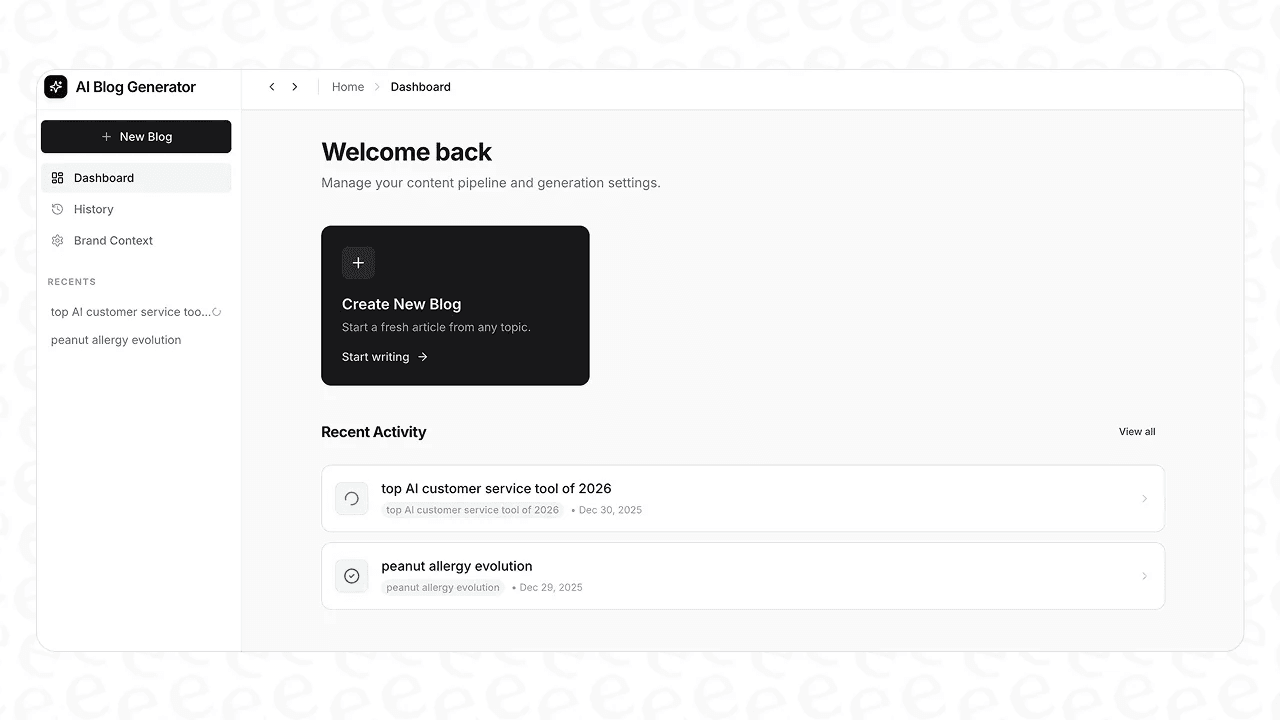
This is where a different kind of tool comes in. The eesel AI blog writer isn't just an assistant or a copilot; it's built to manage the entire workflow from start to finish. It turns a single keyword into a complete, SEO-optimized, and publish-ready blog post in minutes.
Here’s what makes it different:
- Full-cycle automation: It doesn't just write text. It handles the research, outlining, writing, and asset creation all at once. You give it a keyword, and it gives you back a finished blog post.
- Automatic assets and media: This is a huge time-saver. The platform automatically generates and inserts relevant images, infographics, and tables directly into the post. It even finds and embeds real Reddit quotes and YouTube videos to add social proof and keep readers engaged.
- Deep research and human-like tone: It performs context-aware research to make sure the content is detailed and valuable, not just shallow AI filler. After more than a year of refinement, its writing model produces content that sounds natural, engaging, and genuinely human.
- Built for SEO & AEO: The output is structured to rank on Google, but it's also optimized for the new wave of AI Answer Engines, like Google's AI Overviews. This helps future-proof your content.
Instead of spending hours juggling research, writing, and finding images, you can get it all done in one step.
Post-publication: Creating a long-term asset
Hitting "publish" isn't the end of the road.
First, you need to promote your post. Share it on your social media channels, send it to your email list, and post it in relevant online communities. You have to give it an initial push to get some momentum.
I've been writing blog posts for the last few years. Over time, I've come up with a good system that actually has a soul and not just pieced together purely for SEO that no one would enjoy reading.
Second, treat your best how-to guides like living documents. Things change, and your content should, too. Plan to review and update your top-performing articles every 6-12 months. Add new information, update any outdated stats or screenshots, and make sure it’s still the best resource on the topic. This is key to keeping your search rankings over the long term.
To see these principles in action, watching an expert walk through their process can be incredibly helpful. The video below provides a step-by-step guide to writing a blog post from start to finish, covering many of the strategies we've discussed.
Putting it all together
Successful how-to blog writing is a strategic process. It’s a mix of deeply understanding your audience, crafting high-quality content, and optimizing it so people can find it.
It might sound like a lot of work, but the right tools can automate the most time-consuming parts. The eesel AI blog writer handles the research, writing, asset creation, and optimization for you, so you can spend less time producing content and more time on strategy.
Why not see for yourself? Generate your first blog free and see what a difference it makes.

Frequently Asked Questions
Share this article

Article by
Stevia Putri
Stevia Putri is a marketing generalist at eesel AI, where she helps turn powerful AI tools into stories that resonate. She’s driven by curiosity, clarity, and the human side of technology.