Gorgias vs Dixa in 2026: Which ecommerce helpdesk should you pick?

Amogh Sarda

Katelin Teen
Last edited May 7, 2026
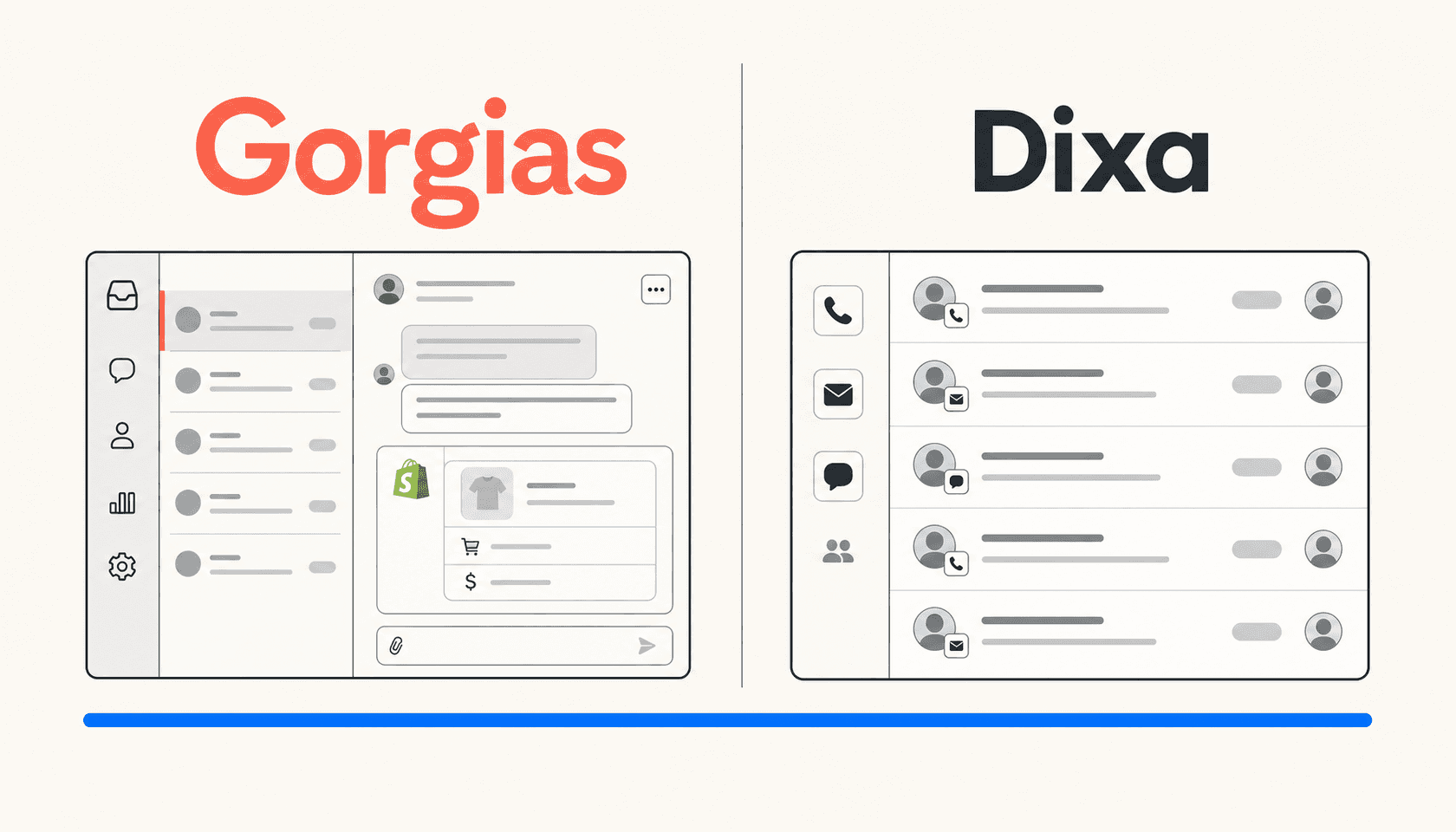
Ecommerce support teams comparing Gorgias and Dixa are often solving slightly different problems, even if they think they're shopping for the same thing. Gorgias is a purpose-built ecommerce helpdesk that grew up on Shopify, with every feature designed around order management and retail workflows. Dixa started as a general omnichannel contact center, then repositioned itself specifically for ecommerce brands - bringing native voice, chat, and an AI agent called Mim to a market that Gorgias has dominated for years.
The choice isn't as simple as "which one is cheaper" or "which one has more features." It comes down to your volume model, your channel mix, and how deeply your support team needs to live inside Shopify data. A 10-person support team at a DTC apparel brand running 3,000 tickets a month has a very different calculation from a 50-person team at a multi-brand retailer managing phone, email, and chat across several storefronts.
This comparison walks through both platforms in the areas that actually matter at purchase time: pricing structure, AI capabilities, Shopify and ecommerce integrations, ease of getting started, and the buyer profiles where each one wins.
What is Gorgias?
Gorgias is a unified helpdesk and AI agent platform designed exclusively for ecommerce brands. The company positions itself as the "#1 helpdesk + AI agent built to drive sales" - a deliberate framing that separates it from general-purpose tools. Unlike most support platforms that treat tickets as problems to be closed, Gorgias treats every customer conversation as a potential transaction.
The platform powers customer conversations for 40% of Shopify brands and serves 17,000+ ecommerce brands globally, including Tommy John, Arc'teryx, Steve Madden, and Reebok. Its headline claim is a 4.2x average return on investment - though that number reflects the combination of support efficiency and AI-driven pre-purchase sales assistance.
The core Gorgias product is a multi-channel inbox (email, chat, SMS, voice, social) with deep Shopify data embedded in every ticket. Agents can see order history, process refunds, cancel orders, and update subscriptions directly from the ticket view. The AI Agent (a separate add-on, billed per resolved conversation) handles both pre-purchase shopping assistance and post-purchase support autonomously.
G2 reviews give Gorgias a 4.6/5 rating across 555 verified reviews, with 73% of reviewers awarding five stars. The dominant user segment is small businesses (446 of 555 reviews), with retail, apparel, and consumer goods making up the top industries.
What is Dixa?
Dixa is an "Agentic CS Platform" built for ecommerce brands, trusted by brands across 42 countries including Miinto, Mejuri, Rapha, Organic Basics, and Mytheresa. The company's current positioning emphasizes agentic AI and intelligent handovers - the idea that an AI handles the first pass, escalates with full context, and human agents pick up without starting over.
What makes Dixa structurally different from Gorgias is channel completeness as a default. All Dixa plans include every channel natively - phone, email, live chat, WhatsApp, Instagram, Facebook Messenger, and SMS - with no per-channel add-ons. Voice is built in, not bolted on. For teams currently paying for a separate telephony tool alongside a helpdesk, consolidating onto Dixa often changes the total cost picture significantly.
Dixa's per-seat pricing model (€89-179/agent/month) is the inverse of Gorgias's per-ticket model. If your support volume spikes during Black Friday, your Dixa bill doesn't move. Your Gorgias bill does.
G2 users describe Dixa as offering "a user-friendly experience with its unified interface that allows for easy management of phone, email, and chat from a single window", and the platform "stands out for its skill-based routing and queue management."
AI and automation
This is where the two platforms diverge most clearly in philosophy.
Gorgias AI Agent
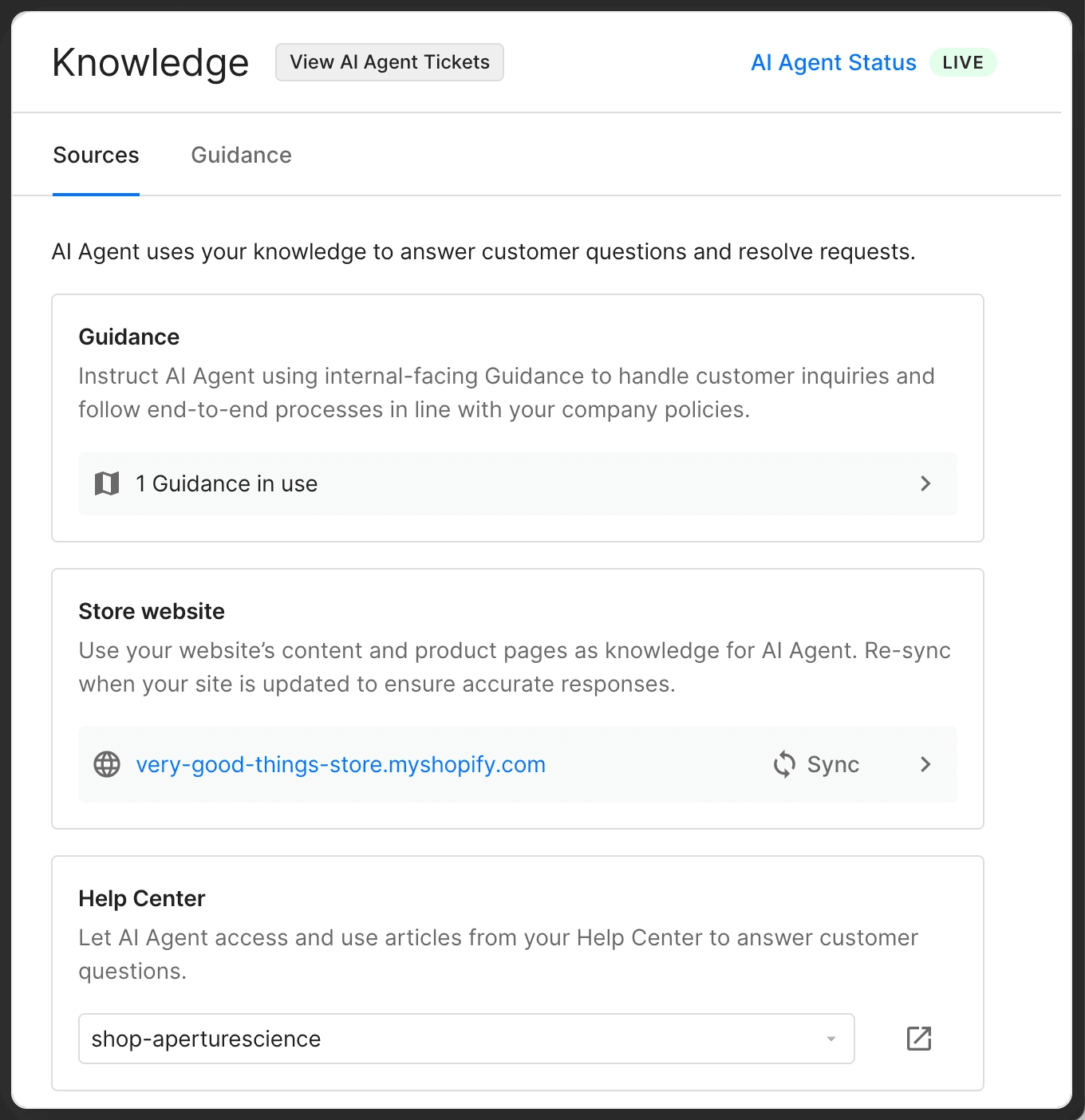
Gorgias's AI Agent has two distinct skillsets: a Shopping Assistant for pre-purchase conversations and a Support Agent for post-purchase resolution. Both are trained on your Shopify store data, Help Center articles, custom guidance, and brand voice settings.
The AI Agent is deeply ecommerce-native. It can cancel orders, process returns, modify subscriptions, and link to products directly through Actions - connections to your third-party tools that let the AI complete tasks without human involvement. Critically, the AI Agent requires a connected Shopify store and is not supported on BigCommerce, Magento, or WooCommerce. If you're not on Shopify, the AI Agent's action capabilities are significantly limited.
Vision capability is a standout feature - the AI can read images attached to tickets, so a customer sending a photo of a damaged item gets a response without human intervention. The coaching feedback loop lets agents rate AI responses and correct knowledge sources, directly influencing future behavior.
The cost model: AI Agent automation is billed at $0.90-$1.00 per fully resolved conversation, on top of the base helpdesk plan.
Real-world results from G2 reviewers:
"The AI Agent has been especially valuable in handling product inquiries and shopping assistance, providing personalized recommendations, linking directly to products, and maintaining strong CSAT performance without manual intervention."
- Hannah S., Operations Specialist (G2, February 2026)
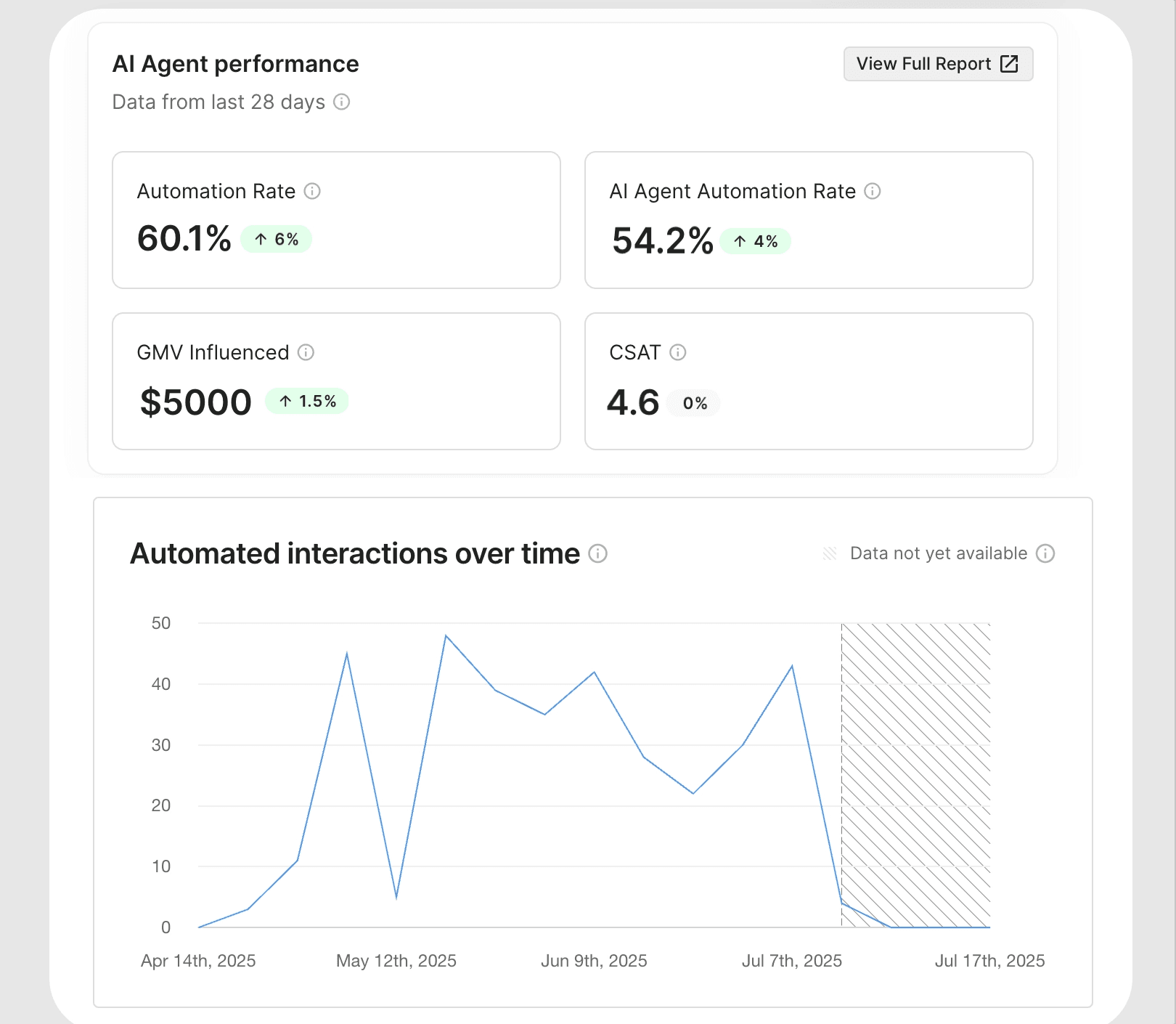
"Gorgias has enabled our team to automate about 50% of our customer interactions. This gives customers immediate, self-service solutions while also freeing up our agents to spend more time connecting with the customers who truly value a human touch."
- Emily M., Director of Customer Experience (G2, March 2026)
Dixa's AI: Mim Agent and AI Co-Pilot
Dixa takes a two-layer AI approach. Mim is the autonomous AI agent add-on, designed to handle up to 80% of incoming requests through smart replies, AI-driven personalization, and seamless handovers. The Co-Pilot is a separate add-on for human agents - GPT-powered tools including smart reply suggestions, conversation summaries, AI translations, a spellchecker, and a writing style guide enforcer.
Both are add-ons with pricing that isn't publicly listed on the pricing page - you need to contact sales to get numbers.
The base plans do include AI features: Standard AI Intent Detection (Ultimate tier) and Advanced AI Intent Detection (Prime tier) for intelligent routing. Knowledge AI Translations are also available in Ultimate and Prime, letting multilingual teams translate knowledge base articles automatically.
Where Dixa's AI differs from Gorgias is in breadth vs. depth. Dixa's AI covers all channels (including voice transcription as an add-on), while Gorgias's AI Agent is strongest on email and chat for Shopify stores. Dixa's AI doesn't have the same level of native Shopify action capability - it can display order data, but the range of transactional actions (cancel, refund, modify) is narrower without custom integration work.
Pricing
Gorgias pricing
Gorgias charges per ticket, not per seat. All plans include unlimited team seats.
| Plan | Monthly price | Ticket limit | Overage |
|---|---|---|---|
| Starter | $10/month | 50 tickets | $0.40/100 tickets |
| Basic | $50-60/month | 300 tickets | ~$0.36/100 tickets |
| Pro | $300-360/month | 2,000 tickets | ~$0.32/100 tickets |
| Advanced | $750-900/month | 5,000 tickets | ~$0.32/100 tickets |
| Enterprise | Custom | 5,000+ | Negotiated |
Annual plans save up to 16% vs. monthly.
AI Agent automation is billed separately at $0.90-$1.00 per fully resolved conversation. Voice adds $0.40-$1.20 per call; SMS adds $0.41-$0.80 per text conversation.
The ticket definition matters: a billable ticket is "a conversation started on any Gorgias channel that includes a message from a human agent, a Rule, or AI Agent." Purely AI-resolved conversations cost $0.90-$1.00 on top of the base plan. This means a busy BFCM week creates a double spike - more tickets on the base plan AND more AI Agent resolutions.
Dixa pricing
Dixa charges per agent, per month, with all channels included in every plan.
| Plan | Monthly price | Annual price (approx.) | Key inclusions |
|---|---|---|---|
| Growth | €89/agent/month | ~€71/agent/month | All channels, routing, analytics, SLAs |
| Ultimate | €139/agent/month | ~€111/agent/month | Growth + automations, macros, standard AI intent, sandbox |
| Prime | €179/agent/month | ~€143/agent/month | Ultimate + SSO, advanced AI intent, advanced insights, enterprise API |
Annual plans save 20%.
AI add-ons (Mim Agent, AI Co-Pilot, QA, Advanced Insights, Voice Transcription) are priced separately and require a demo conversation with Dixa's team. SSO is an add-on on Growth and Ultimate; included in Prime.
Note: Dixa publishes EUR pricing. USD pricing is not listed publicly - contact sales for USD quotes.
The pricing math at different team sizes:
A team of 10 agents handling 5,000 tickets per month would pay approximately:
- Gorgias (Pro, annual): ~$300/month base + AI Agent costs on automated resolutions
- Dixa (Growth, 10 agents, annual):
€710/month ($770 at current rates) + AI add-on costs
At 15,000 tickets per month with the same 10-agent team:
- Gorgias (Advanced, annual): ~$750-900/month base + overages + AI Agent costs
- Dixa (Growth, 10 agents): still ~€710/month
Volume growth hits Gorgias harder than Dixa.
Integrations
Gorgias
Gorgias offers 300+ ecommerce-specific integrations across 16 categories. The integration library covers the full ecommerce lifecycle:
- Ecommerce: Shopify, BigCommerce, Magento, WooCommerce, custom stores via HTTP
- Shipping and fulfillment: 24 integrations including major carriers and logistics tools
- Returns and exchanges: 21 integrations including Loop Returns, Redo, and Corso
- Loyalty and retention: 21 integrations including LoyaltyLion and Yotpo
- Marketing: Klaviyo, Attentive, and other SMS/email marketing tools
- Reviews and UGC: 16 integrations for review collection and social proof
- Subscriptions: Recharge, Bold, and recurring billing platforms
The Shopify integration is particularly deep. AI Agent can perform actions directly in connected tools - cancelling orders, processing returns, modifying subscriptions - without human agents touching those systems. This is what separates Gorgias from platforms with read-only Shopify data display.
From G2 reviewers:
"The Shopify integration is extremely powerful. Being able to see order data, issue refunds, edit orders, and manage tickets directly within one platform significantly improves efficiency for our team."
- Hannah S., Operations Specialist (G2, February 2026)
Dixa
Dixa integrates natively with Shopify, Magento, and WooCommerce, plus custom ecommerce platforms via its open API. Shopify data (order history, shipping status, return eligibility, customer details) pulls into Team Hub automatically when a conversation opens. Dixa is available in the Shopify App Store with read-and-write permissions.
Mim AI Agent can use Shopify data to handle order tracking, returns, and refunds autonomously. Agents can take action directly - cancel orders, issue refunds, update customer information - without opening a new tab.
CRM integrations include Salesforce, HubSpot, and Microsoft Dynamics 365 with two-way data flow. Dixa also has established partnerships with AI providers Ada and DigitalGenius, with documented co-sell playbooks for ecommerce AI resolution use cases.
What Dixa lacks compared to Gorgias: a 300+ integration library built specifically around the ecommerce stack. Gorgias's integration depth for returns platforms, loyalty tools, subscription management, and Shopify-adjacent apps is notably broader.
Ease of setup and use
Gorgias is designed for rapid onboarding. The Shopify connection takes a few minutes and order data appears in the ticket view immediately. Basic automation rules (macros, routing) can be set up without technical help. The AI Agent requires more configuration - connecting knowledge sources, writing guidance, testing against past tickets - but the Analyze, Train, Test, Deploy framework is well-documented.
The main usability complaint from G2 reviewers is the automation logic: complex workflows can require workarounds, and the AI Agent's knowledge base configuration has a learning curve. But for a team going from nothing to "sending AI replies" in a week, Gorgias is faster.
G2 reviewers consistently cite ease of use as the platform's strongest attribute:
"Gorgias is incredibly easy to learn and use. I also like being able to assign emails to different people, and then toggle back and forth depending on who's responding."
- Jennifer S., Marketing Communication Specialist (G2, April 2026)
Dixa has a steeper initial configuration curve, particularly the Flow Builder for routing automation. Teams that invest the time get powerful results - intelligent routing, multi-brand management, AI intent-based queue assignment. But the payoff is less immediate than Gorgias's.
Dixa doesn't offer self-serve signup or a free trial. The entry point is "Book a Demo," which adds sales cycle time before you can run a real evaluation. Gorgias has a free trial available.
Side-by-side comparison
| Feature | Gorgias | Dixa |
|---|---|---|
| Pricing model | Per ticket (unlimited seats) | Per seat (all channels included) |
| Starting price | $10/month (50 tickets) | €89/agent/month |
| AI automation | $0.90-$1.00 per resolved conversation | Mim add-on (flat rate, price on request) |
| Shopify native actions | Yes (cancel, refund, edit orders, subscriptions) | Yes (limited, read-write via Shopify app) |
| Voice/telephony | Add-on ($0.40-$1.20/call) | Native on all plans |
| SMS | Add-on ($0.41-$0.80/conversation) | Native on all plans |
| Ecommerce integrations | 300+ (industry-leading) | Shopify, Magento, WooCommerce + API |
| G2 rating | 4.6/5 (555 reviews) | Strong (fewer reviews) |
| Free trial | Yes | No (demo required) |
| Ideal team size | 1-50 agents | 10-200+ agents |
| Multi-brand support | Limited | Yes (Prime plan) |
| AI requires Shopify | Yes (for full AI actions) | No |
When to pick Gorgias
Gorgias is the right choice if your support operation is primarily Shopify-native, your team is small to mid-sized, and you want the fastest path from "new helpdesk" to "AI handling tickets."
Pick Gorgias if:
- Your store runs on Shopify and you want agents to cancel orders, process refunds, and manage subscriptions without leaving the helpdesk
- Your team has fewer than 30 agents and ticket volume is under 5,000-10,000 per month
- You want a purpose-built ecommerce tool, not an adapted contact center platform
- You need a short time-to-value - Gorgias's free trial and quick Shopify setup means you can evaluate it with real data this week
- You want AI automation that understands product catalog, order history, and brand voice out of the box
Read more: Gorgias ecommerce helpdesk guide, Gorgias AI support agent overview, best Gorgias alternatives.
Be cautious with Gorgias if:
- Your support volume spikes heavily during peak seasons - ticket overages can make costs unpredictable
- You need native voice built into the platform (Gorgias voice is an add-on)
- You're managing multiple brands or operate outside Shopify as your primary platform
When to pick Dixa
Dixa is the right choice if you're running a mid-market or larger operation, need native telephony alongside chat and email, and want pricing that doesn't scale with ticket volume.
Pick Dixa if:
- You have 15+ agents and high monthly contact volumes where per-ticket pricing gets painful
- Voice is a meaningful support channel and you don't want to pay for a separate telephony tool
- You manage multiple brands or markets from one support organization (Prime plan)
- You're replatforming onto Shopify and evaluating your entire support stack at the same time
- You need intelligent routing across complex queue structures - Dixa's Flow Builder handles this better than Gorgias's rule engine
Read more: Dixa review for support teams, best Dixa alternatives, Re:amaze vs Dixa.
Be cautious with Dixa if:
- You're a small team (under 10 agents) - per-seat pricing at €89+ per agent adds up fast relative to Gorgias's $10-60/month base
- You need the same depth of native Shopify ecommerce integrations (returns, subscriptions, loyalty tools) that Gorgias offers through its 300+ app library
- You want to trial the platform before committing - Dixa's demo-first approach means a longer evaluation process
What about adding AI to either platform?
Both Gorgias and Dixa have their own AI products, but neither is a guaranteed fit for every team's AI needs. Gorgias's AI Agent is powerful but Shopify-dependent and billed per resolution. Dixa's Mim requires a sales conversation to price.
Some teams find they want AI automation that works on top of their existing helpdesk setup - without committing to a platform migration or per-resolution billing. That's where eesel AI fits. It's an AI agent layer that connects to Gorgias and other helpdesks, learns from your past tickets and Help Center content, and starts resolving tickets autonomously in under 15 minutes.
The practical difference: eesel doesn't require you to be on Shopify to get full AI ticket resolution, doesn't charge per resolution, and works across the helpdesks you're already using. If you're weighing Gorgias vs. Dixa partly because of AI capabilities, it's worth evaluating whether an independent AI layer - rather than a native one - gives you more flexibility.
For teams already on Gorgias, eesel can extend AI coverage to ticket types that Gorgias's AI Agent doesn't handle well: B2B inquiries, non-ecommerce questions, complex policy cases. For teams on Dixa, eesel can add a resolution layer that works across channels without requiring the Mim add-on spend.
Read more: AI tools for customer support, AI support ticket deflection guide, best helpdesk software for ecommerce.
Conclusion
Only for Shopify-native teams: Gorgias is the default choice, and it's earned that position. The depth of Shopify integration, the 300+ ecommerce-specific apps, and the purpose-built AI Agent for shopping assistance and order management are hard to match at any price point. If your team is under 30 agents and your store runs on Shopify, the combination of ticket-based pricing and per-resolution AI billing will likely be cheaper than Dixa at your current scale.
Dixa makes more sense when scale or channel complexity flips the equation. If you're managing 20+ agents across phone, email, chat, and social - and your costs with Gorgias spike unpredictably every Q4 - Dixa's flat per-seat model removes that variable. It's also the better choice if native telephony, multi-brand management, or complex routing logic is a core requirement, not a nice-to-have.
Neither platform is wrong. They're solving for slightly different shapes of ecommerce support operation.


Frequently Asked Questions
Share this article

Article by
Amogh Sarda
CEO of eesel AI. Amogh Sarda is obsessed with making the ultimate AI for customer service teams. He lives in Sydney, Australia and has previously worked at Atlassian and Intercom. Outside of work he’s usually surfing or on stage doing improv.