7 actionable good blogs tips to scale your traffic

Amogh Sarda
Last edited February 1, 2026
Blogging can feel like shouting into an empty room. With millions of posts going live every day, how do you even begin to get noticed? The answer is having a solid system.
This guide gets straight to it. We are giving you seven practical, repeatable strategies that actually move the needle on traffic and engagement. These are not fluffy theories; they are actionable tips that work. We will cover everything from figuring out what your audience really wants to strategically updating your old content for a quick win.
A quick comparison of top blogging tips
Before we get into the details, here is a quick overview of each tip. Use this table to decide where to focus first based on your goals and how much time you have. It breaks down the effort, potential SEO impact, and how fast you can expect to see results.
| Tip | Effort Level | Impact on SEO | Impact on Engagement | Time to See Results |
|---|---|---|---|---|
| Master search intent | Medium | High | High | Medium |
| Create publish-ready content at scale | Low (with AI) | High | Medium | Fast |
| Write for scanners | Low | Medium | High | Immediate |
| Enrich posts with media & social proof | Low (with AI) | Medium | High | Immediate |
| Treat your blog like a business | High | High | Low | Long-term |
| Build a community | Medium | Low | High | Long-term |
| Refresh and republish old content | Medium | High | Medium | Fast |
7 tips for scaling blog traffic
These are the core strategies you need for real, sustainable blog growth. Let's break them down.
1. Master search intent
Google’s main job is to give people the best answer to their questions. To rank, your blog post needs to do just that. It is not about stuffing keywords; it is about understanding the why behind every search.
There are four main types of search intent:
- Informational: The user wants to learn something (e.g., "what is AEO").
- Navigational: The user wants to find a specific site (e.g., "eesel AI blog").
- Commercial: The user is comparing products before buying (e.g., "best AI blog writers").
- Transactional: The user is ready to pull out their wallet (e.g., "eesel AI blog writer pricing").
An infographic explaining the four types of search intent, a key concept for good blogs tips.
Here is how to figure out the intent:
- Check the SERPs: Google your target keyword and look at the top-ranking pages. Are they how-to guides, listicles, or product pages? That is your blueprint.
- Use Google's hints: The "People also ask" and "Related searches" sections are pure gold. According to one content marketer, these are a goldmine of topics that Google already considers relevant.
I also try to write content that answers real questions people are asking. I use Google autosuggest and check places like Reddit and Quora for ideas. Blogging has been a learning journey for me. But once I found the right tools and built a good routine it started to feel fun and rewarding.

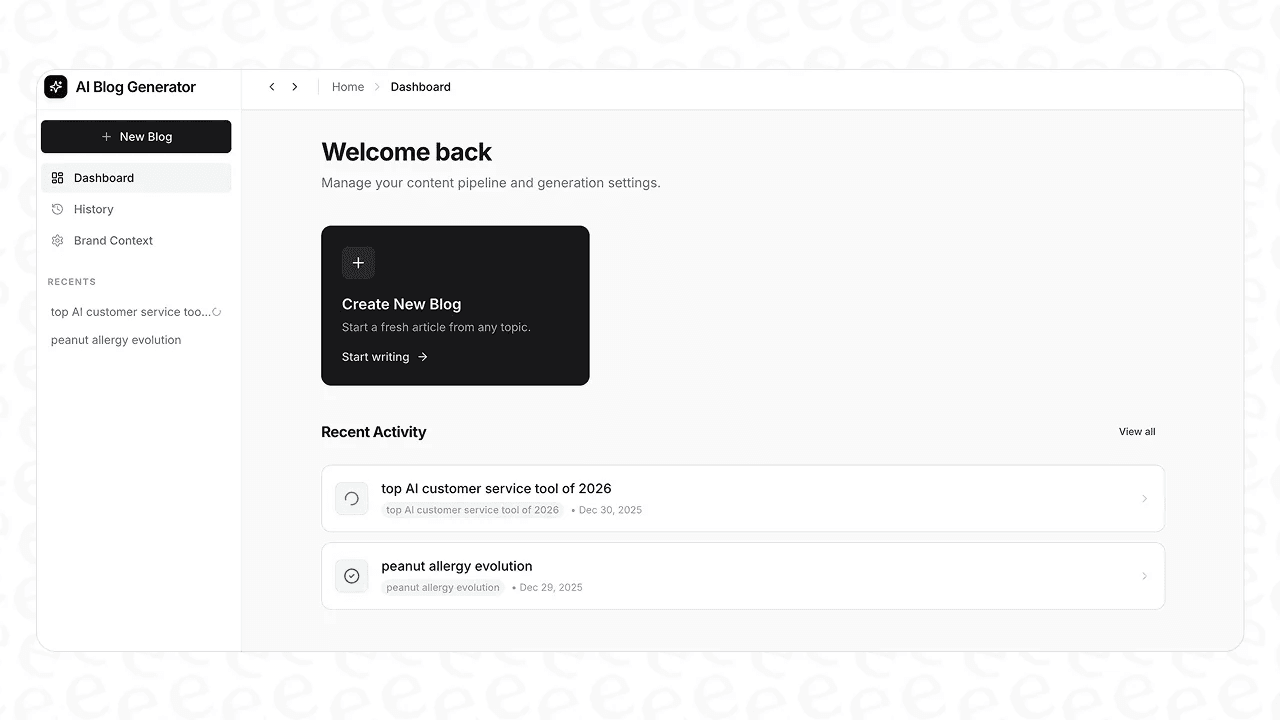
Modern tools are built to handle this. The eesel AI blog writer generates a full post structure, including FAQs, that is designed to match search intent and optimize for Answer Engine Optimization (AEO), which helps you get featured in AI overviews.
2. Create publish-ready content at scale
Using AI as a partner lets you systematize research, drafting, and formatting without cheapening the quality. The focus is on using AI for efficiency while maintaining high quality.
The eesel AI blog writer is designed for exactly this. It turns a single keyword into a complete, SEO-optimized blog post that is ready to go live. This is the same tool we used to jump from 700 to 750,000 daily impressions in just three months by publishing over 1,000 optimized blogs.
What makes it different?
- It is context-aware: Give it a website URL, and it learns your brand to make natural, non-salesy product mentions.
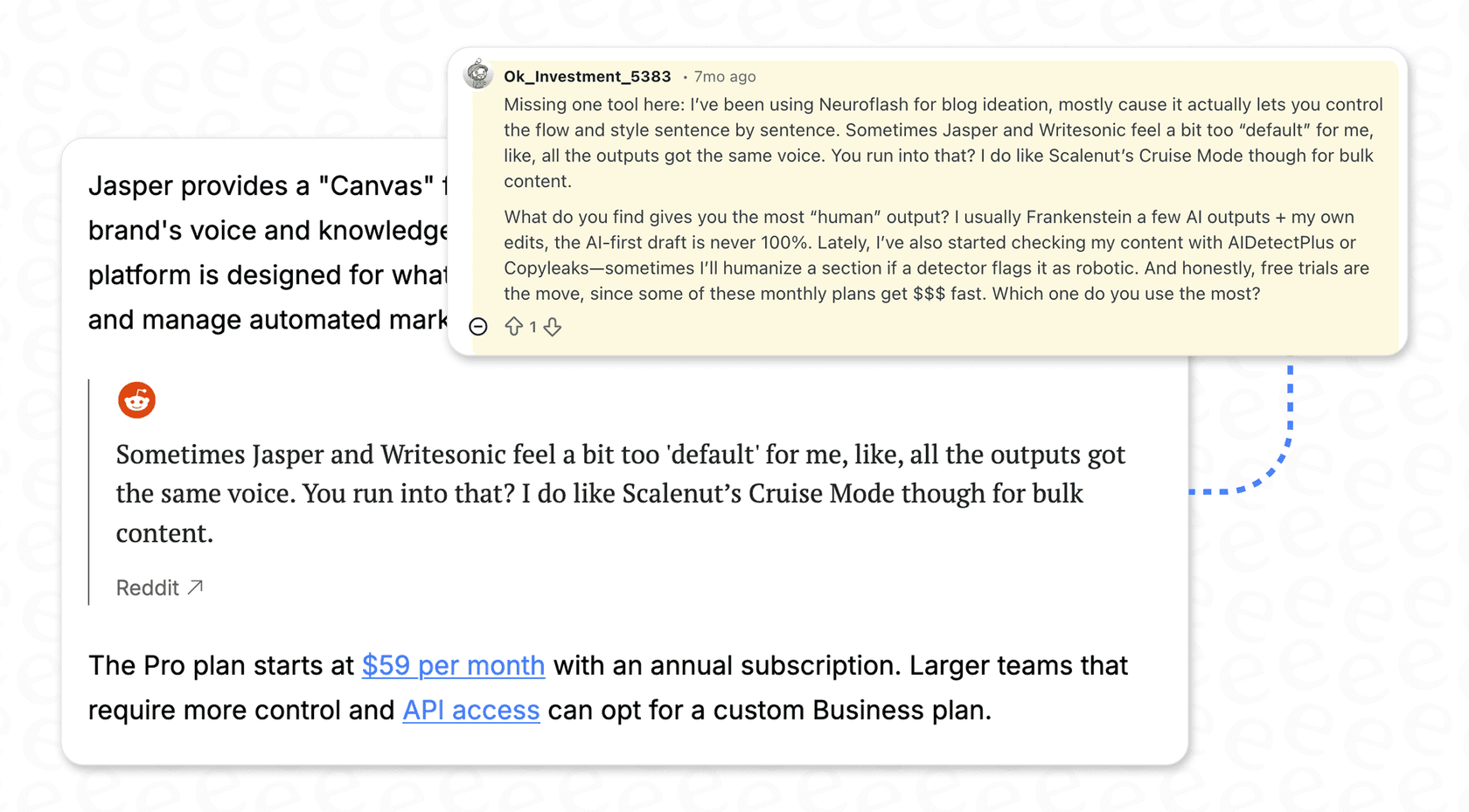
- It includes assets automatically: The AI generates images and infographics and embeds relevant YouTube videos and real Reddit quotes to add authenticity.
- It is affordable: You can get 50 blogs for $99.
Pro tip
While the AI does the heavy lifting, always give the final post a quick human review to make sure it perfectly matches your brand's voice.
3. Write for scanners
Most people do not read blog posts word-for-word. They scan for the bits of information they need. Your job is to make your content easy to scan.
Here is how:
- Keep paragraphs short, around 2-3 sentences.
- Use clear subheadings (H2s, H3s) to break up the text.
- Use bold text to highlight key points.
- Use bullet points and numbered lists to make information digestible.
An infographic comparing a poorly formatted blog post to a scannable one, illustrating one of the most effective good blogs tips.
A well-structured post respects your reader's time and improves engagement, which tells search engines your content is valuable.
4. Enrich posts with media and social proof
A wall of text is boring and can kill your time-on-page metrics. Visuals and social proof make your content more credible and keep people interested.
Include relevant images, infographics, and videos to break up the text and explain complex ideas. Add social proof, like quotes from real people, to build trust and add a human touch.
5. Treat your blog like a business
It is time to shift your mindset from writing a personal diary to building a business asset. Every post should have a clear purpose, whether that is driving traffic, getting leads, or making affiliate sales.
Here is how to start:
- Define your niche: You cannot be an expert on everything. Focus on a specific topic to build authority.
- Nail the on-page SEO basics: For every post, optimize your title, meta description, and make sure your target keyword is in the introduction.
- Build an email list: An email list is an asset you own, no matter what search engine algorithms do. Start building it from day one.
6. Build a community
A great blog is not just a website; it is a community. High engagement is a strong signal to search engines that your content is valuable.
Here is what you can do:
- End every post with a question to get comments started.
- Reply to every single comment to keep the conversation going.
- Share your posts on social media and actually join the discussions there.
- Connect with other bloggers in your niche to build relationships for guest posts and link sharing.
7. Refresh and republish old content
Your blog archives are a goldmine. Companies like HubSpot get a huge chunk of their traffic from posts published months ago.
...I aim for a first draft in one sitting, edit the next day, and update at 30 days with new data to nudge freshness.
A "content refresh" means updating an old post with new info, stats, and images to make it relevant again. This can give you a surprisingly fast SEO boost.
Here is the process:
- Find opportunities: Use Google Search Console to find articles that almost rank on page one (think positions 11-20) or pages with dropping traffic. These are your prime candidates.
- Update everything: Add new sections, correct outdated information, fix broken links, and add new internal links to your newer posts.
- Do NOT change the URL: Keep the existing URL to hold onto any link authority it's already earned. Changing it is like starting from scratch.
- Resubmit to Google: Once you have updated the post, resubmit the URL in Google Search Console so it gets re-crawled quickly.
An infographic detailing the four-step process of refreshing old content, one of the most effective good blogs tips.
Seeing these principles in action can make them easier to grasp. The video below from Ahrefs covers several effective blogging tips that align with the strategies we've discussed, offering visual examples and further insights into what makes a blog successful.
A practical roadmap for implementation
Trying to do all seven things at once is a recipe for burnout. Here is a simple plan to get you started.
- Months 1-3: Focus on the foundation. Concentrate on tips #1 (Search Intent), #2 (Content Scale), and #3 (Scannability). Your goal is to get into a consistent rhythm of producing well-structured content that answers real questions.
- Months 4-6: Enhance and optimize. Start adding multimedia (tip #4) to make your posts more engaging. Begin applying a business mindset (tip #5) by setting goals for your content and starting an email list.
- Months 6+: Build long-term authority. With a solid base of content, focus on community (tip #6) and refreshing old posts (tip #7) to build a loyal audience and compound your SEO results.
Build a content engine, not just a blog
Successful blogging is a system. It is about understanding your audience, creating valuable content efficiently, making it engaging, and promoting it effectively.
The biggest hurdle is almost always consistency. The best strategy is the one you can actually stick with.
Tools exist to remove that friction. The eesel AI blog writer handles the most time-consuming parts of content creation, so you can focus on strategy, promotion, and growth.
Ready to see what a complete, publish-ready blog post looks like? Generate your first blog for free and see the difference yourself.

Frequently Asked Questions
Share this article

Article by
Amogh Sarda
CEO of eesel AI. Amogh Sarda is obsessed with making the ultimate AI for customer service teams. He lives in Sydney, Australia and has previously worked at Atlassian and Intercom. Outside of work he’s usually surfing or on stage doing improv.
