Copy.ai vs SEO.ai: Which AI writer should you choose?

Kenneth Pangan

Katelin Teen
Last edited January 6, 2026

You're trying to pick an AI content tool. The market is split into two very different camps: you have large, multi-functional go-to-market (GTM) platforms, and then you have focused tools built for one thing: getting you to the top of search results.
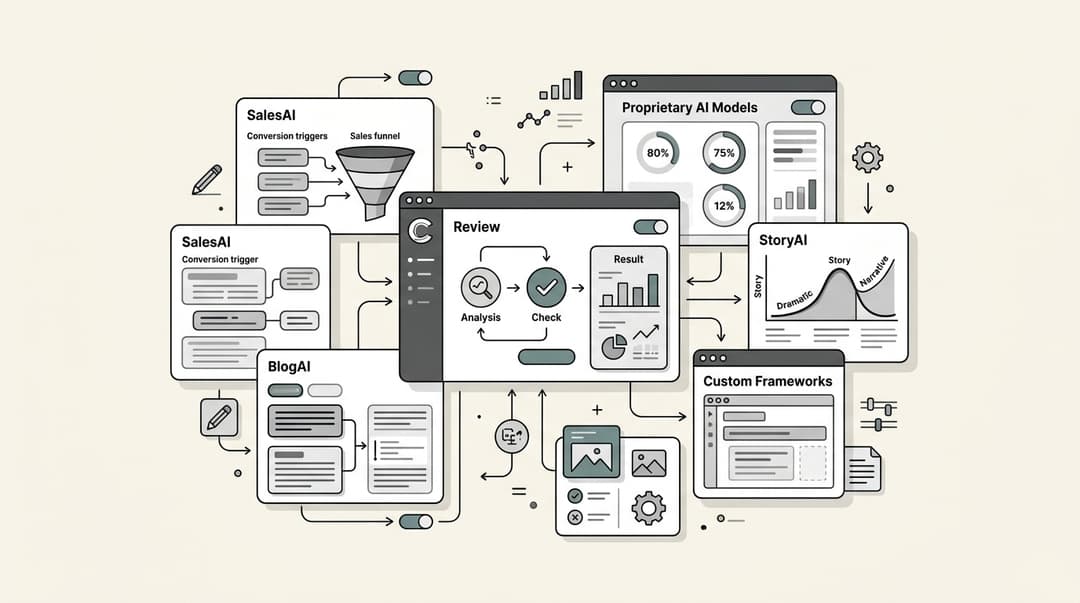
On one side, you have Copy.ai, which calls itself an AI-native GTM platform. The goal is to wrap your entire sales and marketing workflow into one system. On the other side is SEO.ai, a tool designed as an SEO autopilot to plan, create, and publish content that ranks well on Google.
This post will break down the Copy.ai vs SEO.ai comparison. We’ll explore their features, SEO capabilities, usability, and cost. By the end, you should have a much clearer idea of which one is right for you.
What is Copy.ai?
Copy.ai is designed as an "AI-native GTM Platform". The goal is to integrate AI into a go-to-market strategy, from finding new customers to writing content and coaching sales reps. It's intended to be a central hub for growth operations.
It's a choice for sales and marketing teams looking to reduce manual work. Some of its most common uses are:
-
Prospecting and sales outreach: It can analyze accounts and help draft personalized emails.
-
Account-based marketing (ABM): You can generate relevant content tailored to target accounts.
-
Multi-channel content creation: It can help create SEO blog posts, social media copy, and thought leadership articles.
-
Translation and localization: It can adapt sales and marketing content for different regions.
For GTM teams, founders, or agencies trying to sync workflows and use AI to scale sales and marketing, Copy.ai is a suitable option.
What is SEO.ai?
SEO.ai is a more specialized tool. Its mission is to put SEO on autopilot, especially for small businesses. It’s built to handle the entire content process, from figuring out what to write about to publishing it on your site.
It's focused on creating long-form blog posts and articles that drive organic traffic from search engines. The process is nearly automatic and includes:
-
Content gap analysis: It scans your website to find important topics you haven't written about yet.
-
Keyword research: It finds clusters of search terms that your potential customers are using on Google.
-
Content creation: It writes optimized articles for Google's E-E-A-T (Experience, Expertise, Authoritativeness, and Trustworthiness) guidelines that match what users are searching for.
-
Auto-publishing: It can connect straight to your CMS (like WordPress or Shopify) and automatically publish the final article, complete with internal links and images.
The audience here is businesses, agencies, and content creators whose primary goal is to grow their organic search traffic.
A head-to-head comparison of Copy.ai and SEO.ai
Let's put these two tools side-by-side to see how they stack up in the areas that matter most.
Features and use cases
Copy.ai focuses on GTM automation. It’s a broad platform with core parts like Workflows, Agents, and an Infobase that let you map out business processes. It's designed for sales and marketing teams that need to automate a wide range of tasks, like enriching leads, creating personalized outreach, or generating content for ABM campaigns. Its main strength is its flexibility and ability to connect different parts of a GTM strategy.
SEO.ai focuses on SEO content automation. This is a platform built for creating content that ranks. Its entire feature set, from content gap analysis to auto-publishing, is designed to support that goal. It's a suitable choice for businesses that want a more hands-off approach to their blog. The workflow automatically finds opportunities, writes optimized articles, and publishes them on a regular schedule.
Summary: Your choice here depends on your main objective. Copy.ai is for automating various sales and marketing activities. SEO.ai is for automating the task of creating and publishing SEO-driven articles.
SEO capabilities
SEO in Copy.ai is a feature rather than the core product. While its content creation tools can produce SEO-friendly text and meta descriptions, it does not include the same level of analytics as a dedicated SEO tool. SEO content created with Copy.ai may require additional optimization in another tool to compete for rankings. It doesn't offer features like SERP analysis or automatic internal linking suggestions as part of its main writing process.
copy ai is fine for speed but don’t expect it to win seo wars out of the box. raw ai text = generic, detectable, and usually won’t rank long term without heavy human editing...treat ai as an intern not a replacement and it works.

SEO.ai is built for ranking content. It has advanced SEO features like NLP-based keyword suggestions, competitor analysis based on 5.7 million data points, and a content score to indicate ranking potential. It’s designed to create articles that follow Google's E-E-A-T guidelines and are optimized for search and Generative Engine Optimization (GEO). It also automatically adds internal links and structured data.
Workflow differences
The SEO content workflow in Copy.ai may involve several steps. A common process is to generate text in Copy.ai, then move it to another platform (like a CMS or an SEO tool like Surfer) for optimization, formatting, adding images, and publishing. This process involves using multiple tools. While the platform is effective at generating natural-sounding copy for different channels, its long-form content often requires manual steps to be ready to rank.
SEO.ai offers an end-to-end workflow. The process is integrated, as the AI plans, produces, and publishes the content directly to your website. This can save time for teams that want to scale content production by reducing manual tasks. The content is structured and search-optimized from the start. You can approve articles before they go live, but the system is designed for automation.
This presents a common challenge. Teams often need both creative speed for GTM assets and deep optimization for SEO content. This can mean paying for multiple tools and managing a less integrated workflow.
Pricing comparison
Here’s a breakdown of the pricing for both tools, based on information from their official websites.
Copy.ai: The entry-level paid plan is the Pro plan at $49/month (or $36/month if you pay annually). This gets you 5 user seats and unlimited words in the chat. The automated workflows are measured in credits, and you'll have to upgrade to the Team or Enterprise plans to get more of those.
SEO.ai: SEO.ai has a 7-day trial for $1. Their paid plans start with the Standard plan at $49/month (billed annually), which gives you up to 25 articles per month for one website. The Plus plan at $99/month (billed annually) bumps that up to 60 articles.
Here's a table to sum it up:
| Feature | Copy.ai | SEO.ai |
|---|---|---|
| Starting Price | $49/month (Pro plan) | $49/month (Standard plan, annual billing) |
| Trial | Free plan with limited features | Yes, 7-day trial for $1 |
| Core Focus | GTM automation | SEO content on autopilot |
| Best For | Sales & marketing teams needing a unified AI platform | Businesses focused on hands-off organic growth |
To see one of these tools in action, check out this live demo from Copy.ai, which showcases how its features can be used to streamline SEO writing tasks.
Which tool is right for you?
Let’s summarize the main points.
Choose Copy.ai if: Your main goal is to use AI across your entire go-to-market engine. You need a flexible platform for sales prospecting, ABM, social media, and workflow automation. For you, SEO content is just one part of a much bigger picture.
Choose SEO.ai if: Your number one priority is to rank on Google and drive organic traffic with blog posts. You want a specialized tool that manages the SEO content lifecycle for you, from keyword research to publishing.
Are there alternatives?
The comparison highlights a common need for tools that combine broad marketing automation with specialized SEO content creation. This has led to the development of alternative solutions aiming to bridge this gap.
One such alternative is the eesel AI blog writer. It is designed to create a publish-ready blog post from a single keyword, focusing on both SEO research and marketing assets.
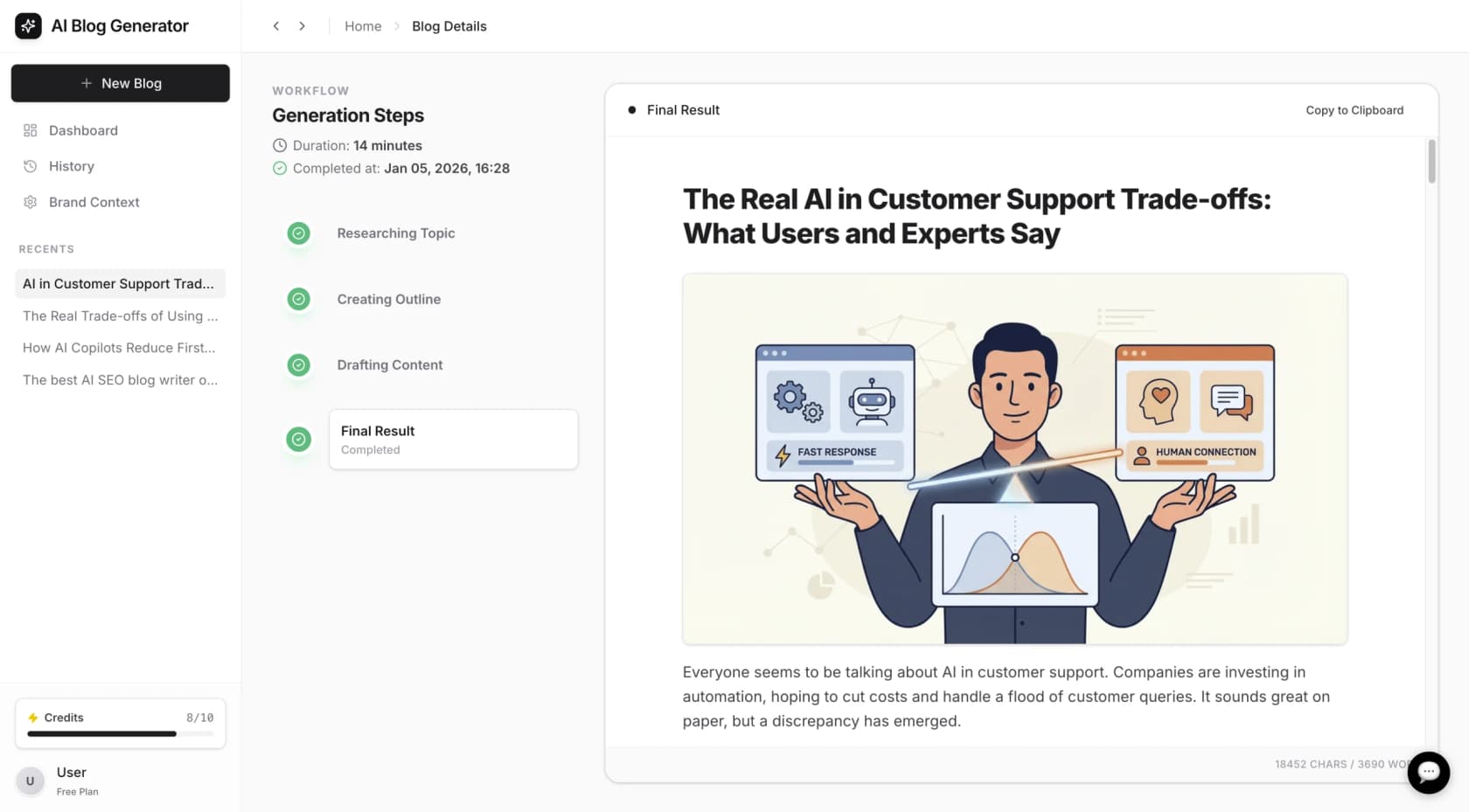
Some of its features include:
-
Automatic Assets: It generates images, tables, and infographics to accompany the text.
-
Social and Media Integration: It can embed relevant YouTube videos and find quotes from Reddit threads to include in the content.
-
SEO-focused content: The tool is designed to produce optimized content. For example, eesel AI used the tool as part of its strategy to grow its organic traffic from 700 to 750,000 daily impressions.
For teams looking for a solution that generates blog content complete with visuals and other media, the eesel AI blog writer is an option to consider. It is free to try.
Final thoughts
In summary, Copy.ai is a go-to-market platform for automating a wide range of sales and AI marketing tasks. SEO.ai is a specialized tool built to automate content marketing and improve search rankings.
The right choice depends on whether you need a broad GTM platform or a focused SEO content tool.
If you are looking for a unified workflow that generates SEO-optimized blog posts with included assets like images and videos, it may be worth exploring tools like the eesel AI blog writer.

Frequently asked questions
The main difference is their core focus. Copy.ai is a broad go-to-market (GTM) platform designed to automate various sales and marketing tasks. SEO.ai is a specialized tool built specifically to automate the creation and publishing of SEO-optimized blog content to rank on Google.
For organic growth through content, SEO.ai is designed specifically for this purpose. Its entire feature set, from keyword research to auto-publishing, is designed to create articles that rank well in search engines.
Both platforms start at a similar price point of $49/month. However, the value depends on your needs. Copy.ai's entry plan gives you access to a wide range of GTM tools, while SEO.ai's plan is focused on generating SEO articles per month.
While you could use both, it might create a less integrated workflow. You might use Copy.ai for social media and sales emails, and SEO.ai for your blog. However, this means paying for two separate tools and managing content across different platforms.
Copy.ai offers a free plan with limited features that you can use indefinitely. SEO.ai offers a full-featured 7-day trial for just $1, allowing you to test its autopilot SEO content capabilities thoroughly.
Share this article

Article by
Kenneth Pangan
Writer and marketer for over ten years, Kenneth Pangan splits his time between history, politics, and art with plenty of interruptions from his dogs demanding attention.