
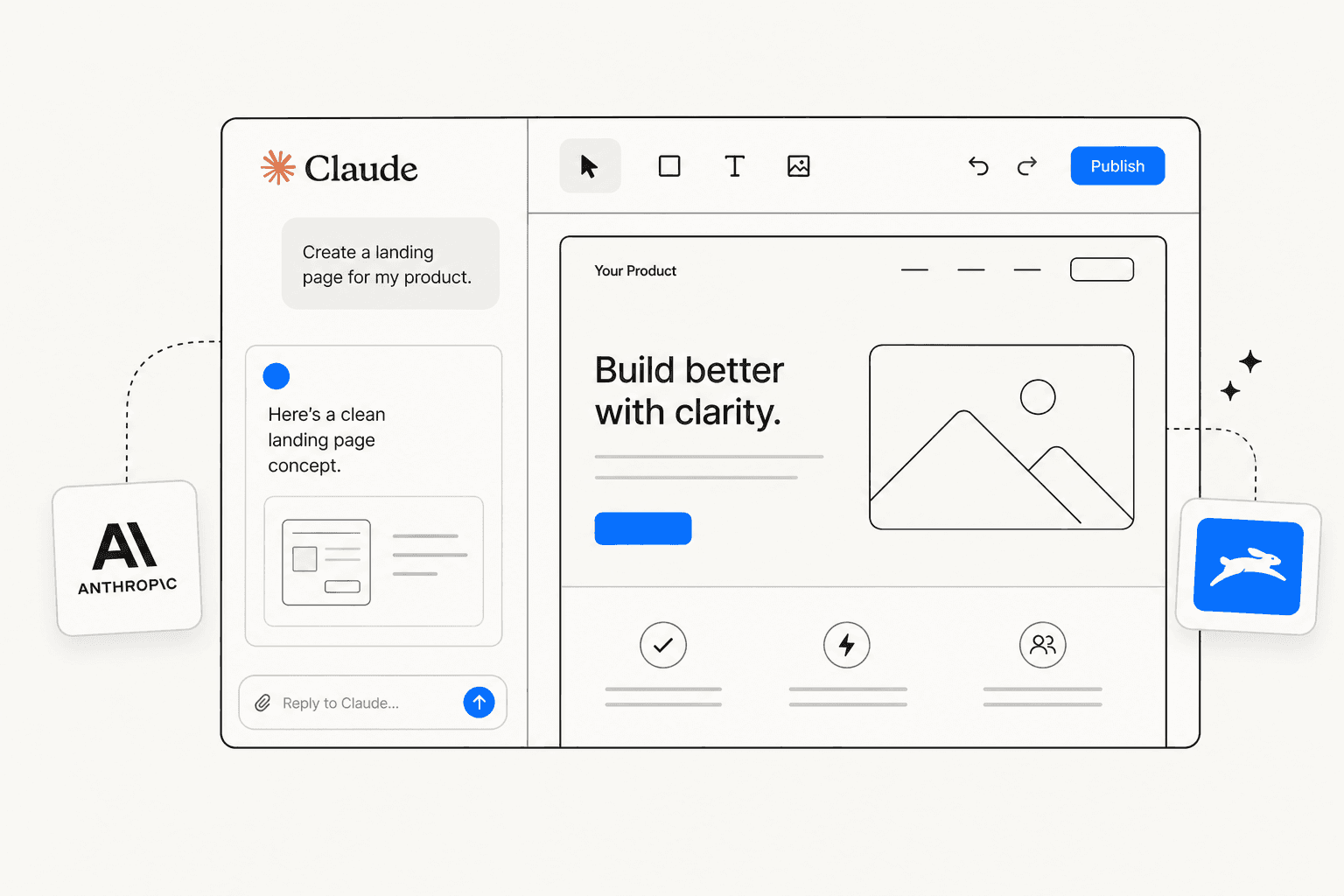
Claude Design launched on April 17, 2026 as part of Anthropic Labs - a research preview of a conversational design tool that lets you generate prototypes, pitch decks, landing pages, and app mockups through a chat interface. The output isn't a static image: it's a live, code-powered canvas you can hand off directly to Claude Code.
The launch got attention. Figma's stock fell ~7% on the day of the announcement. It hit #1 on Hacker News with 817 upvotes. Anthropic's CPO Mike Krieger - a Figma co-founder - quietly left Figma's board just before the launch.
What the launch posts didn't make clear: Claude Design isn't separately priced. It's bundled into existing Claude plans, but with a separate weekly usage budget that runs out fast. If you're on the free tier, you can't access it at all.
Here's exactly what each plan costs and what that means for design work.
What Claude Design actually is
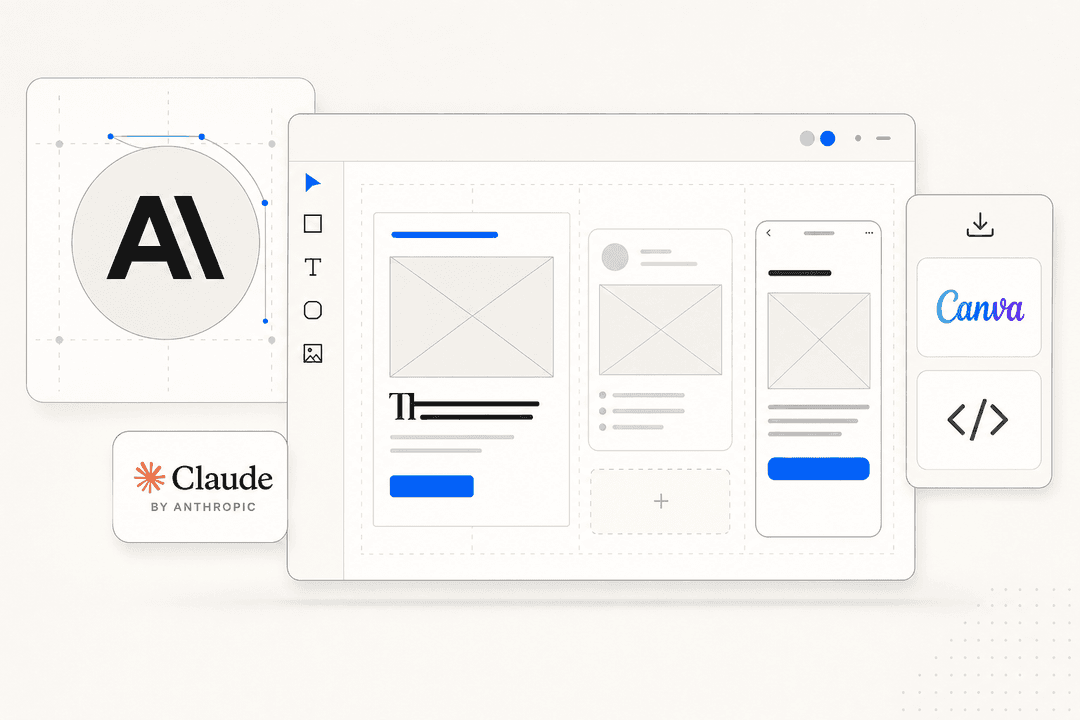
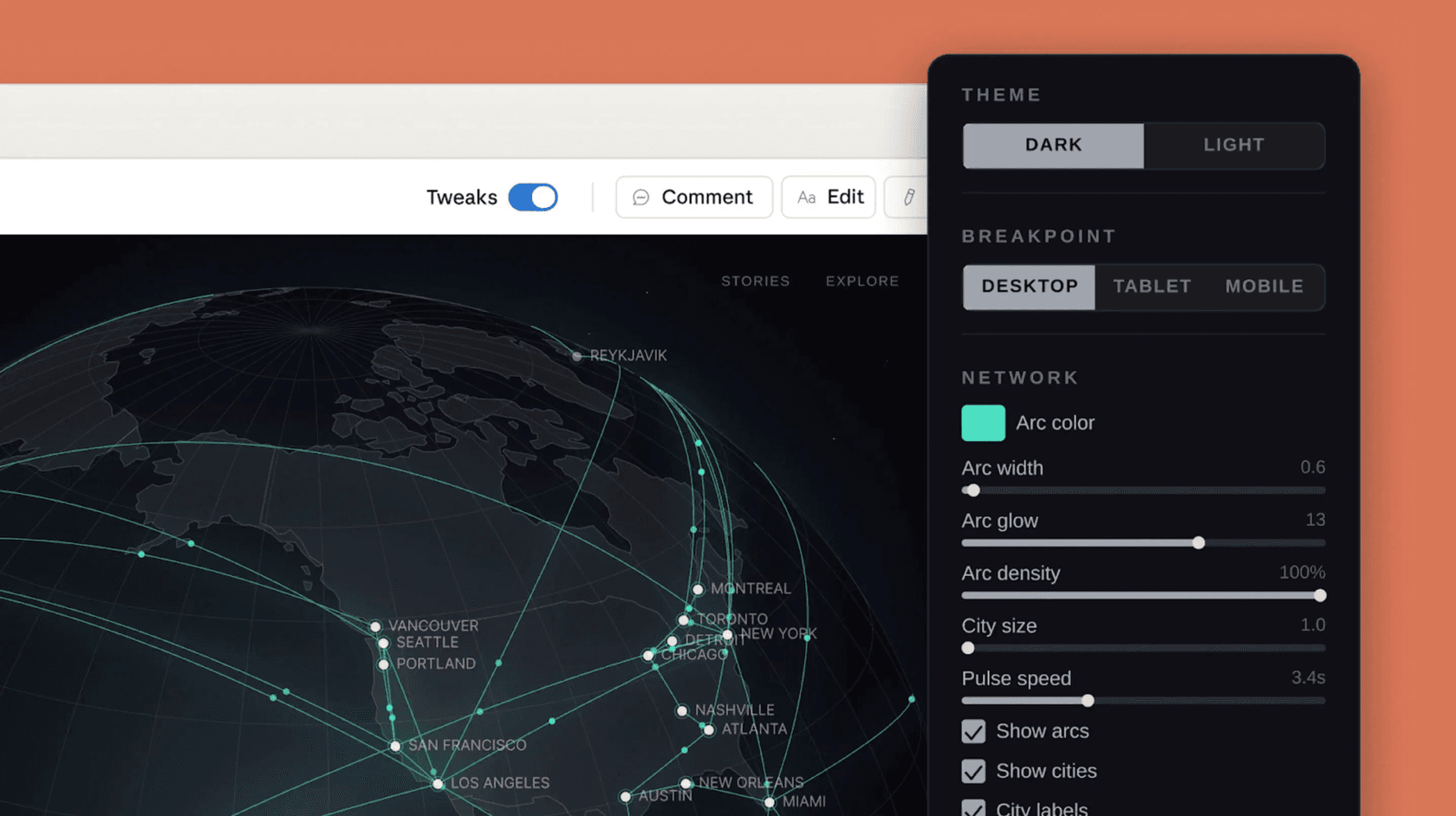
Claude Design is powered by Claude Opus 4.7, Anthropic's most capable vision model. The interface is a split panel: conversation on the left, a live canvas on the right. You describe what you want, Claude produces three variations to pick from, and you refine through follow-up prompts, inline comments, or direct slider controls for spacing, color, and layout.
The product targets founders, product managers, and engineers who need shareable visuals but don't have design backgrounds. Per TechCrunch's coverage, the positioning is specifically "share your ideas more easily" - not a replacement for production design tools.
The standout capability is design system ingestion. Claude Design can read your existing CSS files, Figma exports, or screenshots and apply your team's existing colors, typography, and components consistently across everything it generates. As Victor Dibia's review describes it: "Claude Design ingests your existing CSS to understand your design system, so output respects your design tokens."
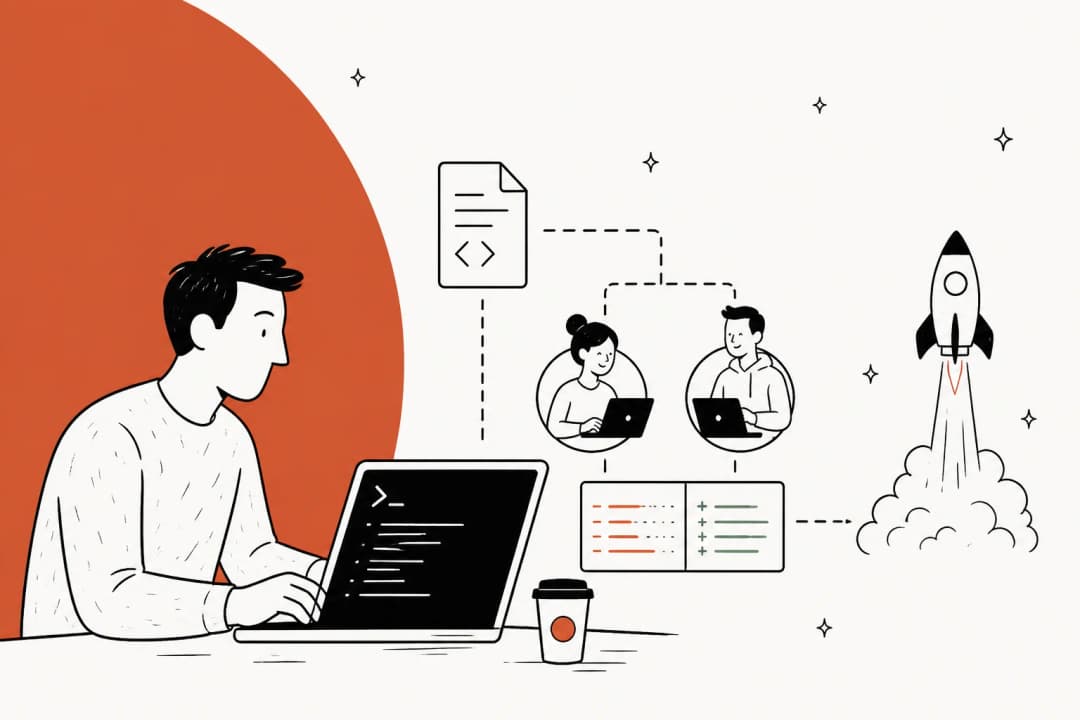
When a prototype is ready, the Claude Code handoff bundle packages the output into a structured format a coding agent can pick up directly. Flowstep's review calls this "the fastest design-to-code path" currently available in any AI tool.
Claude Design pricing by plan
Claude Design is not a separate product you purchase. It's included in Claude Pro, Max, Team, and Enterprise plans - with a dedicated weekly usage allowance that operates independently from your regular chat usage.
The free tier is excluded.
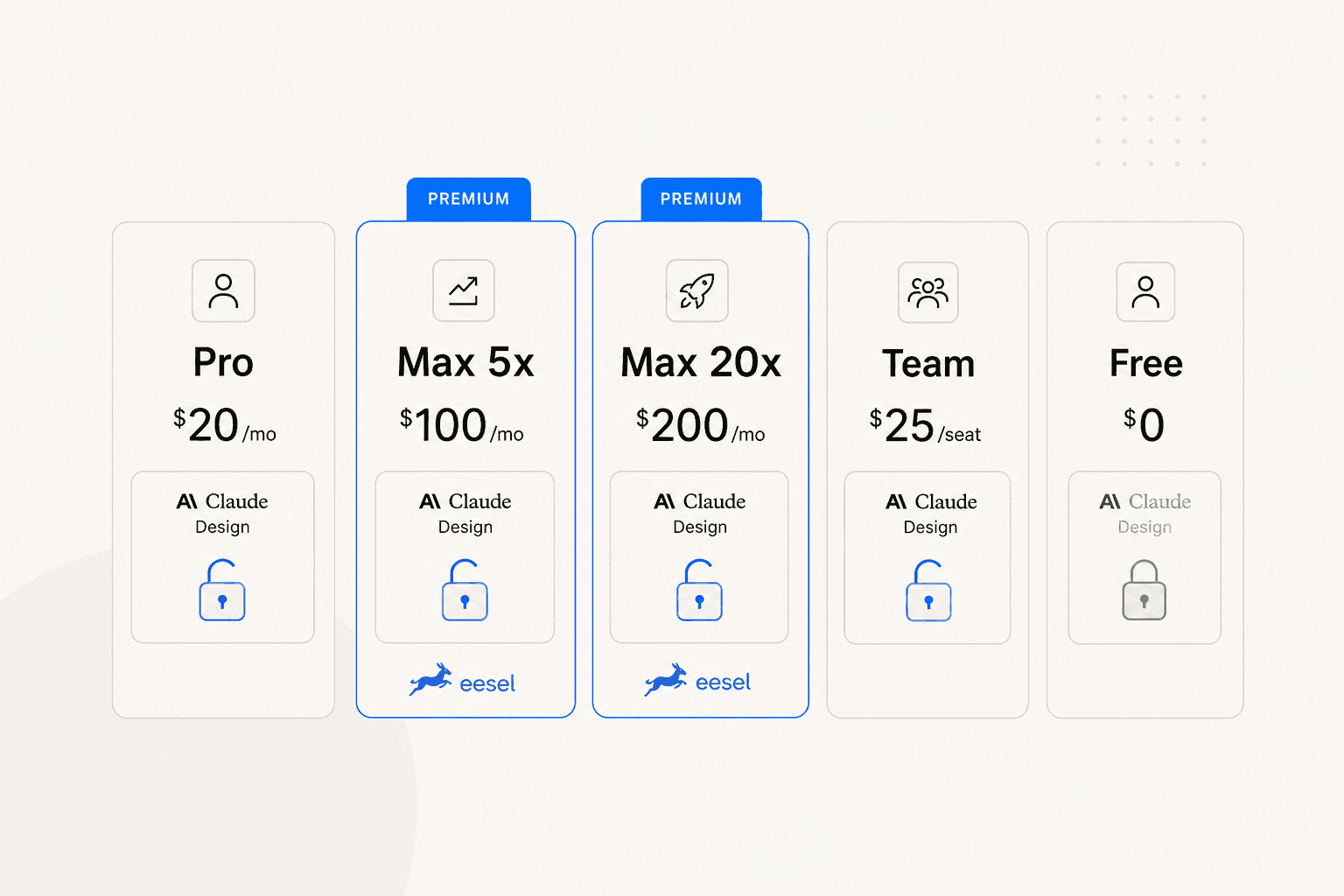
Free - $0/month
Claude Design is not available on the free tier. You can access the rest of Claude's features - web search, image and code generation, projects, memory - but not the design canvas.
Pro - $20/month
The lowest-cost entry point for Claude Design. Pro is $20/month or $17/month billed annually at $200/year, per claude.com/pricing.
In theory, you get Claude Design access. In practice, the weekly usage budget is small enough that several reviewers hit their limit after three or four design prompts. Multiple reviewers found Pro users "consistently hit their weekly limit after 3-4 prompts." On launch day, one X user reported exhausting the weekly budget in three questions.
If you want to experiment once or twice, Pro is fine. For regular use, it isn't.
Max - $100/month or $200/month
Max comes in two tiers, billed monthly only:
| Tier | Price | Usage vs. Pro |
|---|---|---|
| Max 5x | $100/month | 5x Pro's allowance (approx. 225 messages in a 5-hour window) |
| Max 20x | $200/month | 20x Pro's allowance (approx. 900 messages in a 5-hour window) |
Both tiers include priority access during high-traffic periods and early access to new features. Usage limits reset weekly: one across all models, one specifically for Sonnet, both resetting 7 days after each session starts.
Most hands-on reviewers land on Max 20x as the practical minimum for design work. Claire Vo, writing in Lenny's Newsletter, hit the Claude Design credit limit building a single landing page and spent $200 to continue. One documented case showed a Max user spending $85 in API overage charges on a single prototype.
Team - $25/month per seat (or $20/month billed annually)
Team is structured as two seat types, per claude.com/pricing:
| Seat type | Monthly | Annual |
|---|---|---|
| Standard | $25/seat | $20/seat |
| Premium | $125/seat | $100/seat |
Standard seats get usage exceeding the Pro tier. Premium seats (5x more than standard) include Claude Code, Cowork, enterprise search, SSO, admin controls, and desktop deployment. Maximum 150 members.
Claude Design is available on both seat types. Teams evaluating this should factor in that the per-seat cost multiplies against the aggressive token consumption - a small team on standard seats running design sprints could accumulate meaningful overage costs.
Enterprise
Enterprise pricing starts at $20/seat plus usage-based API costs. It includes everything in Team plus SCIM provisioning, audit logs, spend controls, HIPAA option, and Claude Security (beta).
One detail worth knowing: Enterprise settings require explicitly enabling Claude Design - it's off by default. Enterprise organizations that joined at launch also received a one-time credit covering approximately 20 design prompts, expiring July 17, 2026, per The Register.
For high-volume Enterprise use, volume discounts and custom rate limits are available via sales@anthropic.com.
API pricing for developers
If you're building design tooling on top of Anthropic's API rather than using the claude.ai product, you pay per token. Claude Design runs on Claude Opus 4.7, so the relevant prices are:
| Model | Input | Output | Batch input | Batch output |
|---|---|---|---|---|
| Claude Opus 4.7 | $5.00/MTok | $25.00/MTok | $2.50/MTok | $12.50/MTok |
| Claude Sonnet 4.6 | $3.00/MTok | $15.00/MTok | $1.50/MTok | $7.50/MTok |
| Claude Haiku 4.5 | $1.00/MTok | $5.00/MTok | $0.50/MTok | $2.50/MTok |
One important caveat: Opus 4.7 uses a new tokenizer that can use up to 35% more tokens for the same input text compared to previous models. If you're calculating costs by reference to past Opus 4 usage, budget for that increase.
Prompt caching can bring costs down substantially on repeated design system context. Cache reads cost 0.10x the base input rate (roughly $0.50/MTok for Opus 4.7), which matters when you're injecting the same CSS files at the start of every design session. See the Claude Managed Agents guide for how session management works on top of the API.
For a broader API comparison, the API comparison covers how the two stack up for production use.
What Claude Design can build
The product supports a wider range of output types than most early press coverage suggested:
- Interactive prototypes and wireframes
- Pitch decks and slide presentations
- Marketing landing pages
- Mobile app mockups with interactive elements
- Code-powered prototypes incorporating voice, video, 3D, shaders, and particle effects
- Design systems (for example, extracting and systematizing a visual style from existing files)
Export options include .zip, PDF, PPTX, HTML, and Canva, per Anthropic's help center. There's no native Figma export - the path there goes through the Claude Code handoff bundle or a manual screenshot. Video generation is also technically possible (the canvas renders animations) but there's no native video export; the current workaround is screen recording.
The token burn problem
The gap between what Claude Design can do and what it costs to do it regularly is the defining issue with the current pricing structure.
Design prompts are expensive. Generating a complex interactive prototype can consume enough tokens to exhaust a Pro user's weekly budget in a single session. Overage charges bill at standard API rates, which at $25.00/MTok output for Opus 4.7 adds up quickly when the canvas re-renders on every iteration.
Community reaction reflects this. The r/ClaudeAI subreddit's response to the launch, per The Neuron Daily, landed closer to "resounding meh" than excitement - with token limits and generic aesthetics as the two dominant complaints. Developer sentiment on X was warmer, with quotes like "10x better than Lovable or Replit," but developer enthusiasm tends to come from users on Max or higher.
The research preview label is honest. This is a v0.1 product, and the pricing structure reflects a tool that isn't yet calibrated for regular creative work at lower plan tiers.
How it compares to other AI design tools
Claude Design launched one day after Canva's AI update - a crowded week for AI design tooling.
| Tool | Best for | Pricing | Figma export | Key edge |
|---|---|---|---|---|
| Claude Design | Rapid prototypes, pitch decks, code-connected work | Bundled in Claude Pro ($20/mo+) | No | Claude Code handoff; design system ingestion |
| Figma AI | Production UI/UX, design systems | $16/editor/mo | Native | Component libraries, DevMode, full design environment |
| Canva | Marketing assets, brand collateral | $15/mo (Canva Pro) | No | Generates individual editable objects, not locked images |
| Google Stitch | UI screen generation | Separate pricing | Limited | Fast screen-level generation (formerly Galileo AI) |
The consensus across Lenny's Newsletter, MindStudio, and Sketchto's three-way review: use Figma for production UI/UX, Claude Design for rapid prototyping and pitch decks, and Canva for marketing assets. The tools don't compete as directly as the Figma stock reaction suggested.
The one genuinely unique capability in Claude Design is the direct code handoff to Claude Code - no other AI design tool has this depth of integration. If your team is already using Claude Code for development, the design-to-implementation path is faster than anything else available.
What to make of the pricing
Claude Design makes sense at Max 20x ($200/mo) if you're using it regularly and the Claude Code integration is part of your workflow. It's a genuine time-saver for the "I need to share this idea as a working prototype" use case, and the design system ingestion is real - outputs that respect your existing tokens are more usable than generic AI-generated designs.
At Pro ($20/mo), the access is real but the budget isn't. You can run a few sessions before hitting the weekly limit, which makes it more useful for occasional experiments than sustained design work.
If you're evaluating whether Claude more broadly makes sense before committing to Max, the Claude alternatives post covers how it compares to other models across use cases - not just design. For teams using customer support AI and content work alongside the design features, the value-per-dollar calculation shifts considerably.
For developers building on the API, the developer tools guide covers the practical setup. The token cost reality for Opus 4.7 applies there too - design-heavy use cases should budget around the 35% tokenizer change and the prompt caching opportunities it opens up.
Claude Design is in research preview. The token economics will probably improve as Anthropic calibrates usage patterns. What's already there - the code handoff, the design system reading, the three-variation output - is a more coherent product than the Reddit reception suggested. The pricing just hasn't caught up with the capability yet.