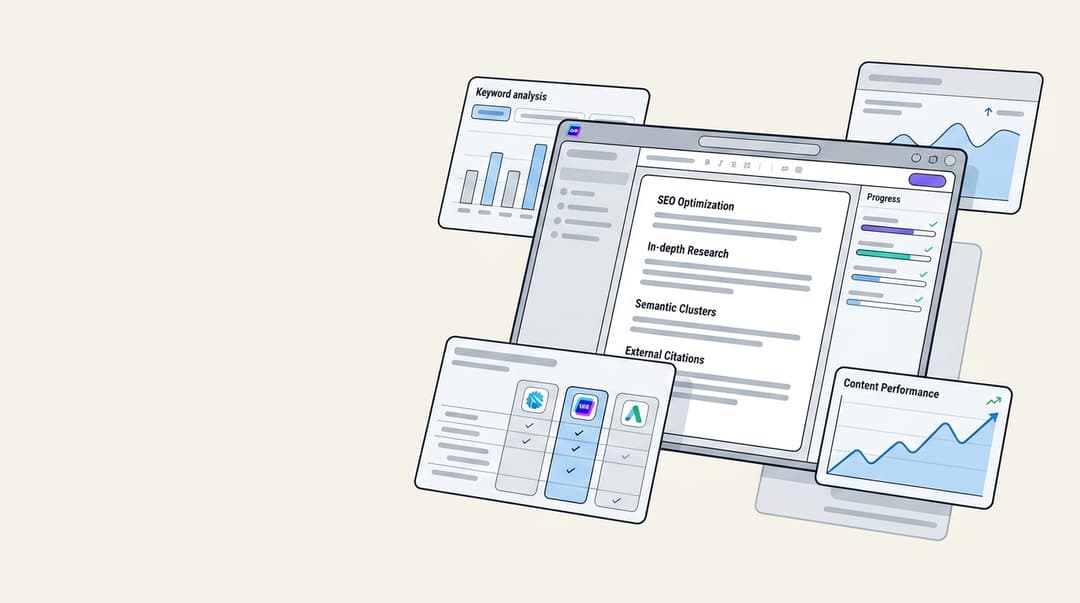
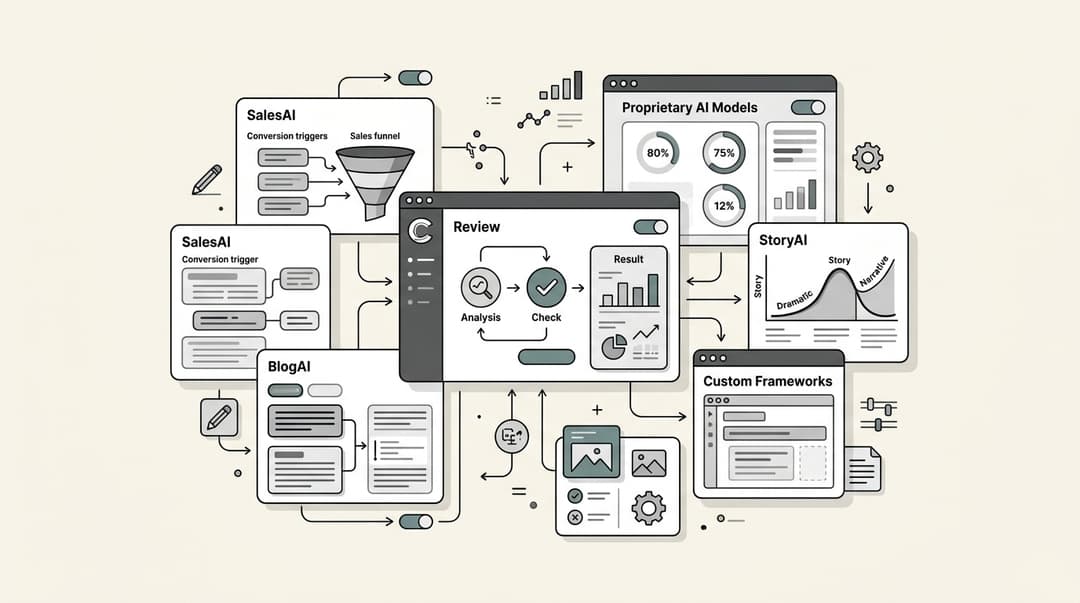
ChatGPT vs Wordtune: Which AI writing tool is right for you?

Stevia Putri
Last edited January 26, 2026
The world of AI writing tools is getting crowded, and trying to pick the right one can be a challenge. You'll probably hear about ChatGPT and Wordtune a lot, but they're designed for completely different parts of the writing process. It's kind of like having a hammer and a screwdriver. Both are useful tools, but you wouldn't use one for the other's job.
ChatGPT is a jack-of-all-trades AI that's great for creating all sorts of content from the ground up. Wordtune, on the other hand, is more of a specialist, a writing assistant that helps you polish text you’ve already written. This article will give you a straightforward, practical breakdown of ChatGPT vs. Wordtune, covering their features, best uses, and pricing, so you can decide which one actually fits your needs.
While these tools are solid for what they do, we'll also talk about how platforms like the eesel AI blog writer offer a more comprehensive package. It can take a single keyword and turn it into a blog post that's ready to go live, so you don't have to piece together different tools.
What is ChatGPT?
ChatGPT is a conversational AI made by OpenAI. Basically, it's built to understand what you're asking and generate text, images, and even code that sounds like a human wrote it. You've likely seen its simple chat window where you type in a question or command and get a response. It’s available on the web and has mobile apps for both iOS and Android.
It's powered by some seriously advanced tech, like GPT-5.2, so it can do many different things. You can ask it to draft an email, write a bit of Python code, brainstorm blog ideas, analyze data from a spreadsheet, create a custom image, or explain some really complicated topics. This makes it a true multi-tool in the AI space.
The only thing is, the quality of its output really hinges on the quality of your prompt. The clearer and more detailed your instructions are, the better the result will be. It's also a good idea to double-check any facts it gives you, because it can occasionally get things wrong.
What is Wordtune?
Wordtune, from AI21 Labs, is different. It's not for generating content from scratch. Think of it as an AI editor that helps polish what you've already written. It’s not there to write for you, but to help you become a better writer.
It mainly works through a browser extension for Chrome, Edge, and Firefox, but it also has an iOS app and a web-based Editor. This means it works right inside the places you already write, like Google Docs, Gmail, and Slack.
Wordtune is all about making your writing better. It fixes grammar, improves the flow of your sentences, and helps you switch your tone from casual to formal. Its best feature is "Rewrite", which offers different ways to phrase a sentence. This is a huge help when you know what you want to say but just can't find the right words. It also has some other cool tricks, like a tool that summarizes text and YouTube videos, and "Spices", which can add stats or examples to your writing to make your points stronger.
Feature comparison: ChatGPT vs. Wordtune
Let's get into the nitty-gritty of what makes these two platforms differ. This should give you a clear idea of which tool is the right one for the job.
| Feature | ChatGPT | Wordtune |
|---|---|---|
| Primary Function | Generates new content (text, images, code) from a prompt. | Refines and rewrites existing text for clarity, tone, and style. |
| Best For | Brainstorming, first drafts, research, data analysis, image creation. | Editing, proofreading, polishing final drafts, overcoming writer's block. |
| Core Features | Data Analysis, Custom GPTs, Web Browsing, Image Generation, Voice Mode. | Rewrite, Tone Adjustment (Casual/Formal), Shorten/Expand, Summarizer, "Spices" for adding facts. |
| Integrations | Web app, mobile apps (iOS/Android), and an API for developers. | Browser extensions (Chrome, Edge, Firefox), iOS app, and a web editor. |
Interface and user experience
Using ChatGPT feels like having a conversation. It's a blank canvas, and you direct the AI with your prompts. The whole thing is built around "prompt engineering," meaning you have to tell the AI exactly what you want it to do. It's powerful, but it's on you to provide clear instructions.
Wordtune, however, blends into your workflow with its browser extension. It feels less like you're commanding an AI and more like you have a helpful editor sitting next to you. You get suggestions in real-time with simple clicks like "Rewrite" or "Make Formal," which makes the editing process feel much smoother.
Core functionality and output
ChatGPT is a generator. It can create a massive variety of content from scratch based on your request. The output could be a single sentence, a full article, a marketing image, or even a piece of code. It also has some neat tools like Data Analysis, which lets you upload files like CSVs and ask questions about the data inside.
Wordtune focuses on text you've already written. It doesn't write for you; it helps you write better by suggesting different ways to phrase things. Its "Spices" feature can even recommend stats or counterarguments to add more substance to your writing. Plus, its Summarizer is great for quickly boiling down long articles or YouTube videos to their main points.
However, GPT4 probably totally killed a job of a line/grammar editor. Or things like wordtune, Grammarly seems now really lame in comparison.

Integrations and accessibility
ChatGPT is mostly a standalone app for the web and mobile. For developers, OpenAI offers an API that lets them build its models into other apps, but for the average user, it's a specific place you go to get work done.
Wordtune's biggest advantage is its integration. The browser extensions make it available on tons of websites and web apps, like Google Docs, Gmail, Slack, and LinkedIn. This means you can use it wherever you're writing, which is super convenient. It also has a dedicated iOS app and a web-based Editor if you prefer working that way.
Use cases: When to use each tool
Here's some practical advice on which tool to reach for depending on what you're trying to do.
When to use ChatGPT
- Brainstorming and ideation: If you’re feeling stuck, ChatGPT is great for generating outlines, topic ideas, or different angles for an article.
- Creating first drafts: Need to get words on the page fast? Ask ChatGPT to whip up a rough draft of a blog post, email, or social media post that you can then clean up.
- Research and data analysis: You can ask it to explain complex topics, summarize long documents, or even analyze data from CSVs to find trends.
- Generating multimedia content: It can create custom images for your blog or generate code snippets for a website, which is way more than just text.
When to use Wordtune
- Editing and polishing: This is where Wordtune really excels. It’s perfect for cleaning up a final draft to improve its clarity, flow, and tone right before you publish.
- Professional communication: Use the casual and formal tone adjustments to make sure your emails, reports, and messages come across as professional and error-free.
- Overcoming language barriers: For non-native English speakers, Wordtune is a fantastic tool for making your writing sound more natural and fluent. It can even translate from 10 languages into English and then help you refine the result.
- Summarizing content: Use it to quickly grab the main points from a long article or YouTube video without having to read or watch the whole thing.
Pricing breakdown
Here’s a look at how the pricing for both tools compares.
ChatGPT pricing
ChatGPT offers a few different plans for individuals and businesses. You can find all the details on their official pricing page.
- Free Plan: Gives you limited access to the main GPT-5.2 model, with caps on messages and features.
- Go Plan: Starts at $8/month for more access to the main model and higher message limits.
- Plus Plan: This plan costs $20/month and gives you access to more advanced models, higher usage caps, and features like the Codex agent and Sora video generation.
- Business Plan: Priced at $25/user/month (billed annually), this plan provides a secure workspace, admin controls, and ensures your business data isn't used for training.
Wordtune pricing
Wordtune’s pricing is based on which features you need and how much you use them. You can see the full breakdown on their plans page.
- Basic (Free) Plan: This gives you 10 rewrites and 3 AI summaries per day, plus unlimited grammar and spelling corrections.
- Advanced Plan: Starting at $4.89/month (billed annually), this plan increases your limits to 30 rewrites and 15 summaries per day.
- Unlimited Plan: For $6.99/month (billed annually), you get unlimited access to everything, including rewrites, summaries, and tone adjustments.
An alternative for comprehensive content creation: eesel AI blog writer
ChatGPT is effective for generating first drafts that require further editing and visual asset creation, while Wordtune excels at polishing existing text. For users looking for a tool that handles the process from start to finish, alternatives are available.
This is where the eesel AI blog writer can be useful. It’s designed to manage the entire content creation process, taking a single keyword and turning it into a complete article.
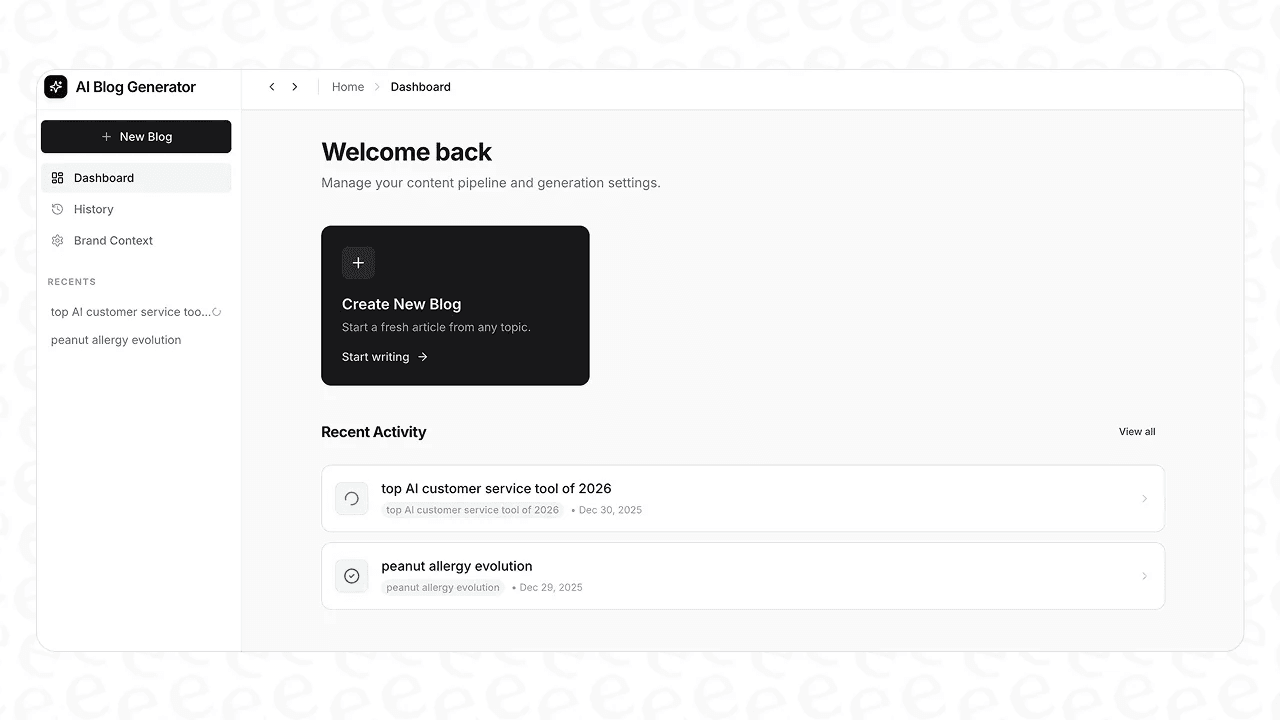
It is designed to address several parts of the content creation process:
- From keyword to complete post: It generates a full article with an introduction, body, conclusion, proper headings, and an FAQ section.
- Automatic assets included: The tool automatically creates and embeds AI-generated images, infographics, and tables directly into the post.
- Built-in research and social proof: To add credibility, it can embed relevant YouTube videos and pull quotes from Reddit forums related to the topic.
- Optimized for modern search: The content is structured for search engines and optimized for AI Answer Engines (AEO), such as Google AI Overviews.
As a practical example, the eesel AI team used this tool to grow their organic traffic from 700 to 750,000 daily impressions in three months.
The tool is free to try, allowing users to generate a post and evaluate its output.
Final verdict: Which tool should you choose?
Here’s the bottom line: use ChatGPT for getting initial ideas and first drafts, and use Wordtune for editing and improving your own writing.
To put it even more simply:
- Choose ChatGPT if... you need to get the writing process started, brainstorm ideas from a blank page, analyze data, or get a rough draft down quickly.
- Choose Wordtune if... you're already confident in your ideas but want to make your writing clearer, more professional, and higher quality.
- Choose the eesel AI blog writer if... you are looking for a tool to generate complete, SEO-optimized blog posts with included assets.
For a quick visual summary of how these two tools stack up, the team at Wordtune put together a short video breaking down the key differences.
Choosing the right AI writing tool
Both ChatGPT and Wordtune are powerful AI writing tools, but they solve very different problems. The trick is to understand what each one is good at so you can use them effectively.
Ultimately, the right tool for you depends entirely on what you need to do. If your goal is to produce complete blog posts efficiently without juggling multiple tools, consider an end-to-end solution. You can try eesel AI for free to see if it fits your workflow.

Frequently Asked Questions
Share this article

Article by
Stevia Putri
Stevia Putri is a marketing generalist at eesel AI, where she helps turn powerful AI tools into stories that resonate. She’s driven by curiosity, clarity, and the human side of technology.