Canva AI Writer vs Rytr: Which is the right tool for your content?

Stevia Putri

Katelin Teen
Last edited January 26, 2026
AI writing assistants are popping up everywhere, and they're definitely changing how we create content. For marketers, creators, and business owners, they can be a huge help for saving time, brainstorming ideas, and getting past that dreaded blinking cursor on a blank page.
Two popular names you'll hear are Canva's Magic Write and Rytr. They're both well-known, but they're designed for pretty different tasks. Magic Write is built right into Canva's design suite, making it handy for writing quick copy to go with your visuals. Rytr, on the other hand, is a dedicated AI writer that focuses on producing short-form copy for things like ads, emails, and product descriptions.
But here's the thing: neither of them is really designed to take a single idea and turn it into a complete, media-rich, and SEO-friendly blog post that’s ready to go live. They're more like assistants for parts of the job, not the whole thing.
In this guide, we'll dive into the details of Canva AI Writer vs Rytr. We'll also introduce an alternative for long-form content: the eesel AI blog writer, a tool built to turn one keyword into a publish-ready article.
What is Canva AI Writer (Magic Write)?
First off, Canva's AI tool is officially called Magic Write. It’s not a standalone app but a feature that lives inside the Canva ecosystem you might already be using. It’s powered by OpenAI, so it has some solid technology behind it.
Its main purpose is to help you generate text while you're in the middle of a design project. This could be social media captions for your latest graphic, talking points for a presentation, or a catchy headline for a new poster. It’s all about convenience, so you don't have to leave Canva to get the copy you need.
It can do some useful things, like summarizing a block of text, continuing a thought you've started, or rewriting something in a different tone. Just be mindful of the usage limits. If you’re on a Canva Free plan, you get 25 queries for life. Canva Pro users get a more generous 250 queries each month.
What is Rytr?
Rytr is a completely different tool. It's a dedicated AI writing assistant that's focused on helping you create short-form marketing and business copy quickly.
Its biggest advantage is its library of over 40 specialized use cases. Need copy for a Facebook ad? There's a template for that. Writing a follow-up email? There's a template for that, too. From product descriptions to SEO meta tags, Rytr has a pre-built prompt to help you start.
It's also quite versatile. You can generate content in over 30 languages, and it has a "My Voice" feature that analyzes a sample of your writing to mimic your unique style. Plus, its browser extension lets you use Rytr directly in other apps like Gmail or Slack, which is a nice little productivity boost.
The first thing I noticed about Rytr was how geared it was for more commercial writing applications. The abundance of templates makes the process of content creation more streamlined and it was useful to be able to guide the tone of writing with the click of a button... Overall, it can be an economical option for writing marketing and SEO materials but I would definitely fact-check and proofread before hitting publish.

Feature comparison: Canva AI Writer vs Rytr
So, how do these two really compare? At their core, they're built for different stages of the content creation process. Canva is for making things look good, and Magic Write helps with the words that go on the visuals. Rytr is where you go to write a bunch of different text-based assets in a short amount of time.
Here’s a quick breakdown:
| Feature | Canva AI Writer (Magic Write) | Rytr |
|---|---|---|
| Primary Use Case | Adding text to visual designs | Generating short-form marketing copy |
| Publish-Ready Blogs | No, generates drafts, not complete articles | No, limited by character caps |
| Templates / Use Cases | Yes, integrated with visual design templates | Yes, over 40 specialized text templates |
| Team Collaboration | Yes, but design-focused | No, primarily for individual users |
| Free Plan | Yes, 25 queries total | Yes, 10,000 characters per month |
| SEO Tools | No | Yes, basic meta title/description generators |
| Accessibility | Within the Canva platform | Web app and browser extension |
Content creation capabilities
It's good to remember that each tool excels in its own area.
Canva: Magic Write is at its best when you need text to go with your visual content. Being able to draft a blog post intro or a few social media captions right inside the design editor is a massive time-saver for designers and marketers. But to be clear, it’s not going to produce a fully structured, media-rich article that’s ready to publish.
Rytr: When it comes to text-only tasks, Rytr has the upper hand. It offers a ton of specialized AI templates for just about any copywriting need you can imagine. The character limits on its free plan mean you won't be writing a 2,000-word article from scratch, which makes it ideal for short-form content and brainstorming.
Unique AI tools and features
Beyond just writing, both platforms have some unique AI features.
Canva: Magic Write is just one part of Canva's "Magic Studio." This suite also includes an AI image generator, a background remover, and other visual tools. They all work together to make creating visual marketing assets a very smooth process.
Rytr: Rytr sticks to its text-focused features. It has a built-in plagiarism checker powered by Copyscape, the "My Voice" tool for matching your brand's tone, and simple commands like "Improve" or "Rephrase" to help you polish the generated copy.
Workflow and collaboration
How do these tools fit into a team environment?
Canva: Canva is a beast when it comes to collaboration on visual projects. Features like real-time comments, shared folders, and brand kits are all built around the design workflow. It’s great for getting a team aligned on a visual asset, but it’s not really set up for collaborative text editing on a long document.
Rytr: Rytr feels more like a tool for an individual. It's great for freelance copywriters, solo marketers, or anyone who needs to generate copy on their own. You can share documents, but it lacks the deep, real-time collaboration features of a design-first platform. Its Chrome extension, however, offers a lot of flexibility for individual workflows across different websites.
Who should use Canva AI Writer vs Rytr?
The right tool for you really depends on what you spend most of your day doing.
Who is Canva for?
- Social Media Manager: You can design a whole week's worth of graphics and write the captions for them without ever leaving the platform. It’s a huge time-saver.
- Marketing Team: Your team can quickly add copy to brochures, presentations, and sales decks right inside the design files, keeping everything organized in one place.
- Small Business Owner: You need an all-in-one tool to create social posts, simple web graphics, and flyers with text that sounds professional.
Who is Rytr for?
- Freelance Copywriter: You need to produce dozens of variations of ad copy, email subject lines, or product descriptions for different clients under tight deadlines.
- SEO Specialist: You need a simple and affordable tool to quickly draft SEO meta titles and descriptions for a long list of web pages.
- Blogger: You want some help brainstorming article ideas, creating outlines, or just writing a quick intro to get past writer's block.
Pricing breakdown: Canva vs Rytr
Let’s talk about cost. Here’s how the plans for each tool break down, based on the latest information from their websites.
Canva pricing plans
Canva's pricing is structured around its entire design suite, so Magic Write is just one of the features you get.
- Canva Free: $0/year. This gives you 25 lifetime uses of Magic Write. It's good for a test run, but you'll use them up quickly.
- Canva Pro: $120/year for one person. This increases your limit to 250 Magic Write queries per month and unlocks all the premium templates and tools like the Background Remover.
- Canva for Teams: Starts at $200/year per person. This adds team workspaces, brand controls, and other advanced collaboration features.
Rytr pricing plans
Rytr's pricing is based on how much you write, making it a very affordable option for copy-heavy roles.
- Free Plan: $0/month. This lets you generate up to 10,000 characters per month.
- Unlimited Plan: $7.50/month (billed yearly). This gives you unlimited character generation and access to the "My Voice" feature.
- Premium Plan: $24.16/month (billed yearly). You get everything in the Unlimited plan, plus the ability to create custom use cases and get priority support.
An alternative for long-form content: eesel AI blog writer
While Canva and Rytr are useful for their specific functions, neither is built to create a complete, high-quality, SEO-optimized blog post from start to finish. Canva is for adding words to pictures, and Rytr is for writing short pieces of copy.
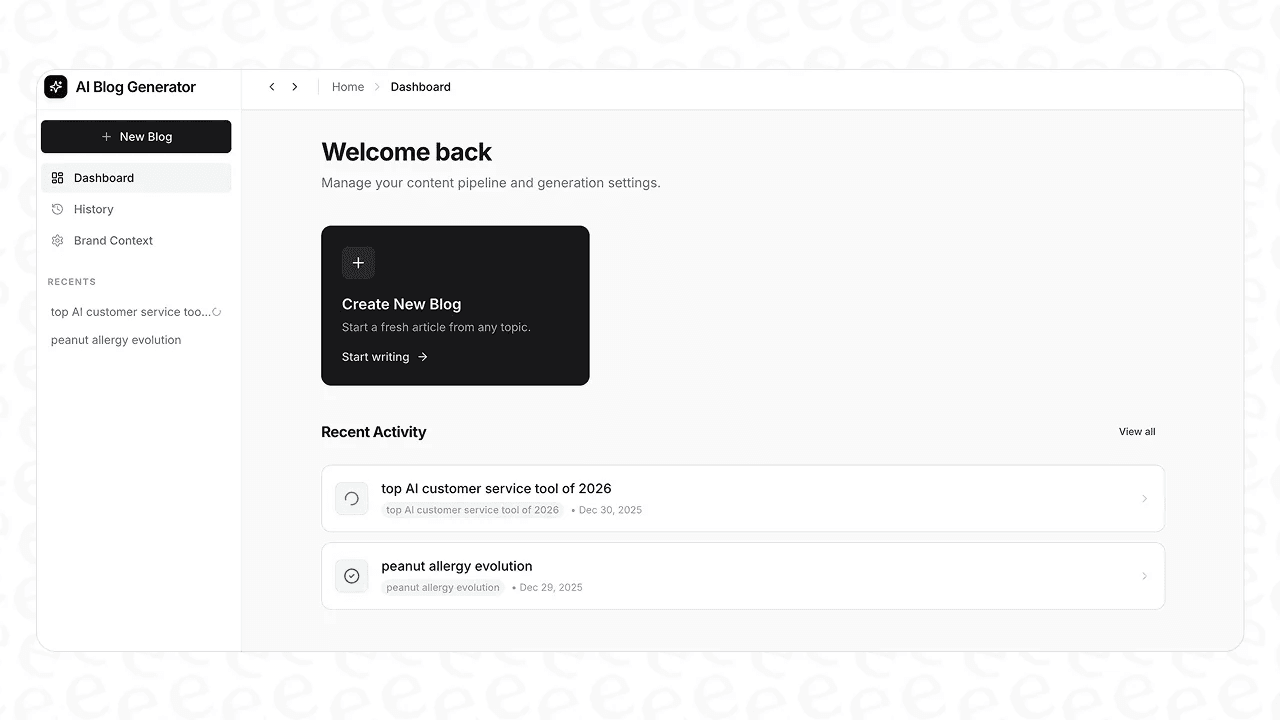
It addresses this specific use case with several features:
- End-to-End Content Generation: It doesn't just give you a few paragraphs. It builds a fully structured blog post with an introduction, logical headings, a conclusion, and even an FAQ section.
- Automatic Rich Media: It automatically creates and embeds relevant assets like AI-generated images, tables, and infographics. It even finds and embeds related YouTube videos to keep your readers engaged.
- Authentic Social Proof: It searches forums like Reddit to find real quotes from people discussing your topic and includes them in the article. This adds a layer of credibility and human experience to the content.
- Advanced SEO & AEO: The content isn’t just optimized for traditional search engines (SEO). It’s also optimized for AI Answer Engines like Google AI Overviews (AEO), so your content is ready for the modern search landscape.
This is the same tool we used at eesel AI to grow our blog from 700 to 750,000 impressions per day in just three months. It’s also free to try, so you can generate your first blog post and see the quality for yourself.
Canva AI Writer vs Rytr: Which is right for you?
So, after all that, which tool should you pick? It really comes down to your primary goal.
- Choose Canva's Magic Write if: Your main job is creating visual content in Canva, and you just need a fast, built-in way to add text to your designs.
- Choose Rytr if: Your focus is on writing short-form copy like ads, emails, and social media posts, and you need an affordable tool to help you draft things more quickly.
- Choose the eesel AI blog writer if: Your goal is to scale your content marketing by publishing complete, SEO-optimized, and media-rich blog posts that are designed to bring in organic traffic.

Frequently Asked Questions
Share this article

Article by
Stevia Putri
Stevia Putri is a marketing generalist at eesel AI, where she helps turn powerful AI tools into stories that resonate. She’s driven by curiosity, clarity, and the human side of technology.