Blog writing vs copywriting: What’s the difference and which one do you need?

Stevia Putri

Katelin Teen
Last edited January 20, 2026
Ever found yourself using "blog writing" and "copywriting" like they're the same thing? Don't worry, you're not alone. Even experienced marketers can get them mixed up because, let's face it, they both involve writing for a business. But once you look closer, you'll see they’re playing two totally different games.
Here’s a simple way to look at it: Blog writing is like having a good chat over coffee. The goal is to inform, maybe entertain, and build a connection. Copywriting is when you ask for the sale. Its only job is to get someone to do something specific, right now.
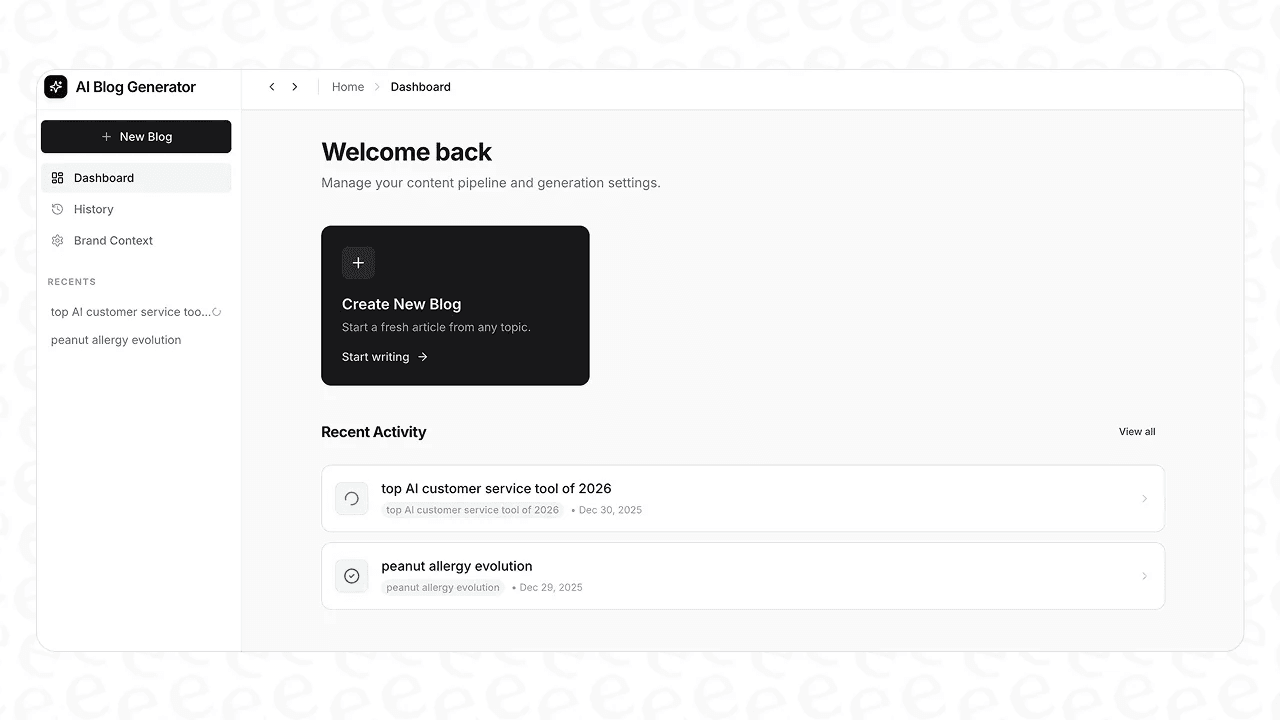
Getting this difference right isn't just about using the right words; it's the secret to a content strategy that actually brings in business. You need both to walk a potential customer from "just looking" to "here's my credit card." Modern tools are also helping to connect these two worlds. At eesel AI, we grew our blog impressions from 70,000 to over 750,000 in just three months using the eesel AI blog writer. It helped us create content that is not only super educational but also fine-tuned to meet our business goals.
The fundamentals of blog writing vs copywriting: What are they?
Before we get into the strategy, let's make sure we're on the same page with the definitions. While both use words to help a business grow, their main purpose, tone, and structure are worlds apart.
What is copywriting?
At its core, copywriting is the art of persuasion. Its one job is to convince the reader to take a specific action immediately. As one writer on Reddit neatly put it, it’s about creating persuasive sales material. That action could be anything from clicking a "Buy Now" button to signing up for a webinar or downloading a free PDF.
Copywriting usually refers to persuasive material aimed at selling things. Can be sales emails, landing pages, ads and product descriptions.

The goal is always direct sales and conversions. The language is designed to spark an emotional response, touch on a reader's pain points, and offer a clear, can't-miss solution.
Copywriting is usually short, punchy, and straight to the point. Every word has a purpose, often using psychological cues and focusing on the real benefits a customer gets, not just the product's features.
You'll see copywriting in places like:
- Website landing pages
- Email marketing campaigns
- Social media and PPC ads
- Product descriptions
- Video sales letters
What is blog writing?
Blog writing, on the other hand, is in it for the long haul. Its main purpose is to inform, educate, entertain, and build a real, lasting relationship with your audience. It’s about giving away value for free without expecting an immediate sale. The aim is to build brand awareness and establish your company as a trusted authority in your field.
The primary goal here is building your brand and earning trust. By consistently answering your audience's questions and helping them solve problems, you bring in organic traffic through SEO, position yourself as the go-to expert, and gently guide potential customers over time.
Blog writing is typically long-form, conversational, and packed with information. It’s less about a hard sell and more about telling stories, explaining tricky subjects, and giving practical advice.
Common formats for blog writing include:
- SEO articles (like this one!)
- How-to guides and tutorials
- Listicles and roundups
- In-depth white papers
- Customer case studies
- Industry trend reports
Purpose and intent: The fundamental divide in blog writing vs copywriting
The clearest way to see the difference between these two writing styles is to look at where they show up in the marketing funnel. If you trace a customer's path from first hearing about your brand to actually buying something, you'll see blog writing and copywriting have very different roles.
How blog writing vs copywriting fit into the marketing funnel
Blog writing is the star player at the Top of the Funnel (ToFu) and Middle of the Funnel (MoFu).
- Top of the Funnel (Awareness): At this stage, people are just starting to realize they have a problem or a question. They're looking for answers, not products. A blog post titled "Why is my team so unproductive?" is classic ToFu content. It meets them right where they are and offers help without asking for anything back.
- Middle of the Funnel (Consideration): Once they've figured out their problem, they begin searching for solutions. This is where deeper content, like a guide on "The 5 Best Project Management Methodologies," fits in. It helps them weigh their options and moves them along their journey.
Copywriting takes over at the Bottom of the Funnel (BoFu).
- Bottom of the Funnel (Decision): By now, the person has done their homework and is ready to decide. This is where you bring in persuasive landing pages, sales emails with special deals, and clear calls-to-action ("Start Your Free Trial") to seal the deal.
Content marketing is a marathon, not a 100-meter dash. A single blog post probably won't result in a sale on the same day, but it builds a foundation of trust that ultimately leads to sales later on.
Tone, style, and emotional appeal in blog writing vs copywriting
The tone of each writing style directly reflects its purpose.
Copywriting often uses an urgent, persuasive, and emotionally driven tone. It focuses on a specific pain point ("Tired of wasting hours on manual data entry?") or creates a feeling of scarcity ("Limited-time offer!") to push for a quick decision.
Blog writing, in contrast, is helpful, conversational, and knowledgeable. It tries to build trust by giving away useful information. The idea is to make the reader feel smarter and more informed, positioning the brand as a credible and friendly expert they'll want to hear from again.
The blend in blog writing vs copywriting: When blog posts need strong copywriting
Okay, so we've established a pretty clear difference. But here's the catch: the best content marketing strategies don't treat them as separate entities. The most powerful content actually mixes them together.
Where blog writing vs copywriting overlap
Great blog posts get a serious boost from copywriting techniques. In fact, you can't have a truly successful blog without them. As one marketer noted, the two are often closely connected.
What many people don't realize is that content writing and copywriting have a lot of overlapping similarities. You could be writing a blog post (content writing) educating people about something while also plugging a product for the brand you're writing for (copywriting).
Here are a few spots where they meet:
- Headlines: Your blog post needs a catchy, clickable headline to stand out on a crowded search results page. That’s a copywriting skill. A headline like "How to Write a Blog Post" is fine, but "10 Headline Formulas That Grab Attention and Never Let Go" is pure copywriting.
- Introductions: The first few sentences of your article must hook the reader and convince them that it's worth their time to keep reading. That's persuasion in action.
- Call-to-Action (CTA): Every single blog post needs a clear CTA. It doesn't have to be a "Buy Now" button. It could be something as simple as "Read this next," "Download our free template," or "Subscribe to our newsletter." This is where copywriting makes sure the reader's journey doesn't end.
The most successful content doesn't just stay in one lane; it borrows the best from both.
| Asset Type | Primary Goal | Dominant Style | Where they blend |
|---|---|---|---|
| Homepage | Guide user to key actions | Copywriting | Informative sections explaining the "what" and "why." |
| "How-To" Article | Educate and solve a problem | Blog Writing | Compelling headline and a clear CTA at the end. |
| Product Launch Email | Drive immediate sales | Copywriting | Educational snippets on why the new feature matters. |
| Case Study | Build trust and credibility | Blog Writing | Persuasive summary of results and a "Request a Demo" CTA. |
| Social Media Ad | Generate clicks and leads | Copywriting | Can link to an educational blog post (ToFu content). |
How AI is shaping the future of blog writing vs copywriting
As a business, you need both blog writing and copywriting to grow. The big challenge is figuring out how to produce a consistent flow of high-quality content for both without needing a huge team of writers. This is where technology can help, but you have to be smart about it.
Challenges with general-purpose AI writers
AI writing tools have popped up everywhere, but using a generic tool like ChatGPT for professional content can present some challenges.
- Generic and repetitive content: Standard AI models are designed to predict the next word, which can sometimes lead to bland, repetitive text. It may lack a unique brand voice or the creative flair needed for engaging content.
- Factual inaccuracies: These tools can sometimes generate "hallucinations" or incorrect facts, stats, and sources. This can be a concern when building brand authority. Additionally, some generic tools can't crawl the web for real-time information, which may result in outdated content.
- Challenges with long-form content: Generating a long-form blog post with a general-purpose AI may result in content that loses focus and repeats points. Creating a high-quality article often requires a manual process of outlining, generating individual sections, and combining them.
- Text-only output: Many general AI writers produce a wall of text. The user is then responsible for sourcing or creating images, tables, videos, and applying formatting to create a complete and engaging post.
Specialized tools for content creation
Specialized tools like the eesel AI blog writer are designed to address these challenges. They are built specifically to produce complete, strategic, and publish-ready content from a single keyword.
Here’s what makes it different:
- Automates the expert workflow: It handles the multi-step process that experts recommend on Reddit, such as outlining and section-by-section generation, automatically.
- Delivers publish-ready posts: Instead of a simple text draft, it generates a fully structured article with an intro, conclusion, SEO-optimized headings, and an FAQ section.
- Context-aware research: The AI can understand the content type. For a comparison post, it can find pricing data, and for a product review, it can look for technical specs. This helps create more in-depth and useful content.
- Automatic asset generation: The tool automatically creates relevant assets like AI-generated images, infographics, and data tables to accompany the text.
- Social proof and media integration: It can find and embed relevant YouTube videos and quotes from Reddit discussions to add credibility and context to the content.
To see these concepts explained in a different format, check out this helpful video that breaks down the key distinctions between content writing and copywriting.
Choosing the right words for the right job
So, blog writing vs copywriting: what's the final call?
It’s not about picking one over the other. Blog writing is how you build a loyal following by consistently offering value and building trust. Copywriting is how you turn that following into customers by prompting direct action.
A smart marketing strategy doesn't choose a side; it uses both to create a smooth customer journey from the first click to the final purchase. The good news is, you don't have to be a master of both. You can focus on the big-picture strategy and let advanced tools do the heavy lifting, perfectly mixing the art of the blog with the science of the sale.
Stop messing with drafts and start publishing content that brings in real traffic. Generate your first blog post for free with the eesel AI blog writer and see how you can turn a single keyword into a publish-ready asset in minutes.

Frequently Asked Questions
Share this article

Article by
Stevia Putri
Stevia Putri is a marketing generalist at eesel AI, where she helps turn powerful AI tools into stories that resonate. She’s driven by curiosity, clarity, and the human side of technology.