A complete guide to blog writing for traffic

Stevia Putri
Last edited January 19, 2026
Ever pour your heart into a blog post, hit publish, and then... hear nothing but crickets? It’s a common and frustrating problem. So many businesses put time and effort into their blogs but see almost no return. Why? They’re often just writing, without a real strategy to bring in an audience. Good writing is a great start, but it's just one part of the equation.
This guide walks you through the whole process of strategic blog writing for traffic. We'll cover everything from the research you need to do before you even start typing, to creating the content, promoting it, and scaling up your work.
And don't worry, this doesn't have to be a huge headache. With the right approach and tools, it's totally manageable. At eesel, we used our own eesel AI blog writer to scale our content and saw our daily impressions jump from 700 to over 750,000 in just three months. Let's get into how you can do it, too.
What is strategic blog writing for traffic?
Writing for traffic is a world away from keeping a personal journal. It’s a methodical process. You’re not just writing about whatever pops into your head; you’re creating content that directly answers the questions your target audience is typing into Google.
The core of blog writing for traffic: Search intent vs. personal interest
The difference here is huge. Think about writing a post called, "Why Writing Is an Art." It's a nice idea, but the audience is pretty small and not well-defined. Now, compare that to a post titled, "How to improve writing skills." This targets a specific need that thousands of people search for every month.
The idea isn't to give up on your expertise or passion. It's about finding that sweet spot where your brand's knowledge meets your audience's real problems. This visual breaks down the key difference between writing for yourself and strategic blog writing for traffic. That's where you'll find the traffic.
The three pillars of successful blog writing for traffic
To do this right, you need to focus on three main pillars. This guide will go through each one, but here’s a quick look:
- Audience & Keyword Foundation: This is about knowing who you're writing for and the exact phrases they use to search for solutions.
- High-quality, optimized content: This is where you create the best, most helpful answer to their question and make sure search engines can find it.
- Promotion & Consistency: You can't just publish and hope for the best. You need to get your content in front of people and keep the momentum going by publishing regularly.
The foundation: Before you write
The blog posts that get tons of traffic aren't just well-written; they're built on solid research. Skipping this step is like trying to build a house without a plan. It's a must-do phase that makes sure your content is relevant, targeted, and has a real shot at showing up in search results.
Understanding your audience
Before you can write content that connects, you need to know who you’re writing for. What are their biggest headaches? What questions are they pondering? What are they trying to get done?
Here are a few ways to get inside your audience's head:
- Chat with your support team: They're on the front lines every day, hearing directly from customers about their problems and questions. The topics that pop up over and over in support tickets are often goldmines for blog post ideas.
- Send out simple surveys: Ask your email list or customers what they want to learn more about. You might be surprised by how many people are happy to tell you exactly what content they need.
- Hang out in online communities: Spend some time on forums like Reddit and Quora, or in niche Facebook groups. Look at the questions people are asking. These are real problems from real people.
Use PAA or Google's autocomplete to see what people are curious about in your topic then write posts that actually answer those questions in your own voice. Make your posts worth sharing by adding short how-to lists, free templates, or personal takes that others might want to quote or link to. Bloggers and small sites love sharing content that’s useful or relatable.

Once you have this information, try creating a simple reader persona. Give them a name and a job, and list their main goals and pain points. This helps keep your writing focused, like you're talking to one specific person.
Mastering keyword research
Think of keywords as the bridge between your content and your audience. When someone needs an answer, they type a phrase into Google. That phrase is a keyword. Your job is to create content that targets the keywords your audience uses.
For this, you'll need some tools. Here are a couple of good ones:
- Google Keyword Planner: This is a free tool inside Google Ads. You'll need to set up an account, but it gives you solid search volume estimates directly from the source. It's a great place to start.
- Semrush: This is a paid, all-in-one toolkit for serious content marketers, but it's incredibly powerful. Its Keyword Magic Tool has a massive database of over 27 billion keywords. It shows you search volume and also gives you a "keyword difficulty" score, which tells you how hard it will be to rank for that term.
The goal is to find a list of relevant keywords with decent search volume (so you know people are looking for it) and a difficulty level that your website can realistically compete for.
The content creation process
Okay, you've done your homework. You know your audience and have a list of keywords. Now for the fun part: creating content that both your readers and search engines will love. This is about more than just words; it’s about structure, quality, and smart optimization.
Structuring your post for readability
People don't read online like they read a book. They scan. Your job is to make your content as scannable as possible. If it looks like a huge wall of text, most people will just leave.
- Craft attention-grabbing headlines: Your headline is your first shot at getting a click. Use numbers ("7 Ways to..."), speak to the reader ("Your Guide to..."), and create a little curiosity.
- Write an irresistible introduction: The first few sentences need to hook the reader. You can start with a relatable story, a surprising stat, or use the classic PAS (Problem-Agitate-Solve) formula. State their problem, explain why it’s a big deal, and then promise a solution.
- Use subheadings and short paragraphs: Break up your text with clear subheadings (like the ones here!). Keep paragraphs short, around 3-4 sentences. This creates white space and makes the content feel less overwhelming. Bullet points and numbered lists are also great for organizing information.
On-page SEO best practices
On-page SEO is just a way of formatting your content so search engines can easily figure out what it's about. It’s not as tricky as it sounds. Here are the basics:
- Place your target keyword strategically: Make sure your main keyword appears naturally in your post's title, meta description (the little blurb in search results), your intro, and at least one subheading. Don't stuff it in everywhere, that looks spammy. Just make sure it's in those key places.
- Use internal links: Link to other relevant articles on your own blog. This helps readers find more useful info, and it's good for SEO because it keeps people on your site longer, which tells Google you have valuable content.
- Optimize your images: When you add an image, give it a descriptive file name and add "alt text." Alt text is a short description of the image that helps visually impaired readers and gives search engines more context.
- Think about Answer Engine Optimization (AEO): More and more, people get answers directly from Google's AI Overviews or voice assistants. To show up there, structure some of your content in a clear Q&A format. An FAQ section at the end of your post is a great way to do this.
Creating valuable content
This is the most important piece of the puzzle. All the SEO tricks in the world won't help if your content is generic or just repeats what everyone else has said. Search engines are getting smarter and are designed to reward expertise and originality.
So, how do you add real value?
- Share unique insights from your own experience.
- Include personal stories or case studies.
- Use original data if you have it.
- Provide real-world examples that make your points clear.
For each blog you write, ask yourself this: 'who would share a link to this and why?' When you've solved for the 'people actually care about this' part of the equation, solving the 'how do I help more people like that find this' part of the equation becomes much easier.
Don’t just tell people what to do; show them how to do it and explain why it works. The goal is to create the single best resource on the internet for your topic.
How to scale your blog writing with AI
Doing every single one of these steps by hand for every post is a lot of work. It can be a major bottleneck to growing your traffic. This is where AI content generation platforms can significantly streamline your workflow, letting you scale up without sacrificing quality. The key is to use a tool that does more than just write a rough draft.
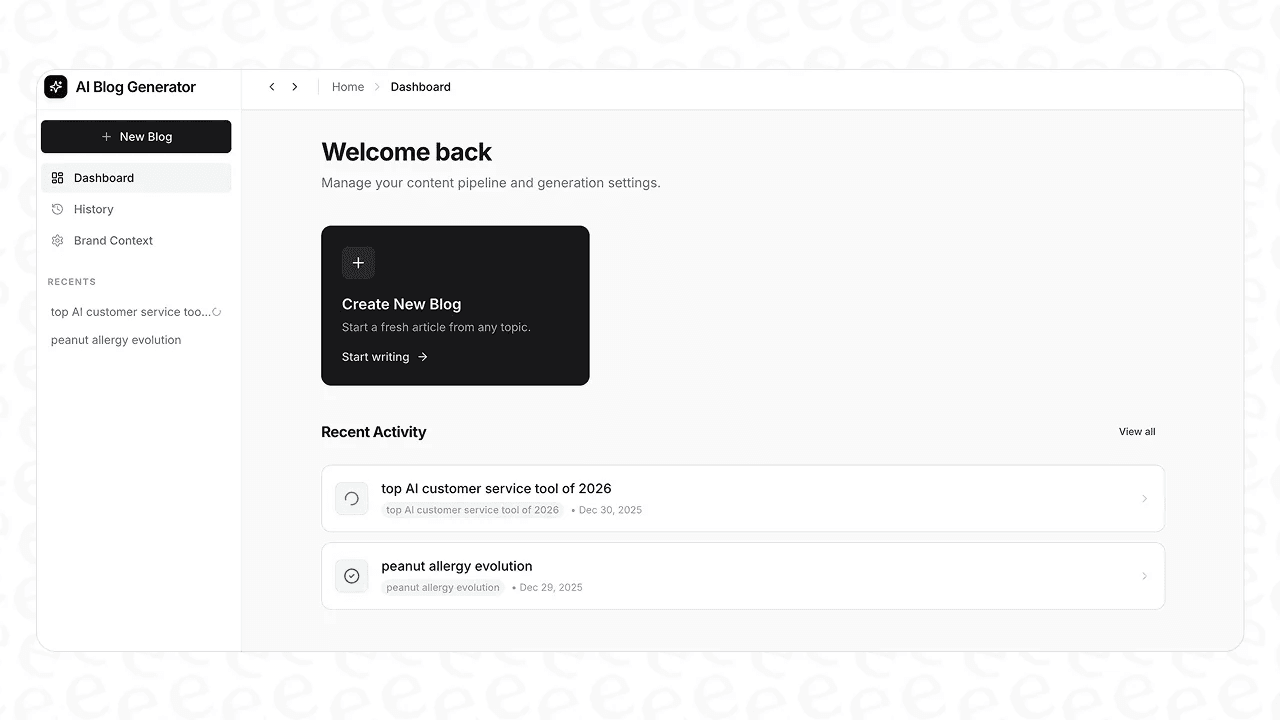
The eesel AI blog writer is designed to handle the entire creation process, from research to a publish-ready draft. You provide a keyword, and it automates many of the time-consuming tasks.
How the eesel AI blog writer streamlines the process
This isn't about replacing writers; it's about augmenting their capabilities. Here’s how it works:
- Context-Aware Research: The tool automatically figures out the search intent behind your keyword. If you’re writing a comparison post, it will find pricing data. If it’s a product review, it will pull in technical specs. This saves hours of manual research.
- Complete Asset Generation: It doesn't just write text. It creates a complete post with AI-generated images, infographics, and tables already included. No more scrambling to find visuals later.
- Social Proof and Media Integration: To make your content more credible, it automatically embeds relevant YouTube videos and pulls in real quotes from Reddit threads on your topic.
- Brand Voice Integration: You can add your website URL, and the AI will learn your brand’s context. This ensures any mentions of your product sound natural and the overall tone fits with your other content.
I get what you’re saying, but the trick isn’t just letting AI write content and hoping it sticks. AI can literally do almost anything, often just as well as you, and in some cases even better. The catch is that it only works if you tell it exactly what you want. For example, instead of saying 'write a blog post about productivity,' you could say something like, 'Write a 1200 word blog post for young professionals, casual and slightly sarcastic, with actionable tips and real-life examples.' That kind of detail keeps the output from being bland and helps it feel more human.
Pro tip
You don't have to take our word for it. It's completely free to try. You can generate your first blog post in a few minutes and see the quality for yourself.
Post-publication promotion
Hitting "publish" is a great feeling, but the work isn't over. In a crowded online space, even the best content needs a push to get noticed. A solid promotion strategy is what separates the blogs that get read from the ones that get lost.
A simple promotion checklist
You don't need a huge marketing team to promote your content. The key is consistency. Create a simple checklist you can use every time you publish a new post. It might look something like this:
- Share on social media: Post your new article on channels like LinkedIn, Twitter, or niche Facebook groups. Don't just drop the link. Write a caption that teases the content and encourages people to click.
- Email your subscribers: Your email list is a huge asset. These people have already said they want to hear from you. Sending new posts to their inbox is a great way to get an immediate traffic boost.
- Engage in online communities: Find relevant conversations on platforms like Reddit or Quora. If you can provide a genuinely helpful answer to someone's question, you can include a natural link back to your blog post where they can learn more. Just be helpful first, promotional second.
Consistency: The secret to traffic growth
One great blog post might give you a nice, temporary traffic spike. But for sustained, long-term growth, the secret weapon is consistency. Sticking to a regular publishing schedule builds trust with your audience and with search engines, creating a powerful compounding effect over time.
When you publish consistently, your readers learn to expect new content from you, and they keep coming back. More importantly, search engines tend to reward sites that are updated frequently with fresh information. It signals that your site is an active, authoritative resource, which can lead to better rankings.
How to stay consistent without burning out
We get it, life gets busy. Sticking to a schedule can be tough. Here are a few tips to make it easier:
- Batch your work: Instead of trying to come up with an idea, write, and edit a post all in one day, block out time for specific tasks. Spend one afternoon just brainstorming ideas. Spend another outlining several posts. This is much more efficient than starting from scratch every time.
- Write ahead of schedule: Don't live on the content treadmill. Create a simple content calendar and aim to have several posts written and scheduled in advance. This gives you a buffer for those busy weeks.
- Focus on progress, not perfection: Your first few posts probably won't be your best, and that's fine. Your writing and strategy will get better with every article. The most important thing is to just get started and keep going.
For a deeper dive into writing strategies that consistently drive results, check out this video from Brian Dean. He breaks down how to structure posts that get shares, comments, and top rankings.
Turn your blog into a growth engine
So, there you have it. Effective blog writing for traffic isn’t about one magic trick. It's a strategic process that combines audience research, high-quality content, smart SEO, and consistent promotion. By treating your blog as a core part of your marketing strategy, you can turn it into a reliable traffic-driving machine.
While this process takes effort, modern tools can automate the most time-consuming parts, making it easier than ever to scale your content production without sacrificing quality.
Now it's your turn. Start putting these strategies into practice, and when you're ready to scale, give the eesel AI blog writer a try for free. You might be surprised at how quickly those traffic numbers start to climb.

Frequently Asked Questions
Share this article

Article by
Stevia Putri
Stevia Putri is a marketing generalist at eesel AI, where she helps turn powerful AI tools into stories that resonate. She’s driven by curiosity, clarity, and the human side of technology.