7 effective blog writing approaches to scale your content in 2026

Kenneth Pangan

Stanley Nicholas
Last edited January 20, 2026
Expert Verified

Content marketing often feels like you're on a treadmill that only gets faster. You have to produce a steady stream of high-quality, engaging content that also ranks well in search engines. The secret to getting ahead isn't just about writing more, it's about having the right process.
The right workflow can be the difference between a content strategy that scales and one that burns out your team. This post breaks down seven different blog writing approaches, from classic methods to modern, AI-driven workflows. We'll look at how tools like the eesel AI blog writer are built to simplify the whole process, turning what used to take days into a matter of minutes.
What are blog writing approaches?
A blog writing approach is just your system for getting from an idea to a published article. It's your workflow, your standard operating procedure. This isn't about style or tone, it’s the framework that guides everything from research and drafting to editing and optimization.
Choosing a consistent approach matters because it affects your team’s speed, ability to scale, and the quality of your content. Without a defined process, every article is a new, unpredictable project. With a clear approach, you’re running an organized assembly line that produces consistent, high-quality results every time. It adds predictability and efficiency to a creative process.
A quick comparison of the top blog writing approaches
This table gives you a quick guide to help find the best approach for your goals, whether you're focused on speed, SEO, or creative expression. To make it easier to visualize, here's a breakdown of how each method stacks up.
| Approach | Best For | Speed | SEO Focus | Scalability |
|---|---|---|---|---|
| Full-Cycle AI | Scaling organic traffic | Fastest | Very High | Very High |
| Organized (Outline-First) | Complex, technical topics | Slow | Medium | Low |
| Free-Flowing (Draft-First) | Creative, personal stories | Medium | Low | Low |
| Research-Driven (SERP Analysis) | Highly competitive keywords | Slow | Very High | Medium |
| Literary Citizenship | Building community & network | Varies | Low | Medium |
| Behind the Scenes | Engaging existing fans | Medium | Low | Low |
| Personal Essay | Building a personal brand | Medium | Low | Low |
The 7 best blog writing approaches for your team
Now, let's take a closer look at each of these methods to see how they work and which one might fit your team.
1. The full-cycle AI approach with eesel AI blog writer
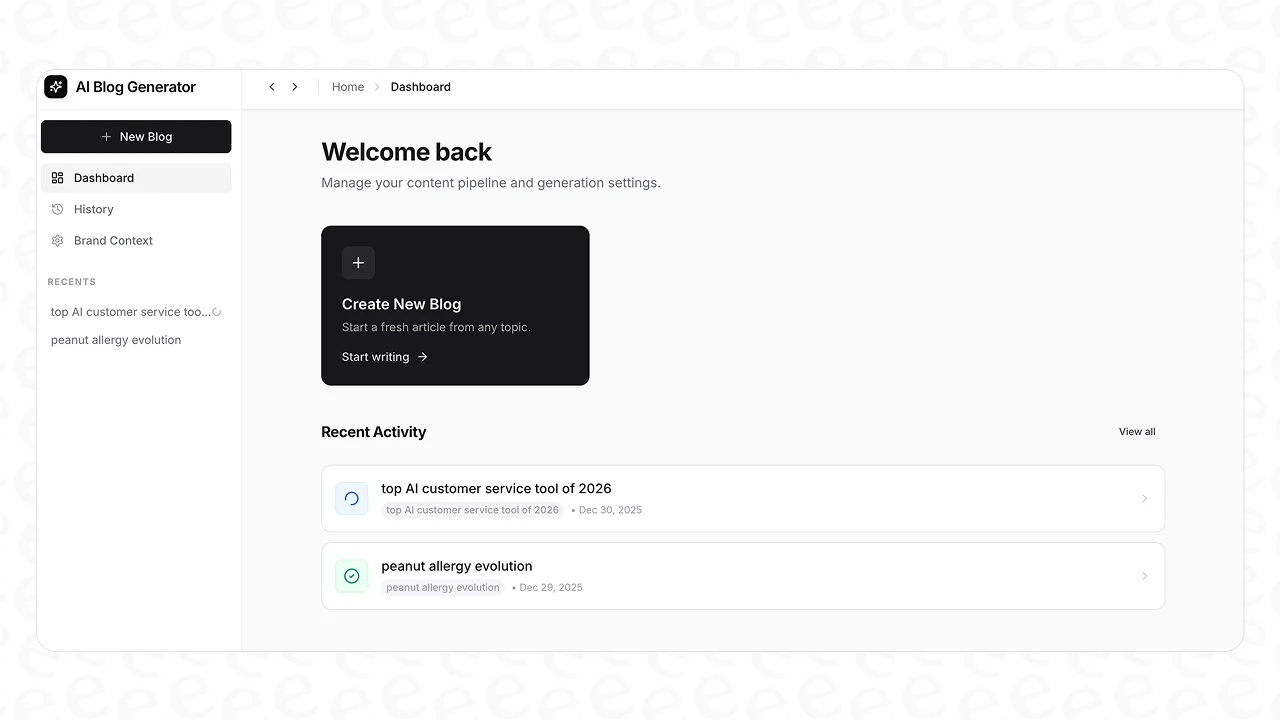
Pros:
- Proven results: This is the exact method we used to grow our own blog traffic at eesel, going from 70k to over 750k impressions in just three months.
- Complete content generation: The eesel AI blog writer delivers a publish-ready post with automatic assets like custom images, authentic social proof from Reddit threads, and relevant YouTube video embeds.
- Built-in optimization: SEO and AEO (Answer Engine Optimization) practices are built-in. The tool automatically adds relevant internal links to your existing content and external links to good sources, building credibility.
- Human-in-the-loop: You’re still in control. After the AI generates the draft, you can review it and use AI-powered edits to quickly adjust any section to match your brand's voice.
Cons: The creative process is less hands-on at the start, since the AI does the initial heavy lifting. While this saves a huge amount of time, a final human review is still needed to check facts and add your own unique touch.
Who it's for: Marketing teams trying to scale organic traffic quickly, SEO managers who need to publish a lot of content, and any business that wants to produce high-quality, optimized content without a big team.
2. The organized (outline-first) approach
This is the classic, reliable method where a detailed outline serves as the blueprint for the article. The process starts by mapping out a title and all the H2s and H3s. Before any real writing starts, the writer fills this skeleton with key points, data, and source links. This makes sure the final piece flows logically and doesn't miss anything important.
Pros: This approach is great for complex or data-heavy topics because it guarantees a coherent structure. It’s also a good way to beat writer's block, as it breaks down a big writing task into smaller, manageable parts.
Cons: It can feel a bit rigid and sometimes stifles creative ideas that pop up during the writing process. More importantly, it's much slower than AI-driven methods and is hard to scale for teams that need to publish a lot of content.
Who it's for: Technical writers, subject matter experts who need to explain complex information accurately, and any writer who values structure and logic.
3. The free-flowing (draft-first) approach
This is the polar opposite of the outline-first method. Here, the writer starts with an idea and just writes. They get all their thoughts and stories onto the page in a stream-of-consciousness style, without worrying about structure or grammar. This is often called a "vomit draft". Only after all the ideas are out is the draft organized and polished.
Pros: This approach lets an authentic, conversational voice come through. It’s perfect for storytelling, opinion pieces, and personal brand-building where a unique perspective is the main attraction. You write from the heart first and organize with your head later.
Cons: The first draft is often unstructured and requires significant editing and restructuring. It’s easy to go off on tangents and lose focus. Important SEO elements like keywords and headings are often missed, which means you have to do a separate, time-consuming optimization pass.
Who it's for: Personal bloggers, creative writers, and thought leaders who want to deliver a strong message and connect with their audience personally.
4. The research-driven (SERP analysis) approach
This method is all about SEO. It starts with a deep dive into the top-ranking search engine results pages (SERPs) for a target keyword. The writer analyzes the top articles to find common themes, heading structures, and questions being answered. The goal is to create a new article that covers all those topics and is better, more detailed, or more current than what's already out there. According to Ahrefs' guide to SERP analysis, this means checking everything from competitor authority to search intent.
Pros: This data-driven process is very effective for matching what users are searching for, which gives your content a strong chance to rank for competitive keywords. It takes a lot of the guesswork out of your content strategy.
Cons: It's an extremely time-consuming process. It can also lead to content that sounds a lot like what's already ranking, making it hard to stand out. Focusing too much on what already exists can stifle originality.
Who it's for: SEO specialists and content marketers whose main goal is to get organic traffic for specific, high-value keywords.
5. The literary citizenship (community-focused) approach
This approach is about building a community in your industry. Instead of creating content alone, you source it from your network. This could be expert interviews, "round-up" posts with quotes from multiple influencers, or reviews of relevant books and products. Your blog becomes a platform for sharing other voices and starting conversations.
Pros: It's a great way to build relationships and network. By featuring others, you borrow their authority to bring credibility and traffic to your own blog. It also gives your audience different perspectives.
Cons: This method depends entirely on other people, which can be hard and time-consuming to coordinate. You have less control over the final content, and keeping a consistent publishing schedule is tough when you're waiting on others.
Who it's for: Niche bloggers who want to become a central voice in their community and brands focused on building strong industry relationships.
6. The behind the scenes approach
This approach pulls back the curtain and gives readers an inside look at your company, your process, or your journey. The content could cover the challenges of building a new product, the user research behind a new feature, or the steps of a successful project. It shows the human side of your brand.
Pros: This fosters a strong connection with your audience and makes your brand more human. This type of content is unique and can't be easily copied by competitors, which gives your brand a powerful edge.
Cons: It works best when you already have an audience that's interested in your story. It can be hard to attract new readers with this type of content, and you might run out of interesting "behind the scenes" material to share.
Who it's for: Established brands, creators, and companies that want to deepen their relationship with existing customers and fans.
7. The personal essay approach
This is all about writing from your own life and experiences. The main goal isn't to rank for a keyword, but to connect with readers on an emotional level through storytelling and a distinct personal voice. It's less about providing information and more about sharing a perspective.
Pros: This method can help you build a loyal following that connects with you as a person, not just a brand. For well-known figures, it can be a powerful creative outlet.
Cons: It's very hard to attract a new audience with purely personal content because people aren't searching for it. This approach is nearly impossible to scale and offers little direct SEO value, making it less suitable for businesses focused on growth.
Who it's for: Well-known figures, memoirists, and anyone whose main goal is creative expression and building a deep, personal brand.
How to pick from these different blog writing approaches
You can use a simple framework to find the right starting point for your team. Just focus on your primary goal.
- Goal: Rapid growth and SEO dominance? The full-cycle AI approach is built for this. It’s designed for speed, scale, and ranking, letting you produce a high volume of optimized content without sacrificing quality.
- Goal: Explain a complex, technical topic? The organized, outline-first approach is your best bet. Its focus on structure ensures accuracy and clarity for dense information.
- Goal: Build a personal brand or share a story? The free-flowing or personal essay approach will serve you well. These methods prioritize an authentic voice, which is key for connecting with readers personally.
Remember, you don't have to stick to just one method. Many successful content teams use hybrid models. For example, you could use an AI tool to generate a comprehensive first draft and then apply a research-driven editing process to make it even better. The key is to be intentional about your process.
To see a general blog writing process in action, this video provides a great overview from start to finish.
A YouTube video explaining effective blog writing approaches from start to finish.
Streamline your content workflow with the right blog writing approaches
Picking the right blog writing approach isn't just about writing. It's about optimizing your content system. The best process is one that aligns with your goals, resources, and team structure. It should make your job easier, not harder.
For teams focused on growth, full-cycle automation is the most efficient path from a keyword to a publish-ready article. It combines research, writing, asset creation, and optimization into a single step, saving you countless hours.
If you're interested in an automated workflow, you can see how this process works firsthand. Generate your first article for free with the eesel AI blog writer and go from a keyword to a complete post in minutes.
Frequently Asked Questions

Share this post
Article by
Kenneth Pangan
Writer and marketer for over ten years, Kenneth Pangan splits his time between history, politics, and art with plenty of interruptions from his dogs demanding attention.