The phrase "AI-powered ITSM" used to mean a chatbot bolted onto a vendor page and a couple of "smart" suggestions in the agent console. In 2026 it covers something quite different. The big platforms have shipped real agents that triage, resolve, and even close tickets without anyone in the loop. Gartner now publishes a Magic Quadrant for AI Applications in IT Service Management. ServiceNow has restructured its ITSM tiers around how much AI you want to license.
The risk is that "AI-powered" still describes very different products. Some vendors built around AI from day one. Others retrofitted it on top of decade-old systems. The marketing copy looks the same on both.
This guide walks through what AI-powered ITSM actually delivers in 2026, which vendors fall into which camp, what the pricing reality looks like, and a buyer's lens that separates a real autonomous agent from agentwashing.
What AI-powered ITSM means in 2026
In the simplest reading, AI-powered ITSM is an IT service management platform whose AI does work, not just suggests it. The shift in 2026 is from generative AI as a response drafter (summarize this ticket, suggest a reply) to agentic AI that interprets intent, picks an action, executes it inside enterprise systems, and confirms the outcome. Gartner predicts that 40% of enterprise applications will feature task-specific AI agents by the end of 2026, up from less than 5% a year earlier.
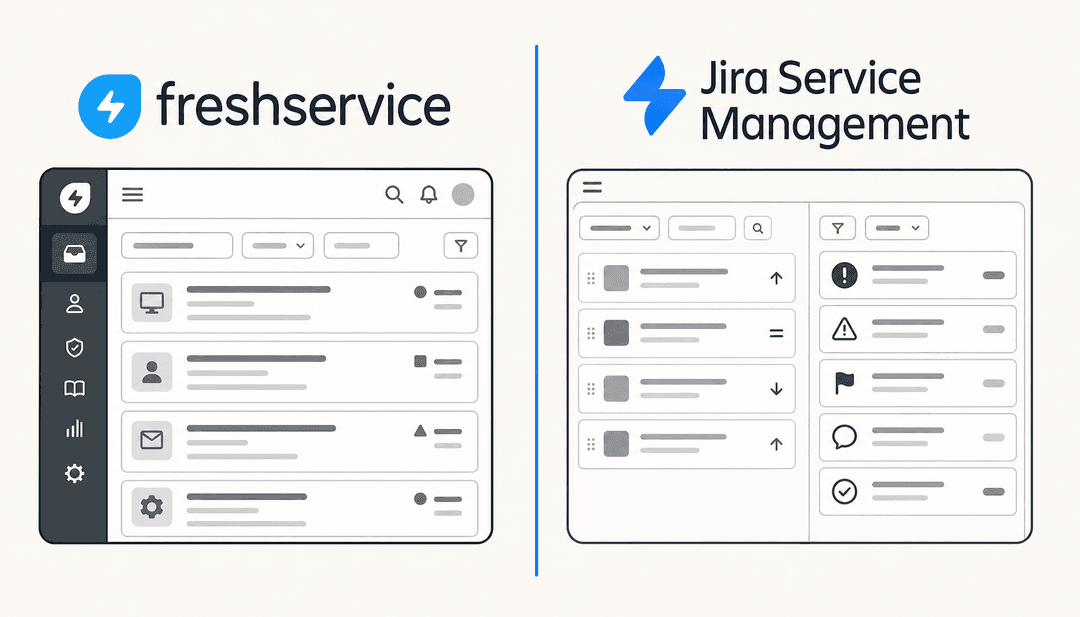
Two camps emerged from this shift. The first is the legacy ITSM camp (ServiceNow, Atlassian Jira Service Management, BMC, Freshworks Freshservice) that bolted AI onto existing platforms in stages: a virtual agent here, a Now Assist there, a Rovo agent in the latest release. The second is the AI-native camp (Atomicwork, Aisera, Moveworks before its acquisition) that built around agents from the ground up, with the helpdesk itself as a thinner system of record.
Both camps now use the same marketing words. Gartner has flagged the resulting "agentwashing" problem and predicts that by 2027, 50% of AI projects at IT service desks will be abandoned due to costs, risks, or unmet ROI. So while the category is real, the difference between a vendor that summarizes tickets and one that closes them autonomously is exactly the gap a buyer needs to evaluate.
Where the AI work actually happens
Strip the marketing, and AI-powered ITSM does four jobs inside an IT service desk: triage and routing, conversational front-door support, knowledge-grounded resolution, and predictive operations.
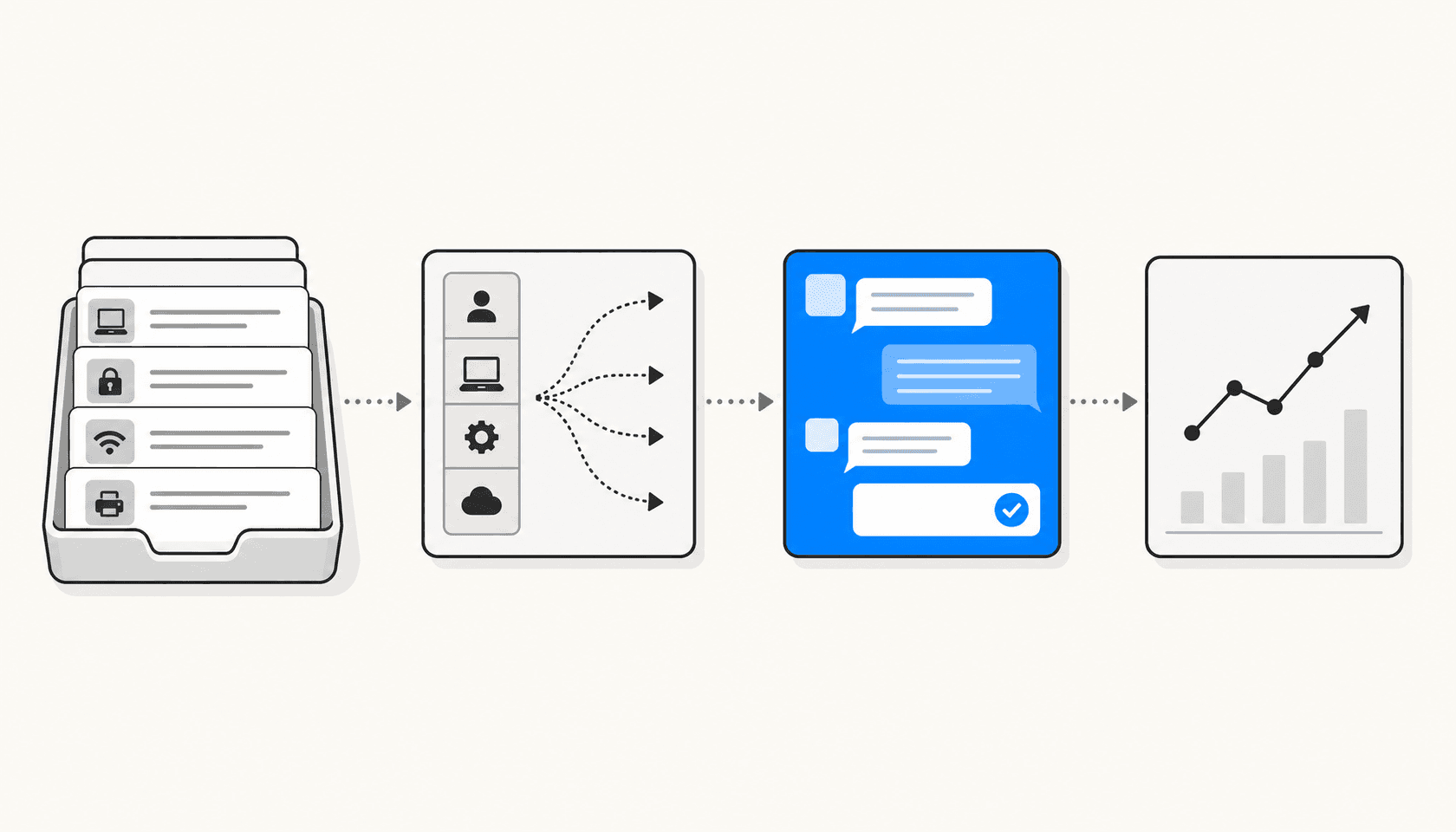
The split matters because vendors are not equally strong at all four, and the "AI-powered ITSM" pitch lumps them together.
Triage and routing
Every modern ITSM platform claims AI ticket classification, prioritization, and skill-based routing. The depth varies. Freshservice's Freddy Copilot reports a 41% improvement in first response time and a 77% drop in resolution time once routing and reply-suggestion features are in use. ServiceNow's Now Assist for ITSM bundles summarization, suggested next actions, and pattern recognition into the Foundation tier, with deeper reasoning gated behind Advanced and Prime.
Routing in 2026 also reaches outward. Jira Service Management's Rovo agents triage requests, suggest resolution steps, and hand off to humans with full context already attached, replacing what used to be a queue dashboard with a brief.
A conversational front door
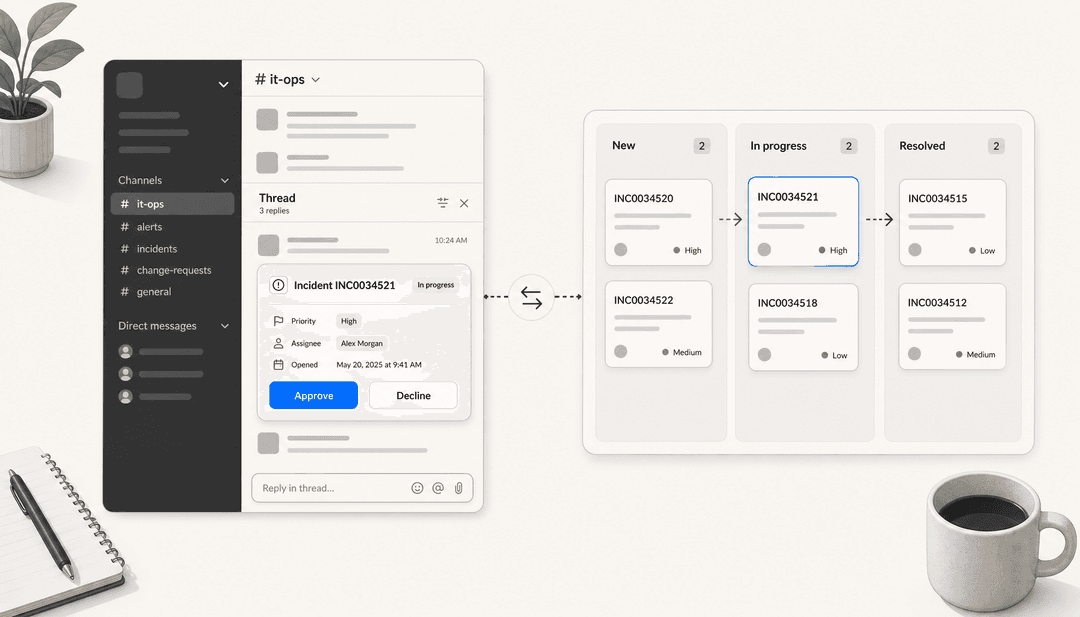
The most visible shift is where employees raise requests. Instead of opening an ITSM portal, they message a bot in Slack or Microsoft Teams. Freshservice's Freddy AI Agent operates across Slack, Teams, Microsoft 365 Copilot, and the service portal in over 40 languages. Atomicwork sits inside Slack and Teams as an Agentic ITSM platform that resolves access requests, software provisioning, and FAQs without creating a ticket at all unless escalation is needed. Atlassian's Virtual Service Agent runs in Slack and Teams from the Premium tier of Jira Service Management.
This matters because deflection scales with surface area. Atomicwork claims its customers see 50%+ of requests auto-resolved from day one, with Zuora citing 50% lower ticket volume and 92% answer accuracy after the rollout. Freshservice cites a 66% deflection rate across Freddy AI Agent deployments.
Knowledge and resolution
The third job is grounded answers. AI-powered ITSM platforms now pull from knowledge articles, historical incidents, and the CMDB to draft replies and close low-risk tickets autonomously. ServiceNow's L1 Service Desk AI Specialist, announced in February 2026 alongside Autonomous Workforce, "autonomously diagnoses and resolves common IT support requests end-to-end ... using enterprise knowledge bases, historical incident data, and proactive remediation workflows." ServiceNow says its internal Autonomous Workforce now handles over 90% of employee IT requests.
Knowledge management itself has moved upstream. Atlassian Intelligence flags knowledge gaps (topics where articles are missing or underperforming) and drafts new articles from resolved tickets. Freshservice Freddy Copilot does the same with smart suggestions linked to historical resolutions. The pattern across vendors is the same: ground on approved sources, surface citations, and let the human catch the rest.
Predictive operations
The fourth job catches problems before tickets get raised. Jira Service Management's AIOps suite groups related alerts into one incident to reduce noise, and AI generates incident summaries and post-incident reviews from the team's Slack conversation timeline. ServiceNow's Predictive Intelligence flags anomaly patterns and surfaces high-impact risks. BMC, OpenText, and SymphonyAI offer similar capabilities under their AIOps banners; Gartner evaluated all of them in its inaugural Magic Quadrant for AI Applications in ITSM.
The vendor landscape in 2026
Five named platforms dominate buyer shortlists. A handful more matter for specific use cases.
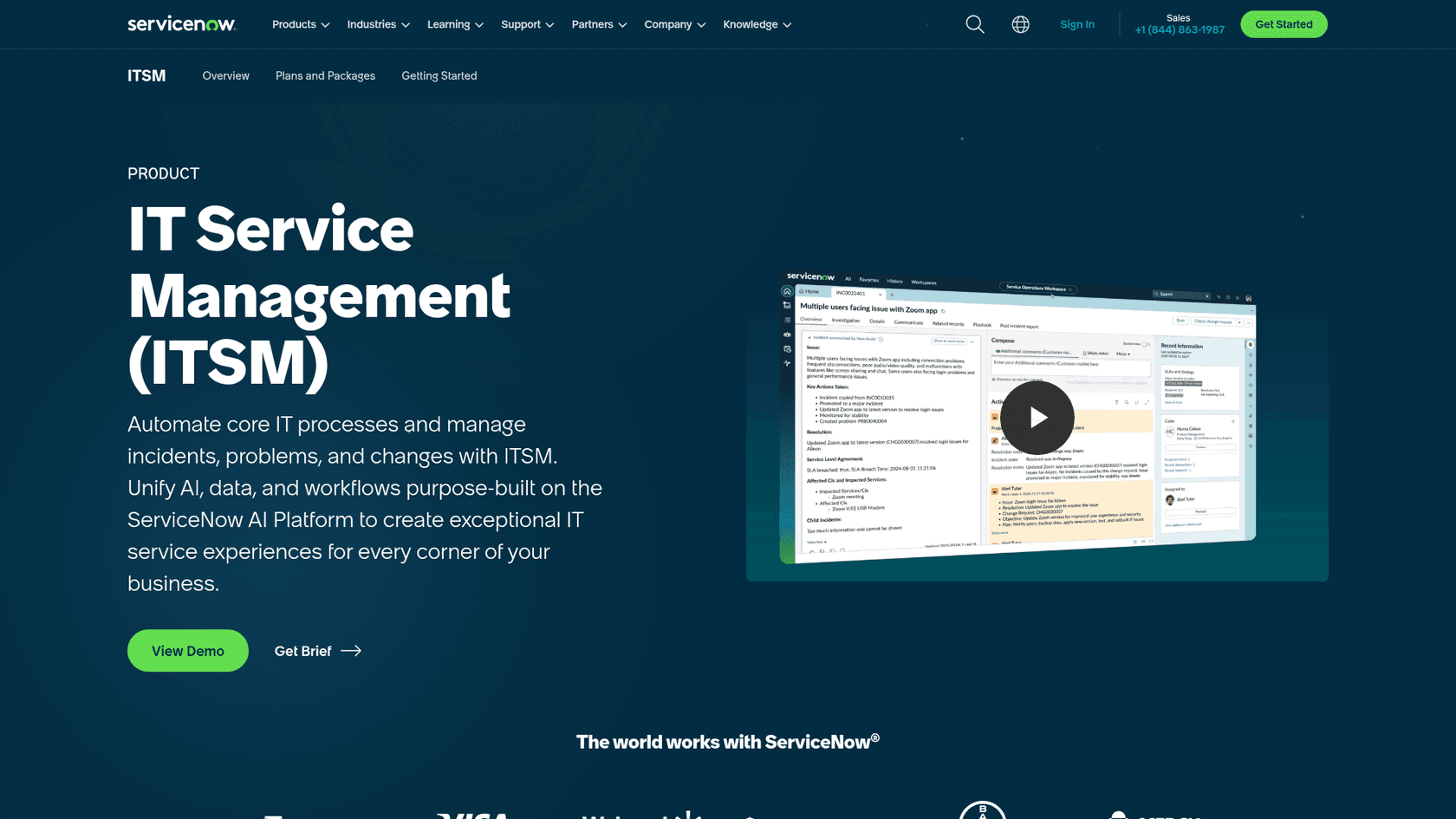
ServiceNow is the giant. Its ITSM product is sold in three tiers in 2026: Foundation, Advanced, and Prime. Foundation includes Now Assist for ITSM with summarization, pattern recognition, and the conversational virtual agent. Advanced adds Major Incident Management, AI Voice Agents, and Change Management. Prime unlocks the L1 Service Desk AI Specialist and the AI Agents marketplace. Every tier now bundles a Moveworks-for-ITSM SKU after ServiceNow closed its Moveworks acquisition in December 2025. ServiceNow holds an 85% Fortune 500 footprint and a 4.4/5 rating across 1,270 G2 reviews, but the same review base flags "complexity of setup", "expensive" pricing, and AI features that "can feel limited unless they are properly configured and licensed". For a longer comparison, see our ServiceNow alternatives write-up.
Atlassian Jira Service Management is the middle-of-the-market choice. AI sits across the platform under Atlassian Intelligence and Rovo agents: a Virtual Service Agent for Slack and Teams, AI risk assessment for change management, AI-grouped alerts, and AI-drafted post-incident reviews. JSM is the rare ITSM vendor with public pricing: $20 per agent per month at Standard, $51.42 at Premium, and custom Enterprise. Forrester's TEI study cites a 275% three-year ROI.
Freshworks Freshservice sells Freddy AI as three layers: Freddy AI Agent (employee-facing), Freddy Copilot (agent-facing), and Freddy Insights (leadership-facing analytics). Freshservice claims a 356% ROI in under six months and customer outcomes like Village Roadshow's 60% IT cost reduction.
Atomicwork is the AI-native challenger. It pitches a "no ticket" model where the agent resolves issues directly in Slack or Teams, only creating a record when human escalation is needed. Customer outcomes include Zuora's 50% ticket reduction and Pepper Money's 98% employee satisfaction score. Atomicwork is sold via custom quote.
Other Gartner-evaluated vendors include Aisera (AI-native, autonomous service experiences), BMC (Helix AIOps), Espressive (Barista virtual agent), HaloITSM, OpenText, Serviceaide, and SymphonyAI. Moveworks no longer sells standalone since the ServiceNow acquisition.
What pricing actually looks like
Most AI-powered ITSM vendors do not publish per-user dollar figures. The two that do are at opposite ends of the market. Watch for token consumption, "Rovo credits", AI conversation overages, and Pro Plus or Enterprise Plus upgrade gates for AI features.
| Platform | Public starting price | AI tier model | Notes |
|---|---|---|---|
| Jira Service Management | $20 per agent per month (Standard) | Rovo credits per user; Virtual Agent at 1,000 conversations free, $0.30 each after | Premium ($51.42) needed for the full AI suite; Enterprise is custom quote |
| ServiceNow ITSM | Custom quote (Foundation, Advanced, Prime) | Now Assist gated behind Pro Plus or Enterprise Plus add-ons; commands a 25-40% premium per Jace.pro | L1 Service Desk AI Specialist requires Prime; see our ServiceNow license types and cost breakdown |
| Freshworks Freshservice | Custom quote (Starter, Growth, Pro, Enterprise) | Freddy AI sold as add-on across the stack | Predictable per-user pricing, AI conversation cap depends on tier |
| Atomicwork | Custom quote | Agentic ITSM bundled, no separate AI SKU | "No ticket" model means deflection is the unit you're paying for |
| HaloITSM | From £29 per agent per month (concurrent licensing) | AI assistant features included | Smaller deployment overhead than enterprise platforms |
| eesel AI | Flat per agent | AI agent layer on top of existing helpdesk; no token math | Drops onto Slack, Zendesk, Freshservice, Jira, and others without forced migration |
The metered-AI footnote bites. Atlassian charges $0.30 per assisted conversation above 1,000 a month on Premium, and ServiceNow has moved its automation product line toward consumption-based pricing with "Assist" tokens. A high-deflection workflow can produce a punitive monthly bill if overages aren't planned for.
Where AI-powered ITSM still falls down
Three things go wrong often enough in 2026 to be worth budgeting for up front.
Configuration debt. Most enterprise ITSM AI features need tuning, integration, and content seeding before they perform. The G2 review base for ServiceNow flags this directly: AI features "can feel limited unless they are properly configured and licensed", a sentiment echoed across 1,270 reviews. The same review base lists "Learning Curve", "Expensive", "Complexity", and "Customization Difficulty" among the top cons. A platform that scores 4.4/5 globally still has 72 reviewers calling out the learning curve by name.
Hallucination and the agentwashing risk. Gartner's working assumption is that 50% of AI projects at IT service desks will be abandoned by 2027, driven partly by AI replies that sound right but aren't. Vendors that ground responses in approved knowledge bases plus historical resolved tickets are the safer bet. Vendors that label a basic GPT wrapper an "AI agent" are the ones that contribute to the 50%. Read the vendor's grounding architecture before reading the demo script.
Migration cost and lock-in. ServiceNow does not publish a public implementation timeline, but third-party analysts routinely cite multi-quarter rollouts. Jira Service Management and Freshservice are lighter, but a vendor switch still touches every integration, workflow, and SLA reporting pipeline. For teams who do not want to migrate, a thin AI layer that reads from the existing helpdesk through APIs avoids the full rip-and-replace; that's the slot eesel AI sits in.
A buyer's lens
A short checklist that separates "AI-powered ITSM" the buzzword from the working version:
- Day-one deflection. What deflection rate does the vendor cite without a multi-month config phase? Atomicwork and Freshservice publish numbers; legacy tiers usually need ramp time.
- Where employees actually work. If the AI lives only in a portal and not in Slack or Teams, adoption will trail.
- Coexistence vs migration. Can the vendor sit on top of your existing helpdesk, or does the AI assume you've already migrated to its system of record?
- Pricing model. Flat per agent, per conversation, per token, or a mix? Add a generous overage buffer in the first-year forecast.
- Agentic, not assistive. Can the AI take an action (reset a password, provision a license, close a ticket), or is it a fancy reply suggester?
- Governance. What knowledge sources does the AI ground on, and what audit trail exists? Freshservice's Freddy AI Trust, ServiceNow's AI Control Tower, and Atlassian's content access policies are the comparison points here.
If a vendor cannot answer all six in plain language, the AI label is doing more work than the AI.
Wrapping up
"AI-powered ITSM" is a real category in 2026, but it is also a spectrum. ServiceNow's tiered Now Assist plus Autonomous Workforce, Atlassian's Rovo plus AIOps, Freshservice's Freddy stack, Atomicwork's no-ticket Slack-first model. They sell the same outcome with very different architectures and pricing logic. Pick based on where your employees already are, how flexible the pricing model is, and whether the AI can actually act, not just summarize.
If forcing a multi-quarter migration to whatever vendor sells the AI is the wrong shape for your team, eesel AI drops onto the helpdesk and chat tools you already run, learns from your knowledge sources, and resolves tier-one IT requests in front of the system of record. Try it free.