AI for multilingual support: how to handle every language without growing your team
Stevia Putri
Katelin Teen
Last edited May 15, 2026

Every third-party survey about multilingual customer service contains one uncomfortable data point: 88% of support teams say they offer support in more than one language, but only 28% of customers say they actually experience it. That's not a perception gap -- it's a delivery problem.
The classic fix is hiring. Add bilingual agents, add languages, add markets. The problem: 85% of support managers say they struggle to find agents who speak more than one language. Each new language adds a separate hiring pipeline, training program, and QA process that doesn't share infrastructure with anything you already have.
AI handles this differently. Done right, a single AI agent can detect a customer's language automatically and reply in it -- drawing from one knowledge base without anyone translating anything. This guide covers how that works, what to look for when evaluating AI multilingual support tools, and how the major helpdesk platforms approach the problem today.
Why multilingual support matters more than most teams think
The business case is direct. 76% of consumers prefer buying products with information in their native language, and 40% won't buy from a website that doesn't offer their language at all. That's a sales problem that bleeds directly into support: 74% of customers are more likely to repurchase from brands that supported them in their native language, and 2 in 3 would switch to a competitor that offers it.
Language also affects forgiveness. 62% of customers say they're more likely to tolerate a product problem if support is available in their native language. It's not just whether a ticket gets resolved -- it's whether the customer forgives you for needing to raise one.
The gap between what companies claim and what customers experience is the central problem AI for multilingual support is built to close.

Native-language support increases CSAT by 20-30% on average. The ceiling is higher: Wargaming saw CSAT jump 82% after removing language barriers for their Chinese, Japanese, and Korean players, largely because they could staff agents who understood the game rather than just the language. Logitech's NPS for translated conversations rose 58 points after deploying AI translation across their support channels.
Why the traditional approach doesn't scale
The textbook response to multilingual support is to hire native-speaking agents. It works until it doesn't -- and for most teams, it doesn't past the second or third language.
85% of support managers report difficulty hiring agents who speak more than one language. Those agents, once found, command salary premiums. And contact center attrition runs at roughly 60% annually for all roles -- maintaining a specialized language bench means constantly refilling a leaky bucket.
The economics get stranger for specific geographies. European languages are a good example. Companies trying to staff German or Dutch-speaking support in lower-wage countries run into a structural problem: native speakers who'd accept those salaries largely don't exist in the necessary concentrations. As one hiring manager in Portugal discovered trying to build a German-language support team:
"People in the Netherlands and Germany can easily make 2.5-3k net. Why would they want to move to Portugal for much less?"
-- u/LentilSpaghetti (r/PortugalExpats)
The workaround many teams fall back on -- routing non-English tickets to English-speaking agents who relay through phone interpreters -- doesn't fix the problem. It extends handle times, adds a third party to every exchange, and still leaves the customer feeling like an afterthought. From a 20-year call center veteran:
"It's when you get a call from a customer who explicitly selected another language. The queues exist, but there are never enough agents to cover the necessary volume for the language in question, so what do they do? Simple, they ignore your request."
-- u/Renaius (r/CustomerService)
This is the gap AI is built to fill -- not by replacing complex human judgment, but by handling the high-volume, language-sensitive tickets that break the economics of human staffing.
How AI handles the language problem differently
The mechanism is simpler than most people expect. A well-built AI support system:
- Receives a ticket in any language
- Detects the language automatically from the text
- Generates a response from your existing knowledge base
- Returns that response in the customer's language
The part that surprises people: step 4 doesn't require your knowledge base to be translated. The AI reads your English-language help center and writes a German reply. Or Japanese. Or Arabic. You maintain one knowledge base; the AI translates at response time.

This changes the operational math significantly. A 2024 Forrester study found that organizations using AI translation reduced their overall translation workload by 50% and cut internal document translation time by 90%. For an AI agent that works directly from your help center, you're not managing translation at all -- just your source content.
The scale is real. Smava, a German loan comparison platform, processes 100,000+ support tickets per month, fully automated, entirely in German -- one of the largest AI support deployments in eesel's customer base. Ecosa, an Australian sleep products brand, runs 10,000+ tickets monthly across multiple markets using 522 knowledge items, including multilingual coverage for their Singapore and Malaysian customers.
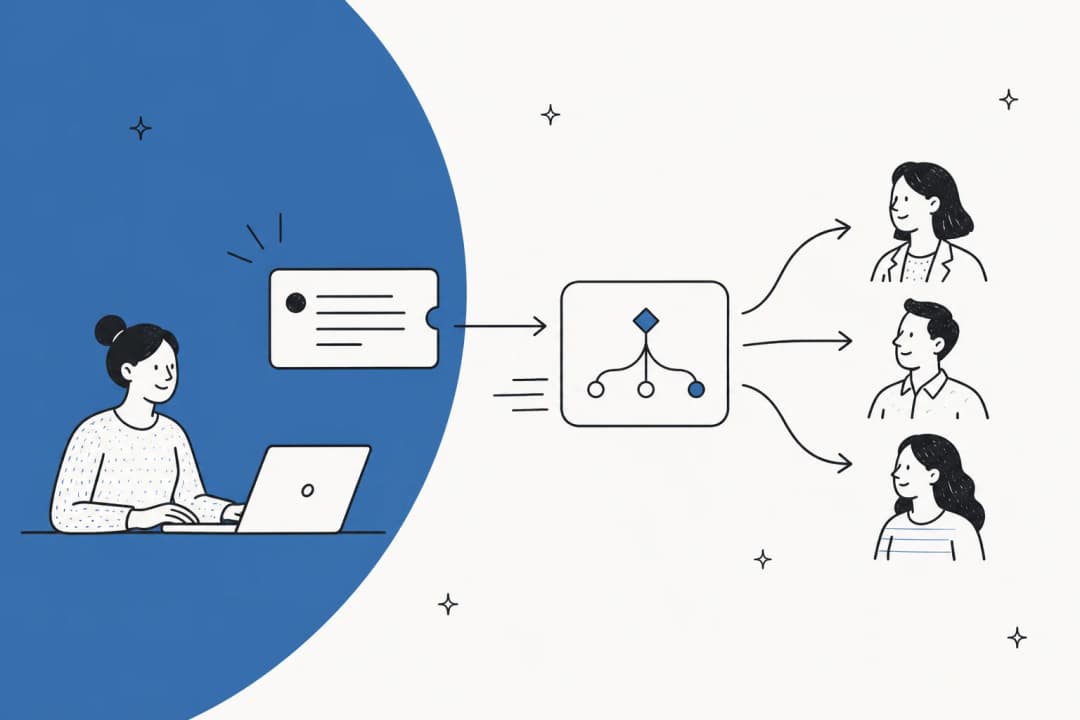
The other behavior to look for: confidence routing. A good multilingual AI doesn't just translate -- it knows when it doesn't know. Low-confidence responses in any language should queue as drafts for human review rather than going out as automated replies. Language shouldn't disable your quality controls.
What to look for in an AI multilingual support tool
Not all multilingual support tools work the same way. A few things separate capable tools from ones that create more work:
Automatic detection, not a translate button. Some platforms require agents to click a translate button per ticket. That's manual overhead -- and it means language-specific tickets aren't automatically handled. Auto-detection should run by default, not on demand.
No knowledge base translation overhead. If a tool requires you to maintain your help center in every supported language, you've traded one operational burden for another. Better tools translate at response time from a single-language source.
Language coverage that matches your markets. Zendesk's AI-generated replies support 100+ languages via OpenAI. Freshdesk's Live Translate handles 43 languages. eesel AI covers 80+. If your customers write in Hindi, Filipino, or Thai, verify those are in scope before committing to a platform.
Confidence routing in every language. The AI shouldn't send uncertain responses in German any more than it should in English. Look for platforms that apply the same confidence thresholds regardless of the ticket language.
Pricing that doesn't punish multilingual volume. Per-agent pricing means your multilingual cost is flat whether you're handling 50 Spanish tickets or 5,000. Per-ticket pricing aligns costs with actual volume.
How the main helpdesks handle multilingual today
Both Zendesk and Freshdesk have meaningful multilingual capabilities -- but both require understanding which features live at which plan tier, and where the practical limits are.
Zendesk
Zendesk's multilingual system has four main layers. Live Conversation Translation, available on all Suite plans, translates messages in real time using Amazon Translate for live channels and Amazon Nova Micro for email. Agents read in their language, customers receive replies in theirs. There's a 5,000-character limit per message.
Dynamic Content handles multilingual automated workflows -- macros, triggers, and system emails swap in the right language variant automatically via placeholder tokens. This is powerful but requires Suite Growth or above; it's not available on Suite Team.
AI-generated replies via Zendesk's generative AI handle 100+ languages, the broadest native count anywhere in the platform. Intelligent Triage adds automatic language detection on incoming tickets for routing, but requires Suite Professional plus the Advanced AI add-on at $50/agent/month on top of the base plan price.
One practical note: Zendesk's AI agent automatic translation feature was placed in legacy status in July 2025 and is scheduled for full discontinuation on December 31, 2026. If you're currently relying on it, migration planning should be on the roadmap now. For more on Zendesk's native options versus third-party alternatives, see this comparison.
Freshdesk
Freshdesk supports 47 languages for the customer portal, knowledge base, and ticket forms -- but availability starts at Pro plan. The Freddy Self-service bot supports 54 languages, including Hindi, Bengali, Tamil, and other South and Southeast Asian languages not in the portal list -- but the bot is Enterprise-only.

Live Translate, powered by Microsoft Azure AI Language Detection, is Freshdesk's agent-facing translation tool. The catch: it's not automatic. Agents click a Translate button per ticket. And metering limits it to 100 translations per Copilot license per month -- for teams handling high volumes across multiple languages, that cap runs out quickly.
Freshdesk also has no built-in automatic language routing. Routing tickets to language-specific queues requires manual skill tagging and automation rules, which is workable but adds setup complexity. For setting up Freshdesk's multilingual KB specifically, see this guide.
For teams whose customer base spans more languages than either platform natively covers, third-party integrations like Lingpad (available for both Zendesk and Freshdesk) extend coverage to 120+ languages.
Choosing the right delivery model
The question of whether to staff multilingual agents, outsource, rely on AI, or combine approaches has a fairly clear answer in practice -- though the right mix depends on your volume and market complexity.

AI-only works well for high-volume, routine requests across many languages. Low cost per resolution, instant scale, consistent brand voice. The limit: complex or emotionally charged interactions where customers need human judgment.
In-house multilingual teams deliver the best experience and the most product-deep responses. They're also the most expensive and slowest to scale. Realistic for your top two or three languages; not sustainable as you expand markets.
Outsourcing trades quality control for cost savings -- and the offshore cost advantage collapses for languages with no large, low-wage, native-speaking talent pool. That's most European languages other than English, and many Asian languages outside of major BPO geographies.
Hybrid is where most teams land: AI handles 60-90% of volume across all languages, humans handle edge cases and complex tickets. As one CX practitioner described their own deployment: "The auto translate seems to work just fine and our help articles can translate too... For your more complex or emotional then having a hand off to a local rep or office is usually a good idea."
One thing worth knowing before deploying: in actual AI support deployments, the main failure mode isn't translation accuracy -- it's stale knowledge bases. If your help center content is out of date, the AI produces outdated responses regardless of which language it writes them in. Keeping source content current matters more than any language configuration.
Try eesel AI

eesel AI handles multilingual support as a core capability -- not an add-on, not a higher-tier unlock. The agent detects each incoming ticket's language automatically and replies in it, drawing from your existing help center. No translated knowledge base required; the docs explicitly note "80+ languages - no need to translate your help center."
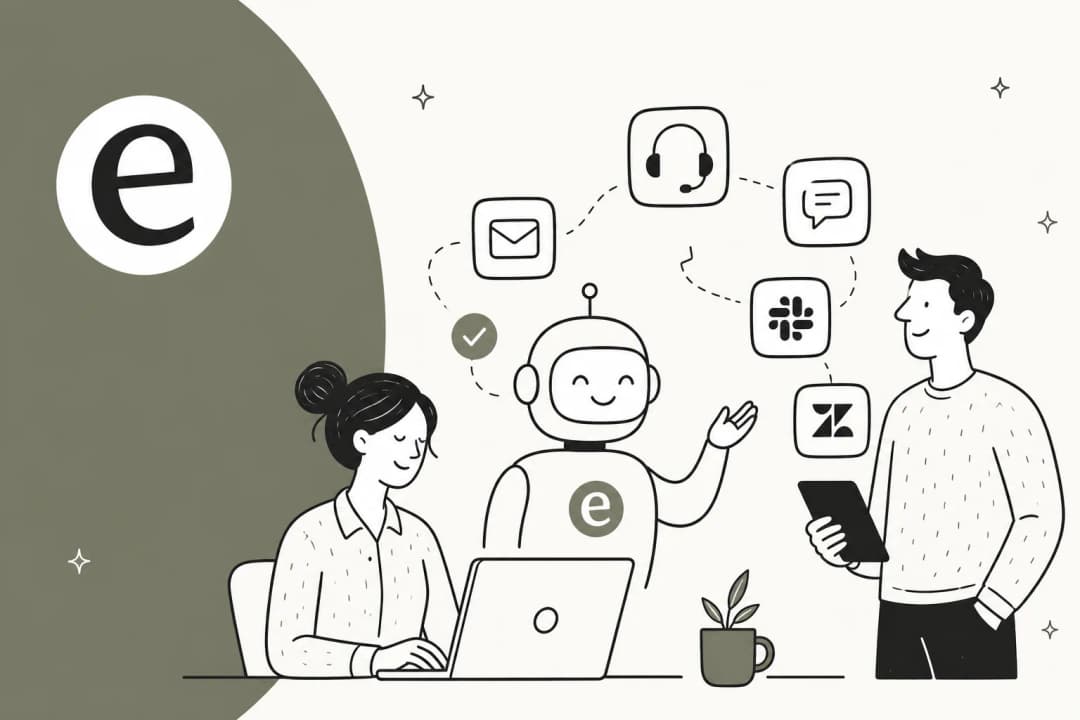
It works across all of eesel's helpdesk integrations -- Zendesk, Freshdesk, Intercom, Gorgias, HubSpot, and others. Confidence-based routing applies in every language: if the AI isn't sure about a response, it queues as a draft for human review rather than sending automatically.
Pricing is $0.40 per ticket handled, with no platform fee and no multilingual add-on. You can start with $50 in free credits to test against your real ticket volume before committing.
Frequently Asked Questions
Share this article

Article by
Stevia Putri
Stevia Putri is a marketing generalist at eesel AI, where she helps turn powerful AI tools into stories that resonate. She’s driven by curiosity, clarity, and the human side of technology.