The complete guide to using AI content for SEO

Stevia Putri

Katelin Teen
Last edited January 14, 2026
Let's get right to it. The question every marketer is asking in 2026 is: does AI content for SEO actually get you ranked? After major search engine updates like Google's March 2024 core update, it's a perfectly valid concern.
The answer isn't a simple yes or no. It all comes down to how you use it. If you're just prompting a generic chatbot and copy-pasting the text onto your blog, you're probably not going to see much success. But if you treat AI as a starting point for creating high-quality, human-refined content, the potential is huge.
We've seen marketers jump from 200 to 3,000 monthly views by using a smart, AI-assisted approach. The trick is to stop seeing AI as a magic button and start treating it like a powerful assistant. You need tools that help you build a strategic workflow, not just spit out generic paragraphs.
What is Google's real stance on AI content for SEO?
There’s a lot of chatter and confusion about Google's take on AI content. But their position is actually pretty clear.
Google’s main objective has always been to reward helpful, high-quality content that people find useful, regardless of how it was created. They've even stated that using AI appropriately is not against their guidelines.
So, what does Google have a problem with? They're cracking down on using automation (including AI) mainly to manipulate search rankings with spammy, low-value content. This led to their new "scaled content abuse" policy. This policy goes after the practice of mass-producing pages just to game the system, without offering any real value to readers. It doesn't matter if it was made by AI, a human, or a mix of both; if it's low-quality and produced at scale, it's a problem.
Can AI content for SEO actually rank?
This is where theory meets reality. We've seen both sides: AI content that disappears without a trace and AI-assisted content driving growth. The difference is always the strategy.
Common pitfalls of low-effort AI content
When you let AI handle 100% of the work with no human oversight, you're bound to hit some problems that can torpedo your SEO.
- Factual Inaccuracies: We've all heard about "AI hallucinations," where the model just invents facts. It's a real problem. One study showed that AI assistants can misrepresent news content about 45% of the time. Publishing wrong information is a quick way to lose credibility and hurt your E-E-A-T signals.
- Lack of Originality: Most AI models are trained to summarize information that's already out there. This makes it tough for them to come up with truly unique insights or share the kind of first-hand "Experience" Google values. You often end up with generic, robotic content that doesn't resonate with readers.
- Risk of Penalties: Pumping out unedited AI articles is exactly what Google's policy against "scaled content abuse" is meant to prevent. If Google detects a site publishing hundreds of low-quality, automated posts, it could lead to lower rankings or even de-indexing.
How strategic AI content achieves results
It's not all bad news. When you use AI as an assistant to a human expert, it becomes a powerful tool. It lets your team scale up high-quality content creation without burning out.
For instance, one Reddit user explained how their strategic AI-assisted workflow took their site from 200 to 3,000 monthly views, helping them build a business earning over $10,000 a month. They weren't just clicking "generate"; they used AI for the heavy lifting of research and drafting, then layered their own expertise on top.
Yes. Went from 200 views a month to 3000. Website is making $10,000+ monthly.

Another solid example is the Xponent21 case study. They saw a massive 4,162% increase in organic traffic by using a complete strategy. AI was a key part of their content creation, but it was just one component of a larger plan that included content clusters, structured data, and rich media. This shows that AI is a powerful tool, but it performs best within a smart, well-rounded SEO strategy.
How to use AI content for SEO: A 3-step workflow
Step 1: Start with a purpose-built tool
First, you need the right tool. There’s a huge difference between a generic AI chatbot and a specialized platform built for creating SEO content.
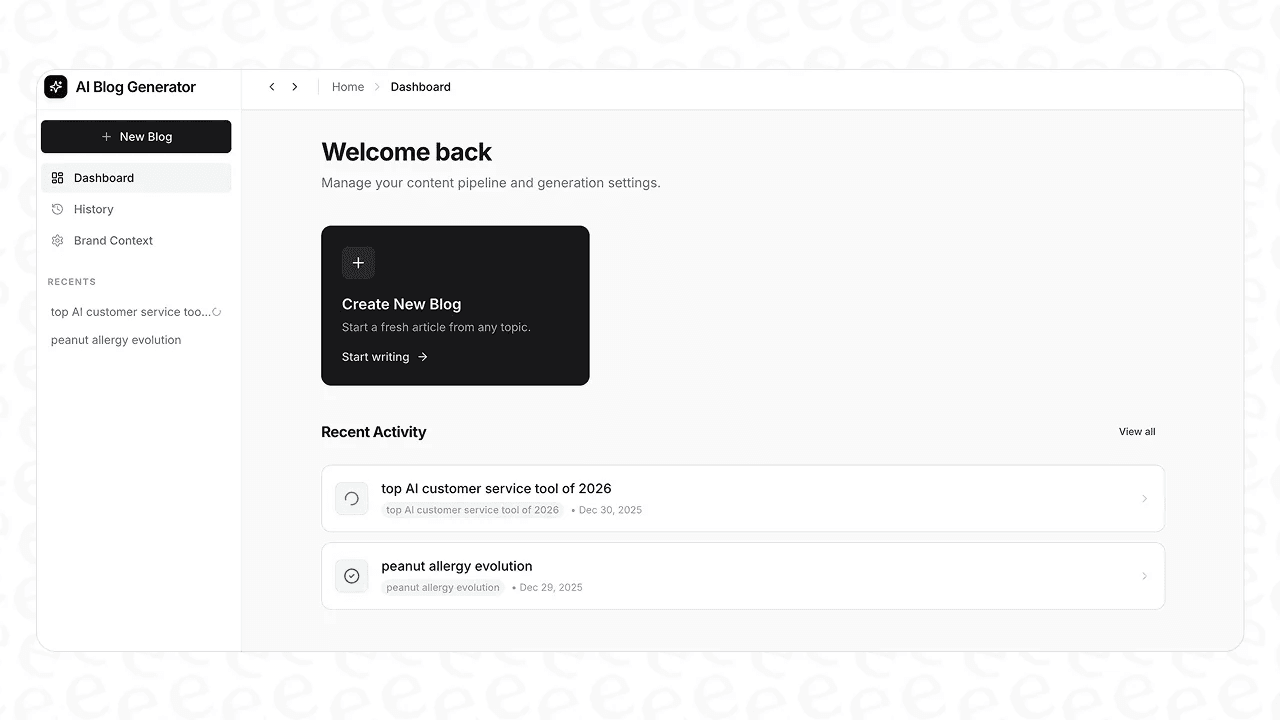
This is where the eesel AI blog writer fits in. It’s designed to automate the strategic parts of content creation, turning a single keyword into a structured blog post that’s about 90% ready to go live.
It's built to tackle the common problems with AI content from the get-go:
- Deep Research with Citations: Instead of just scraping the top few search results, our tool performs a deeper analysis and adds automatic links to external sources. This immediately boosts the authority and trustworthiness of your content.
- Automatic Asset Generation: A giant wall of text is a snooze-fest. eesel automatically creates AI-generated images, helpful infographics, and data tables to break up the text, improve readability, and keep visitors on your page longer.
- Authentic Social Proof: To add that vital layer of human experience, the platform can embed YouTube videos and Reddit quotes. This brings a level of nuance and credibility that a generic AI tool just can't match.
Step 2: Add the human element
This step is absolutely essential. AI is an incredibly efficient junior writer, but it's not a substitute for a skilled human writer, editor, or subject matter expert. Your role is to take the 90% complete draft from the AI and add the final 10% of human polish that makes it truly stand out.
Here’s what your human review process should include to meet those E-E-A-T standards:
- Fact-Checking: Don't trust, verify. Go through any data, stats, or claims the AI made and double-check them against reliable sources.
- Adding Experience: This is where you inject what the AI can't. Add your own personal stories, unique industry examples, or expert opinions that give the reader original value.
- Refining Brand Voice: Read the whole article out loud. Does it sound like your brand? Adjust the wording, sentence structure, and tone until it perfectly aligns with your style guide.
Step 3: Publish and scale your content
The goal isn't to create just one great article. The real advantage of this human-AI workflow is its ability to help you consistently publish a high volume of quality content.
This workflow lets you scale your content production significantly without sacrificing the quality that both users and search engines expect.
Common mistakes that hurt rankings
As effective as this approach is, a few common slip-ups can undermine your efforts. Make sure you steer clear of these.
- Publishing Unreviewed Content: This is the biggest mistake you can make. Publishing raw, unedited AI output is the quickest path to low-quality, inaccurate content that could get flagged for "scaled content abuse." Always have a human review every single word.
- Forgetting about E-E-A-T: If you just let the AI write, you'll almost certainly fail on the "Experience" component Google is looking for. You have to manually add your unique insights and real-world expertise.
- Focusing Only on Text: As the Xponent21 case study showed, top-ranking content is more than just words. It’s a full experience with images, videos, structured data, and a solid internal linking strategy. Use AI to generate the text, but don't forget to build out the rest of the page.
- Ignoring Performance Monitoring: Your job isn't over when you click "publish." Keep an eye on your content's performance in Google Search Console. If an article isn't ranking or getting clicks after a few weeks, it's a signal that a human expert needs to update or improve it.
The future of AI in SEO content
So, is AI content for SEO the future? Yes, but not in the way some might think. It’s not about replacing humans with machines. It’s about creating a powerful partnership between them.
The future of content marketing isn't AI versus humans; it's about combining AI's incredible speed and scale with human creativity, strategic oversight, and real-world experience. When you use AI as a tool to help you create better, more helpful content, faster, you gain a massive competitive edge.
The goal is to serve your audience with the best information possible. Tools like the eesel AI blog writer are designed to help you do just that, but at a scale you might not have thought was possible.
Ready to scale your content strategy without sacrificing quality? Try the eesel AI blog writer and generate your first publish-ready, SEO-optimized blog post in minutes.

Frequently Asked Questions
Share this article

Article by
Stevia Putri
Stevia Putri is a marketing generalist at eesel AI, where she helps turn powerful AI tools into stories that resonate. She’s driven by curiosity, clarity, and the human side of technology.