The practical guide to AI and SEO: How to win in the new age of search

Kenneth Pangan

Katelin Teen
Last edited January 12, 2026
Expert Verified

People keep asking, "Is SEO dead?" Not at all, but it has definitely changed. AI is now a huge part of how search engines figure out what content is good, which means a lot of the old tricks don't work anymore.
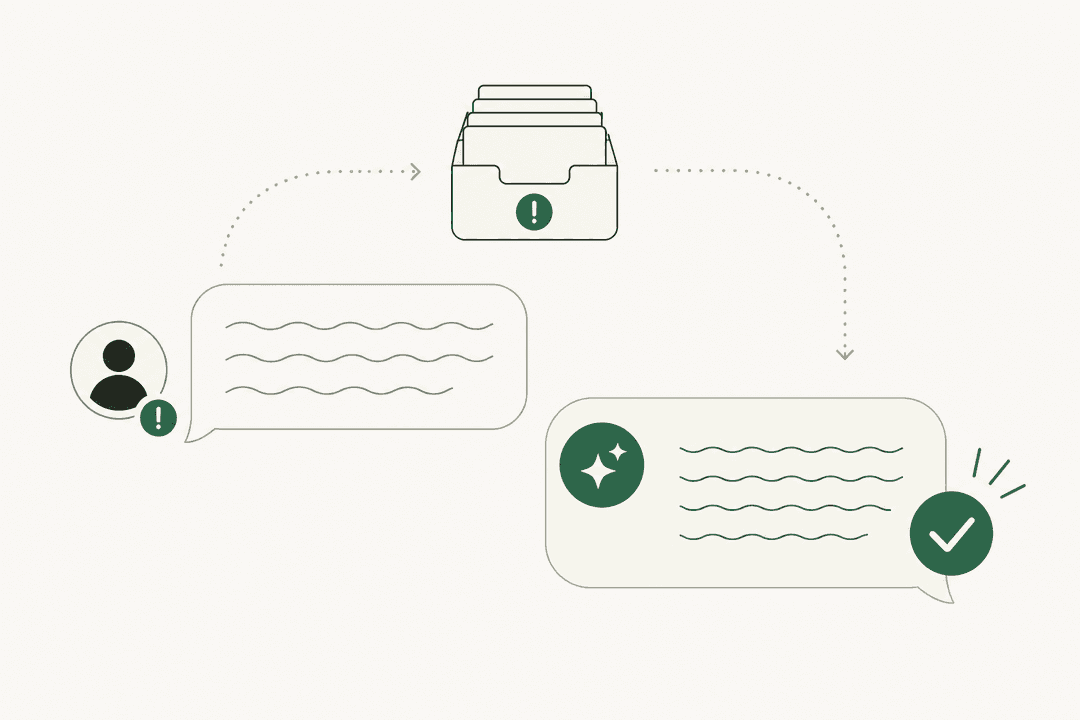
This isn't bad news; it's actually a big opportunity. Search engines are turning into "answer engines", giving people information in seconds. Your goal isn't just to be on the first page, but to be the source for those AI-powered answers.
This guide will walk you through how AI is changing search, how you can use AI tools to make your SEO work easier, and what you need to do to get your content ready for this new world.
To keep up, you need the right tools. We used the eesel AI blog writer to take our blog's traffic from 700 to over 750,000 daily impressions in just three months. We did it by creating content that works for how search operates now.
What is AI SEO?
AI SEO really breaks down into two main parts:
- Using AI tools for SEO tasks: Think of using AI for things like keyword research, writing content, and running technical checks to get things done faster.
- Optimizing content for AI platforms: This is the newer piece of the puzzle, sometimes called Generative Engine Optimization (GEO). It’s all about setting up your content so AI like Google's AI Overviews, ChatGPT, and Perplexity can find it, make sense of it, and use it as a source.
To do well, you need to get good at both. It's not just about churning out content quickly. It's about making solid, trustworthy content that AI systems will actually use.
How AI and SEO are changing the search landscape
AI is driving big changes in how people find information and how search engines provide it. Getting a handle on these changes is the first step to updating your strategy.
From search results to direct answers
Google's AI Overviews now appear right at the top of search results, giving users a summary answer pulled from several websites.
The new goal isn't just to rank #1, but to be one of the sources cited in these AI summaries.
This doesn't mean you can forget about traditional SEO. Research shows that 75% of the links in AI Overviews come from pages that are already in the top 12 organic search results. A strong SEO foundation is still what gets you in the door.
The rise of LLMs as answer engines
People are also going straight to chatbots like ChatGPT, Perplexity, and Claude for answers, skipping traditional search engines entirely. These platforms act like "answer engines," summarizing web content to give quick recommendations.
Perplexity has its own web scraper, PerplexityBot, that finds and indexes information on the fly.
The traffic you get from these sources is really valuable. One study found that visitors from AI search convert 4.4x more often than visitors from regular search. Microsoft also reported that Copilot's click-through rate on cited answers is 6x higher on organic links.
The trick is to create content that is so clear and authoritative that a large language model will trust it enough to cite it.
How to use AI to improve your SEO workflows
AI tools can speed up SEO work and make it better, which lets you spend more time on strategy.
AI-powered topic research and strategy
AI can handle a lot of the tedious work that used to go into keyword research. It can sift through thousands of keyword variations to find long-tail opportunities and group related topics together.
Even better, AI is great at figuring out what users actually want. It analyzes the top-ranking content for a topic to help you create articles that give searchers the answers they're looking for.
Creating better content faster with the eesel AI blog writer
AI has made it possible to generate content at a massive scale, but just creating
The eesel AI blog writer is designed for exactly this. It takes a single keyword and turns it into a full, publish-ready blog post. It's a smooth workflow, not a messy process involving multiple prompts.

It has a few features that set it apart from more general tools:
- Automatic Asset Generation: It does more than just write. It creates and adds relevant images, infographics, and tables right into the post.
- Authentic Social Proof: The AI finds and includes real quotes from Reddit and relevant YouTube videos. This adds a human element that fits well with Google's E-E-A-T guidelines.
- Built-in AEO: The content is structured from the ground up to be easily understood and cited by AI answer engines like Google AI Overviews and Perplexity.
- Context-Aware Research: Just give it your website URL, and it will learn your brand's voice and find natural ways to mention your products.
Automating technical analysis
AI tools can automate technical audits for your entire site, quickly finding problems like broken links, slow pages, and duplicate content.
Platforms like Ahrefs and Semrush use AI for their site audit features, which frees up SEO specialists to work on strategy instead of doing manual checks.
How to optimize for AI and SEO: A practical GEO checklist
This is where Generative Engine Optimization (GEO) comes in. Here are some practical steps you can take to make your content more likely to be cited.
Build topical authority and demonstrate E-E-A-T
Google's own guidance is pretty clear: create helpful, reliable, people-first content. It doesn't matter if it was human or AI-written content.
E-E-A-T (Experience, Expertise, Authoritativeness, and Trustworthiness) is a bigger deal than ever. With so much AI content being produced, showing real human expertise is a great way to stand out.
Use Google's "Who, How, and Why" framework to make sure your content is transparent and adds value. Ask yourself: Who made this? How did they make it? and Why did they make it?
| Signal | How to Implement It |
|---|---|
| Experience | Add personal stories, case studies, or first-hand accounts. Show, don't just tell. |
| Expertise | Include clear author bios with their credentials and link to their professional profiles. |
| Authoritativeness | Get mentioned on reputable sites in your field and build out content on related topics. |
| Trustworthiness | Cite your data with links to the sources, and make sure your contact info is easy to find. |
Structure content for AI extraction
AI systems need information to be clearly structured so they can pull from it.
Here are a few things you can do:
- Use descriptive headers (H2s, H3s) that ask and answer questions.
- Write in short, simple paragraphs. Break down complicated ideas.
- Use bullet points, numbered lists, and blockquotes to make information easy to scan.
- Use schema markup, especially "FAQPage", "HowTo", and "Author" schemas, to give AI extra context.
Focus on brand mentions and authority signals
For GEO, research suggests that brand mentions are a factor, sometimes even more than traditional backlinks.
A good digital PR strategy is key. When your brand gets mentioned on trusted news sites and industry blogs, it tells AI that you're a credible source.
Positive reviews on platforms like Google, CNET, and Yelp also act as important trust signals for AI.
Track your AI visibility
You can't fix what you don't measure. You need a way to track how often your brand is being cited in AI-generated answers.
New tools are starting to pop up to help with this. Both Ahrefs' Brand Radar and Semrush's AI Toolkit now have features that let you monitor your brand's visibility on platforms like Google AI Overviews and ChatGPT.
For a deeper dive into the new rules of AI-powered search, check out this video from Nathan Gotch, which breaks down the key strategies for 2026.
Nathan Gotch breaks down the new rules of AI-powered search for 2026.
Your next steps in the age of AI and SEO
AI hasn't killed SEO, but it has made things more competitive. To succeed now, you need a two-part strategy: use AI tools to work more efficiently and optimize your content for AI-powered answer engines.
The game has changed from just ranking for keywords to getting seen in AI-generated answers and showing real, human-led expertise.
Generic, low-quality content will just get lost in the noise. The winning approach is to combine AI's speed with human strategy and unique insights.
The best way to get started is to use tools that were built for this new environment. A specialized AI content platform can do the heavy lifting of research, drafting, and creating assets, leaving you free to add the final layer of expertise that makes your content truly valuable.
Ready to see how simple it is to create SEO-optimized content for the AI era? Generate your first blog post for free and see what a difference a context-aware AI can make.
Frequently Asked Questions
Share this post

Article by
Kenneth Pangan
Writer and marketer for over ten years, Kenneth Pangan splits his time between history, politics, and art with plenty of interruptions from his dogs demanding attention.