2026年Lovable代替ツール7選(実際にテスト)

Stevia Putri

Stanley Nicholas
最終更新 October 5, 2025

Let's be honest, using Lovable for the first time feels a bit like magic. You type a few words, and a pretty slick UI prototype appears out of nowhere. It’s a fun, incredibly fast way to see your ideas come to life. I totally get the appeal.
But then, reality kicks in. You try to move from that cool demo to a real, scalable business application, and you start to see the cracks. Trying to tweak the UI becomes a battle of prompts, the backend is either nonexistent or completely locked in, and you realize you've built a beautiful storefront with nothing in the back room. If that sounds familiar, you're in the right place. I spent weeks digging through the world beyond Lovable to find powerful alternatives that offer the control, flexibility, and scale you need for different goals, from launching full-stack apps to automating complex business workflows.
What is Lovable and why you might need Lovable alternatives
Lovable is an AI-powered platform that generates web app interfaces, mostly using React, from simple text prompts. It’s become a go-to for rapid prototyping, creating quick mockups, and what some people call "vibe-coding", just exploring an idea to see how it feels.
But the very thing that makes it great for demos is what makes it tough for production. Users often run into the same walls:
-
Prompt Purgatory: Getting the AI to make a specific, pixel-perfect change can feel like you're arguing with a stubborn robot. You end up spending more time rephrasing prompts than it would take to just code it yourself, which kind of defeats the whole purpose.
-
Limited backend and logic: Lovable is all about the frontend. If you need a database, user authentication, or any real business logic, you're usually out of luck or stuck with a specific, inflexible option like Supabase.
-
Scalability and production concerns: When it's time to go live, you need security, team collaboration features, and reliable infrastructure. These are areas where tools focused on prototypes just can't keep up.
-
Restrictive usage limits: Nothing kills your creative flow like hitting a daily prompt limit. Many free and entry-level plans are so stingy with their token counts that you can’t get any serious work done without pulling out your credit card.
How we evaluated the best Lovable alternatives
To give you a list you can actually use, I didn't just look for flashy features. I focused on what really matters when you're building something for real. Here’s the criteria I used:
-
Customization and Control: How much freedom do you have to actually change what the AI builds? Can you tweak things easily with a visual editor, or are you stuck diving into code for every little adjustment?
-
Backend and Integrations: Can the tool handle the "engine" of your app? Does it let you build custom logic, connect to different databases, and play nice with the other services you use?
-
Ease of Use vs. Power: Is it simple enough for a founder with an idea, or is it a heavy-duty tool made for seasoned developers? I looked for a good balance.
-
Scalability: Is this just a toy for building MVPs, or can you build a real, production-ready application on it that can grow with your business?
-
Pricing Model: Is the pricing straightforward? Nobody likes getting a surprise bill because their app had a busy month.
A quick comparison of the top Lovable alternatives
For those of you who just want the highlights, here’s a quick rundown of the tools we’ll be covering.
| Tool | Best For | Key Strength | Starting Price |
|---|---|---|---|
| eesel AI | Automating support & knowledge | Plugs into existing tools (no new app needed) | $299/month |
| Bubble | Building complex web apps | No-code visual workflow engine | $32/month |
| WeWeb | Visual editing with AI speed | AI generation + no-code drag-and-drop editor | $16/month |
| Bolt.new | Prototyping full-stack apps | AI prompt-to-code in a browser IDE | $25/month |
| Retool | Building internal tools & dashboards | Extensive component library for internal apps | $12/dev/month |
| Cursor | AI-assisted coding | Deep codebase understanding in your IDE | $20/month |
| Glide | Turning spreadsheets into apps | Simple, data-driven app creation | $25/month |
The 7 best Lovable alternatives for building real applications
Alright, let's get into the details. Each of these tools has a unique take on solving the problems that Lovable can't.
1. eesel AI
Often, the reason you’re looking at an app builder in the first place is to solve a business problem, like handling customer support or organizing internal knowledge. eesel AI has a different idea: why build a whole new app when you can just make your existing tools intelligent?
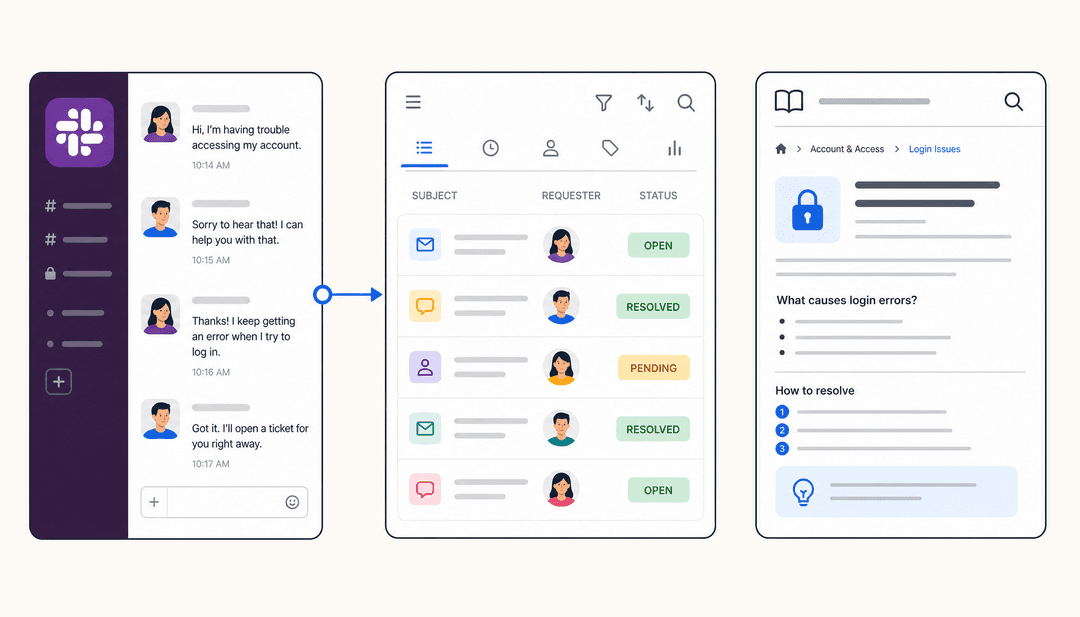
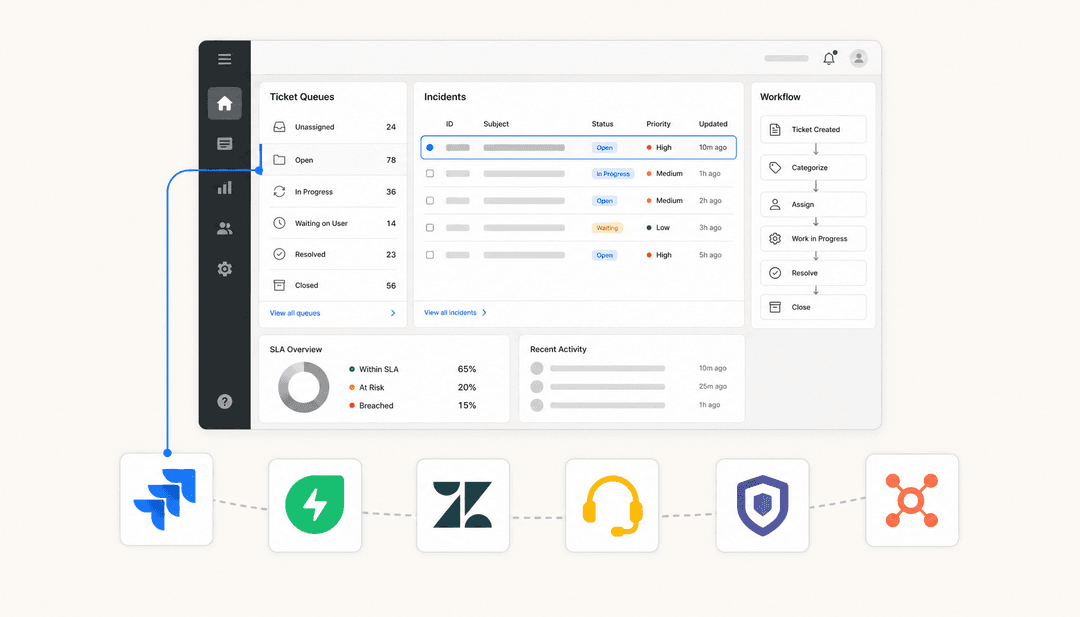
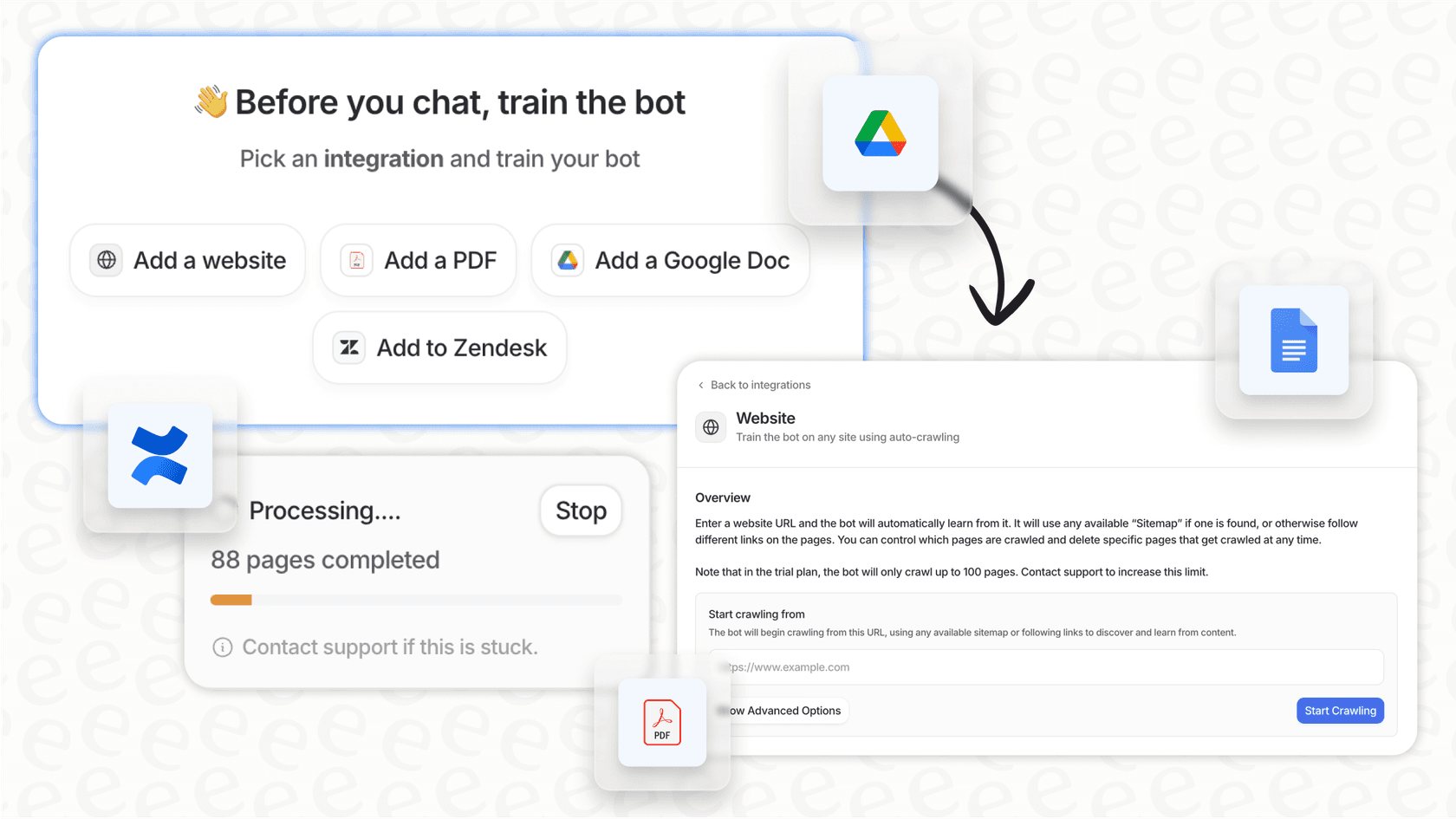
Instead of making you start from scratch, eesel AI plugs directly into the software you already use every day. It connects to your helpdesk (like Zendesk), your knowledge bases (Confluence, Google Docs), and your chat tools to automate support, answer questions, and assist your team. It solves the core problem without the headache of building and maintaining a custom application.
Key Features & Benefits:
-
Go live in minutes, not months: The setup is completely self-serve. You can connect your helpdesk with a single click and have a working AI agent running in less time than it takes to finish your coffee. No mandatory sales demos or complicated API projects.
-
Unify your knowledge instantly: You don't have to train eesel AI manually. It learns from your past support tickets, help center articles, and internal docs to understand your business context and brand voice from day one.
-
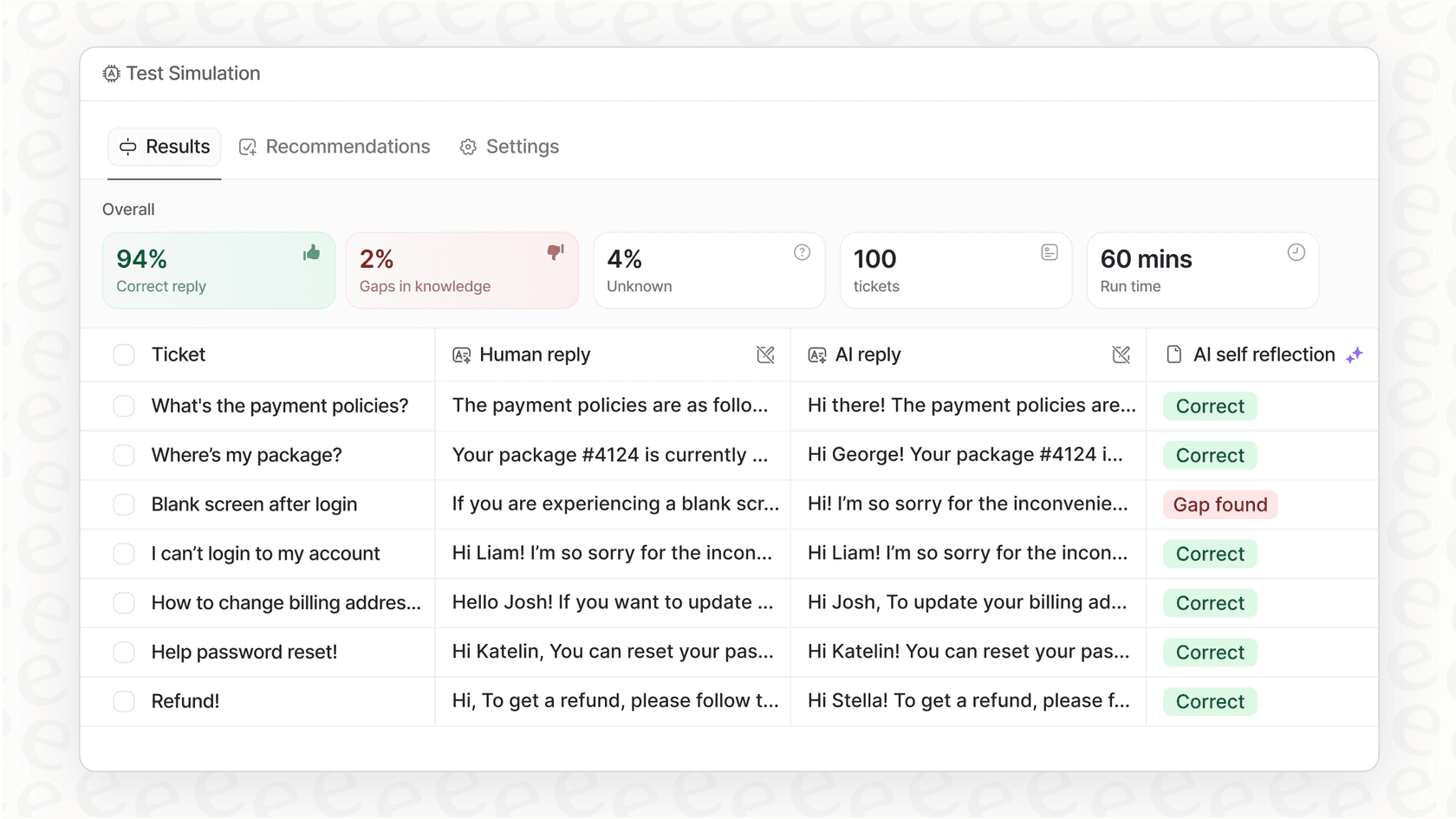
Total control and risk-free simulation: This is a big one. Before you let the AI talk to a single customer, you can run it in a simulation mode on thousands of your past tickets. You get a precise forecast of how well it will perform and can make adjustments with confidence.
Pricing:
eesel AI’s pricing is based on usage, with no per-resolution fees.
-
Team Plan: $299/month ($239/month annually) for up to 1,000 AI interactions and 3 bots. Includes an AI Copilot for agents and Slack integration.
-
Business Plan: $799/month ($639/month annually) for up to 3,000 AI interactions and unlimited bots. Adds the fully autonomous AI Agent, training on past tickets, and AI actions like ticket triage.
-
Custom Plan: For unlimited interactions, advanced actions, and enterprise-level needs.
Bottom Line: A perfect fit for support, IT, and ops leaders who want to use AI to solve real business problems now. eesel AI delivers the outcome (automated support, instant answers) without the time, cost, and risk of building a brand-new application.
2. Bubble
If your goal is to build a full-featured web app with its own logic and database without writing code, Bubble is your tool. It's a beast for creating complex, logic-driven web applications. While Lovable builds the facade, Bubble builds the entire house, foundation, plumbing, and all.
Key Features:
-
Visual Development: A drag-and-drop editor lets you design your interface with pixel-perfect control.
-
Powerful Workflow Engine: This is Bubble's secret sauce. You can build complex logic visually, like "when a user clicks this button, sign them up, send them an email, and update their profile."
-
Built-in Database: Manage all your application's data without needing an external service.
-
Extensive Plugin Marketplace: Add features like payment processing, maps, and social logins with plugins from the community.
Pricing:
Bubble offers plans for both web and mobile apps, with a free plan to get started.
-
Free: For building and testing, includes 1 app editor and 50k workload units/month.
-
Starter: $32/month (annually) to launch a live app on a custom domain.
-
Growth: $134/month (annually) for 2 app editors and more workload.
-
Team: $399/month (annually) for 5 app editors and even more capacity.
Bottom Line: An excellent choice if you're building a standalone web application and are willing to put in the time to learn it. It's incredibly powerful, but don't expect to master it overnight.
3. WeWeb
WeWeb feels like the tool Lovable users wish they had when they get stuck in prompt purgatory. It gives you the best of both worlds: you can generate a UI with an AI prompt, and then immediately jump into a flexible, no-code visual editor to tweak every single detail.
Key Features:
-
AI UI Generation: Create layouts from text prompts or even by uploading screenshots.
-
Full Visual Editor: A powerful drag-and-drop interface lets you refine AI-generated designs or build from scratch.
-
Backend Flexibility: Unlike tools that lock you in, WeWeb can connect to any backend you want, whether it’s Supabase, Xano, or your own REST API.
-
Code Export: If you ever outgrow the platform, you can export your project as a standard Vue.js application, so you're never trapped.
Pricing:
WeWeb separates its pricing for developer seats and hosting.
-
Seat Plans:
- Free: 1 developer seat and 1 million AI tokens to try it out.
- Essential: $16/month (annually) for 1 seat and 10 million AI tokens.
- Pro: $42/month (annually) per seat, with more tokens and team features.
-
Hosting Plans: You can start for free on a WeWeb subdomain. Plans with a custom domain start at $10/month.
Bottom Line: Ideal for users who love the initial speed of AI generation but need the freedom to edit everything visually without having to write code for every small adjustment.
4. Bolt.new
Bolt.new is what you get if you take Lovable's concept and build it for actual developers. It doesn't just generate a UI; it scaffolds an entire full-stack application from a single prompt, right inside a browser-based IDE.
Key Features:
-
Full-Stack Generation: Prompt for a frontend, backend, and database, and Bolt.new spits out the complete codebase.
-
Live Code Editor: Once the code is generated, you can immediately start editing it in the built-in IDE.
-
Instant Preview & Deployment: Test your app live in the browser with one click and deploy directly to services like Netlify.
-
Mobile Support: It can even generate mobile apps using React Native and Expo.
Pricing:
Bolt.new uses a token-based model.
-
Free: 400k tokens daily and 2.5M tokens per month.
-
Pro: $25/month for 10M tokens per month, custom domains, and no branding.
-
Teams: $30/user/month for centralized billing and team management features.
Bottom Line: The best option for technical founders and developers who want to skip the tedious setup and go from idea to an editable, deployable codebase in minutes. You’ll need coding skills to iterate and build on what it gives you.
5. Retool
While Lovable is a general UI builder, Retool is focused on one specific, very common problem: building internal tools. Think admin panels, customer support dashboards, and inventory management systems. It's built from the ground up for this, making it much faster and more effective than a generic tool.
Key Features:
-
Massive Component Library: Comes with a huge set of pre-built, production-ready components like tables, forms, charts, and buttons.
-
Direct Data Connections: Easily connect to almost any database or API to pull in and write data.
-
Custom Code Everywhere: While it's low-code, you can write custom JavaScript or SQL queries anywhere you need to add specific logic.
Pricing:
Retool’s pricing is based on two user types: builders ("Standard Users") and viewers ("End Users").
-
Free: Up to 5 users.
-
Team: $12/month per standard user + $7/month per end user (billed annually).
-
Business: $50/month per standard user + $15/month per end user (billed annually) for more control and permissions.
-
Enterprise: Custom pricing for advanced security and source control.
Bottom Line: If your goal is to build a functional tool to run your business operations, Retool is the specialized tool for the job. It's much faster and better suited for internal apps than trying to force a general-purpose builder to do something it wasn't designed for.
6. Cursor
Cursor is a totally different beast. It's not an app generator; it's an AI-native code editor built on top of VS Code. For developers who get frustrated by the messy, hard-to-maintain code that AI generators often produce, Cursor offers a smarter way to work. It helps you within your existing projects and workflow.
Key Features:
-
AI-First IDE: It’s a version of VS Code with deeply integrated AI features for generating, editing, and debugging code.
-
Codebase-Aware Chat: You can ask questions about your entire project (like, "where is the user authentication logic defined?") and it will give you accurate, context-aware answers.
-
AI-Powered Editing: Select a block of code and just tell the AI what to do, like "refactor this into a separate function" or "add error handling."
Pricing:
-
Hobby (Free): Includes a two-week Pro trial and limited AI usage.
-
Pro: $20/month for unlimited Tab completions and extended AI limits.
-
Pro+: $60/month for 3x usage on all models.
-
Teams: $40/user/month for centralized billing and team features.
Bottom Line: This is the perfect tool for developers who want the power of AI without giving up control. Cursor enhances your existing coding workflow instead of trying to replace it, which leads to cleaner, more maintainable code.
7. Glide
Glide is probably the simplest and fastest way to go from a pile of data to a working app. It's built on a simple idea: if you have data in a spreadsheet (like Google Sheets or Excel), you can turn it into a good-looking web and mobile app in a few minutes.
Key Features:
-
Data-Driven UI: Glide automatically generates an app interface based on the structure of your spreadsheet.
-
Simple Drag-and-Drop Builder: Easily customize the layout, add components, and change the design without any code.
-
Built-in AI Columns: Add AI-powered features directly to your data, like summarizing text, generating images, or pulling out specific info.
Pricing:
-
Free: 1 app for up to 10 personal users.
-
Business: Starts at $199/month (billed yearly) for unlimited apps, 30 users, and 5,000 updates/month.
-
Enterprise: Custom pricing for advanced needs, more users, and SQL data sources.
Bottom Line: The perfect no-code tool for non-technical users who want to build simple, data-driven apps for things like inventory trackers, employee directories, or event guides. It’s all powered by a spreadsheet you already know how to use.
How to choose the right Lovable alternatives for you
Feeling a bit overwhelmed? Don't worry. The right choice really just comes down to who you are and what you're trying to do.
-
If you're a support or IT leader... your goal isn't to become an app developer; it's to solve a business problem. You can skip the complexity of building something new and get results faster with a tool like eesel AI that adds intelligence to your existing helpdesk and knowledge base.
-
If you're a non-technical founder... and you need to build a full-featured web app with custom logic, Bubble is your most powerful bet. For simpler, data-centric apps, Glide is the way to go.
-
If you're a designer or product manager... who wants the speed of AI but needs more visual control than Lovable offers, WeWeb strikes the perfect balance.
-
If you're a developer... use Bolt.new to speed up your prototyping. To make your day-to-day coding on existing projects faster, Cursor is the clear winner. And for building internal tools, Retool is the professional's choice.
Lovable alternatives: Move beyond prototypes to real solutions
Lovable is a fantastic introduction to the world of AI-powered development. It really shows what's possible. But when it's time to build a real business solution that can scale and adapt, you need a tool that's actually built for the job.
The "best" alternative is the one that fits the problem you're trying to solve. For many business challenges, especially in customer support and internal knowledge management, the smartest move isn't building a new app from the ground up. It's about empowering the systems you already have with a purpose-built AI platform like eesel AI.
Ready to see how fast you can automate your support workflows? Connect your helpdesk and go live with an AI agent in minutes. Start your free eesel AI trial today.

Frequently asked questions
Lovable excels at quick UI prototypes, but often falls short on backend logic, deep customization, and scalability needed for production-ready business applications. The alternatives listed offer more robust features to handle real-world complexity and grow with your needs.
Your choice depends on your specific goal: for support automation, eesel AI; for complex web apps, Bubble; for internal tools, Retool; for developers needing full-stack AI, Bolt.new or Cursor; and for data-driven apps, Glide. Consider your technical skill level and project scope.
While some Lovable alternatives, like WeWeb and Bolt.new, also leverage AI for generation, others like Bubble and Retool focus on powerful visual development and extensive integrations. Cursor integrates AI into your coding workflow, and eesel AI uses it to automate support processes.
Yes, several Lovable alternatives provide full-stack capabilities. Bubble includes a powerful workflow engine and built-in database, while Bolt.new generates complete front-end, back-end, and database code from prompts. WeWeb is highly flexible with any backend you choose.
Most Lovable alternatives are designed for strong integration. Retool connects to almost any database or API, eesel AI plugs directly into your helpdesk and knowledge bases, and WeWeb offers flexibility to connect to various backends.
Yes, many of the suggested Lovable alternatives offer free tiers or trials. Bubble, WeWeb, Bolt.new, Retool, Cursor, and Glide all have free plans or trials that allow you to explore their features before committing to a paid subscription.
The scalability varies among Lovable alternatives. Tools like Bubble and Retool are designed for production-ready applications that can grow with your business, offering robust infrastructure and enterprise-level features. eesel AI also scales efficiently with usage, integrating into existing enterprise systems.
Share this article

Article by
Stevia Putri
Stevia Putri is a marketing generalist at eesel AI, where she helps turn powerful AI tools into stories that resonate. She’s driven by curiosity, clarity, and the human side of technology.