
Your IVR system's supposed to route customers to the right agent quickly. When it works, callers press a key and reach someone who can help. When it doesn't, you'll get frustrated customers, missed calls, and support tickets that start with "I tried calling but..."
Zendesk Talk is a capable phone system, but like any technology, it has its quirks. This guide covers the most common IVR issues support teams encounter and how to fix them. We'll walk through diagnosis, specific solutions, and prevention strategies so you can keep your phone support running smoothly.
And if you're finding yourself fighting your IVR more than using it, we'll also look at how modern AI tools can reduce your dependency on complex phone trees altogether.
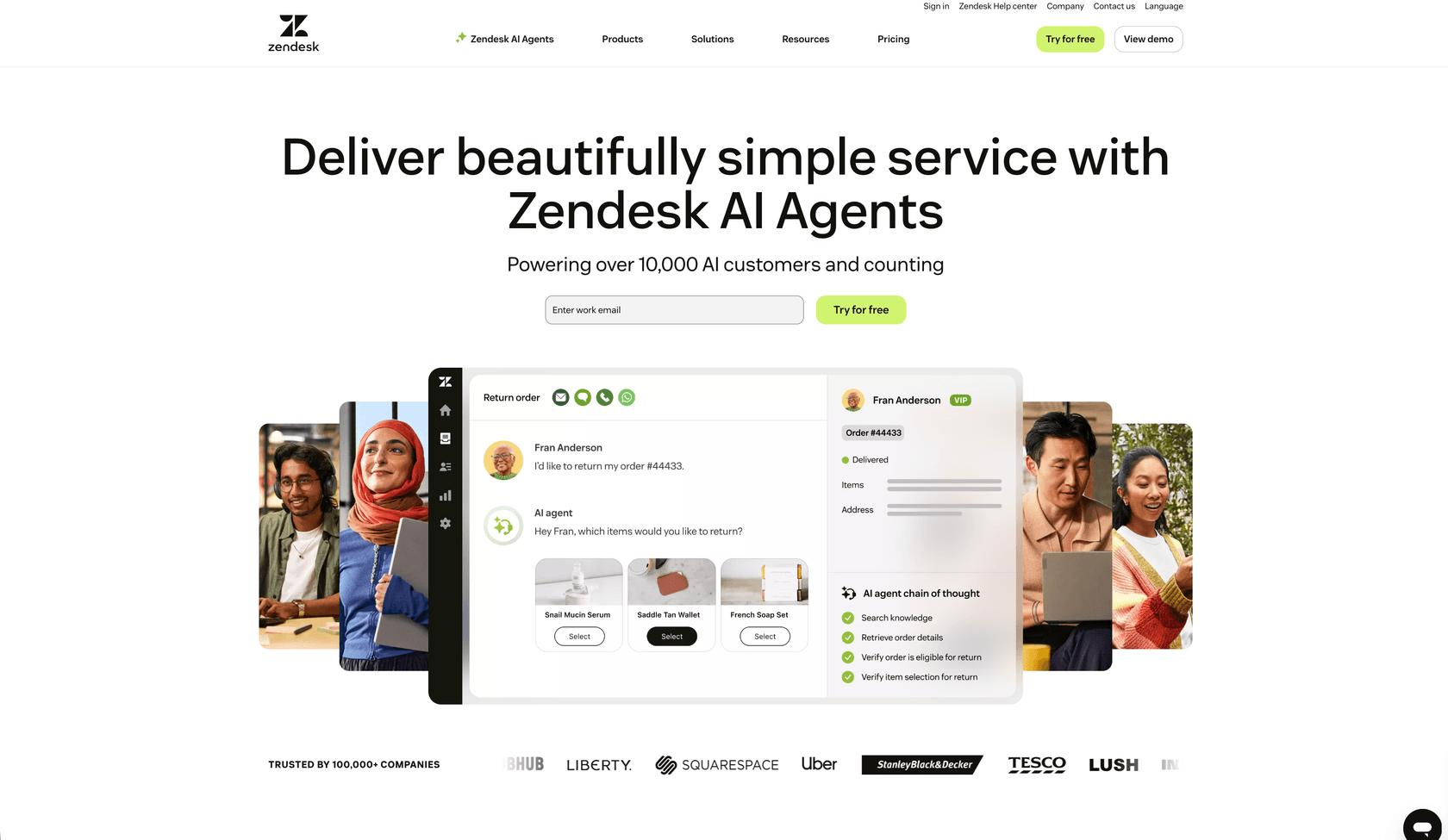
Common Zendesk Talk IVR issues and quick diagnosis
Before diving into specific fixes, let's identify what category your problem falls into. Most IVR issues cluster around four areas:
- Network and connectivity calls drop, quality is poor, or agents can't connect
- Configuration and routing calls don't reach the right people or go to voicemail unexpectedly
- Audio and file uploads greeting uploads fail or play incorrectly
- Agent availability agents show as available but don't receive calls
Quick diagnostic checklist
When an IVR issue appears, run through these checks first:
- Check the Zendesk status page rule out service incidents before troubleshooting your setup
- Verify Talk is enabled in Admin Center, confirm Channels > Talk shows as active
- Confirm agent status agents need Team Lead or Agent roles (not Admin) and've got to set their status to Online
- Test from an external line internal testing sometimes bypasses routing rules that affect real callers
If these basics check out, move to the specific issue sections below.
Fixing IVR greeting upload errors
The "Error creating greeting" message is one of the most specific (and frustrating) IVR issues. You have a recorded message ready to go, but Zendesk won't accept it.
Why uploads fail
Zendesk Talk has strict requirements for greeting files:
- Format: 711 µ-LAW or MP3 only
- Permissions: Only Support administrators can create or modify greetings
- Browser issues: Cache and cookies sometimes interfere with uploads
Step-by-step fix
-
Verify your file format. If your audio file isn't 711 µ-LAW or MP3, convert it using a tool like Audacity or an online converter. Re-export from your recording software if needed.
-
Clear browser cache and cookies. In Chrome, go to Settings > Privacy and security > Clear browsing data. Select "Cached images and files" and "Cookies and other site data," then clear.
-
Try a different browser. If Chrome continues to fail, test with Firefox or Edge to rule out browser-specific issues.
-
Check your admin permissions. Confirm your account has Support administrator rights. If you're not an admin, you'll need one to upload greetings for you.
-
Test with a different file. Try uploading a simple test recording to determine if the issue is specific to your original file.
Prevention tips
- Standardize on MP3 format for all greetings (most compatible)
- Keep a "greetings library" with backup copies of working files
- Test uploads in a staging environment before deploying to production
- Document your greeting naming convention to avoid confusion
Resolving call routing failures
Routing issues are the most disruptive IVR problems because they directly impact whether customers reach help at all.
Symptoms to watch for
- Agents are available but callers hear "No support agents are currently available"
- Calls go straight to voicemail without ringing
- Uneven call distribution (some agents get flooded while others sit idle)
- Calls dial out from the wrong number
Configuration checks
Start with your Admin Center settings:
-
Verify routing destination. Go to Channels > Talk > Lines and confirm each line has either a group destination or IVR menu assigned. A line without a destination won't route anywhere.
-
Check business hours. If calls come in outside your scheduled hours, they'll follow after-hours routing (often voicemail). Review your schedule at Channels > Talk > Business hours.
-
Review maximum queue wait time. If set too low, calls may abandon before agents can answer. Try setting this to 5 minutes. If your queue frequently maxes out, consider setting up priority lines.
-
Confirm agent roles and permissions. Agents need specific Talk permissions to receive calls. In Admin Center, check that affected agents have the appropriate access levels.
Agent availability issues
Even properly configured IVRs fail when agents aren't actually available:
- Unified agent status: If you use unified status, verify agents appear online in the agent status dashboard
- Focus mode: When focus mode is active and an agent is in a chat ticket, the system won't serve them calls even if they're online
- Browser refresh: Refreshing the browser resets Talk agent state to unavailable. Agents must manually reset their status to become available again.
Omnichannel routing considerations
If you've activated omnichannel routing, it changes how IVR calls behave:
- Tickets are created as soon as calls enter the queue (before they're answered)
- IVR keypress tags can trigger queue conditions and routing rules
- Custom queues may be needed if you route to multiple groups on a single keypress
If you recently enabled omnichannel routing and routing broke, check that you removed all non-primary groups from your IVR menu before activation.
Network and connectivity troubleshooting
Voice quality and connection issues often stem from network configuration rather than Zendesk settings.
Common network problems
- VPN interference: Talk doesn't work well with VPNs due to GLL (Geographic Load Balancing), which selects the best network path for calls. VPNs mask agent locations, preventing efficient routing.
- MPLS networks: Similar to VPNs, MPLS can cause latency and quality issues
- Blocked ports: Network teams sometimes block ports or IP addresses that Talk requires
- Wi-Fi instability: Wireless connections are more prone to packet loss than wired
Diagnostic steps
-
Run the Twilio network test. Visit networktest.twilio.com to verify ports are open, speed is adequate, and you're connecting to the right endpoint.
-
Check for packet loss. Run a ping test for 10-15 minutes, especially during problem periods. Test these Twilio endpoints:
chunderw-vpc-gll.twilio.comchunderw-gll.twilio.comchunderw-vpc-gll-[region].twilio.com(use your region: au1, br1, de1, ie1, jp1, sg1, us1)
Even 1% packet loss over 15 minutes can affect call quality.
-
Verify firewall settings. Ensure your network allows traffic on all Talk network requirements ports.
-
Switch to wired connection. Ethernet eliminates Wi-Fi interference from other devices.
Browser and headset optimization
- Microphone permissions: In Chrome, check Settings > Privacy and security > Site settings > Microphone. Remove and re-add Zendesk if issues persist.
- Gaming headsets: Deactivate audio driver software (not supported and can cause sync issues)
- Connection type: USB headsets perform better than Bluetooth. If troubleshooting, try computer speakers to rule out headset issues.
EC# error resolution
EC# errors indicate Talk doesn't have an adequate network connection. They often come from router or local network limits. If you see these errors:
- Review the Talk network requirements and confirm all ports are open
- Check firewall and router settings
- If issues persist, contact Zendesk support with screenshots of your open port configuration
IVR menu configuration best practices
Many IVR issues stem from poor initial setup. Getting the fundamentals right prevents problems later.
Menu structure fundamentals
- Limit main menu options to 5 or fewer. Research shows that 63% of consumers find irrelevant IVR options frustrating. More options mean more confusion.
- Keep depth to 2-3 levels maximum. Abandonment rates increase with each additional menu level.
- Use clear, descriptive names. "Main Support Menu" tells you more than "IVR_01." Include purpose and scope in names.
Strategic ordering
The order of your menu options matters:
- Place your most common inquiry type first. If 60% of calls are for technical support, make that option 1.
- Make "speak to representative" easy to find. 81% of consumers want to reach a live agent immediately.
- Consider industry patterns. E-commerce typically prioritizes orders and shipping. SaaS companies usually put technical support first.
Testing your IVR setup
Don't assume your IVR works because you configured it correctly. Test thoroughly:
- Every keypress option (0-9, *, #)
- Invalid keypresses (what happens when someone presses 8 when only 1-3 are options)
- No input scenarios (wait through the greeting without pressing anything)
- Default route behavior
- Business hours vs. after-hours behavior
Always test from an external phone line, not just internally.
For detailed guidance on naming conventions and menu organization, see our Zendesk Talk IVR menu naming guide.
Preventing IVR issues proactively
Reactive troubleshooting is necessary, but prevention saves time and customer frustration.
Regular maintenance checklist
- Quarterly IVR audit: Review all menus, greetings, and routing rules for accuracy
- Monitor abandonment metrics: Use Zendesk Explore to track which menu choices cause hangups
- Update greetings seasonally: Holiday hours, promotions, or staffing changes should be reflected in your IVR
- Gather agent feedback: Your agents know when routing isn't working. They hear from misrouted callers.
Monitoring and alerts
Set up Zendesk Explore reports to track:
- IVR completion rates (percentage of callers who reach their destination)
- Abandonment by option (which choices cause hangups)
- Time in IVR (how long callers spend navigating menus)
- Call quality metrics from the Agent leg quality issues report
When to consider alternatives
Sometimes IVR complexity itself becomes the problem. Consider alternatives when:
- Your phone tree requires more than 3 levels to route calls effectively
- Abandonment rates stay high despite optimization
- Customers consistently express frustration with phone navigation
This is where modern AI solutions can help. Instead of forcing customers through complex phone trees, eesel AI handles support inquiries through intelligent ticket automation, reducing the burden on your phone system.
Streamlining phone support with AI automation
IVR systems were designed to route calls efficiently. But what if many of those calls didn't need to happen at all?
AI-powered support tools can reduce your dependency on complex phone trees by handling issues before they escalate to calls. Here's how we approach it at eesel AI:
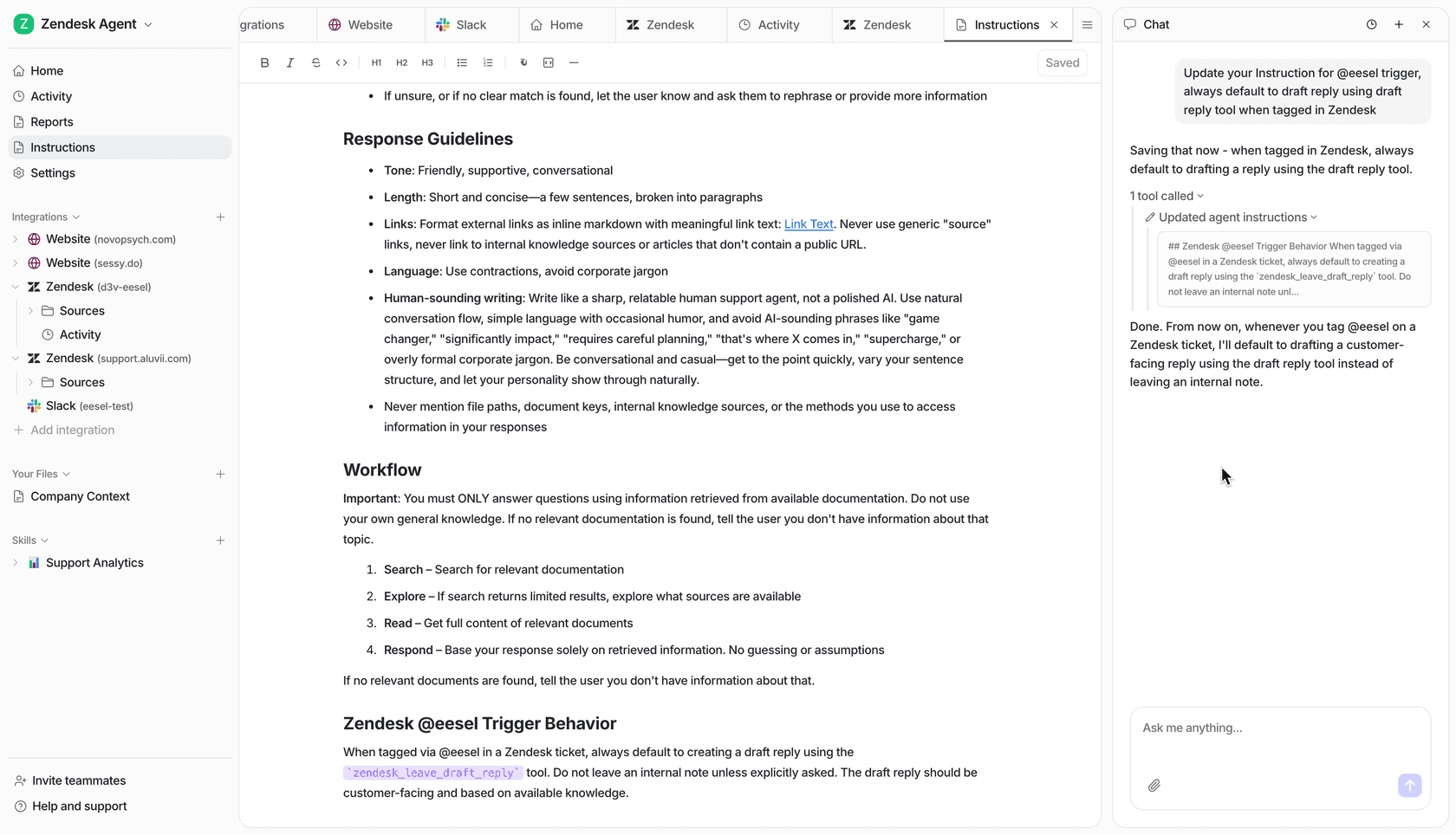
AI Copilot drafts responses automatically. When a call does create a ticket, our AI Copilot drafts replies based on your help center and past tickets. Agents review, edit if needed, and send. This cuts response time and ensures consistency.
AI Agent resolves common issues autonomously. For tickets that don't need human attention, our AI Agent can respond directly. Mature deployments achieve up to 81% autonomous resolution with a typical payback period under 2 months.
AI Triage keeps queues organized. Before agents even see tickets, AI Triage tags, routes, and prioritizes them based on content and urgency.
The combination works like this: your IVR handles the calls that truly need voice interaction, while AI handles the follow-up and deflects issues that can be resolved through other channels. You reduce call volume, shorten resolution times, and improve customer satisfaction.
If you're interested in how AI can complement your existing Zendesk setup, you can try eesel AI or explore our AI Copilot and AI Agent products.


