Zendesk messaging: Complete guide to setup, features, and pricing in 2026

Stevia Putri
Last edited March 3, 2026
Customer support has evolved beyond simple email ticketing and phone calls. Today's customers expect instant responses across multiple channels, and they don't want to repeat themselves every time they reach out. That's where Zendesk messaging comes in.
Unlike traditional live chat that ends when the session closes, Zendesk messaging creates persistent conversations that follow customers across devices and channels. It's designed for the way people actually communicate today: asynchronously, through their preferred platforms, with context that carries forward.
If you're evaluating Zendesk messaging for your support team, or considering alternatives like eesel AI's Zendesk integration, this guide covers everything you need to know.
What is Zendesk messaging?
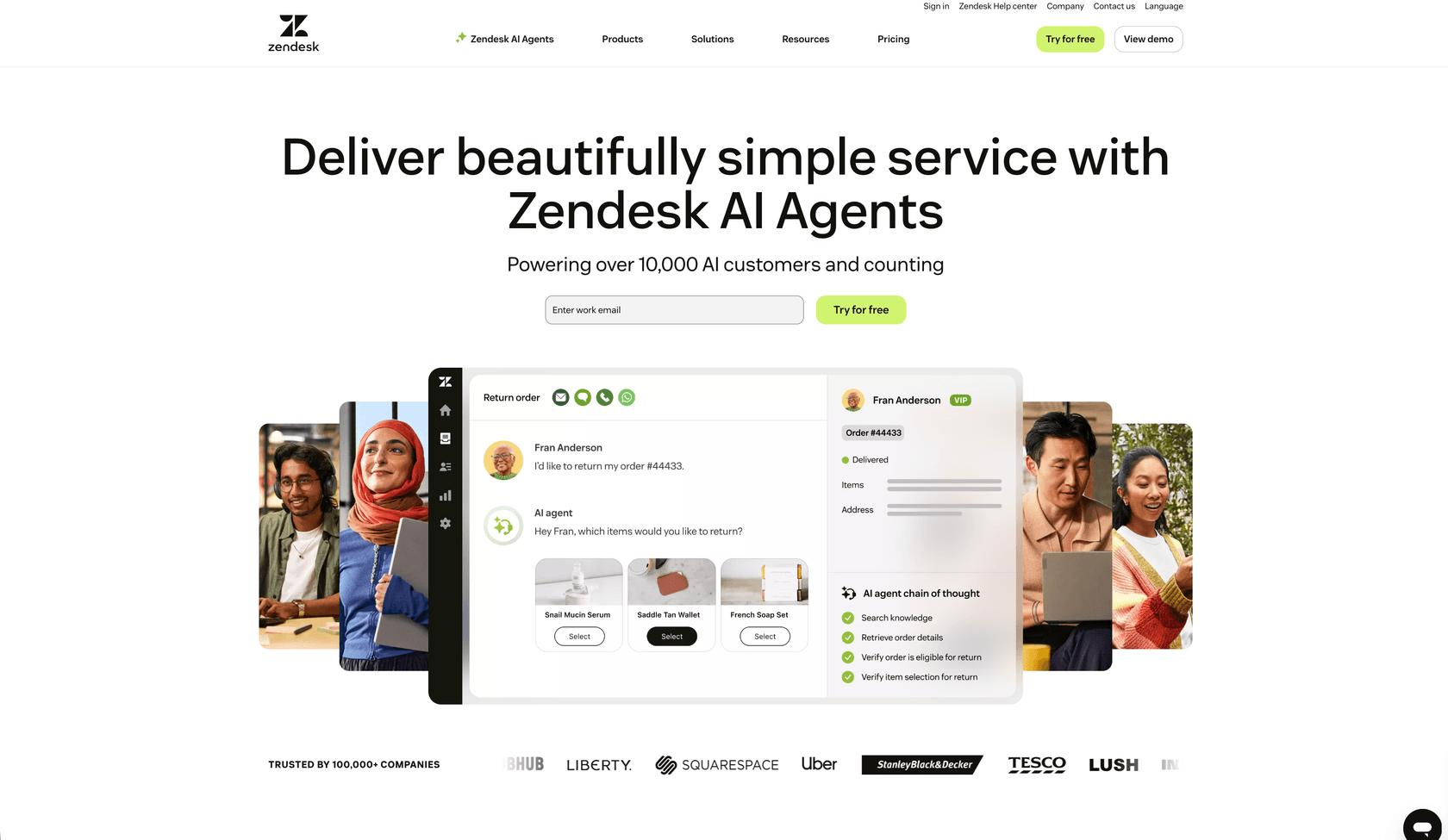
Zendesk messaging is a conversational support platform that lets businesses engage with customers across web, mobile, and social channels through a single unified system. At its core, it's built on the idea that customer conversations should be continuous, not transactional.
Here's the key difference from traditional support: when a customer starts a conversation via your website widget, they can continue that same conversation hours later on WhatsApp or your mobile app. The context, history, and any files shared all carry over. The customer never has to explain their issue twice.
The platform includes several integrated components:
- Web Widget: An embeddable chat interface for your website or help center
- Mobile SDKs: Native iOS, Android, and Unity SDKs for in-app messaging
- Social Channels: Direct integration with WhatsApp, Facebook Messenger, Instagram, WeChat, LINE, and X
- AI Agents: Automated responses that can resolve common issues without human intervention
- Agent Workspace: A unified interface where agents handle conversations from all channels
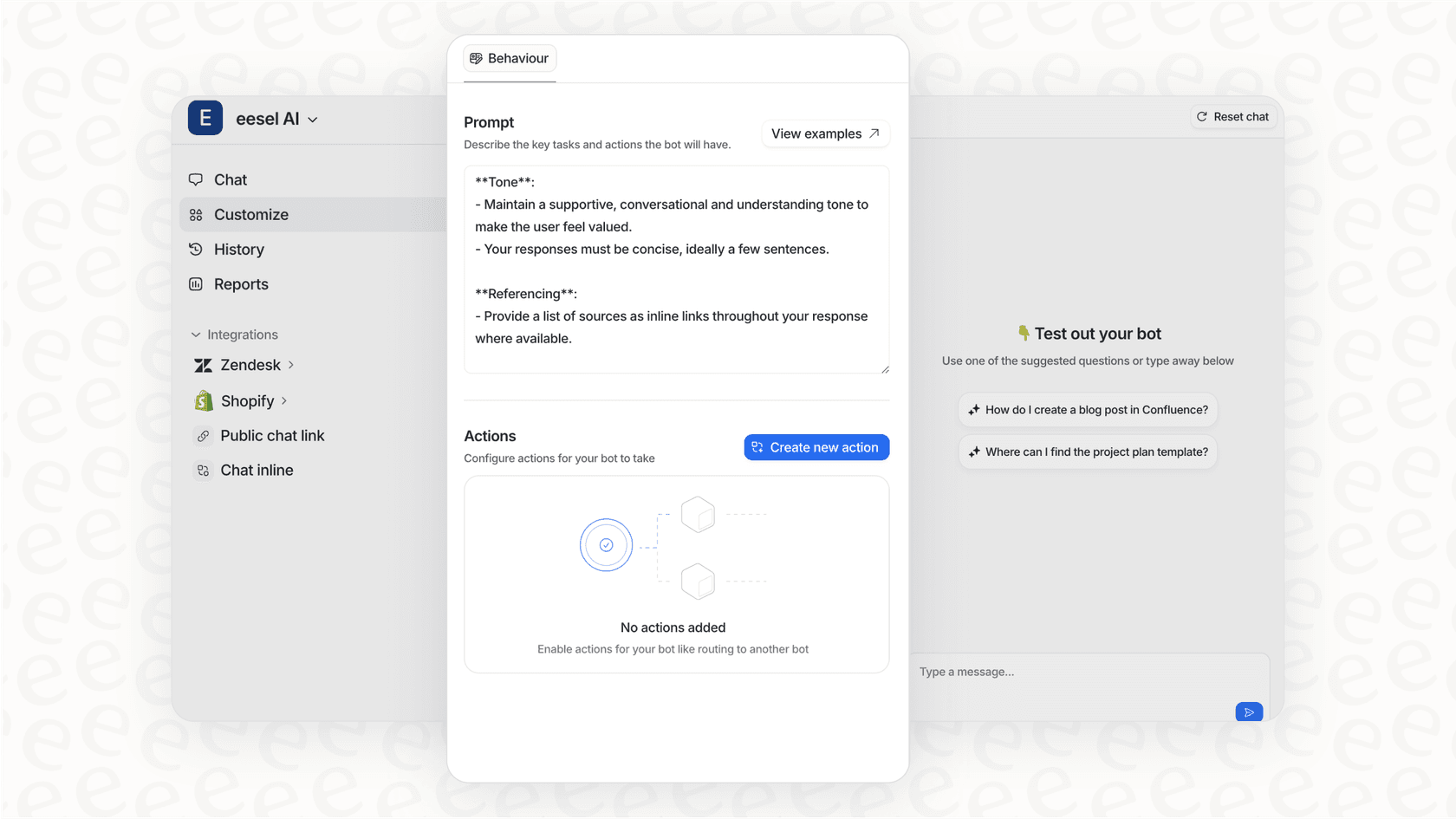
For teams already using Zendesk, messaging integrates directly with your existing ticketing system, knowledge base, and workflows. For teams looking for AI-first alternatives, eesel AI offers native messaging capabilities that integrate with Zendesk and other platforms.
Zendesk messaging vs live chat: Key differences
If you're currently using Zendesk's legacy live chat, you might wonder whether migrating to messaging is worth the effort. The differences are substantial.
Session-based vs persistent conversations
Live chat operates on sessions. A customer starts a chat, talks to an agent, and when the chat ends, the conversation is essentially gone. If the customer returns later with a follow-up question, they start from scratch with a new agent who has no context.
Messaging conversations persist. Customers can close their browser, come back tomorrow, and pick up exactly where they left off. The full conversation history is visible to both the customer and any agent who helps them.
Context retention
With live chat, agents see only what's happening in the current session. With messaging, agents can see the entire conversation history, any previous tickets from that customer, and relevant data from your CRM or e-commerce platform. This context makes agents more effective and customers less frustrated.
Channel flexibility
Live chat is limited to your website. Messaging extends to wherever your customers are: WhatsApp, Facebook, Instagram, your mobile app, or your website. And customers can switch between these channels mid-conversation without losing context.
AI capabilities
Here's a major differentiator: AI agents are only available with messaging, not with legacy live chat. If you want automated responses, intelligent routing, or generative AI that drafts replies based on your knowledge base, you need messaging.
When to migrate
Zendesk is gradually phasing out live chat in favor of messaging. New customers get messaging by default. Existing customers on live chat should plan a migration, especially if they want AI capabilities or need to support social channels.
Key features of Zendesk messaging
Omnichannel support
The platform unifies conversations across multiple touchpoints. Customers can start on your website, continue via WhatsApp, and finish in your mobile app. Agents see everything in one place.
Supported channels include:
- Web widget (embeddable on any site)
- iOS, Android, and Unity SDKs
- WhatsApp Business
- Facebook Messenger and Instagram Direct
- WeChat, LINE, and X (Twitter) DM
- SMS via Twilio
AI agent integration
Zendesk AI agents can handle routine inquiries automatically, escalating only complex issues to human agents. The AI draws from your knowledge base to generate accurate responses in your brand's voice.
Key AI capabilities include:
- Generative replies based on help center content
- Automated resolution of common issues (refunds, order status, password resets)
- Intelligent routing to the right agent or department
- 80+ language support with automatic language detection
- Quality monitoring through built-in QA scoring
Real customer results show the impact: Hello Sugar achieved a 66% automation rate with $14k in monthly savings, while Motel Rocks reduced ticket volume by 50% and increased CSAT by 9.44%.
Agent Workspace integration
The Agent Workspace brings together tickets, messaging conversations, customer context, and collaboration tools in one interface. Agents don't need to switch between tabs or systems to help customers across different channels.
Features include:
- Unified conversation view across all channels
- Real-time customer context and history
- Collaboration tools like @mentions and side conversations
- Skills-based routing to match customers with the right agents
- Capacity rules to balance workload
Customization options
The Web Widget and mobile SDKs can be customized to match your brand. You control colors, logos, positioning, greeting messages, and conversational styles. The widget can be configured for live chat (real-time) or social messaging (asynchronous) behavior.
Developer platform (Sunshine Conversations)
For teams needing deeper customization, Zendesk messaging is built on Sunshine Conversations. This platform provides:
- REST APIs for programmatic conversation management
- Webhooks for real-time event handling
- Custom bot orchestration and escalation flows
- Outbound messaging capabilities
- Rich message payloads and interactive elements
How to set up Zendesk messaging
Setting up messaging requires Admin Center access and takes about 30-60 minutes for basic configuration. Here's the step-by-step process.
Step 1: Enable messaging in Admin Center
Navigate to Admin Center > Channels > Messaging to activate the feature. You'll need to configure your default brand settings and choose which channels to enable.
Step 2: Configure the Web Widget
Set up the widget appearance, position, and greeting messages. You can customize:
- Widget color scheme and logo
- Position (bottom left or right)
- Greeting message and response time expectations
- Pre-chat form fields
- Launcher button behavior

Step 3: Set up messaging channels
Add social channels like WhatsApp or Facebook Messenger. Each channel requires separate authentication:
- WhatsApp: Connect your WhatsApp Business account
- Facebook/Instagram: Authorize through Meta Business Manager
- Mobile SDKs: Generate channel keys for iOS and Android
Step 4: Configure AI agents (optional)
Enable AI agents to handle common queries automatically. Configuration includes:
- Connecting your knowledge base
- Setting up escalation rules
- Defining the AI agent's persona and tone
- Configuring business hours behavior
Step 5: Train your team
Familiarize agents with the Agent Workspace and messaging workflows. Key training points:
- How messaging conversations differ from tickets
- Using conversation history for context
- When to end vs. leave conversations open
- Collaborating with @mentions
Zendesk messaging pricing
Messaging is included in Zendesk Suite plans, not available as a standalone product. Here's the breakdown:
| Plan | Annual Price | Monthly Price | Messaging Features |
|---|---|---|---|
| Support Team | $19/agent | $25/agent | Basic web widget only |
| Suite Team | $55/agent | $69/agent | AI agents (Essential), messaging, social channels |
| Suite Professional | $115/agent | $149/agent | AI agents, Copilot, skills-based routing |
| Suite Enterprise | $169/agent | $219/agent | Advanced AI, sandbox, custom roles |
AI agent costs
AI agents are priced by "automated resolutions" (AR), which are conversations fully resolved by AI without human intervention:
| Plan | Included ARs | Additional Cost |
|---|---|---|
| Suite Team | 5 per agent/month | $1.50 committed, $2 pay-as-you-go |
| Suite Professional | 10 per agent/month | $1.50 committed, $2 pay-as-you-go |
| Suite Enterprise | 15 per agent/month | $1.50 committed, $2 pay-as-you-go |
Common add-ons
- Advanced AI Agents: Contact sales for pricing (adds reasoning controls, custom actions)
- Copilot: $50/agent/month (AI writing assistance for agents)
- Zendesk QA: $35/agent/month (automated quality assurance)
- Workforce Management: $25/agent/month (scheduling and forecasting)
For teams comparing costs, eesel AI's pricing offers a different model based on AI interactions rather than per-agent seats, which can be more cost-effective for high-volume support operations.
Mobile SDK and developer resources
Zendesk provides native SDKs for mobile developers who want to embed messaging directly in their apps.
Platform requirements
| Platform | Minimum Version |
|---|---|
| iOS | 14.0+ |
| Android | API 21+ |
| Flutter | 3.27.0+ (via community plugin) |
Key SDK features
- JWT authentication for secure user identification
- Push notification support (FCM for Android, APNs for iOS)
- 24 event types for real-time tracking (conversation started, agent assigned, etc.)
- Conversation tags and custom fields
- Unread message count tracking
- Multi-conversation navigation
Developer documentation
Is Zendesk messaging right for your team?
Zendesk messaging works best for teams that:
- Already use Zendesk for ticketing and want to add conversational support
- Need to support customers across multiple channels (web, mobile, social)
- Want AI automation but need it integrated with human agent workflows
- Have the budget for per-agent pricing with additional AI resolution costs
Limitations to consider
- Pricing complexity: Costs scale with both agent seats and AI usage, making budgeting unpredictable
- Migration effort: Moving from legacy chat requires planning and potential workflow changes
- Learning curve: Agents need training on the new interface and persistent conversation model
- Customization limits: Advanced customization requires developer resources and Sunshine Conversations
Alternative approaches
For teams looking for AI-first messaging without Zendesk's complexity, eesel AI offers an alternative approach. Rather than adding AI to a traditional ticketing system, eesel AI is built around autonomous AI agents that handle conversations end-to-end, with human oversight and escalation when needed.

The key difference is the starting point: Zendesk adds AI to an existing support platform, while eesel AI starts with AI and adds human collaboration. Both approaches work, but they suit different organizational needs and technical setups.
If you're already invested in Zendesk, their messaging platform is the natural next step. If you're evaluating options or want to explore AI-native alternatives, our comparison of AI support tools covers the landscape in more detail.


Frequently Asked Questions
Share this article

Article by
Stevia Putri
Stevia Putri is a marketing generalist at eesel AI, where she helps turn powerful AI tools into stories that resonate. She’s driven by curiosity, clarity, and the human side of technology.
