Zendesk CX explained: What it is and how it works in 2026

Stevia Putri
Last edited March 3, 2026
Customer experience can make or break a business. In 2026, 73% of customers say CX is the number one factor in their purchase decisions. Yet 83% of consumers still believe experiences should be better than they are today. That gap between expectation and reality is where platforms like Zendesk come in.
Zendesk has built a reputation as one of the most established names in customer service software. But what exactly is Zendesk CX, and how does it help businesses close that experience gap? Let's break it down.
What is Zendesk CX?
Customer experience (CX) refers to every interaction a customer has with your company, from the first ad they see to their most recent support conversation. It's the sum total of how they perceive your brand across the entire journey.
Zendesk CX is the company's approach to helping businesses manage and improve those interactions. The platform centers on what they call the "three Ps":
- People: Giving customers helpful, empathetic support agents
- Process: Creating seamless workflows that don't frustrate customers
- Product: Delivering intuitive tools that solve problems
It's worth distinguishing CX from customer service. Customer service is just one component of the broader customer experience. You might have excellent marketing and a great product, but if a customer can't get help when they need it, their overall experience suffers. Zendesk positions itself as the connective tissue that keeps all these touchpoints working together.
Key features of Zendesk CX
Zendesk's platform breaks down into several core capabilities.
AI agents and automation
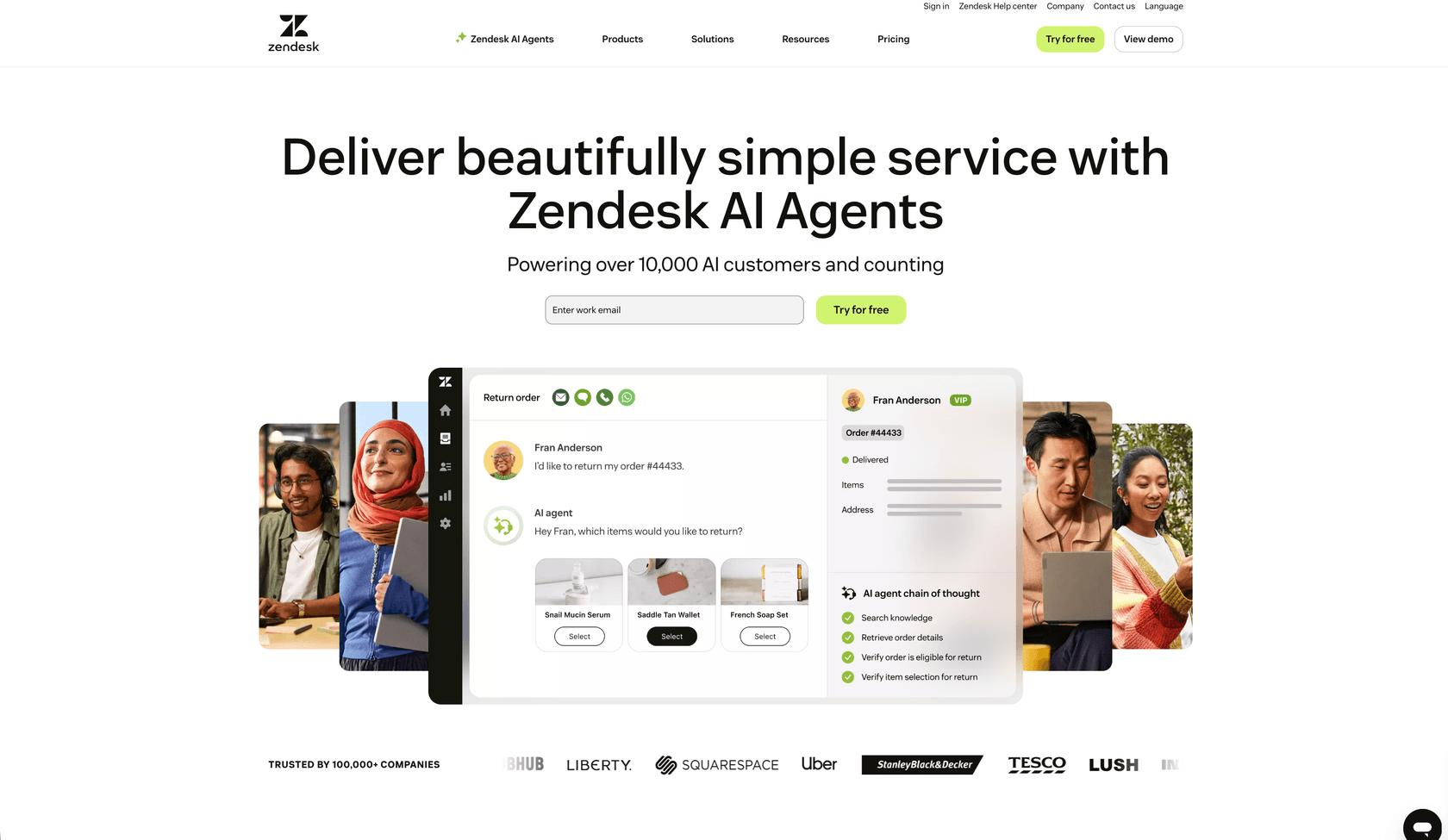
Zendesk AI agents can automate 80%+ of customer interactions across any channel. The company claims its "Resolution Learning Loop" continually improves automation rates by connecting AI, human agents, and knowledge on one platform.
Omnichannel support
The platform brings together conversations from email, voice, chat, social media, and messaging apps into a single workspace. This matters because 70% of customers expect anyone they interact with to have full context of their issue. With omnichannel support, agents don't ask customers to repeat themselves when switching channels.
Self-service options
Zendesk's help center lets customers find answers without contacting support. The platform also includes standard bots for common questions.
Analytics and reporting
Prebuilt dashboards help teams spot coaching opportunities, identify knowledge gaps, and benchmark performance against peers. The idea is to turn support data into actionable insights.
Integration ecosystem
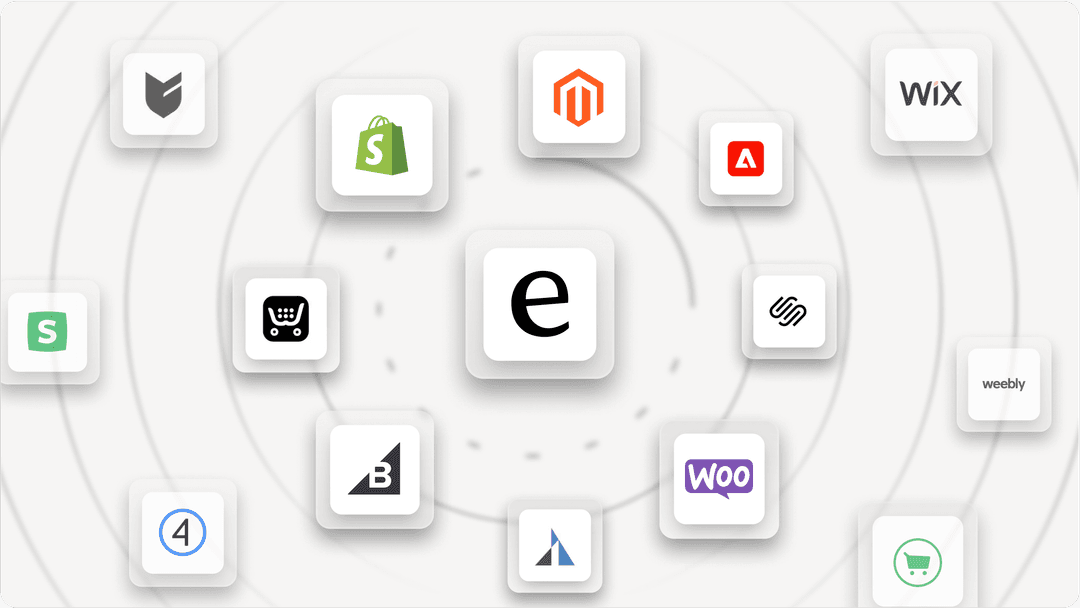
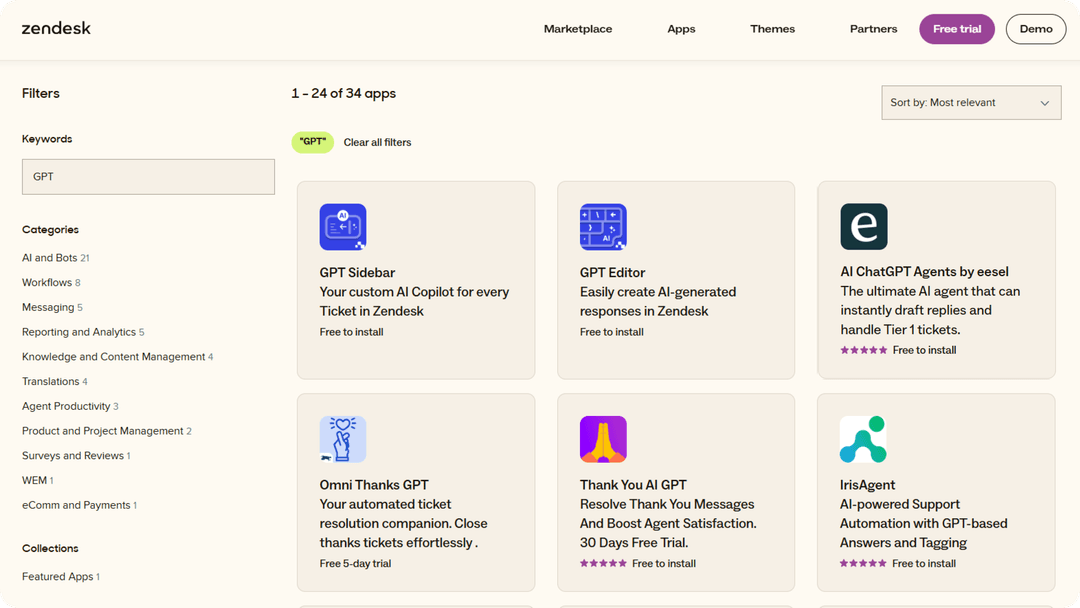
The Zendesk Marketplace offers 1,000+ integrations with tools like Shopify, Slack, Salesforce, and Pipedrive. This matters if you're running a tech stack that needs to stay connected.
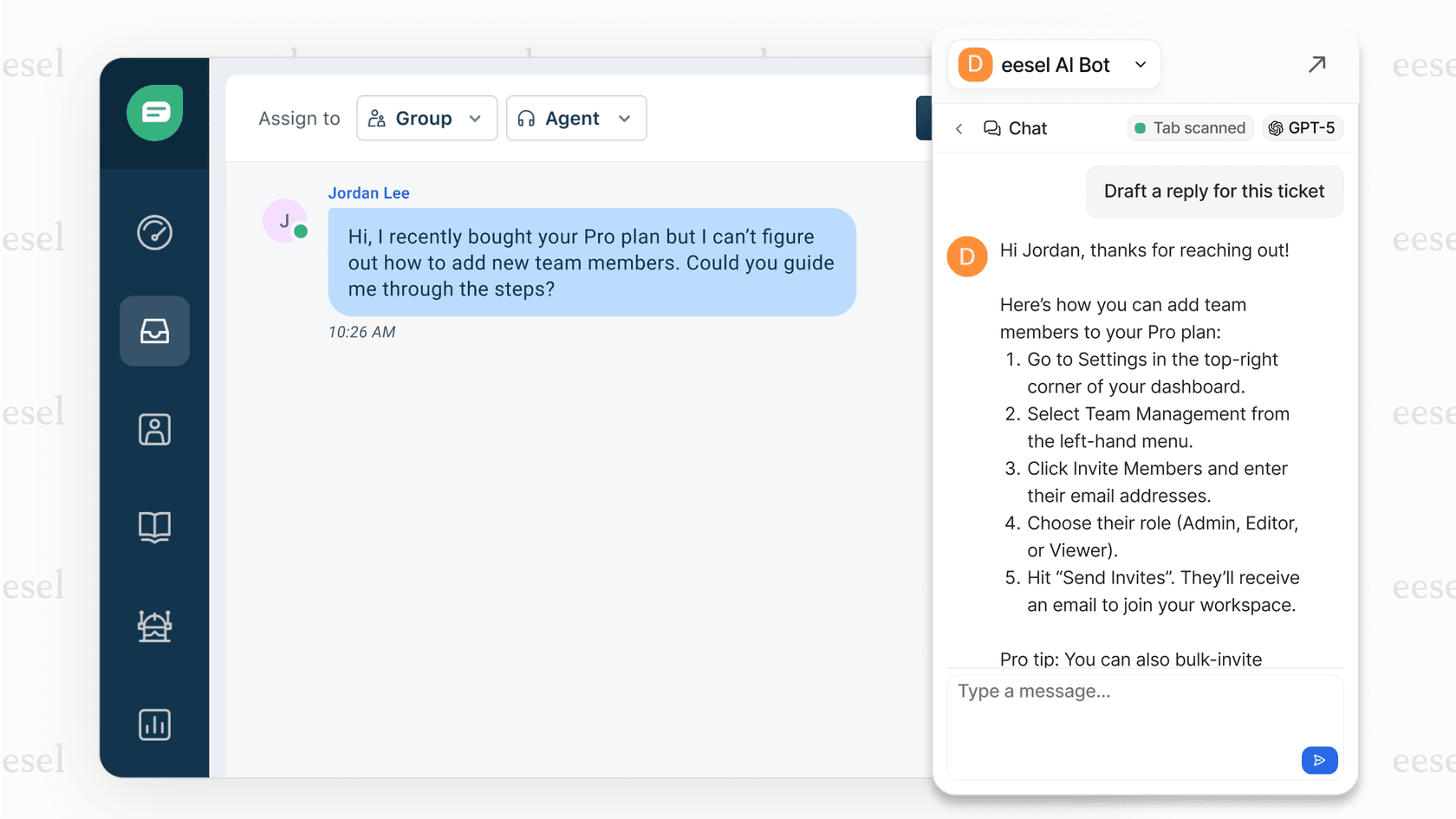
For teams already using Zendesk, eesel AI integrates directly to add AI capabilities that learn from your existing tickets and help center content.
Zendesk CX trends 2026: What the data shows
Zendesk publishes an annual CX Trends report based on surveys of consumers and business leaders. Here are the key findings for 2026:
| Trend | Statistic | Implication |
|---|---|---|
| Memory-rich AI | 83% of CX leaders say memory-rich AI agents are key to personalization | AI needs context from past interactions |
| Instant expectations | 74% of consumers expect 24/7 service due to AI | Availability is now table stakes |
| First-contact resolution | 85% of CX leaders say customers will drop brands over unresolved issues on first contact | Getting it right the first time matters more than ever |
| Multimodal support | 82% of CX leaders say ignoring multimodal will leave them behind | Customers want text, images, and video in the same thread |
| AI transparency | 95% of consumers expect explanations from AI-made decisions | Trust requires visibility into how AI decides |
The report also found that 52% of customers will switch to a competitor after just one bad experience. At the same time, 75% are willing to spend more with companies that provide good CX. The stakes are high, and the margin for error is slim.
For more on how AI is reshaping support, see our guide to AI customer service tools.
Zendesk pricing and plans
Zendesk uses a per-agent pricing model with both monthly and annual billing options.
Zendesk for Service (Support-only)
| Plan | Monthly Price | Annual Price | Key Features |
|---|---|---|---|
| Support Team | $19/agent | $19/agent | Email and social channels, basic ticketing, knowledge base |
| Support Growth | $55/agent | $49/agent | Multiple ticket forms, light agents, custom roles, CSAT surveys |
| Support Professional | $115/agent | $99/agent | Custom workflows, advanced analytics, SLA management |
| Support Enterprise | Custom | Custom | Advanced AI, sandbox, unlimited light agents |
Zendesk Suite (Omnichannel)
| Plan | Monthly Price | Annual Price | Key Features |
|---|---|---|---|
| Suite Team | $55/agent | $49/agent | Messaging, email, voice, help center, basic AI |
| Suite Growth | $89/agent | $79/agent | Multiple help centers, custom integrations, multilingual support |
| Suite Professional | $115/agent | $99/agent | Advanced AI, custom analytics, workforce management |
| Suite Enterprise | Custom | Custom | AI agents, advanced security, dedicated support |
The pricing model means costs scale directly with team size. A team of 20 agents on Suite Professional would pay $1,980 per month annually. For larger teams, those per-agent costs add up quickly.
Advanced AI features and AI agents are only available on Professional and Enterprise plans, so factor that into your evaluation if automation is a priority.
A modern alternative: AI teammates for CX
Zendesk represents the traditional approach to customer service software: configure the tool, set up workflows, and train your team to use it. But there's a different model that's gaining traction.
At eesel AI, we think about CX differently. Instead of configuring a tool, you hire an AI teammate.
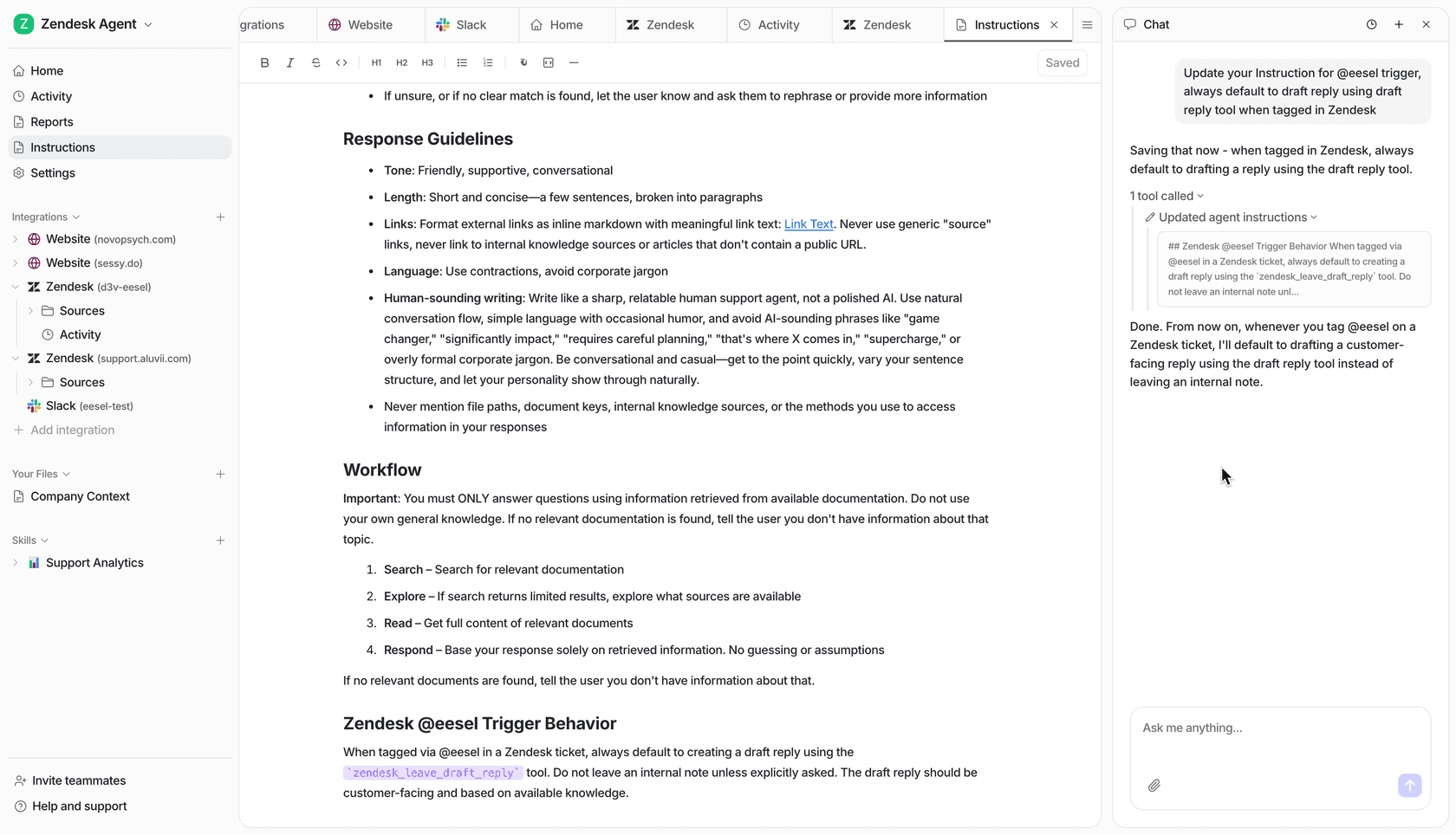
Here's how the teammate model works:
Onboarding in minutes, not weeks. Connect eesel to your help desk and it immediately learns from your past tickets, help center articles, and macros. No manual training or documentation uploads required.
Start with guidance. Like any new hire, eesel begins with oversight. Draft replies for agent review, limit to specific ticket types, or set business hours when eesel can respond. You verify understanding before expanding scope.
Level up to autonomous. As eesel proves itself, you expand its role. Eventually, it can handle full frontline support 24/7, escalating only the edge cases you define.
Plain-English control. Define what eesel handles and when it escalates in natural language: "If the refund request is over 30 days, politely decline and offer store credit." No code or rigid decision trees.
Pre-go-live testing. Run simulations on thousands of past tickets before going live. See exactly how eesel would respond, measure resolution rates, and gain confidence before customers see it.
Our AI Agent handles frontline support autonomously. AI Copilot drafts replies for human agents to review. AI Triage keeps your queue clean by auto-tagging, routing, and closing tickets.
Pricing starts at $299 per month for up to 1,000 AI interactions, with no per-agent fees. You pay for what you use, not for seats.
Choosing the right CX approach for your team
So which path makes sense for your situation?
Zendesk CX works well if:
- You need a proven, established platform with extensive integrations
- You have a dedicated admin to configure and maintain the system
- Your team is already trained on Zendesk workflows
- You want omnichannel support with deep customization options
An AI teammate approach fits better if:
- You want AI handling tickets without complex configuration
- You prefer to start small and expand based on performance
- You need plain-English control over escalation rules
- You want to test thoroughly before going live
For a detailed comparison of help desk options, see our Freshdesk vs Zendesk analysis.
Improving your customer experience in 2026
Regardless of which platform you choose, some principles hold true for improving CX this year:
Understand your gaps first. Before investing in new tools, audit where your current experience falls short. Are response times the issue? Resolution quality? Channel coverage?
Invest in AI where it augments humans. The best implementations use AI to handle routine issues while freeing human agents for complex, empathy-required situations.
Prioritize speed and personalization. 72% of customers want immediate service, and 88% of online shoppers are more likely to continue with retailers that personalize experiences.
Test before you scale. Whether it's a new AI agent or a workflow change, validate with real data before rolling out to all customers.
If you're looking to explore AI-powered support, our guide to getting started walks through the key considerations.


Frequently Asked Questions
Share this article

Article by
Stevia Putri
Stevia Putri is a marketing generalist at eesel AI, where she helps turn powerful AI tools into stories that resonate. She’s driven by curiosity, clarity, and the human side of technology.