Writesonic vs Scalenut: Which AI writer should you choose?

Amogh Sarda

Katelin Teen
Last edited January 18, 2026
Trying to keep up with content demands can feel like a losing battle. You need to publish great stuff all the time, but time and budget are always tight. It often feels like a trade-off between quality, quantity, and your team's sanity.
AI content platforms can help, and two names you'll hear a lot are Writesonic and Scalenut. They both promise to speed up content creation, but they take very different paths. One is a generalist for all sorts of marketing copy, while the other is a dedicated SEO powerhouse.
So, how do you figure out which one is the right fit for you? That's what this guide is for. We're going to break down Writesonic vs Scalenut, feature by feature, so you can see which one actually fits your workflow. We’ll look at what they do well, where they miss the mark, and how their pricing compares.
And while these platforms give you a solid set of writing tools, it’s worth keeping in mind that there's another way to approach this. Instead of a box of tools, you could have a system that generates a complete, publish-ready blog post from just a single keyword, saving you a ton of manual steps. But we'll get to that in a bit.
What is Writesonic?
Think of Writesonic as a massive creative toolbox for marketers. It’s an all-in-one AI writer built to handle just about any type of content you need. Whether it's a catchy social media post, a compelling Google Ad, a new landing page headline, or even a full blog post, Writesonic has a template ready to go.
Its biggest advantage is its versatility. The platform is built around a huge library of templates, so you can jump in and generate specific copy in minutes. On top of that, it has a few other useful features. There's Chatsonic, a ChatGPT-like assistant for conversational questions and research, and Photosonic, an AI art generator for creating custom images.
This broad approach makes Writesonic a popular for marketing agencies, e-commerce stores, and solo creators who need to produce a wide variety of content. If your day involves jumping between writing emails, product descriptions, and articles, Writesonic is designed to handle that kind of pace.
Writesonic sat in the middle (7.8), solid for ecommerce and quick drafts but needed a lot of manual editing in B2B use.

What is Scalenut?
Scalenut, however, is a content marketing platform that puts SEO first and foremost. While it uses AI to write, its main purpose is to help you create long-form content that’s engineered to rank on search engines. It’s less about general writing and more about a strategic, data-backed approach to content.
The features really show this focus. Scalenut’s main attraction is "Cruise Mode," a guided workflow that takes you from a target keyword to a fully optimized blog post. It helps with research, building an outline based on top search results, and writing the content. It also has powerful tools for content strategy, like a keyword clustering feature that helps you plan entire topic hubs to build authority. Its content editor gives you a real-time optimization score, suggesting NLP terms and other tweaks to help you outrank the competition.
This makes Scalenut the preferred tool for SEO specialists, content strategists, and businesses that are serious about organic growth. If your main goal is to climb the search rankings with well-researched, optimized articles, Scalenut is built for exactly that.
The tools are fine but will the content generated by these tools manage to rank on search engines? That's a different story.
Feature comparison: Writesonic vs Scalenut
Core writing and content creation
Writesonic uses a template-based system that’s great for getting specific copy done quickly. If you need five versions of a Facebook ad or a dozen product descriptions, you just pick a template, fill in some details, and get your results in seconds. Its long-form article editor is solid, but it’s more of a blank slate. It provides AI-assisted tools, but the structure and flow are mostly up to you. It's flexible, which is a plus, but it doesn't offer as much guidance as Scalenut.
SEO and content planning tools
Writesonic offers some basic SEO tools. You can do some simple keyword research, and its article editor will give you some on-page optimization tips. It's useful for covering the basics, but it doesn't go much deeper. It’s not really meant to be a full-fledged SEO strategy tool.
Scalenut is the place to go for advanced SEO features. Its topic cluster generator is a huge help for content strategy, allowing you to map out pillar pages and cluster content to build topical authority. The AI-powered content briefs it generates are incredibly detailed, pulling insights from the top-ranking pages for your keyword. In the editor, it doesn't just check for keywords; it suggests NLP (Natural Language Processing) terms to help you cover the topic more thoroughly, which is a big factor for search engines these days.
User interface and ease of use
Writesonic has a clean, simple interface organized around its templates. It’s very easy to find your way around. You find the content type you need, click it, and start creating. There’s almost no learning curve, which is ideal for teams that need to get going quickly or for individuals who just want to get a task done without any hassle.
Scalenut feels more like a project management tool for content. The interface is packed with data, with sidebars full of SEO recommendations, competitor info, and content scores. For an SEO professional, this is fantastic, all the information you need is right there. For a beginner or someone who just wants to write a quick email, it might feel a bit much. The learning curve is steeper, but the reward is a more powerful, data-driven workflow.
Pricing breakdown
Both platforms offer tiered subscription plans that scale based on things like word count, user seats, and access to more advanced features. Here’s a look at how they set up their pricing.
Writesonic's pricing model
Writesonic’s plans are made for flexibility, serving everyone from freelancers to large companies.
- Free Trial: Gives you a limited number of words to try out the platform.
- Pro: Aimed at individuals and small teams, this plan usually includes a good monthly word count, access to all templates, and features like a browser extension and Zapier integration. Pricing often changes based on the number of users.
- Business: Designed for larger teams and agencies, this tier offers more words, more user seats, and advanced features like an article rewriter and bulk processing.
- Enterprise: A custom plan for large organizations that need API access, custom branding, and dedicated support.
One thing to note is that Writesonic often ties its word counts to "quality" levels (like Premium vs. Superior), where higher-quality output uses up more of your credits.
Scalenut's pricing model
Scalenut bases its pricing on content volume and the depth of its SEO features.
- Essential: This entry-level plan is for individuals and gives you a fair number of AI word credits and a limited number of SEO article reports each month.
- Growth: For growing content teams, this plan bumps up the word credits and SEO reports and unlocks features like Cruise Mode and the ability to audit existing pages.
- Pro: For larger teams and agencies, this tier provides a very high volume of word credits and SEO reports, along with extra features like keyword clustering and more user seats.
Scalenut’s value is directly linked to its SEO toolkit, so the higher-priced plans unlock more of those powerful, strategy-focused features.
Key differences and limitations
When it comes down to it, the choice is about a core trade-off. Writesonic is the versatile "Swiss Army knife" that can handle almost any type of marketing copy. Scalenut is the specialized, high-powered tool built specifically for SEO-driven content strategy.
But here’s something important to remember about both platforms: they give you a text draft. That's it. You still have to do the heavy lifting. You're the one manually researching stats, finding or creating images, digging up quotes for social proof, and spending a ton of time editing the text to make it sound like a human wrote it. That workflow gap can eat up a surprising amount of your time.
An alternative to consider: eesel AI blog writer
If all that manual work after getting the first draft is your main bottleneck, there’s another way to look at it. The eesel AI blog writer was built to solve that exact problem. It’s not a toolkit for drafting text; it’s a tool that generates a complete, SEO-optimized blog post that’s pretty much ready to publish right away.
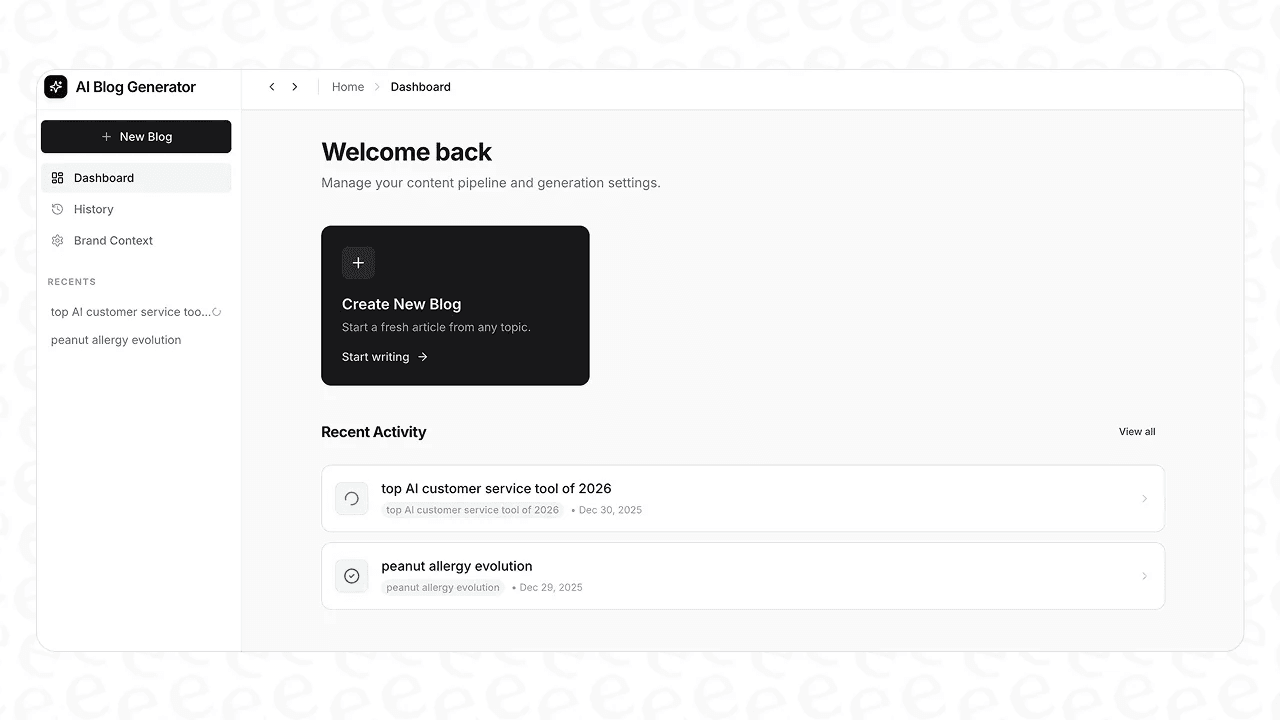
Here’s what makes it different and helps it get past the limitations of other tools:
- Automatic Assets: It doesn't just write text. The eesel AI blog writer includes AI-generated images, infographics, and tables directly in the post, saving you hours of searching for or creating your own visuals.
- Built-in Social Proof: To make the content more credible, it automatically finds and embeds relevant YouTube videos and real quotes from Reddit discussions. This adds a layer of authenticity that pure AI text can't match.
- AEO Optimization: In 2026, ranking isn't just about old-school SEO. The content is uniquely optimized for AI Answer Engines (like Google AI Overviews and Perplexity), which is essential for modern visibility.
- Context-Aware Research: The tool understands the kind of blog you’re creating. If it’s a comparison post, it will automatically look for pricing data. If it’s a product review, it will pull in technical specs. This reduces your manual research time.
The best part is that it's completely free to try. You can generate your first blog and see for yourself what a truly publish-ready article looks like. From there, the pricing is simple: $99 gets you 50 complete blog posts.
For a more hands-on look at how these two platforms operate, seeing them in action can be helpful. The video below provides a direct comparison of their features and shows the kind of blog posts each tool produces, which can help clarify which workflow might be a better fit for you.
Which tool is right for you?
So, which AI writer should you choose? It all comes back to your main goal. There’s no single "best" tool, just the right tool for the job.
| Tool | Best for |
|---|---|
| Writesonic | Marketers needing a versatile toolkit for all types of copy. |
| Scalenut | SEO teams needing a robust platform for content strategy and research. |
| eesel AI blog writer | Teams wanting to scale blog content efficiently with publish-ready articles. |
Here’s the final takeaway:
Choose Writesonic if you need an all-purpose writer that can quickly generate everything from ads to emails to social posts.
Choose Scalenut if your world revolves around SEO and you need deep control over content strategy, research, and optimization for long-form articles.
And if your main goal is to go from a keyword to a complete, high-quality, and fully-illustrated blog post as fast as possible, then give the eesel AI blog writer a try.

Frequently Asked Questions
Share this article

Article by
Amogh Sarda
CEO of eesel AI. Amogh Sarda is obsessed with making the ultimate AI for customer service teams. He lives in Sydney, Australia and has previously worked at Atlassian and Intercom. Outside of work he’s usually surfing or on stage doing improv.