Writesonic vs Article Forge: Which AI content writer is right for you?

Stevia Putri
Last edited January 22, 2026
Trying to scale up your content can feel like you're on a treadmill that just won't slow down. You know you need quality blog posts to rank, but creating them consistently is a huge drain on time and resources. This is where AI writers have really stepped in to help marketers and SEO teams. They promise to speed things up, but with so many options, which one is actually right for you?
This post is a straight-up comparison between two popular tools: Writesonic and Article Forge. We're going to look at what they do, how they're different, and who they're really for. It's also worth mentioning that the technology is evolving. While these tools are great for generating text, other platforms like the eesel AI blog writer are now automating the entire process, giving you complete, publish-ready posts with images and all. Let's get into it.
What is Writesonic?
Think of Writesonic as more than just a writer; it’s a complete content marketing and search optimization platform. Its main focus is on what it calls Generative Engine Optimization (GEO), which is a way of saying it helps you get found in AI search engines like ChatGPT, Gemini, and Perplexity, not just on Google.
The goal here isn't just to churn out articles. It's to give brands a toolkit to track and improve their visibility wherever people are looking for answers. It’s loaded with features designed for a modern SEO workflow.
Here’s a quick rundown of what it offers:
- AI Visibility Tracking: This feature monitors how visible your brand is on over 10 AI platforms, keeping an eye on things like brand sentiment and where you’re being cited.
- AI Article Writer 6.0: This is their main writing tool. It creates fact-checked, SEO-friendly articles by pulling in real-time data and checking out what your competitors are up to.
- SEO Site Audits: It can scan your website for technical issues and then use AI to suggest how to fix them.
- SEO AI Agent: This is an intelligent system that helps automate the tedious parts of SEO, like analyzing search results, researching the competition, and running technical audits.
Best for: Marketing teams and SEO professionals who want a single platform to handle everything from content creation and traditional SEO to making sure they appear in the new wave of AI search.
What is Article Forge?
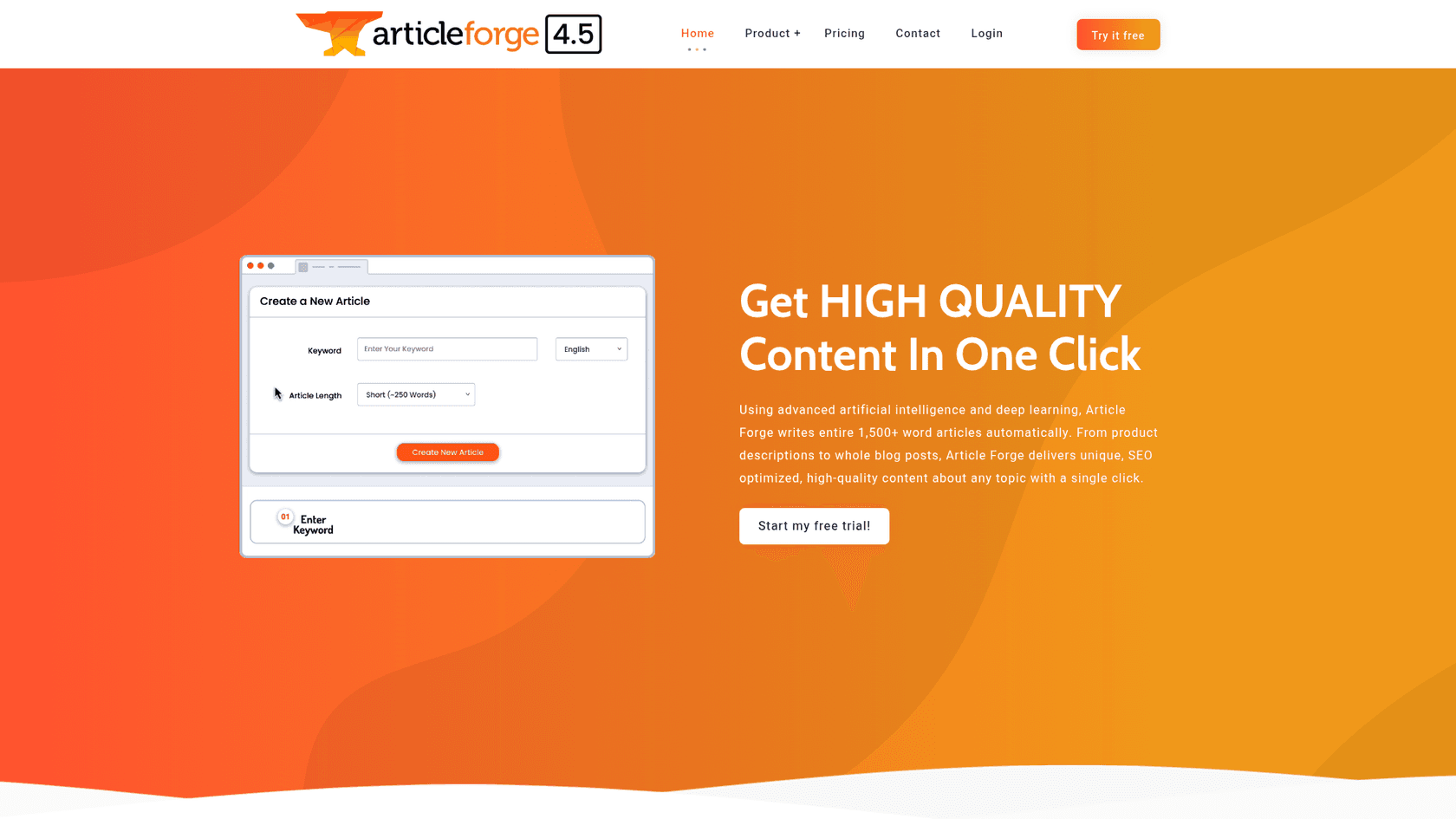
Article Forge has a much more focused mission: it aims to be the first truly automatic AI article writer. You give it a keyword, and it delivers a unique, long-form article (over 1,500 words) in about a minute. That’s it.
Its entire appeal is built on speed and hands-off automation. With over a decade of AI research behind it, the goal is to handle the research, planning, and writing for you, cutting down the time and money you'd typically spend. It uses deep learning models, similar to what Google uses, to create content that is topically rich, designed to rank, and passes plagiarism checkers like Copyscape.
Best for: Anyone who needs to generate a large volume of first drafts quickly. If you manage multiple affiliate sites or blogs and just need to get content published fast, Article Forge is made for you.
A feature-by-feature look at Writesonic vs Article Forge
Both tools use AI to write content, but they approach it from completely different angles. Writesonic is the comprehensive suite with all the bells and whistles, while Article Forge is the specialized, high-speed machine. Let's break down their strengths and differences.
Content generation and quality
When it comes to the actual words on the page, the two platforms have different approaches.
-
Writesonic: Writesonic provides a toolbox with over 100 different AI writing templates for almost any format you can imagine. Its main tool, the AI Article Writer 6.0, focuses on quality and accuracy. It uses real-time data and competitor analysis to create factual content with citations, aiming for articles that fit into a serious SEO and GEO strategy. It can even generate articles up to 5,000 words long.
-
Article Forge: Article Forge does one thing, and it does it very well: it generates full-length articles from a single keyword. It can even write about current events by researching topics as they happen. The main goal is speed and uniqueness. However, while it produces a decent first draft, many users find the output benefits from manual editing to be ready for publication. The initial draft may not include elements like H3 subheadings or bullet points, and the grammar and flow might need polishing.
Having a reliable essay generator can be a game changer, especially for brainstorming and structuring ideas. Just remember to use them as tools for guidance and still personalize your work to make it truly your own

SEO and optimization capabilities
Both tools are built with SEO in mind, but they tackle it from different directions.
-
Writesonic: This is where Writesonic offers a more comprehensive feature set. It focuses on both traditional SEO and GEO. It pulls data from Ahrefs and Google Keyword Planner and even includes an SEO AI Agent to help automate technical fixes. The GEO features are its standout advantage, letting you track how your brand appears in AI-generated answers, monitor sentiment, and find gaps where competitors are getting mentioned but you aren't.
-
Article Forge: Article Forge’s SEO strategy is integrated directly into its writing process. It uses its deep learning models to create content that’s relevant and topically rich, which is a core part of ranking well. However, it lacks the advanced suite of tracking, auditing, and technical SEO tools that come with Writesonic. Its integrations with tools like GSA Search Engine Ranker and SEnuke TNG suggest a stronger focus on automated, high-volume workflows like link-building.
A look at integrations and workflow
How these tools fit into your daily work is another key point of comparison.
-
Writesonic: Writesonic integrates well with other tools. It offers a wide range of connections with key marketing platforms like WordPress (for one-click publishing), Zapier, and Semrush. This makes it easy to plug into your existing content workflow. The process usually involves selecting a tool from its library, providing detailed instructions, and generating content for a specific purpose, whether it's a blog post, ad copy, or a landing page.
-
Article Forge: Article Forge is all about automation. It has a powerful API and a native WordPress integration that lets you schedule and post content automatically. This is ideal if you're trying to publish a large volume of content without manual oversight. The workflow is incredibly simple: you enter a keyword, adjust a few basic settings (like adding an image or video), and click generate. It’s built for pure speed.
Pricing comparison: Writesonic vs Article Forge
Let's talk about cost. The pricing for these two platforms is quite different, which makes sense given their distinct features. Here’s how they compare.
| Feature | Writesonic | Article Forge |
|---|---|---|
| Pricing Model | Tiered plans based on features and generation limits | Sliding scale based on word count |
| Starting Price (Annual) | Lite Plan: $39/month for 15 articles/mo | Standard Plan: $13/month for 25,000 words/mo |
| Free Tier | Free trial with 10,000 premium words | 5-day free trial |
| Primary Focus | All-in-one SEO/GEO platform with a suite of tools | Bulk long-form article generation |
A different approach: The eesel AI blog writer
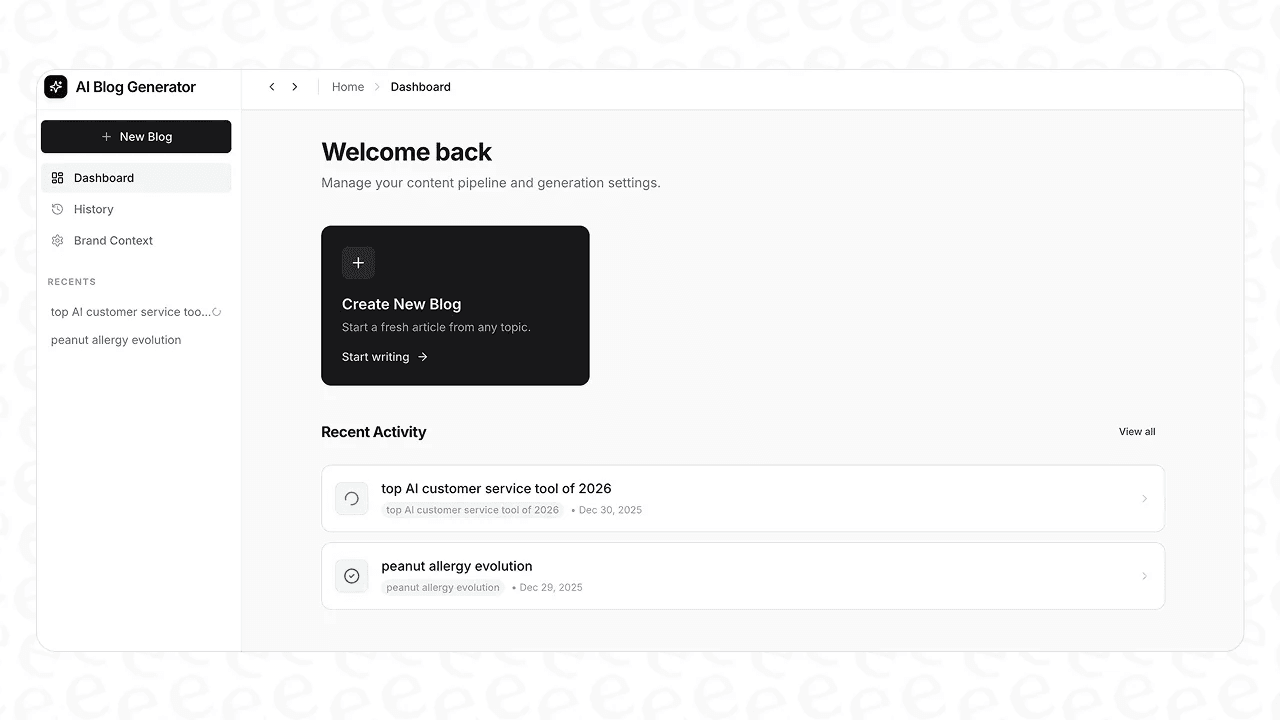
This approach is all about closing the gap between an AI-generated draft and a polished, final article. In fact, we used this exact tool to grow our own daily impressions from 700 to over 750,000 in just three months.
Here’s what makes it different and saves you a ton of time:
- Automatic asset creation: It doesn’t just give you text. It generates and embeds relevant images, custom infographics, and data tables right into the post.
- Context-aware research: If you give it a topic like "best CRM for startups," it knows to automatically research and include important details like pricing and user reviews.
- Built-in social proof: The tool automatically finds and integrates real Reddit quotes and relevant YouTube videos to add authority and a human touch to your content.
- Answer Engine Optimization (AEO): The content is structured with clear, concise answers designed to get you featured in AI answer engines like Google AI Overviews and Perplexity, not just ranked in traditional search results.
It's completely free to try, so you can generate a full post and see the difference for yourself.
Writesonic vs Article Forge: Which AI writer should you choose?
Choose Writesonic if: You need a powerful, all-in-one platform to manage your entire content and search strategy. It’s the perfect choice for teams who want to optimize for both traditional Google rankings (SEO) and stay ahead of the curve with visibility in new AI search engines (GEO).
Choose Article Forge if: Your number one priority is generating a high volume of unique, long-form article drafts as quickly and automatically as possible. If you already have a solid editing and formatting process in place, it’s an incredibly efficient way to fuel your content machine.
However, if your goal is to go from a single keyword to a fully-formed, media-rich blog post that’s ready to hit "publish," you should try the eesel AI blog writer for free. It’s built to handle the entire content creation process for you, from the initial research and writing all the way to adding visuals and social proof.

Frequently Asked Questions
Share this article

Article by
Stevia Putri
Stevia Putri is a marketing generalist at eesel AI, where she helps turn powerful AI tools into stories that resonate. She’s driven by curiosity, clarity, and the human side of technology.