A practical guide to thought leadership blog writing

Katelin Teen
Katelin Teen
Last edited January 20, 2026
Let's face it, in the sea of online content, just being an expert doesn't cut it anymore. You need to be the lighthouse, the voice that people actually listen to.
But here's the rub: many experts are great at what they do, but not so great at getting those brilliant ideas out of their heads and onto the page. Writing is hard work, and it's slow. So, those game-changing insights often stay locked away.
In this guide, we'll break down what thought leadership actually means, what goes into it, and how you can build a strategy that works.
What is thought leadership content really?
So, what's all this buzz about "thought leadership"? Simply put, it’s about sharing your unique ideas and perspectives to become a go-to voice in your field. It’s less about your product and more about what you know.
Think of it like this: all thought leadership is content marketing, but not all content marketing is thought leadership. In other words, thought leadership is a part of the overall content marketing engine.

Your aim is to shake things up a bit, offer solutions to real problems, and just be genuinely helpful. Get it right, and people will trust you. Get it wrong, and it can backfire. A study from Edelman and LinkedIn found that 38% of decision-makers actually thought less of a company after reading its low-quality content.
The core pillars of effective thought leadership blog writing
Authenticity and a unique point of view
Real thought leaders don't just rehash the same old points. They bring a fresh perspective, a strong opinion that actually adds to the discussion. You need to have a take. People want content that makes them think differently.
Sharing your own stories is a powerful way to do this. Look at Brené Brown, for example. She uses personal anecdotes, good and bad, to make her work deeply human and relatable. As Forbes Books points out, explaining how you tackled a problem makes the solution feel real and helps you connect with readers.
Deep research and credible data
A strong opinion is a great start, but you need to back it up with facts. It's not optional if you want people to take you seriously. A SurveyMonkey study found that a huge 82% of people prefer data-backed articles over pure opinion pieces.
Want to really stand out? Do your own research. When you publish your own surveys, case studies, or industry reports, you become the source. You're creating information that no one else has.
And it should go without saying, but always cite your sources. It's good practice and it boosts your own credibility. It makes sense that an Edelman and LinkedIn study found that 88% of execs see thought leadership as a major credibility booster.
A focus on the audience
This is a big one. Your main job is to help your audience. If your content feels like a sales pitch in disguise, you’ll lose them instantly.
Adopt a "give it away for free" mentality. Don't save your best insights for a rainy day. Share what you know freely. Adam Witty from Forbes Books puts it well: it's about "sharing and amplifying the expertise you already have" to genuinely help people. That's how you build a loyal following.
Consistency and community
A single great article is nice, but authority is built through consistency. Publishing regularly shows your audience they can count on you for fresh insights.
And don't forget, this is a two-way street. Encourage comments, ask questions, and actually talk to people on your blog and social media. That's how you turn readers into a real community of advocates.
How to scale your thought leadership content without losing quality
Let's be real, the biggest hurdle for most experts is time. A single, well-researched article can take days to create. It's hard to be consistent when the process is such a grind.
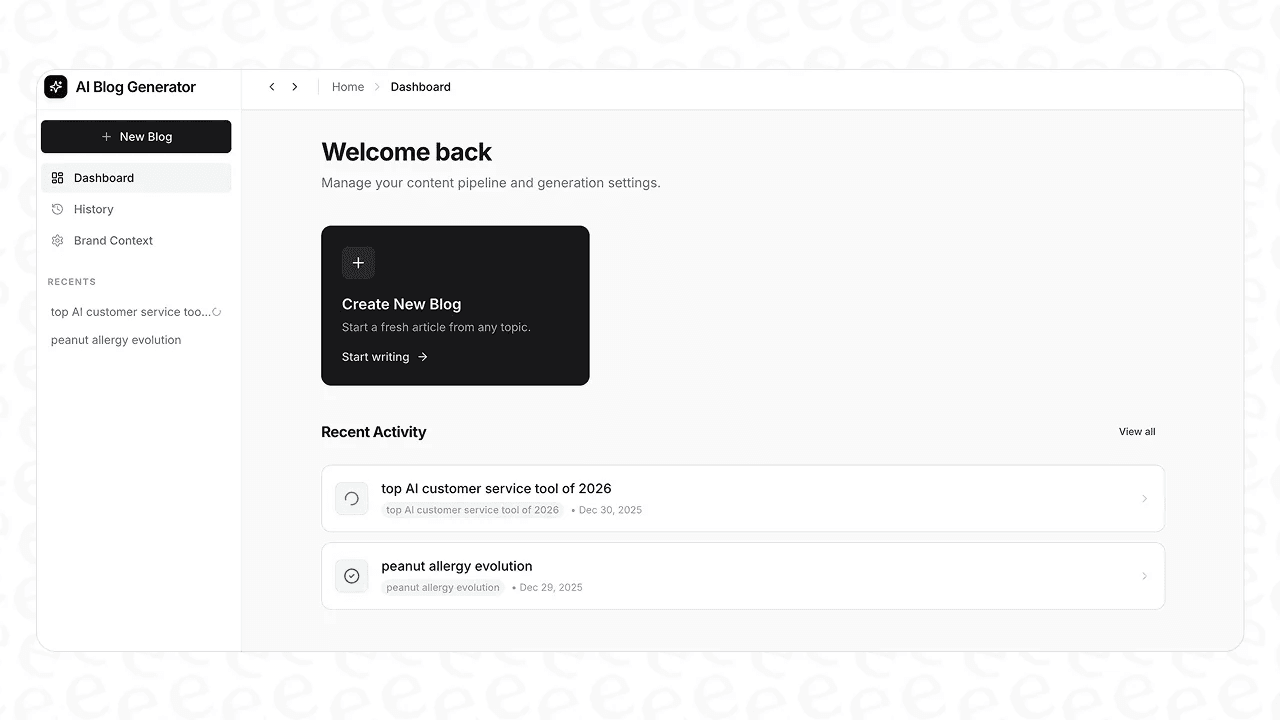
This is where AI can really help. AI content tools aren't meant to replace you; they're here to give you a boost. A good tool can do the grunt work: research, outlining, creating assets, so you can focus on the part that matters: your unique insights.
Using AI to streamline your writing process
You give it a topic, tell it your website so it gets your brand's vibe, and it whips up a complete, SEO-friendly post in minutes.
Here are a few features that are perfect for thought leaders:
- It does smart research: It doesn't just spit out generic text. It pulls in relevant details based on what you're writing about, like pricing for comparison posts or tech specs for reviews.
- It creates assets for you: It builds a complete post with AI images, infographics, and tables. This saves a ton of time and makes your content much more engaging.
- It adds real-world proof: It automatically finds and includes relevant YouTube videos and real Reddit quotes, which adds a nice touch of authenticity.
- It's built for modern search: The content isn't just for old-school SEO. It's also set up for Answer Engine Optimization (AEO), so it's ready for AI-powered search results like Google's AI Overviews.
Don't let a lack of time keep your best ideas on the shelf. You can try it out for free to see what a publish-ready post looks like.
For a deeper dive into what thought leadership is and how to craft compelling content, check out this video.
Common pitfalls to avoid
- Being too salesy: Seriously, just don't. The point is to teach and help, not to push a product. Keep the focus on your audience.
- Having nothing new to say: Try not to just repeat what's already out there. Good thought leadership offers a fresh take or a different solution.
- Being inconsistent: One viral hit doesn't make you an authority. You build a reputation by showing up regularly. (This is where a tool like the eesel AI blog writer can be a huge help).
- Sounding like a textbook: Keep it readable! Use a conversational tone, simple language, and personal stories to connect with people.
From expert to authority
At the end of the day, thought leadership is about commitment. It's about consistently sharing unique, helpful insights that are backed by real evidence and delivered with your own authentic voice.
It takes work to go from expert to authority, but today's tools make it easier than ever. The biggest challenge isn't a lack of ideas; it's finding the time to share them consistently.
The eesel AI blog writer can be a great partner on that journey. It's time to stop letting your best ideas gather dust and start sharing them with the world.

Frequently Asked Questions
Share this article

Article by
Katelin Teen
Katelin is an operations specialist at eesel where she uses her psychology training and education experience to optimize B2B SaaS processes. Outside of work, she unwinds with story-driven games, writing, and keeping up with latest tech innovations.
