
With AI-generated content popping up everywhere, we're all facing a new problem: how do you tell what's real without wrongly accusing human writers? It's a question that keeps teachers and content managers up at night.
The biggest issue? A lot of AI detectors just aren't very good. They have a bad habit of flagging human-written text, especially formal academic papers or anything written by a non-native English speaker. This is a massive problem, with students on forums like Reddit worrying about false accusations ruining their academic careers.
Hey Man, Im having this same problem and its for my colleeg essay, any tips?

This guide is here to help you sort through the options. We’ve tested the most popular software to detect AI writing to see which ones are accurate, which ones miss the mark, and which ones you can actually rely on.
And here’s an idea: instead of just reacting to AI text, what if you could create content that's so good and so human that you don't even have to worry about detection? We’ll get into that, which is exactly what tools like the eesel AI blog writer are built for.
What is software to detect AI writing and how does it work?
So, what do these tools actually do? They're designed to scan a piece of writing and estimate the probability that it was written by an AI like ChatGPT, Gemini, or Claude.
They don’t just take a wild guess. They're trained to look for specific patterns. For instance, tools like GPTZero look for a couple of key signals:
- Perplexity: This is just a technical term for how predictable the word choices are. Human writing is usually more varied and surprising, while AI can sometimes fall back on common, expected phrases.
- Burstiness: This is all about the rhythm of the sentences. Humans naturally mix short, punchy sentences with longer, more complex ones. AI-generated text can sometimes feel a bit flat and uniform.
How we tested the top software to detect AI writing
To keep things fair, we set up some basic rules and judged each tool on the same things. We wanted our recommendations to be based on what really counts.
- Accuracy: How well does it distinguish between 100% AI text and 100% human text? We looked at company claims and independent studies.
- Reliability: How often does it get it wrong? A tool that constantly flags human writing is a huge liability, especially for non-native English writers.
- Features: Does it offer more than a simple score? We looked for useful extras like sentence highlighting, plagiarism checkers, and helpful integrations.
- User Experience: Is it simple to use? Can you actually make sense of the results? A clean design and clear reports were essential.
Comparison of the top software to detect AI writing
If you're short on time, this table gives you a quick look at the tools we tested and how they compare.
| Tool | Primary Function | Best For | Accuracy Claim | Free Plan |
|---|---|---|---|---|
| eesel AI blog writer | AI Content Generation | Proactively creating human-quality content that ranks | N/A (Creates content) | Free to try |
| GPTZero | AI Content Detection | Educators needing detailed analysis and student feedback tools | 99% accuracy | 10,000 words/month |
| Copyleaks | AI & Plagiarism Detection | Professionals needing high accuracy and multilingual support | Over 99% accuracy | Up to 25,000 characters/scan |
| Originality.ai | AI & Plagiarism Detection | SEO agencies and publishers with a zero-AI policy | Most accurate in 3rd party studies | Paid only |
| Turnitin | AI & Plagiarism Detection | Educational institutions needing LMS integration | <1% false positive rate* | Institution-based only |
*For documents with over 20% AI writing.
The best software to detect AI writing
Okay, let's get into the specifics. Here’s our complete breakdown of each tool, what we liked, what we didn't, and who it’s best suited for.
1. eesel AI blog writer

- Pros: It doesn't just give you text; it builds a whole blog post with assets like AI-generated images and infographics. It even finds and embeds relevant YouTube videos and pulls real quotes from Reddit for social proof. This is the same tool we used to grow our organic traffic from 700 to 750,000 impressions a day in just three months.
- Cons: Its job is to create content, not check it. If you only need to analyze text from someone else, you'll need to use it alongside one of the other detectors on this list.
- Pricing:
- It's completely free to try.
- The Early Bird plan is just $99 for 50 blog generations.
- Our Verdict: This approach focuses on proactively creating high-quality content. If you want to scale up content that performs well, it helps you sidestep the detection game altogether.
2. GPTZero
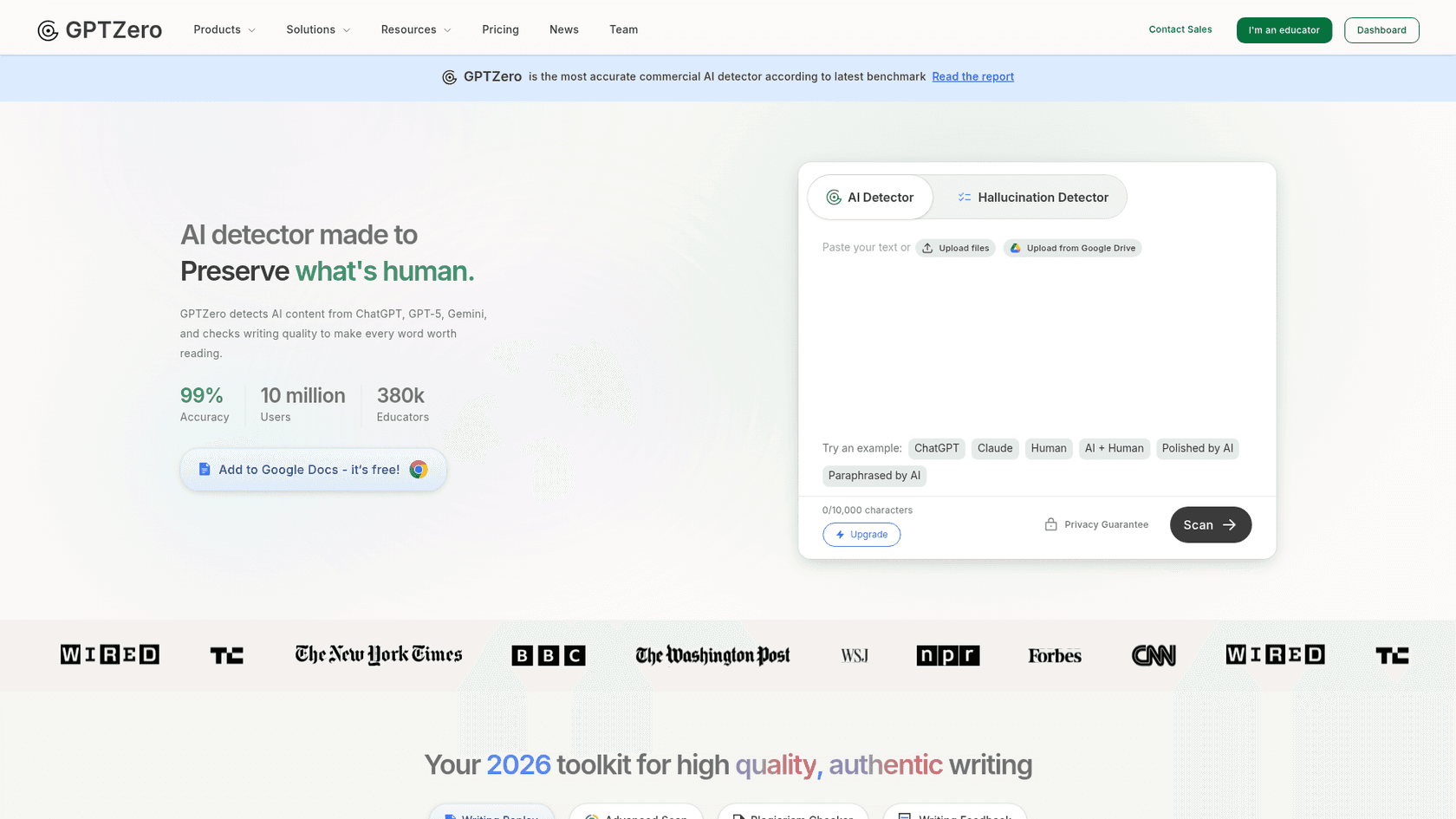
- Pros: It claims a 99% accuracy rate and has some really useful features, like a plagiarism checker and a "Writing Replay" that shows you how a document was put together. The company also claims it has tuned its model to be fairer to ESL writers, shooting for a low 1% false positive rate for that group.
- Cons: Some users have reported false positives. You can find reports online of it flagging 100% human work, which can be a concern for students who wrote every word themselves.
- Pricing:
- Free: You can check up to 10,000 words per month.
- Premium: Plans start at $9.99/month (billed annually) for 300,000 words.
- Our Verdict: It’s a useful tool for educators who need a place to start a conversation about AI. But because of the false positive risk, its results should be treated as a guide, not a final judgment.
3. Copyleaks
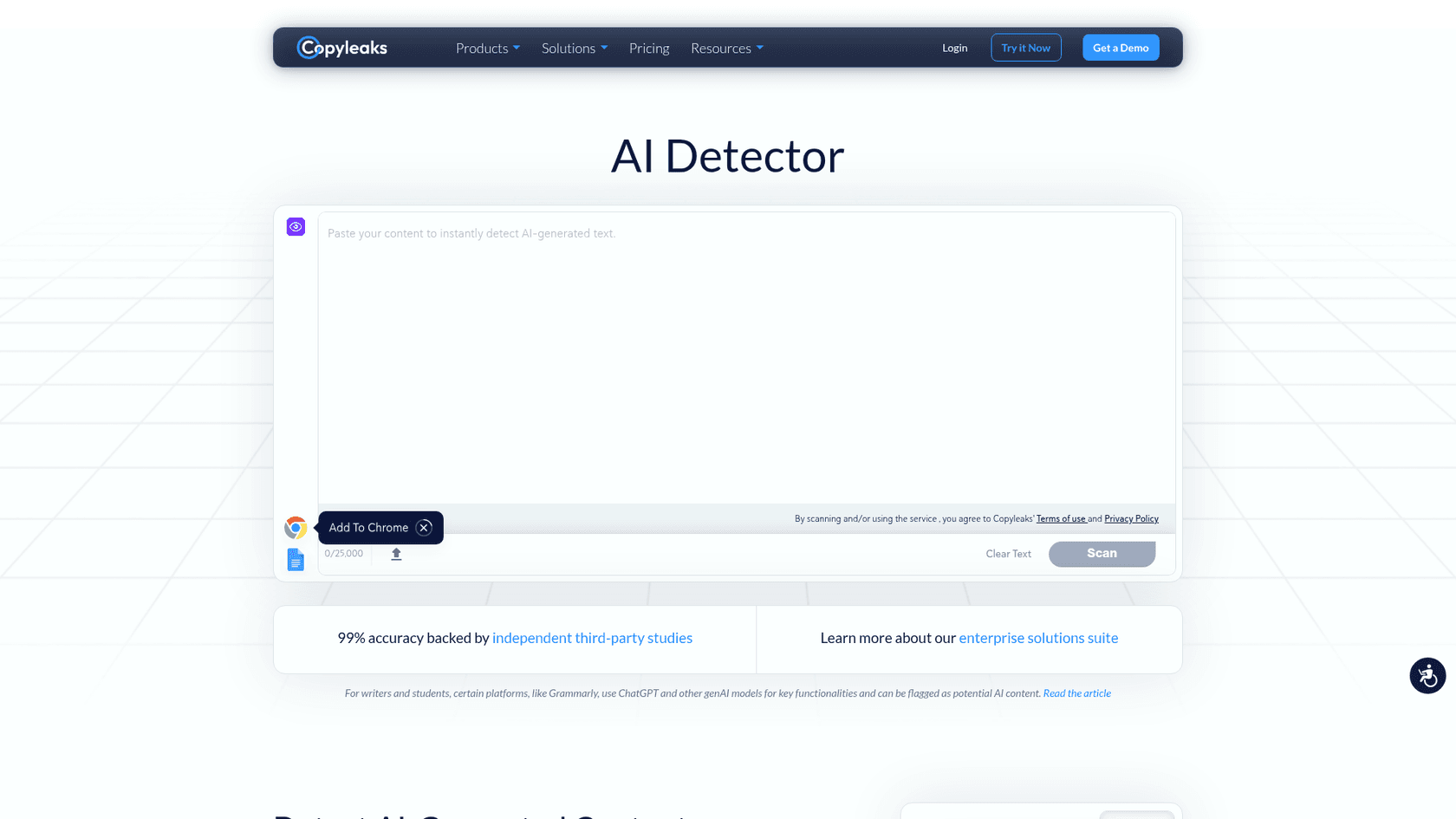
- Pros: Accuracy is its main strength. It claims an accuracy rate of over 99% with an industry-low 0.03% false positive rate. A study it conducted also found a 99.84% accuracy rate on texts from non-native English writers, making it one of the most reliable and fair options available.
- Cons: The interface feels a bit corporate and isn't as intuitive as some others. Many of the best features are also locked behind paid plans.
- Pricing:
- Free: You can run scans of up to 25,000 characters on the website.
- Personal: Starts at $16.99/month for 100 credits (which is about 25,000 words).
- Our Verdict: For businesses, publishers, or anyone who can't afford to be wrong, Copyleaks is one of the most trustworthy detectors out there. Its low false positive rate makes it a reliable option for users concerned about accuracy.
4. Originality.ai
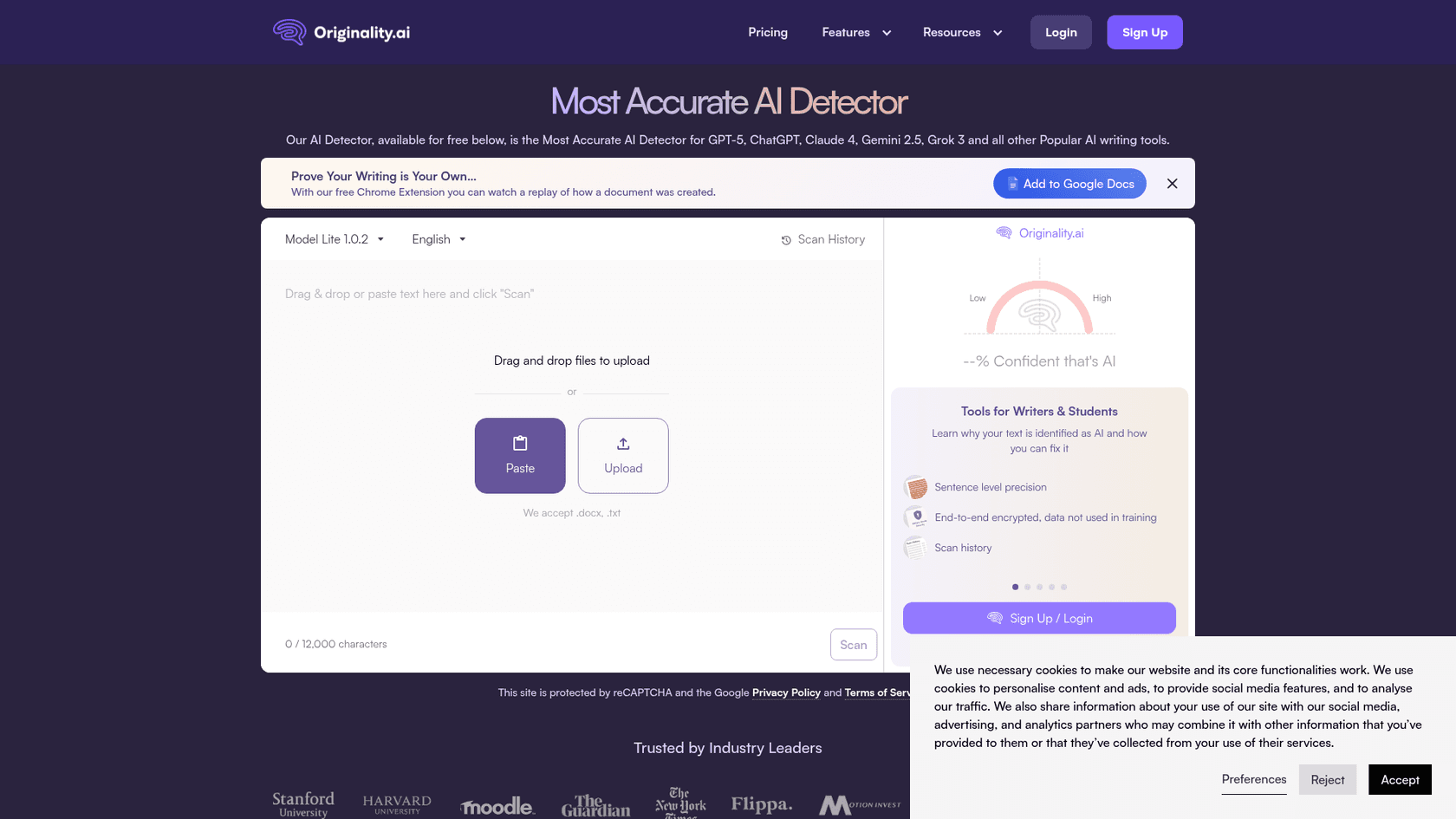
- Pros: It has consistently been ranked as one of the most accurate detectors in several third-party studies. It also gives you different detection models, like a "Lite" version with a low 0.5% false positive rate for teams that are okay with a bit of AI assistance.
- Cons: Its default "Turbo" model has a 1.5% false positive rate, which is higher than some competitors and makes it more likely to flag human writing. There's also no free plan.
- Pricing:
- Pay-as-you-go: $30 gets you 3,000 credits (1 credit scans 100 words).
- Pro Subscription: Starts at $14.95/month for 2,000 credits.
- Our Verdict: It's a powerful tool for agencies with a strict no-AI policy, but you'll definitely want a human to double-check its findings. Using the "Lite" model can help reduce the risk of false positives.
5. Turnitin
You’ve probably heard of Turnitin. It's the big one in the academic world, built right into the learning management systems (LMS) at thousands of universities. Its AI detector is a natural add-on to its well-known plagiarism checker.
- Pros: For teachers, it's incredibly convenient since it’s already part of their daily workflow. The company has also done its research, claiming its detector shows no significant bias against ELL writers on longer assignments.
- Cons: You can't just sign up for it; access is only through a school or university. Also, its claim of a less than 1% false positive rate has a major catch: it only applies to documents with over 20% AI-generated text. The risk could be higher for work that only used AI for a little editing.
- Pricing:
- Available only through institutional licenses.
- Our Verdict: It's the clear winner for schools and universities, but it's not an option for individuals or businesses. Educators should also be aware of the strings attached to its accuracy claims.
The challenge with software to detect AI writing: False positives
Let's be direct about the biggest problem here: false positives are a real, serious issue. One study even concluded that most detectors are "neither accurate nor reliable".
So, why does this happen? AI models learn from huge databases of human-written text. They've become very good at mimicking formal, well-structured writing. The irony is that high-quality human writing can sometimes have the same "robotic" patterns (like low perplexity) that detectors are built to flag.
I've been running samples through a lot of them, and as it turns out, my chats with GPT rank more human now than my actual writing over the years. Been accused and made fun of for being a robot literally my entire life and now even the robots are joining in on the fun.
This affects some people more than others. A Stanford study found that non-native English writers are disproportionately impacted and are much more likely to have their original work flagged as AI-generated. This creates a terrible atmosphere of suspicion and can lead to unfair accusations.
The bottom line is that blindly trusting a percentage score from any of these tools is a bad idea. It's a constant race between AI generators and AI detectors, and for now, your own judgment is still the most important tool you have.
To see these tools in action and understand the nuances of their results, it can be helpful to watch a hands-on comparison. The video below tests several free AI detectors, offering a practical look at how they perform on the same piece of text and what their reports actually look like.
Focus on creating value, not just avoiding detection
So, what's the takeaway? While tools like Copyleaks offer great reliability and GPTZero has useful features for educators, the entire AI detection field is constantly changing. No software to detect AI writing is perfect, and they're all in a perpetual game of cat and mouse.
The best long-term strategy isn't about trying to avoid detection, it's about creating content that's genuinely valuable, well-researched, and undeniably human. That’s what connects with people, and it’s what search engines are ultimately built to reward. It's about focusing on authenticity and expertise right from the start.
Instead of worrying about detection, why not create content that's authentic from the get-go? Try generating your first publish-ready blog post with the eesel AI blog writer for free and see the difference for yourself.