A strategic guide to SaaS SEO agencies

Stevia Putri
Last edited February 2, 2026
In the crowded SaaS market, organic search is how you get predictable, scalable growth. But getting it right is tricky. The usual SEO tricks that work for a local shop or an e-commerce site just don't cut it for SaaS. You need a specific strategy that understands recurring revenue, long sales cycles, and what B2B buyers are actually looking for.
This guide will walk you through the world of SaaS SEO agencies. We'll cover what makes them different, how to choose a good one, and some powerful alternatives you have now, thanks to AI. A big part of any SEO plan is creating great content consistently, and that's something AI tools are making much easier for in-house teams.
What makes working with SaaS SEO agencies different?
Why can’t any SEO agency handle SaaS? The SaaS business model is different, and your SEO needs to reflect that. A specialized SaaS SEO agency understands this, while a generalist might not be familiar with concepts like churn rates or LTV:CAC ratios.
Here’s what sets the specialists apart:
- A focus on business metrics: A true SaaS SEO partner doesn't just talk about traffic. They talk about Marketing Qualified Leads (MQLs), trial sign-ups, and the organic search pipeline. They know that for a subscription business, where LTV is high and CAC discipline, a million visitors who don't sign up are just a vanity metric.
- A deep understanding of the funnel: They know the B2B SaaS funnel inside and out. They understand how to create content that attracts users who are just realizing they have a problem (top of the funnel), educates prospects looking for solutions (middle of the funnel), and converts buyers who are ready to make a decision (bottom of the funnel). It's the difference between targeting "what is project management" versus "Asana vs Trello pricing."
- Expertise in high-intent keywords: These agencies are pros at finding the keywords that signal someone is ready to buy. This means going beyond broad topics to dig into content for specific use cases, features, integrations, and the most valuable SaaS SEO terms: "[competitor] alternatives" and "[your category] pricing."
How to evaluate potential SaaS SEO agencies
So, you need a specialist. How do you choose the right one when so many options look the same? It’s all about asking the right questions and knowing what good signs to look for. Here’s a checklist.
Look for proven SaaS case studies
This one is pretty obvious. You wouldn't hire a plumber who's never fixed a leaky pipe, so don't hire an agency that hasn't grown a SaaS business.
Pro tip
A good tip is to ask for case studies from companies in a similar niche.
Red flags when choosing agencies include agencies that can't show case studies from actual SaaS companies, focus only on blog content instead of product page optimization, don't understand freemium funnels or trial-to-paid conversion, or promise specific ranking positions or timeline guarantees.

Why top agencies vet you
A great agency isn't just looking for another client; they're looking for a partnership. It's a very good sign when they start asking you tough, thoughtful questions. They want to understand your business goals, your product, and your customers to see if you're a good fit for each other. If they just agree with everything you say and send over a generic proposal, you should probably walk away. You want a team that offers a detailed, custom strategy, not a pre-packaged deal.
When picking a SaaS SEO agency, I look for: Deep understanding of SaaS funnels (awareness → trial → paid) KPI tracking beyond traffic (MQLs, signups, CAC impact) Technical + content expertise in the same team
Transparency in strategy and staffing
"Secret sauce" is for fast food, not for SEO. A trustworthy agency should be an open book. They need to explain the changes they want to make, why those changes are important, and how they'll track success. It’s also a good sign when they're upfront about who is working on your account. You should be able to talk to the strategist, not just the salesperson who signed you up.
Are you getting the A team or will the work be outsourced to a junior SEO? (too often agencies put the experienced person on the sales & discovery call... only for the work to outsourced to someone less experienced)
Focus on the entire customer journey
SEO is more than just the blog. A top-tier agency knows this. They should be just as focused on optimizing your high-conversion pages, like your pricing, product tour, and comparison pages, as they are on writing new articles. They look at the entire journey to make sure you’re not just getting visitors, but turning them into paying customers.
Red flags to watch for when hiring SaaS SEO agencies
Knowing what to look for is important, but knowing what to avoid is just as crucial. The SEO world has plenty of people who overpromise and underdeliver, and that can cost you time and money. Here are some major red flags to watch for.
Most SaaS SEO agencies are selling you blog posts that'll never rank and 'technical audits' that just regurgitate Screaming Frog outputs. That's the fluff you're worried about and yeah it's everywhere.
- Guarantees of #1 rankings or instant results: If an agency promises you page-one rankings, they’re either not telling the truth or using sketchy tactics that will get you penalized by Google down the road. Real, sustainable SEO takes time. Genuine results usually take 6-12 months to start showing.
- A "one-size-fits-all" approach: Your SaaS company is unique, and your SEO strategy should be too. If an agency tries to sell you a "Gold Package" without digging into your business first, they're not a real partner. A good agency will always build a custom strategy based on your specific goals and market.
- A "black box" process: You should always know what work is being done on your site and why. If an agency is vague about their methods or says their process is "too complicated" to explain, that's a big warning. They might be doing very little, or worse, using tactics that could hurt your site's reputation.
- High-pressure sales and long-term contracts: Good agencies are confident they can deliver results. They don’t need to force you into an 18-month contract on the first call. Many of the best agencies offer flexible, month-to-month contracts. Be wary of anyone using aggressive tactics to get you to sign.
- An office full of junior staff: This is a subtle but important red flag. If you see that an agency is staffed almost entirely by recent grads with high turnover, it might be a sign they are built on selling SEO. These firms often cut costs by hiring cheap labor, which means your account could be managed by someone who is still learning the ropes.
In-house vs. SaaS SEO agencies vs. an AI-powered workflow
What's the best path forward? For a long time, the choice was simple: build an in-house team or hire an agency. But now, a third, very powerful option has emerged. Let's look at the pros and cons of each.
Building an in-house team
- Pros: Nobody will ever understand your product better. An in-house team is fully dedicated to your company's goals and can adapt quickly.
- Cons: It's very expensive. A full-time SEO manager and a content writer can easily cost $150,000 – $200,000+ per year after you factor in salaries, benefits, and software. Plus, finding and hiring top SEO talent is tough.
Hiring one of the SaaS SEO agencies
- Pros: You get immediate access to a team of specialists with proven methods, without the cost and hassle of hiring.
- Cons: It's still a significant expense. Reputable agencies often have monthly retainers starting at $5,000 – $10,000+. You also give up some direct control, and managing communication can feel like a job in itself.
The hybrid model: An alternative to traditional agencies
This is where things get interesting. Many of the fastest-growing SaaS companies are using a hybrid model. They keep the high-level strategy in-house with a marketing lead or fractional CMO, but they use tools and freelancers for the actual work, especially content creation. This gives you the best of both worlds: strategic control and cost-effective execution.
Using the eesel AI blog writer in a hybrid model
The hybrid model can be further optimized. A significant challenge in any SEO strategy is creating enough high-quality content consistently. An AI tool like the eesel AI blog writer is designed to address this. It helps in-house teams scale their content production efficiently.
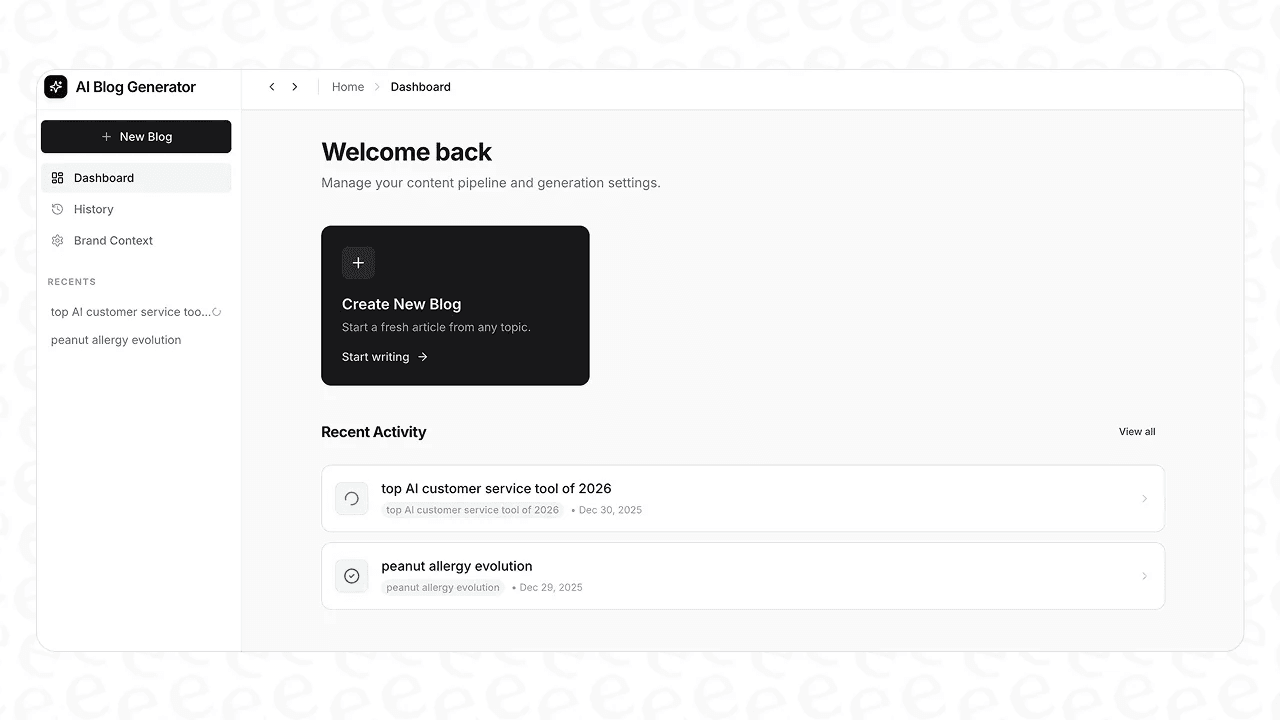
The tool is designed to turn a single keyword into a complete, SEO-optimized, and publish-ready blog post in minutes.
Here’s how it solves the biggest content problems:
- Context-Aware Research: Just give it your website URL. The tool automatically learns your brand's context, tone, and product details, so it can include natural mentions without sounding like a sales pitch.
- Complete Assets Included: No more spending hours looking for stock photos or building charts. It automatically generates images, infographics, and tables right in the article, saving your team a ton of time.
- Authentic Social Proof: It makes content more credible by finding and embedding relevant YouTube videos and real Reddit quotes. This adds a layer of authority and demonstrates the "Experience" that Google's E-E-A-T guidelines value.
This is the exact tool our team used to grow organic impressions from 700 to 750,000 per day in just three months by publishing over 1,000 optimized blogs. This allows teams to increase content output while managing costs effectively.
Comparison: In-house, AI, and agencies
| Approach | Best For | Annual Cost Estimate | Pros | Cons |
|---|---|---|---|---|
| In-House Team | Well-funded companies with deep product complexity. | $150,000 - $200,000+ | Deep product knowledge, full control. | Expensive, hard to scale, risk of burnout. |
| SaaS SEO Agency | Teams needing external expertise and high-level strategy. | $60,000 - $120,000+ | Specialized knowledge, established processes. | High monthly cost, less direct control, communication overhead. |
| eesel AI blog writer | In-house teams needing to scale content efficiently. | Variable (e.g., $99 for 50 blogs) | Extremely fast, cost-effective, includes all assets. | Requires in-house strategy to guide the topics. |
Building your SaaS SEO engine for 2026
Choosing the right SEO path for your SaaS isn't simple. It means finding a partner who gets your business model, focusing on metrics that matter, and being careful about who you bring on board.
The good news is that things are changing. The choice is no longer just between a very expensive in-house team and an even more expensive agency. AI-powered tools have shifted the economics of content production, which is the fuel for any good SEO engine.
For a deeper dive into what the top agencies are doing and how they structure their services, the video below offers a great breakdown of some of the leading names in the industry.
By using a hybrid model powered by a tool like the eesel AI blog writer, you can keep your strategy focused and your brand voice authentic while producing content at the scale of a huge agency, all for a fraction of the cost.
Ready to see how fast you can create a publish-ready, SEO-optimized blog post that drives real results? Try the eesel AI blog writer for free and generate your first article in the next five minutes.

Frequently Asked Questions
Share this article

Article by
Stevia Putri
Stevia Putri is a marketing generalist at eesel AI, where she helps turn powerful AI tools into stories that resonate. She’s driven by curiosity, clarity, and the human side of technology.
