Rytr vs Semrush: A realistic guide to choosing your content tool

Stevia Putri
Last edited January 18, 2026
If you’re trying to sort out your content workflow, you've probably stumbled upon the Rytr vs Semrush question. It’s a bit of an odd comparison, and for a good reason. First, let's clear up a common mix-up: Semrush recently bought a company called Ryte, a user experience platform. This has zero to do with Rytr, the AI writer. It's easy to get them confused, but they are completely different tools.
I think you are mixing up Ryte with Rytr. Ryte is a UX testing and optimization platform Rytr is probably an 'AI sludge generator'

The comparison boils down to this: Rytr is a dedicated AI writing assistant made to get text on a page quickly. Semrush, on the other hand, is a massive SEO and marketing platform that helps you with research and analysis. It's a writer versus a strategist.
Choosing between them really depends on what your team needs most. Are you trying to churn out creative drafts as fast as possible, or are you digging deep into market research to plan your next big campaign? Modern content teams often need a bit of both. You need a data-backed strategy and the ability to execute on it without spending weeks on a single blog post. This is where a new wave of tools, like the eesel AI blog writer, is offering a new approach by connecting deep research with automated, high-quality writing.
What is Rytr?
Rytr is an AI-powered writing assistant designed to help you get words on the page, fast. It's for those moments when you're staring at a blank page, trying to beat writer's block and speed up the content creation process across a ton of different formats.
The workflow is pretty simple. You pick a template (they call them "use cases"), type in a few keywords or a short description of what you want, select a tone of voice, and click "Ryte for me." The AI then spits out copy based on your inputs. It’s built for variety, with templates for everything from blog ideas and outlines to social media ads, marketing emails, product descriptions, and even video scripts.
Rytr is a solid choice for freelancers, social media managers, and small business owners who need to create a high volume of varied copy. If your main goal is to quickly generate creative ideas or first drafts for things that don't need intense SEO optimization right away, Rytr gets the job done. It’s a tool for breadth and speed, helping you produce a lot of content without getting stuck.
What is Semrush?
Switching gears completely, Semrush is an all-in-one digital marketing suite. It’s a tool for SEO professionals, advertisers, and anyone who needs to understand the competitive landscape. Its goal is to be the single platform for everything you need to run a digital marketing strategy.
Semrush is trying to be an All in One, doing absolutely everything; whilst AHrefs is staying in its lane. Neither is right or wrong; their doing what works for them.
Semrush is broken down into several main toolkits: SEO, Content Marketing, Advertising, and Social Media. For this comparison, we're most interested in its Content Marketing Platform. This part of the tool includes features like the SEO Writing Assistant, a Topic Research tool that helps you find content ideas, and a Content Audit tool to analyze your existing pages.
While Semrush is incredibly powerful, it's important to understand its role. It gives you the data to inform your strategy. For example, its site audits are great for catching technical issues like broken images or missing alt tags. As some SEO pros have noted, while fixing technical issues is important, the most significant growth often comes from the high-level keyword and content strategy that Semrush helps you build.
Site audits might get you a 10% 'boost' but for what traffic? Its not going to bump you to first place for a key traffic term. You're not going to go from behind 25 $1bn tech companies to page 1....
In short, Semrush provides the insights: the keywords to target, the topics to cover, and the competitors to watch. Its content tools are there to help you optimize what you write, but the platform's core strength is analysis, not generation.
Core focus and use cases
Let's break down the fundamental purpose of each tool. This is where you’ll really see how different they are and which one fits your workflow.
Rytr: Speed and versatility
Rytr is all about generating text. Its core strength is its ability to create copy for dozens of different formats in just a few seconds. It's the tool you turn to when you need to brainstorm five different ad headlines, outline a quick blog post, or just get some ideas flowing. It's a content production engine for first drafts.
A key consideration is that the content is generated without built-in SEO data, competitor analysis, or keyword research capabilities. The copy it produces often requires further editing and optimization to rank for competitive terms.
Semrush: Data-driven SEO
Semrush is on the complete opposite end of the spectrum. Its main job is to analyze markets, find keyword opportunities, track your rankings, and see what your competitors are up to. Its content tools, like the SEO Writing Assistant, are designed to help you optimize content you've already written or to guide the creation of a brief.
Rytr vs Semrush: A comparison at a glance
Here’s a simple table to sum it all up.
| Feature | Rytr | Semrush |
|---|---|---|
| Primary Goal | AI Content Generation | SEO & Market Research |
| Best For | Quick drafts, social media copy | In-depth strategy, analysis |
| Ease of Use | Very simple, template-driven | Complex, steep learning curve |
| Output | Written copy | Data, reports, suggestions |
Content generation and writing features
So, how do these tools actually handle the writing process? Their approaches couldn't be more different.
Rytr's approach to AI writing
With Rytr, the process is simple and direct. You choose a "use case" like "Blog Idea & Outline," add a short prompt, pick a tone (like "convincing" or "enthusiastic"), and let the AI generate the text.
The pros are obvious: it's incredibly fast, super easy to use, and fantastic for generating a bunch of ideas quickly. The cons, however, are just as clear. The content can sometimes be general, as it's generated without real-time, contextual research. It won't automatically pull in relevant stats, quotes, or visuals, so you're left with a plain text draft that needs a lot of work to become a compelling, publish-ready piece.
Semrush's content platform
Semrush doesn't really have an "AI writing" feature in the same way Rytr does. Its main tool here is the SEO Writing Assistant. This tool works more like an editor or a coach. You write your content (either in their editor, a Google Doc, or WordPress) and it gives you a real-time score based on your target keywords. It provides suggestions to improve readability, use more relevant keywords, and match the tone of your top competitors.
The platform functions as an optimizer rather than a generator. The user is responsible for the research, outlining, and writing. Semrush provides guidance, but it does not generate the content itself.
An alternative: The eesel AI blog writer
This highlights a common challenge in content creation: bridging the gap between research and writing. Many content teams find that to create high-quality, long-form content with AI, they follow a manual, multi-step process. First, they conduct research in a tool like Semrush. Then, they create an outline. After that, they generate each section in a tool like Rytr and finally stitch it all together and add their own assets.
My routine now is: SurferSEO - Keyword collection, AnswerThePublic, my own app for template selection, then port the template outline over to Jasper for first draft. I do the actual writing in ProWritingAid.
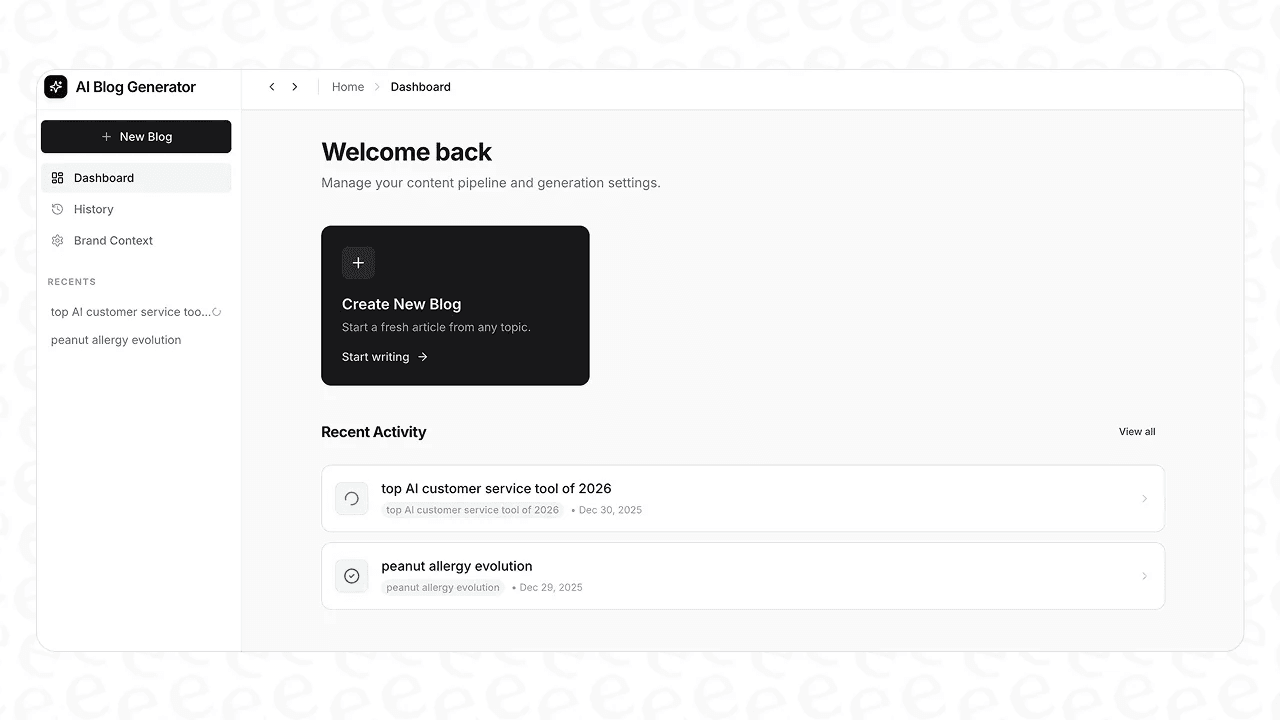
It addresses the need for more contextual content by performing research and automatically including assets like AI-generated images, data tables, and relevant Reddit quotes or YouTube videos. It also automates the drafting process, which can be a manual step for users of research tools. This combines data-informed insights with the speed of AI writing in a single workflow.
Pricing comparison
Rytr pricing plans
Rytr is very accessible, making it a great option for individuals or small teams on a tight budget.
- Free Plan: Gives you up to 10,000 characters per month to test it out.
- Saver Plan: Starts at $9/month for 100,000 characters per month.
- Unlimited Plan: For $29/month, you get unlimited character generation, which is great for power users.
Semrush pricing plans
Semrush is a professional-grade enterprise tool, and its pricing reflects that. It's a significant investment meant for teams who will use its full suite of features.
- Pro: Starts at $129.95/month. This is for freelancers and small teams and has limits on projects and keywords you can track.
- Guru: Jumps to $249.95/month. This plan unlocks more features, including the Content Marketing Platform.
- Business: Costs $499.95/month and is designed for large agencies and enterprises needing the full feature set and higher limits.
eesel AI's pricing: An alternative
For teams focused specifically on scaling high-quality blog content, there’s a much more direct approach. The eesel AI blog writer's pricing is simple and predictable: $99 for 50 complete blog posts.
This model offers incredible value, giving you publish-ready articles without locking you into a pricey monthly subscription designed for market research. It's built for content production, and you can try it completely free to see the quality for yourself.
Making the right choice for your team
So, after all that, how do you decide? It comes down to your primary role and goals.
Who is Rytr for?
Rytr is the perfect fit for social media managers, copywriters, and entrepreneurs. It's for anyone who needs to generate a high volume of short-form content and creative ideas quickly, without an immediate need for deep SEO optimization.
If you need ad copy, email drafts, or product descriptions in a flash, Rytr is a great assistant.ChatGPT. I only do specific things with it — meta descriptions, socials/LinkedIn ballast, rough article outlines.
Who is Semrush for?
Semrush is built for SEO agencies, large in-house marketing teams, and enterprises with the budget for a comprehensive research tool. If your job revolves around competitor analysis, technical SEO audits, keyword tracking, and building data-driven marketing strategies, Semrush is the industry standard.
Who is the eesel AI blog writer for?
The eesel AI blog writer is for content managers, founders, and growth-focused teams whose main goal is to scale the production of high-quality, SEO-optimized, long-form content. It’s for people who understand the principles of SEO but want to automate the time-consuming work of research, writing, and asset creation so they can focus on strategy and distribution.
For a closer look at how AI writing assistants like Rytr function and what value they offer, check out this detailed comparison video.
Moving beyond the Rytr vs Semrush debate
At the end of the day, comparing Rytr and Semrush is like comparing a hammer and a blueprint. One is for building (writing), and the other is for planning (research). They serve fundamentally different purposes, so the debate isn't about which one is "better," but which one you need for the specific job at hand.
The future of content marketing, however, lies in tools that intelligently merge both functions. The most effective teams are the ones who can seamlessly move from data-driven insight to high-quality execution without getting bogged down by disconnected tools and manual processes.
Instead of wrestling with a separate tool for research and another for writing, you can generate your first complete, SEO-optimized article in just a few minutes.

Frequently Asked Questions
Share this article

Article by
Stevia Putri
Stevia Putri is a marketing generalist at eesel AI, where she helps turn powerful AI tools into stories that resonate. She’s driven by curiosity, clarity, and the human side of technology.