A practical guide to effective opinion blog writing

Stevia Putri
Last edited January 19, 2026
It feels like the internet is overflowing with the same old content, doesn't it? We’ve all clicked on a promising headline only to find the same five tips we’ve read a dozen times before, or a post that uses a lot of words to say absolutely nothing. In a space this crowded, a strong, well-argued opinion isn't just a nice change of pace; it's how you actually get heard.
This is where opinion blog writing comes into play. It’s a way to build your authority, connect with people on a real level, and start actual conversations in your industry.
What is opinion blog writing, really?
It’s helpful to see how it stands apart from other content formats:
- vs. News Reporting: A news report aims to be objective, sticking to the facts without bias. Opinion writing is the complete opposite. It’s proudly subjective and designed to be persuasive.
- vs. How-To Guides: A how-to guide is focused on the "how," giving you step-by-step instructions for a task. An opinion piece is more concerned with the "why" or the "what if," arguing for a way of thinking rather than a way of doing.
- vs. Reviews: Reviews are full of opinions, but they're zeroed in on a specific product or service. An opinion piece can tackle much bigger topics, like industry trends, cultural shifts, or abstract concepts.
A great opinion piece is more than a diary entry you post online. It's a carefully built argument that invites people to think and engage. It doesn't just ask for agreement; it encourages conversation, which is far more valuable.
Why opinion blog writing benefits your brand
In today's digital world, having a unique voice isn't just a nice extra, it's a real competitive edge. When you have the confidence to share what you really think, you’re doing more than just publishing another blog post. You're building something much bigger.
Here’s why it makes such a difference:
- It establishes you as a thought leader. Anyone can summarize what’s happening in their industry. A thought leader is someone who digs into why it's happening and where things are going next. When you challenge common thinking or offer a fresh take, you position your brand as an innovator, not just another follower.
- It builds a stronger connection with your audience. People forget facts, but they remember personality and values. Sharing your opinions gives your brand a human side, helping you build a loyal community that connects with you on a deeper level. That kind of authenticity attracts the right kind of people.
- It drives real engagement. Let's be honest, a bland, by-the-numbers article rarely gets a good debate going in the comments. Opinion pieces are made to get people talking. They invite comments, shares, and discussions. This level of interaction is so much more valuable than just getting page views.
- It stands out from generic AI content. Many brands are using AI to produce generic, fact-based articles. While that has its place, a well-crafted opinion piece shows off what AI can't replicate on its own: genuine human insight, personal experience, and critical thinking. The best tools are the ones that help this process along, not replace the person at the center of it.
LLMs are powerful tools, but they'll just make your poor communication skills even more obvious. You can get better at writing *without* letting the AI do it for you. Just ask it for options, work with it, even argue with it. It's a great way to improve your own content.

The key parts of compelling opinion blog writing
Here's what you need to focus on:
- A strong, debatable main point. This is your core idea, your main argument, summed up in a single, clear statement. It should be right at the beginning, usually in your intro. Importantly, it can't just be a fact ("the sky is blue"). It has to be a stance that someone could reasonably disagree with ("companies should switch to a four-day work week").
- Credible supporting evidence. An opinion without proof is just a claim. To be persuasive, you need to back up your main point. This can be hard data from credible sources, case studies, personal stories that illustrate your point, or quotes from experts. This is where a lot of the work is, but tools can help with deep research with citations to make it faster.
- An authentic, consistent voice. This is the personality in your writing. Are you witty? Passionate? Calm and analytical? Whatever your style is, commit to it. The key is to write in a conversational way that stays true to your brand's tone. Don't try to be someone you're not; people can spot that a mile away.
- Acknowledgement of counterarguments. This might seem weird, but addressing the other side of the issue actually makes your argument stronger. It shows you’ve done your research, considered different views, and aren't afraid of a challenge. It demonstrates intellectual honesty and builds trust with your reader, even if they don't end up agreeing with you.
- A clear and memorable conclusion. Your ending needs to do more than just trail off. It should summarize your main points and leave the reader with something to think about. End with a powerful final thought, a question to consider, or a clear call to action that tells them what to do next.
A step-by-step guide to opinion blog writing from scratch
Here’s a practical workflow to guide you:
- Choose a topic you're passionate about (and that your audience cares about). The best opinion pieces come from a place of real interest and knowledge. If you're not excited about it, your writing will feel flat. Brainstorm ideas where your unique expertise overlaps with current conversations in your industry. What's everyone talking about, and what's your unique spin on it?
- Define your core message in one sentence. Before you write anything else, force yourself to clarify your main point. What is the one thing you want your reader to believe when they're done? Write it down. This sentence will be your guide, keeping you focused and on track.
- Create a structured outline. Don't just start writing and see where you end up. An outline is your blueprint for a strong piece. Map it all out: your intro hook, your main point, each of your supporting arguments (and the evidence for each), the counterargument you'll address, and how you'll wrap it all up.
- Write your first draft. This is the "get it all down" stage. Don't stress about perfect wording or grammar. Just focus on getting your ideas onto the page. Follow your outline and let it flow. The goal is to create the raw material you'll polish later. Try not to edit as you go, it just slows you down.
- Refine, edit, and fact-check. Now the real work begins. Go back through your draft and start polishing. Strengthen your arguments, punch up your language, and make sure your tone is consistent. Most importantly, double-check all your facts, stats, and sources. One small error can undermine your entire argument. Reading your post out loud is a great way to catch awkward sentences and typos.
How to streamline your opinion blog writing with the eesel AI blog writer
Going through that five-step process is rewarding, but let's be honest, it can take a lot of time. The research, outlining, and drafting alone can eat up hours, if not days.
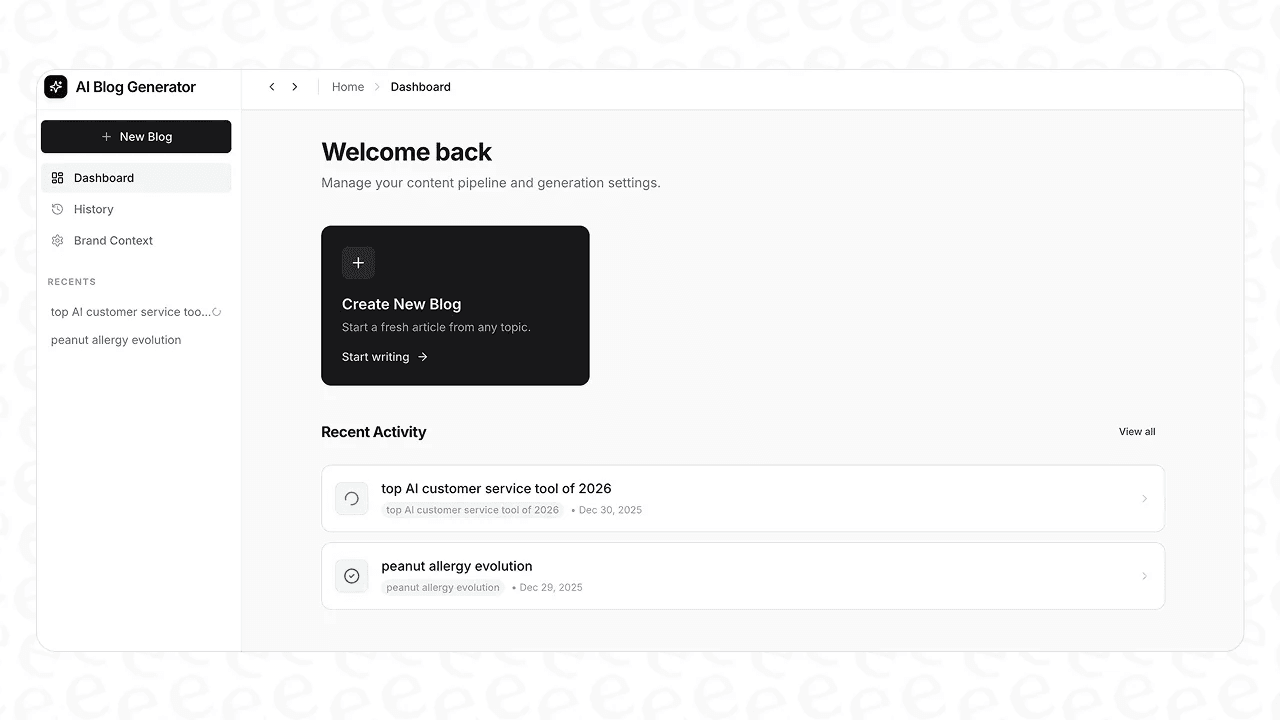
This is where a tool like the eesel AI blog writer can help. It’s designed to speed up this workflow, handling the heavy lifting so you can focus on refining your unique perspective and voice.
From topic to a structured draft in minutes
We've all stared at a blank page, right? It's where good ideas sometimes get stuck. eesel AI helps you jump right over that hurdle. You just give it a topic, and it generates a complete, well-structured draft with an introduction, logical headings, and a conclusion. This gives you a solid foundation to edit and add your personal flair to, instead of starting from zero.
Automatically weaving in evidence and social proof
One of the biggest time-killers in opinion writing is finding credible evidence. eesel AI automates this by pulling in relevant data, external citations, and even real quotes from Reddit. This adds layers of depth and human nuance to your arguments, making them more compelling without you having to spend hours digging through forums.
Maintaining your authentic brand voice
The number one worry with AI writers is that they'll sound robotic. The eesel AI blog writer is built to avoid that. You just add your website link and any brand context, and it analyzes your existing content to match your unique tone. The output sounds like your brand, not a machine.
My two cents is yes. I use Active Inspiration (A.I.) software to 'break me out' of the blank page freeze. The issue is when the content is 70% AI or more. AI should really be used as an Assistive Interface for writing great content, not producing mechanical bastardized word slop by running and rerunning paragraphs through GPT-3.
Adding visual punch with AI-generated assets
A great opinion piece isn't just about the words; visuals help break up the text and make your points clearer. To make your post more engaging, eesel AI automatically generates relevant images, tables, and charts that support your claims. It's one less thing for you to worry about.
To see these principles in action, it can be helpful to watch an expert break down the process of crafting an opinion piece. The video below offers practical advice on how to structure your arguments and share your voice with the world, reinforcing the steps we've covered.
Find your voice and get it out there
So, what's the main takeaway? Effective opinion blog writing is a mix of a strong perspective, solid evidence, and an authentic voice. It’s not about being the loudest person in the room; it’s about being the most thoughtful and persuasive.
In a digital world that's getting more automated every day, sharing a genuine, human opinion is one of the best ways to build real authority and connect with your audience. It shows you're not just a faceless brand, but a group of thinking people with something valuable to say.
Don't be afraid to take a stand. Get past the fear of disagreement and start with a topic you truly care about. Your audience is waiting to hear what you think.
Ready to craft compelling opinion pieces without all the manual work? Try the eesel AI blog writer for free and see how easy it is to generate a publish-ready draft that truly sounds like you.

Frequently Asked Questions
Share this article

Article by
Stevia Putri
Stevia Putri is a marketing generalist at eesel AI, where she helps turn powerful AI tools into stories that resonate. She’s driven by curiosity, clarity, and the human side of technology.