OpenAI is a prominent name in the AI field. Their models, like the latest GPT-5.2, are powerful and have set a high standard for AI capabilities. However, relying on a single provider can present challenges. As businesses scale their AI usage, many are diversifying their AI stack to find specialized solutions that can offer specific advantages for certain tasks.
This guide provides a practical comparison of five OpenAI frontier alternatives, covering a range of options from model APIs to integrated AI solutions. The goal is to help you identify the right tool for your specific business needs.
What are OpenAI frontier alternatives?
The term "frontier models" refers to the most powerful, cutting-edge AI systems available. They are the top-of-the-line models from major research labs, capable of advanced reasoning, understanding images and video, and solving complex problems.
These models go beyond simple text generation. They are the engines behind advanced applications like coding assistants and enterprise search systems that understand company-specific context. They are also the technology behind autonomous customer service platforms that can resolve issues without human intervention.
How we evaluated OpenAI frontier alternatives
- Model performance and reliability: How well does the model perform on complex, multi-step instructions? How does it handle specialized jobs like writing code, analyzing data, or understanding customer intent?
- Enterprise-readiness and security: Does the platform have necessary security credentials like SOC 2 and GDPR compliance? Can it be deployed in a way that keeps data private, such as in a virtual private cloud (VPC)?
- Ease of use and time-to-value: This considers the implementation timeline, whether it's a raw API requiring significant development or a more out-of-the-box solution.
- Total cost of ownership (TCO): This looks beyond token pricing to include developer hours, implementation time, and the ongoing maintenance needed to see a return on investment.
A quick comparison of the top OpenAI frontier alternatives
For those who want the highlights, here’s a quick rundown of the top providers and where they excel.
| Provider / Solution | Best For | Key Strength | Data Privacy Focus | Starting Price Model |
|---|---|---|---|---|
| eesel AI | Business Teams (Support & Sales) | Pre-built AI teammate, no coding needed | Very High (Data isolation, GDPR, zero-retention option) | Interaction-based |
| Anthropic (Claude) | Complex Reasoning & Coding | Safety-first approach, strong coding & writing | High (SOC 2, ISO 27001, HIPAA-ready) | Token-based |
| Google (Gemini) | Multimodal Applications | Native multimodal, deep Google Cloud integration | High (via Vertex AI) | Token-based |
| Cohere | Enterprise Search & RAG | Data privacy, flexible private deployments | Very High (VPC & on-prem options) | Token-based |
| Mistral AI | Efficiency & Open Source Flexibility | Cost-effective open-weight & commercial models | High (EU data centers, GDPR compliant) | Token-based / Free |
5 OpenAI frontier alternatives in 2026
When considering alternatives, it's helpful to look beyond APIs. A complete solution that leverages frontier AI to solve a specific business problem can be a more efficient approach. This list includes both types of solutions.
1. eesel AI
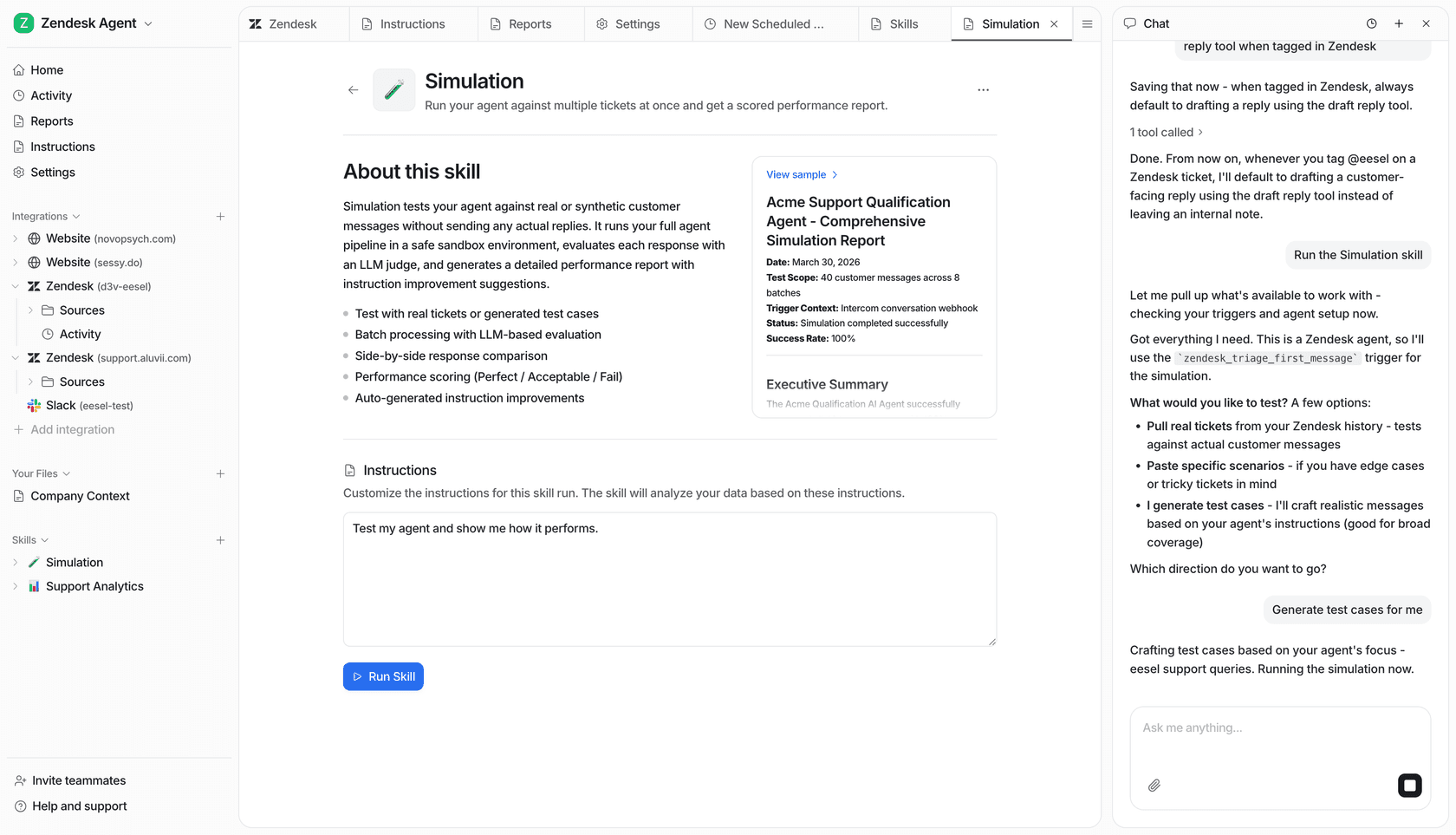
- Pros: A key advantage is rapid time-to-value. Teams can achieve up to 81% autonomous resolution on support tickets, with a typical payback period of under two months. The "teammate" model allows for a phased rollout, which can mitigate risk. Users can begin with eesel drafting replies for agent review and then transition to full autonomy as confidence in its performance grows.
- Cons: Its specialization in customer-facing workflows means it is not a general-purpose API for building a wide range of custom applications.
- Pricing:
- Team: Starts at $239/month (billed annually) for 1,000 AI interactions.
- Business: Starts at $639/month (billed annually) for 3,000 interactions and adds key features like training on your past tickets.
- Custom: Offers unlimited interactions for larger teams and complex needs like multi-agent orchestration.
- Why it's on the list: For many businesses, particularly those focused on improving support or sales, eesel AI offers an efficient path to leveraging frontier AI. It can deliver a more immediate outcome compared to building a custom solution from scratch on an API.
2. Anthropic (Claude)
- Pros: Claude's main strength is its performance on complex, multi-step tasks. It is a strong option for applications requiring in-depth problem-solving. It's also enterprise-ready, with SOC 2 and ISO 27001 compliance, making it a solid choice for companies in regulated industries.
- Cons: The pricing for top-tier models may be a consideration for some budgets. Their "Artifacts" feature is a newer feature that provides a dynamic workspace for interacting with generated content.
- Pricing (API):
- Claude 3.5 Sonnet: $3 per million input tokens, $15 per million output tokens.
- Claude Opus 4.6: $5 per million input tokens, $25 per million output tokens.
- Claude Pro: $20/month for web access to their models.
- Why it's on the list: For developers building custom applications that require advanced reasoning capabilities, Claude offers state-of-the-art performance. It's a strong OpenAI frontier alternative for building custom solutions.
3. Google (Gemini)
- Pros: For companies heavily invested in the Google Cloud ecosystem, Gemini offers seamless integration with tools like Vertex AI and Workspace. Models like Gemini 1.5 Pro have massive context windows, allowing them to process large documents or entire videos in one go, which is a key advantage.
- Cons: As a newer model family, its performance on certain text-based reasoning tasks may differ from other established models.
- Pricing (API via Vertex AI):
- Gemini 1.5 Pro: Starts around $1.25 per million input tokens and $10 per million output tokens for the latest versions.
- Gemini 1.5 Flash: A faster, more cost-effective model designed for high-volume, quick-turnaround tasks.
- Why it's on the list: For any use case that involves more than text, Gemini is a strong frontier alternative. It is well-suited for tasks like analyzing product photos, summarizing video meetings, and transcribing voicemails.
4. Cohere

- Pros: Cohere's primary strengths are its focus on data privacy and flexible deployment options. You can use their models in a secure virtual private cloud (VPC), on your own servers (on-premise), or through their managed service. This provides enterprises with control over their data, a critical requirement for many organizations.
- Cons: Due to their enterprise focus, the models are less geared toward general-purpose creative writing or conversational applications.
- Pricing (API):
- Command R+ (08-2024): $2.50 per million input tokens, $10 per million output tokens.
- Rerank and Embed Models: They have specialized models for search tasks that are priced separately.
- Why it's on the list: If you're building a secure internal knowledge base, a powerful chatbot that uses your company's data, or any application that needs to perform RAG, Cohere is a suitable choice. It is a strong option for businesses prioritizing data security.
5. Mistral AI
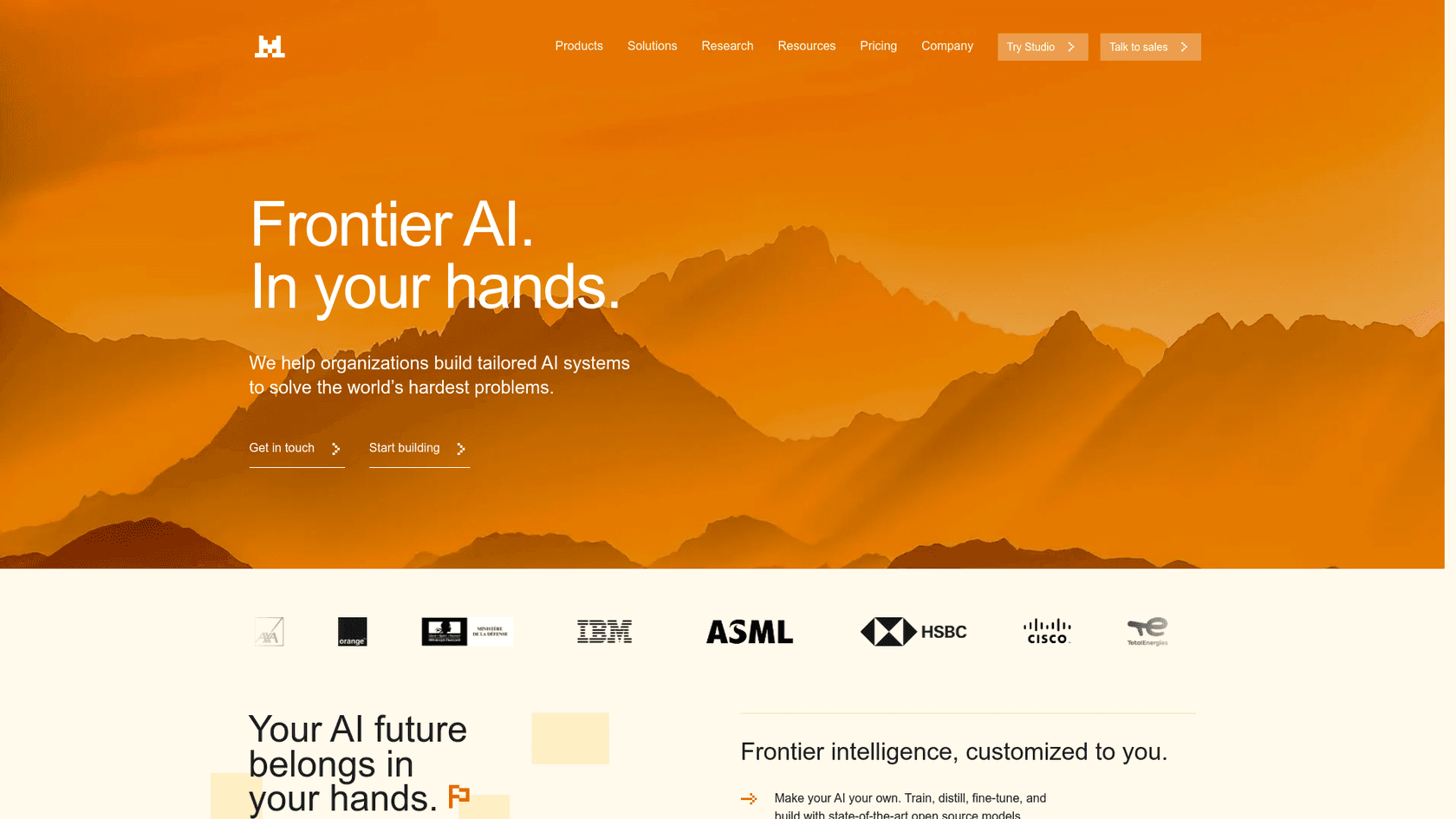
- Pros: Mistral's main advantage is flexibility. You can start on their easy-to-use API and, if your needs change, switch to a self-hosted open model without a significant change in performance. As a European company, they have a strong focus on GDPR compliance and handle data within EU data centers, which is an important factor for many businesses. They also recently introduced a free tier and lowered prices across their commercial models, making them one of the more budget-friendly options on this list.
- Pricing (API):
- Mistral Large 2: A very competitive $2 per million input tokens and $6 per million output tokens.
- Open-weight Models: Free to download and use; you just pay for your own server costs.
- Why it's on the list: Mistral offers a practical and capable alternative. It is well-suited for companies that want the flexibility to choose between a convenient managed API and a fully-controlled self-hosted model without being locked in.
How to choose the right OpenAI frontier alternatives
After reviewing the options, how do you select the right one? It comes down to asking the right questions.
- Build vs. Buy: This is a key consideration. Consider whether you have the engineering resources, a specific use case, and the budget to build a custom solution on an API like Claude or Gemini, or if you require an immediate solution for a business problem. In the latter case, a pre-built solution like eesel AI can achieve the desired outcome more quickly and with lower upfront investment.
I did this recently with Zendesk. You'll need good documentation sources for any of them to be helpful, so make sure updating or creating documentation is set as a prerequisite if you don't already have it. Even with good documentation, many of them ended up being a mess of inaccurate answers that piss people off, like you mentioned.
- Use case specialization: General models like GPT-5.2 are versatile but may not be optimized for every task. For specific jobs, specialized tools can offer advantages. If you're building an internal search engine, Cohere is purpose-built for that task. If you're trying to automate customer service, an AI teammate like eesel is designed for that workflow, which can be more efficient than adapting a generalist model from scratch.
- Data security and control: This can be a deal-breaker. If your data cannot leave your own environment, your choices narrow. You'll need a provider that offers private deployments (like Cohere's VPC option) or lets you self-host an open-source model from a provider like Mistral AI.

Pro tip
Start with the business problem, not the technology. Figure out exactly what you want to achieve (e.g., 'reduce our first response time by 50%') and then work backward to find the tool that gets you there. Whether that's an API, an open model, or an AI teammate, the goal should drive the decision.
For a deeper dive into the cost-saving aspects of switching to open-source or free-tier models, the following video offers a practical overview of several alternatives that can reduce or eliminate API costs.
Finding the right OpenAI frontier alternative for your needs
The AI market is maturing, and there are now numerous viable alternatives to OpenAI. While OpenAI offers a capable generalist tool, these specialized OpenAI frontier alternatives can provide advantages in performance, security, and time-to-value for specific business needs.
The right choice depends on your goals. If you're a developer with a blank canvas, API providers like Anthropic and Google give you powerful building blocks to create new applications.
For businesses needing to address challenges in support and sales, an AI teammate approach can be an effective way to achieve a return on investment.
Get started with an AI teammate today
Consider the challenges your team faces in customer support and sales, such as repetitive questions, long wait times, or missed sales opportunities. eesel AI applies frontier AI to address these problems without requiring coding.
Invite eesel to your team. See for yourself how a fully-trained AI agent performs on your real customer inquiries. Start your free trial.