The ultimate guide to using a multilingual AI blog writer for global growth

Katelin Teen
Katelin Teen
Last edited January 14, 2026
Thinking about taking your content global? It’s a huge opportunity, but let’s be honest: creating content for different regions by hand is a massive headache. It's slow, expensive, and you’re always worried you’re missing the mark on cultural nuances. One wrong phrase and your entire message can get lost in translation.
That's exactly the problem a multilingual AI blog writer is built to solve. Think of it as your secret weapon for scaling content internationally. These tools automate the creation of high-quality, localized content that actually connects with diverse audiences, without you having to hire a team of translators for every single market.
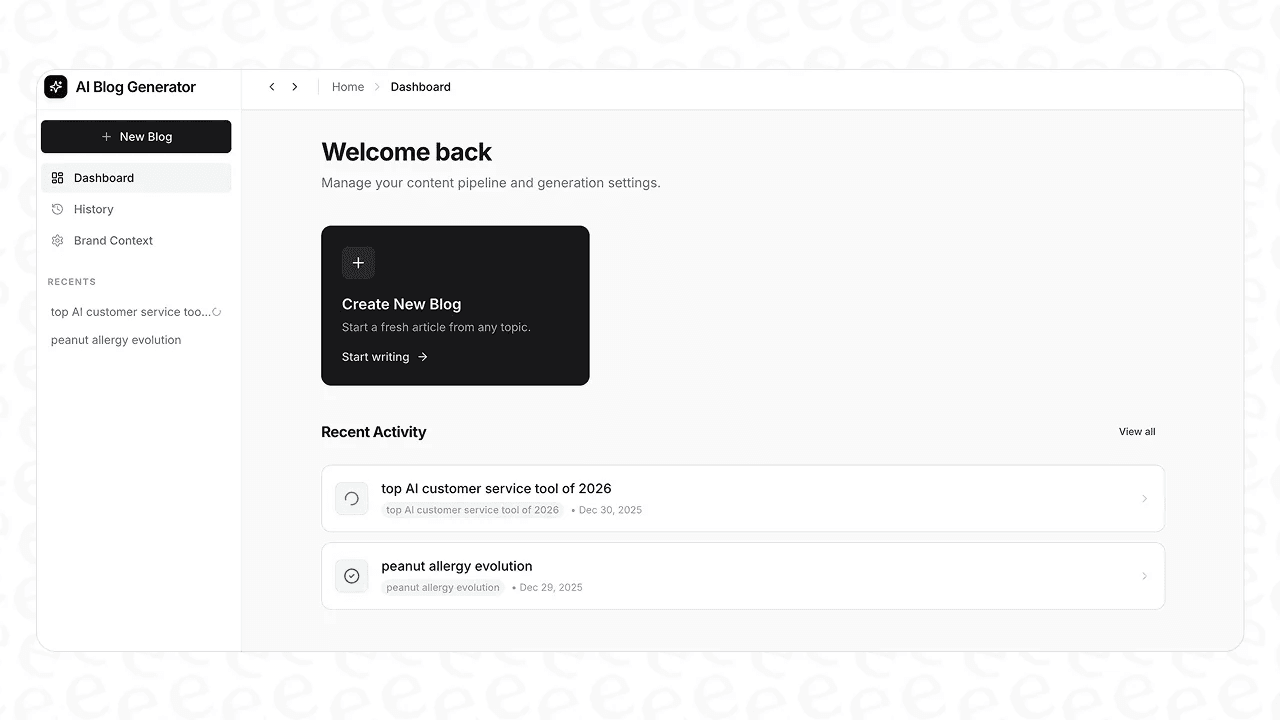
Tools like the eesel AI blog writer are designed for this. They can turn a single topic into publish-ready articles for multiple markets. It's how we scaled our own organic traffic from 700 to 750,000 daily impressions in just a few months.
What is a multilingual AI blog writer?
First off, let’s clear something up: a multilingual AI blog writer is way more than just a writer mixed with a translator. It’s an AI platform that understands the nuances of different languages and cultures to generate original, relevant content for each market.
We’ve all seen what happens with basic machine translation. You get clunky, literal translations that lose all context and tone. It just feels off. And that feeling matters. Research shows that a whopping 76% of customers would rather buy products with information in their own language. If your content doesn't feel authentic, you're leaving money on the table.
A true multilingual AI blog writer does more than just swap words. It considers regional SEO keywords, local idioms, and culturally appropriate formatting. Instead of just translating an article from English to Spanish, it creates a brand new Spanish article from the ground up, made specifically for a Spanish-speaking audience. It’s about creating something genuinely new and relevant, not just a secondhand copy. Here’s a visual breakdown of the difference:
How a multilingual AI blog writer masters multiple languages
It might sound a bit like magic, but the technology behind these tools is pretty straightforward once you break it down. It’s not about just translating text; it’s about understanding context and generating something new.
The role of LLMs and NLP
At the core of these tools are advanced large language models (LLMs), like the ones from OpenAI and Anthropic. These models have been trained on staggering amounts of text and data from all over the world, in countless languages. This gives them a deep understanding of grammar, syntax, and cultural context.
They also use Natural Language Processing (NLP), which helps the AI understand the intent behind the words. This makes sure the output feels natural and human-written, not like it was spit out by a robot.
Beyond translation: How content is generated
This is the most important part to get. A good multilingual AI writer doesn't just translate your English article. It takes your initial prompt or keyword and generates a brand new article from scratch, specifically for the target language and audience.
This process involves contextual adaptation. The AI can adjust its writing style, switching between formal and informal tones based on what’s appropriate for that language and culture. For example, an article for a German audience might need to be more formal than one for an American audience, and the AI knows how to make that switch seamlessly.
Localized SEO and AEO
Finally, the best tools don't just write well; they write to get seen. They analyze search trends and keyword data for each country, ensuring the blog post is optimized to rank in local search engines like Google.es or Google.de, not just Google.com.
They also focus on something called Answer Engine Optimization (AEO). This is the next step up from SEO, where content is optimized to be directly cited by AI-powered answer engines like Google AI Overviews and ChatGPT. As marketers on Reddit have pointed out, AEO is all about creating clear, authoritative answers that AI assistants love to use.
The whole process looks something like this:
- You give it a topic and a target language.
- The AI analyzes local SEO trends and AEO opportunities.
- It generates new, contextually relevant content.
- It adapts the content to match your brand's voice.
- It even integrates automatic assets and media.
- You get a publish-ready article, optimized for that specific market.
Key features to look for in a multilingual AI blog writer
When you're shopping around for these tools, you'll find they're not all built the same. If you're evaluating different options, here's a checklist of what really matters, so you can separate the basic translators from the true content generation platforms.
Language support
The number of supported languages is obviously a factor, with some tools offering 30+ and others boasting 140+. But don't get distracted by a big number. The quality and nuance of the generation for each language are what really count. A tool that produces flawless German is better than one that produces mediocre content in 50 languages. Look for a tool that invests in high-quality output for the languages that matter most to your business.
Context-aware research
Your AI writer needs to be more than just a wordsmith; it needs to be a researcher. The best tools understand the intent behind a keyword in different cultures and do deep research from authoritative sources to build credibility. For example, some tools like Hypertxt.ai analyze up to 25 sources for a single article to make sure it’s packed with useful, fact-checked information. This is what separates high-value content from shallow AI filler.
Integrated SEO and GEO
A must-have feature is built-in SEO that adapts to each language. The tool should be doing localized keyword research, not just translating your English keywords. It also needs to be forward-thinking. Generative Engine Optimization (GEO) is a new concept where content is optimized to be found and cited by AI search engines. Platforms like Writesonic are even building entire suites around this idea, helping brands get visibility in this new AI-driven search landscape.
Automatic asset integration
Let’s be real, a wall of text isn’t going to cut it in 2026. Modern content needs visuals. The best tools automatically generate or embed relevant media that are culturally appropriate for the target audience. Some platforms, like the eesel AI blog writer, take it a step further by embedding social proof like real Reddit quotes to add a layer of authenticity that text alone can't achieve.
ChatGPT could do the job, but you need to write a good prompt. How big is your novel? Would it fit in to single context window? It might be preferable to translate the entire novel in one session. This will ensure consistency in translation, especially in names and places.

Maintaining brand voice
Finally, your brand should sound like your brand, no matter the language. A key feature is the ability to maintain a consistent brand voice, tone, and terminology across all your content. This prevents a disjointed customer experience and ensures that your brand identity remains strong and recognizable in every market you enter.
Here's a quick breakdown of what to look for:
| Feature | Basic Multilingual Tool | Advanced Multilingual AI Blog Writer |
|---|---|---|
| Functionality | Word-for-word translation | Original content generation per language |
| SEO | Translates English keywords | Performs localized keyword research |
| Optimization | Basic SEO only | SEO and AEO/GEO for AI answer engines |
| Assets | Text-only output | Generates images, charts, and media embeds |
| Brand Voice | Inconsistent tone | Maintains consistent brand voice globally |
A look at top multilingual AI blog writer platforms
Ready to see what’s out there? We’ve rounded up some of the top platforms to help you find the right fit for your global content strategy.
1. eesel AI blog writer
The eesel AI blog writer is an end-to-end solution for teams that want to scale content production. It takes a single keyword to generate a complete article. The platform was used to grow the eesel AI site from 700 to 750,000 daily impressions in three months.
Key Features:
- Context-Aware Research: It doesn't just write; it researches. It automatically pulls relevant information from the web and adapts it for the blog type and region you're targeting.
- Complete Asset Generation: This is a big one. It creates a full post complete with AI-generated images, infographics, tables, and even suggested screenshots.
- Social Media Integration: To make content feel more human and trustworthy, it can uniquely embed relevant YouTube videos and real Reddit quotes.
- AEO Optimization: The content is specifically designed to get picked up and cited by AI answer engines like Google AI Overviews, putting you ahead of the curve.
Pricing: The pricing is $99 for 50 blogs. You can generate your first article for free to see the quality for yourself.
Best for: Teams looking for a solution that produces media-rich, publish-ready content optimized for search engines and readers.
2. Writesonic
Writesonic is a versatile platform with a heavy focus on creating SEO-optimized articles and tracking how your brand shows up in AI search.
Key Features: It supports over 30 languages, includes a built-in SEO checker, and offers a comprehensive Generative Engine Optimization (GEO) platform. This lets you monitor brand mentions across AI tools like ChatGPT and Perplexity.
Limitations: While it’s powerful for SEO analytics and generating text, creating a fully media-rich post often requires more manual work. You'll likely need to source and add your own images and other assets to get it publish-ready.
Pricing: Paid plans start at $49/month for the Lite plan, which gives you 15 articles per month.
Best for: Marketers who are laser-focused on SEO and GEO analytics and don't mind adding their own media and final polish to the drafts.
3. Pairaphrase
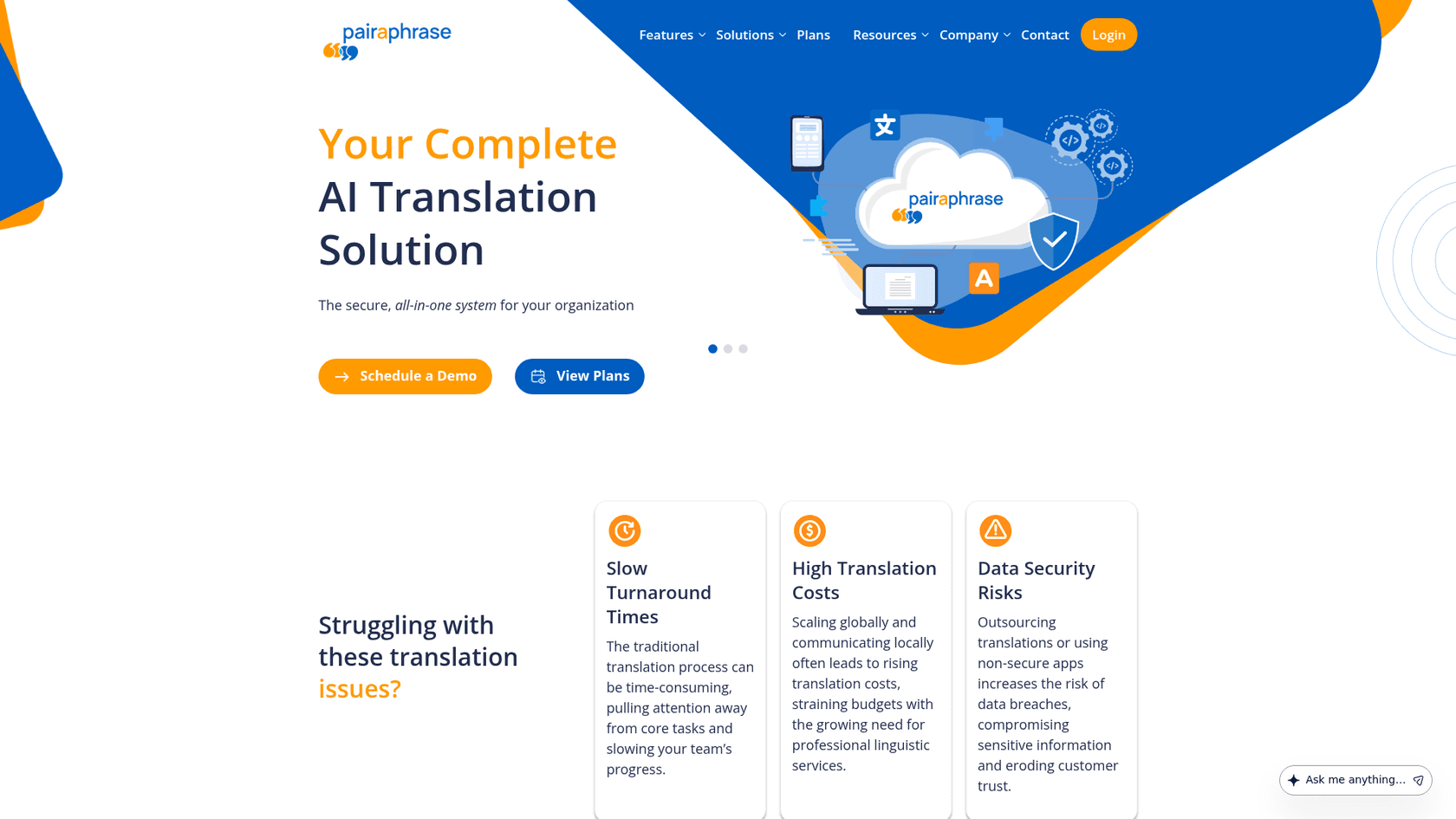
Pairaphrase is a translation-first platform built for large organizations, especially those in regulated industries that need secure, auditable workflows.
Key Features: It supports a massive 140+ languages and 25 different file types. Its AI Sandbox is a standout feature, allowing content generation within a secure environment that is compliant with HIPAA, FERPA, and GDPR. It also has robust terminology management to keep brand messaging consistent.
Limitations: It’s more of a translation management system than a dedicated blog writer. The workflow is geared toward localization professionals, not marketers looking to quickly create SEO content.
Pricing: It's priced for enterprises, with monthly subscriptions starting at $285/month and one-time packages from $199.
Best for: Large enterprises in legal, healthcare, or finance that need auditable translation trails and strict terminology control for compliance reasons.
4. Hypertxt.ai
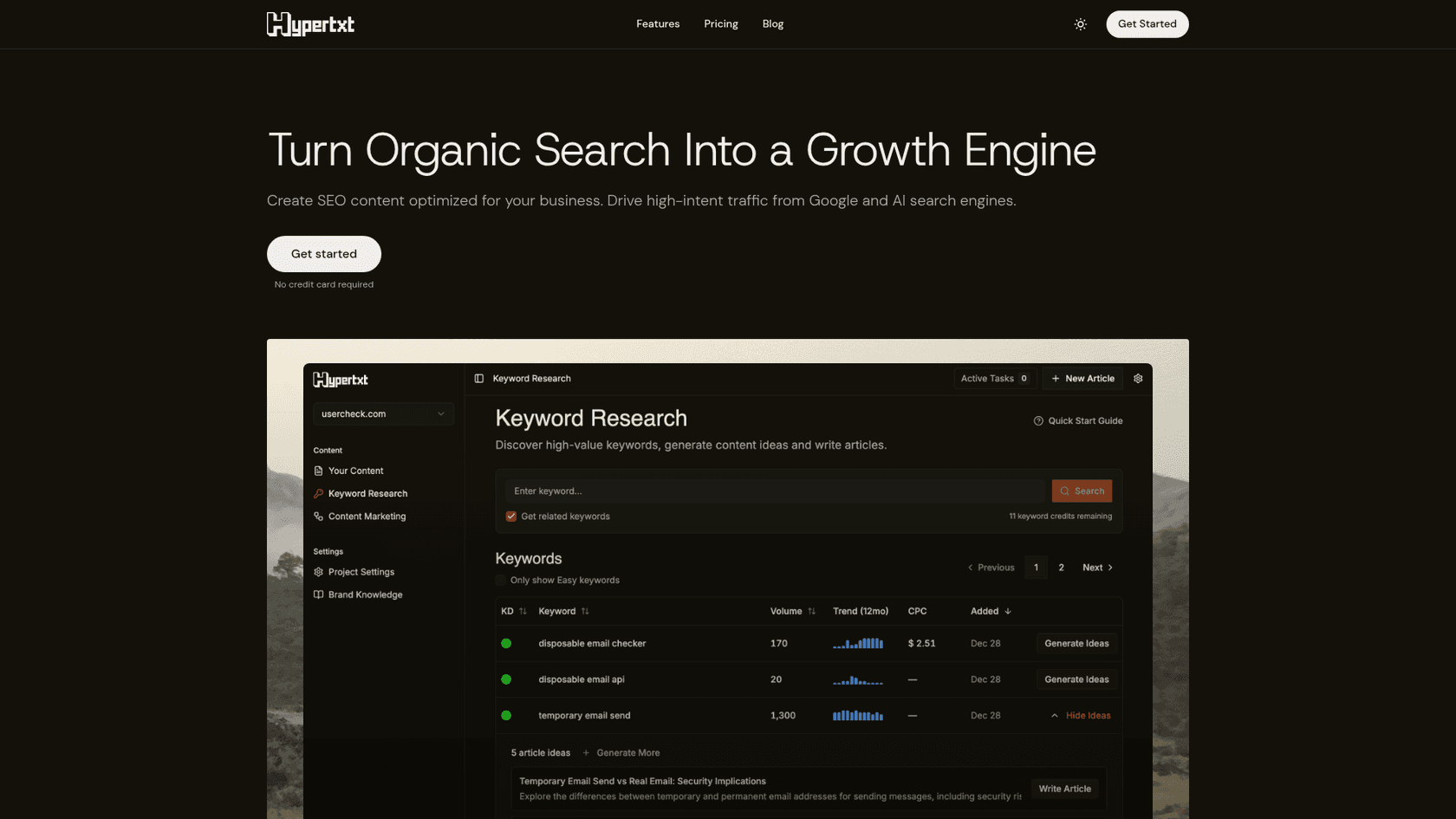
Hypertxt.ai carves out a niche with its powerful research engine. It analyzes up to 25 authoritative sources to build credible, fact-checked articles.
Key Features: It supports over 80 languages and has a feature where you can upload a URL of your writing, and it will automatically learn and match your brand voice. It also integrates keyword research directly into the workflow.
Limitations: The platform is heavily focused on research and text generation. While it ensures your content is credible, it's not as streamlined for creating the visual assets that make a blog post engaging.
Pricing: You can try it for free with 3 articles. Paid plans start with the Starter plan at $39/month for 10 articles.
Best for: Content creators who produce in-depth, research-backed articles and want an AI that can closely mimic their specific writing style.
For a deeper dive into how a multilingual strategy can drive real results, check out this video on leveraging an AI agent for multilingual SEO to boost traffic.
Build your global presence, one post at a time
Taking your content global used to feel like a massive project, but things have definitely changed. We've moved beyond basic, clunky translation to intelligent, multilingual content generation that truly understands cultural and SEO nuances.
The right multilingual AI blog writer can automate the entire workflow, from research and writing to optimization and asset creation. This frees up your team to focus on the big picture instead of getting bogged down in the details of manual content creation. With platforms designed specifically for this purpose, expanding your reach across the globe is more accessible than ever.
To see how these tools operate, you can try the eesel AI blog writer for free and generate a complete, publish-ready article. It provides a practical way to understand how AI can help build a global presence.

Frequently Asked Questions
Share this article

Article by
Katelin Teen
Katelin is an operations specialist at eesel where she uses her psychology training and education experience to optimize B2B SaaS processes. Outside of work, she unwinds with story-driven games, writing, and keeping up with latest tech innovations.