

SEO in 2026 is more complex than it used to be. Search has fragmented, with people finding answers not just on traditional search engines, but also through Google's AI Overviews and conversational AI like ChatGPT and Perplexity. In this environment, you can't just publish content and hope it works out. To succeed, teams need to consistently monitor their SEO program to protect their current rankings and find new opportunities for growth.
I’ve tried a few and honestly, most of them feel like rebranded SERP parsers with AI slapped on.

This guide offers a straightforward framework for monitoring your SEO performance, covering everything from the technical health of your website to the real-world impact of your content across all these channels. But before you can measure anything, you need a solid foundation. Successful monitoring begins with high-quality content, and creating optimized articles with a tool like the eesel AI blog writer provides the base needed for any performance program.
What does it mean when you monitor an SEO program?
SEO monitoring is the process of tracking key metrics to measure how effective your SEO strategy is against your business goals. It's a practice that involves much more than just checking a list of keyword rankings once a month. A thorough monitoring program looks at the entire organic ecosystem to understand what's working, what isn't, and why.
This process can be divided into four main areas:
- Technical Health: This is about making sure search engines can crawl, understand, and index your site without hitting technical issues like broken links or slow page speeds.
- Content Performance: Here, you analyze how your content ranks, how much traffic it brings in, and how well it engages users on different platforms, from Google Search to AI chatbots.
- Backlink Profile: This area focuses on tracking the number and quality of links pointing to your site, as these are a major indicator of your website's authority.
- Competitive Landscape: Monitoring isn't just about your own site. It also means watching your competitors' performance in both traditional search results and AI-generated answers to spot threats and opportunities.
An infographic showing the four key areas to monitor an SEO program: technical health, content performance, backlink profile, and competitive landscape.
Key performance areas to track in an SEO program
Now that we've outlined the core pillars, let's dive into the specific metrics you need to track within each area. This is the "what to track" part of building a solid monitoring system.
Technical site health and indexability
A technically sound website is the bedrock of any good SEO program. If search engines can't get to your content, nothing else you do will matter. You could have the best articles on the internet, but they won't rank if they can't be indexed.
Key metrics to watch here include crawl errors (which you can find in Google Search Console), site speed (especially Core Web Vitals), mobile usability, and your overall indexation status. These tell you if Google is having trouble processing your site. For a more detailed look, tools like Screaming Frog's SEO Spider offer free technical audits for up to 500 URLs, which is a good starting point for smaller sites.
Keyword rankings and visibility across channels
Tracking keyword positions has changed. It's no longer enough to know where you rank on a standard Google search results page. Today, you need to monitor your visibility across a much broader search environment.
This means tracking your performance in:
- Traditional Google SERPs: The classic blue links that are still a major source of organic traffic.
- Google's AI Overviews (AIO): The AI-generated summaries that show up at the top of many search results. Being cited here can give you a lot of visibility.
- Generative AI responses: The answers provided by platforms like ChatGPT, Gemini, Claude, and Perplexity when users ask questions about your industry.
Modern SEO platforms like SEOmonitor and Nightwatch are designed for this new reality. They provide a single view, letting you track the same keywords across these different channels to get a full and accurate picture of your performance.
Organic traffic and user engagement
Rankings are just a means to an end. The real goal of SEO is to attract the right audience that engages with your content and helps you meet your business objectives. Monitoring traffic and engagement metrics connects your SEO work to actual outcomes.
Using a tool like Google Analytics 4, you should keep an eye on these key metrics:
- Organic Sessions: The total number of visits you get from organic search.
- New vs. Returning Users: To understand the makeup of your audience.
- Engagement Rate: A measure of how many sessions had meaningful interaction.
- Conversions: The number of users who took a desired action, like signing up for a trial or buying something.
These metrics show whether your content is meeting user needs and delivering real business value.
Backlink profile and domain authority
Backlinks are still a very important ranking factor. They act like votes of confidence from other websites, telling search engines that your content is authoritative and trustworthy.
Key metrics to monitor include the number of new and lost backlinks, the quantity and quality of referring domains, and your overall domain authority or rating score. Earning high-quality backlinks consistently suggests a healthy SEO program, while a sudden drop in links might point to a problem that needs looking into. Free tools like Ahrefs Webmaster Tools are very useful here, as they let you monitor your own backlink profile without a paid subscription.
The best tools to monitor your SEO program
No single tool can do everything, which is why most marketing teams use a mix of platforms to build their monitoring setup. Here are some of the top options for different needs, based on their features and official pricing.
SE Ranking: An affordable all-in-one solution
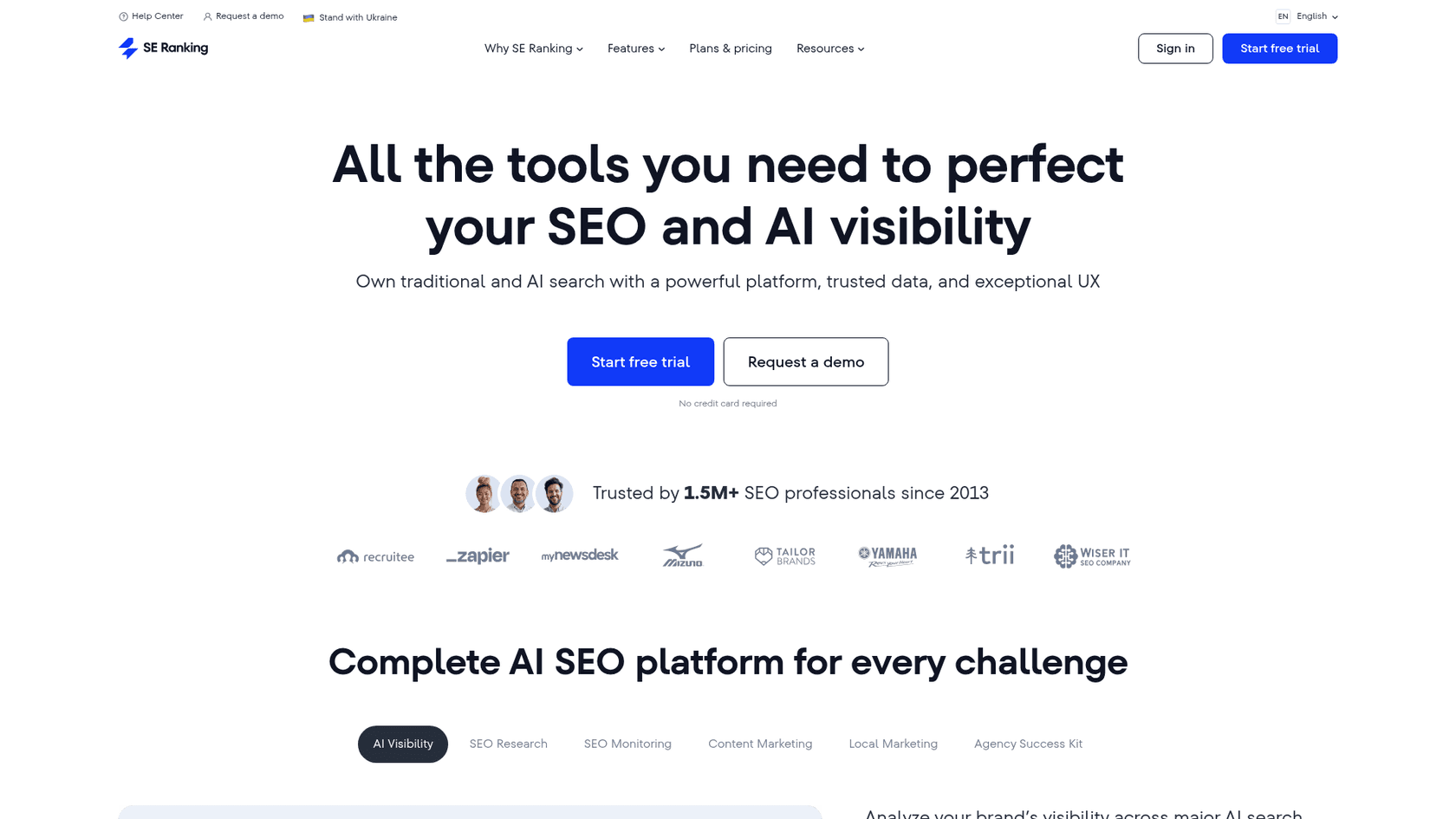
SE Ranking is a comprehensive platform for businesses and agencies that need a lot of features without a huge price. It covers most parts of an SEO program, from keyword tracking to technical audits.
Had to scroll to make sure I wasn’t gonna repeat this suggestion! I’ve been using SEranking for several years and love them.
Its complete AI SEO platform includes an AI Visibility Tracker that monitors performance in both AI Overviews and ChatGPT, along with a traditional rank tracker, website audits, and backlink monitoring tools.
Pricing: According to their official site, plans begin with the Essential plan at $52/month (billed annually). The Pro plan is $95.20/month, and the Business plan is $207.20/month, both with annual billing.
SEOmonitor: A unified strategy
SEOmonitor has a unique approach of tracking keywords, not prompts. This method gives a unified performance view across Google, AI Overviews, and AI Search platforms like ChatGPT and Gemini. It's great for agencies that need to show ROI to clients without getting bogged down in separate data sets.
The platform's main strength is its unified dashboard, which helps avoid confusing and disconnected reporting. It also has an award-winning forecasting method to help make a business case for SEO investment and an AI Content Writer to help put the strategy into action.
Pricing: Their pricing page shows the Starter plan is €99/month, and the Pro plan for agencies starts at €299/month.
Nightwatch: Precision tracking
Nightwatch is a tool built for data precision. It's a great choice for businesses that rely on local search performance or need a deep look into the AI search landscape.
Some folks I know switched to Nightwatch or AccuRanker just for rank tracking because they’re more cost-effective and client-report friendly.
The platform is known for its ability to track 107,000+ locations, which offers amazing detail for local SEO. Its unified dashboard tracks performance across search engines (Google, Bing) and generative AI (ChatGPT, Gemini, Claude), and it provides AI-specific metrics like "Share of Voice" and "Sentiment Analysis."
Pricing: Plans start at $32/month (billed annually) for 250 keywords. An optional AI Tracking Add-on is available for an extra $99/month.
How the eesel AI blog writer fits into your monitoring workflow
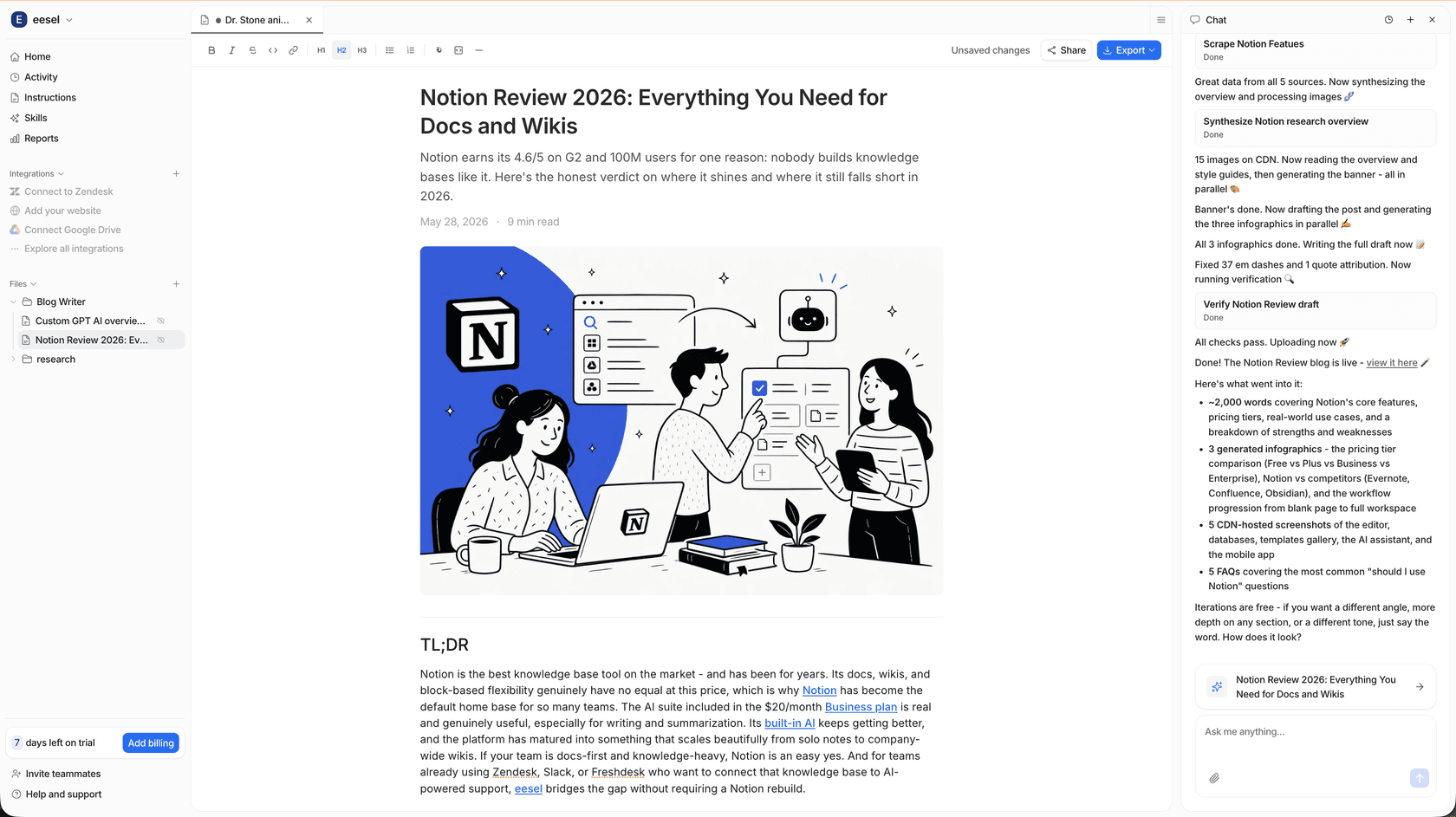
While it's not a monitoring tool itself, it's a key part of the "program." It automates the creation of content that is optimized for both traditional SEO and Answer Engine Optimization (AEO). Its main differentiators are context-aware research, the automatic inclusion of assets like AI-generated images and tables, and the integration of social proof like relevant Reddit quotes. By generating content that's ready to rank at scale, it gives your monitoring tools something meaningful to measure. At eesel, we used this exact tool to grow our daily impressions from 700 to 750,000 in just three months.
Consolidating data into a unified dashboard
One of the biggest headaches in monitoring an SEO program is scattered data. You might have your keyword rankings in one tool, traffic data in another, and technical health reports in a third. This makes it hard to see the whole picture and share results clearly.
The answer is a central dashboard that pulls all your key metrics into one place. This gives you a complete view of your program's health and makes reporting to stakeholders much easier. Platforms like AgencyAnalytics are designed for this. It integrates data from over 80 sources, including Google Search Console, Google Analytics, SE Ranking, and Semrush, into a single, clean dashboard.
An effective SEO monitoring dashboard should include:
- High-level KPIs: An overall visibility score, total organic traffic, and conversions.
- Keyword Performance Trends: A look at your top keywords that are gaining or losing ground.
- Technical Health Summary: Key metrics like crawl errors and site speed scores.
- Top-Performing Content: A list of your pages that are driving the most traffic and engagement.
- Backlink Growth Overview: A summary of new and lost referring domains.
For a deeper dive into the tools available for tracking your keywords, this video offers a great comparison of some of the best options on the market, helping you choose the right one for your specific needs.
From monitoring to action
A successful SEO program needs constant, careful monitoring across technical health, content performance, and the competitive landscape. In 2026, this monitoring has to go beyond traditional search to include AI-driven answer engines to get a full view of your organic visibility.
Remember, the point of monitoring isn't just to collect data. It's about finding actionable insights that help you improve your strategy, make better decisions, and drive steady growth. Monitoring tells you where to put your efforts for the biggest return.
The foundation of any successful SEO program is great content. Before you can monitor performance, you need content built to rank across both search and AI. Start by scaling your content creation with the eesel AI blog writer. It's free to try and generates dozens of SEO-optimized articles that will give your monitoring program something meaningful to measure.