You've probably scrolled through a dozen listicles today. They’re everywhere, and it makes sense. They’re easy to scan, simple to digest, and give you a quick dose of useful information. But just because they look simple doesn't mean they're a piece of cake to create. A really good listicle, one that actually shows up on Google and keeps people reading, requires a smart strategy and, more importantly, the right set of tools.
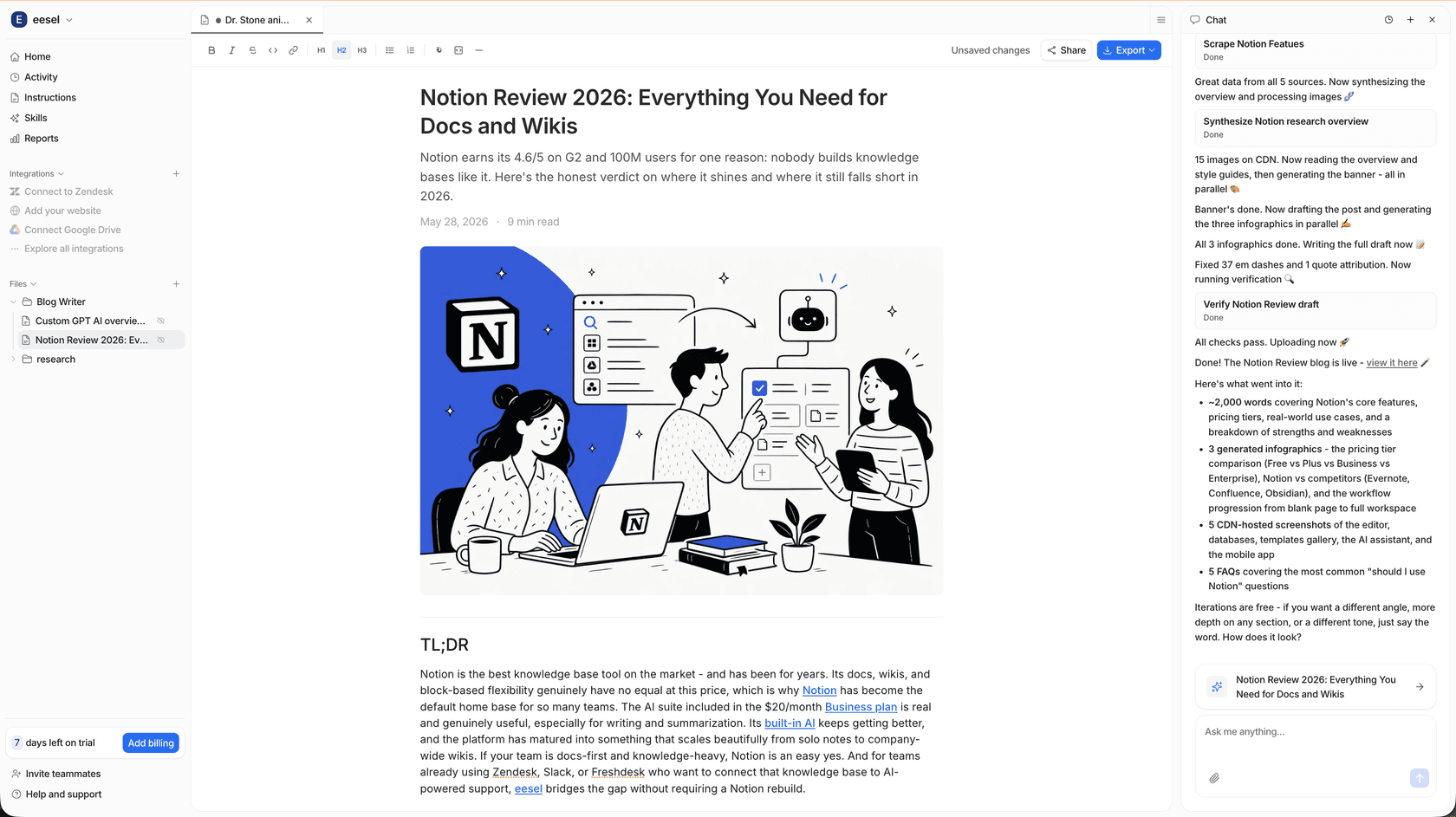
This guide is all about the best tools to help you manage the whole process, from finding a great topic to publishing a fully formatted post. We'll cover everything you need. In fact, we used an end-to-end solution, the eesel AI blog writer, to handle the heavy lifting and grow our own site's impressions from about 700 to over 750,000 per day in just three months.
The eesel AI blog writer interface, a tool for automated listicle blog writing.
__
Understanding the basics of listicle blog writing
A listicle is pretty much what it sounds like: a combination of a "list" and an "article." It's a blog post built around a list, typically with a catchy, numbered headline.
At its heart, a listicle has a few key components: an interesting intro that sets the scene, a numbered or bulleted list where each item gets its own explanation, and a conclusion to tie it all together. The main thing that separates a listicle from a standard blog post is how easy it is to scan. The format is built for how we read online these days, hopping from heading to heading to find what we need.
An infographic detailing the key components of effective listicle blog writing, including the introduction, the numbered list, and the conclusion.
__
You'll find them in all shapes and sizes, from "best of" comparisons and large resource collections to simple step-by-step guides. Whatever the format, the goal is always the same: to deliver clear, organized information that's super easy to take in.
Why listicle blog writing is a content marketing powerhouse
It’s not by chance that listicles are all over our feeds. They tap into a few key principles that make them incredibly effective for content marketing.
First, there's the psychological side of it. Our brains are wired to appreciate organized information. A numbered list feels predictable and not so overwhelming. You know exactly what you’re getting into, and the structure provides a nice sense of progress as you scroll.
Then there are the major SEO advantages. Listicles are perfect for targeting long-tail keywords (like "best tools for listicle blog writing," for instance). Their clear, structured format also makes them a favorite for Google's featured snippets, which can land your content right at the very top of the search results.
On top of that, they’re simply more readable. People are more likely to stick around and read through a post when they can easily scan the headings and get the main points. This improves engagement signals like time on page, which search engines like to see. And finally, because they offer quick, valuable tidbits, they're extremely shareable on social media. A headline like "5 Ways to..." is practically made to be clicked and shared.
An infographic showing the virtuous cycle of listicle blog writing, from high readability and engagement to SEO benefits and social shareability.
__
Our criteria for the best listicle blog writing tools
To make sure we’re recommending tools that actually make a difference, we didn't just pick names randomly. We selected them based on a few key factors that are important for busy content marketers and business owners.
Here’s what we looked for:
End-to-End Functionality: Does the tool just generate some text, or does it assist with the entire process? We focused on tools for research and writing, formatting, and even creating visuals.
Content Quality: Does it sound like it was written by a robot or a person? The content needs to be well-researched, engaging, and properly optimized to have a chance at ranking.
Ease of Use: You don’t have time to struggle with a complicated tool. The best tools are intuitive and easy to get started with.
SEO Optimization: How well does it help you with the things search engines look for? This includes keyword placement, proper structure, and meta data.
Value for Money: Does the price justify the features you get and the time you save?
Comparison of the top listicle blog writing tools
Before we get into the specifics, here’s a quick side-by-side comparison of our top choices. This table should give you a fast overview of where each tool excels.
The 5 best tools for effective listicle blog writing
Okay, let's dig in. Based on our tests and the criteria we just covered, these are the five best tools that will help you create fantastic listicles, and do it faster.
The eesel AI blog writer is a different kind of tool. Instead of just being a writing assistant, it’s built to be a complete content engine. You give it a single keyword or topic, and it generates an entire, media-rich, and SEO-optimized listicle designed to be publish-ready. This is the exact tool we used to scale our own blog to over 750,000 monthly impressions. It performs in-depth research to produce a comprehensive article.
The eesel AI blog writer dashboard showcasing a complete, publish-ready article, a key feature for listicle blog writing.
__
Pros: Its key feature is producing a complete article, including text, formatting, and assets. It's context-aware, so it automatically finds relevant data, adds citations and internal links, and even generates assets like images and tables. A notable feature is its ability to integrate authentic social proof by finding and embedding relevant Reddit quotes.
The idea is to streamline that process by letting the AI generate a full draft directly from a URL or a text summary... It pulls context from the source to match the tone, so you can skip jumping between different tools for the outline and draft.
Plus, its focus on AEO (AI Engine Optimization) means your content is prepared for the future of search, including things like Google AI Overviews.
Cons: Since it’s a specialized blog writer, it doesn't have the huge library of templates for other marketing copy, like social media ads or email campaigns, that you might find in more general AI writers.
Why we chose it: It is a highly efficient tool for any team that wants to scale high-quality blog content without hiring a large team of writers. It handles the whole workflow in one step, saving you hours of work on every post.
A screenshot of the Jasper AI homepage, an AI tool used for listicle blog writing and other marketing content.
__
Jasper AI is one of the most recognized names in the AI writing world. It has grown into a full platform for marketing teams, with features made to automate your content workflow. You can train it on your brand voice and use its "Agents" to manage different kinds of content creation.
Pros: Jasper's main strength is its versatility. It provides tools for almost any type of copy you can think of, from blog posts and social media updates to complete marketing campaigns. The Jasper IQ feature is quite powerful, as it can learn from your company's knowledge base to create consistent, on-brand content. It also has a solid suite of AI image generation tools built right in.
Cons: Jasper functions as a collaborative writing assistant. Users typically manage the final research, fact-checking, formatting, and sourcing of most visuals to complete the content. It's important to know that its popular integration with Surfer SEO is no longer available, which means you’ll need another tool or method to handle your on-page SEO.
Why we chose it: Jasper is a good choice for marketing teams that need a single AI platform for a wide range of tasks and prefer a more hands-on, collaborative way of creating their final content.
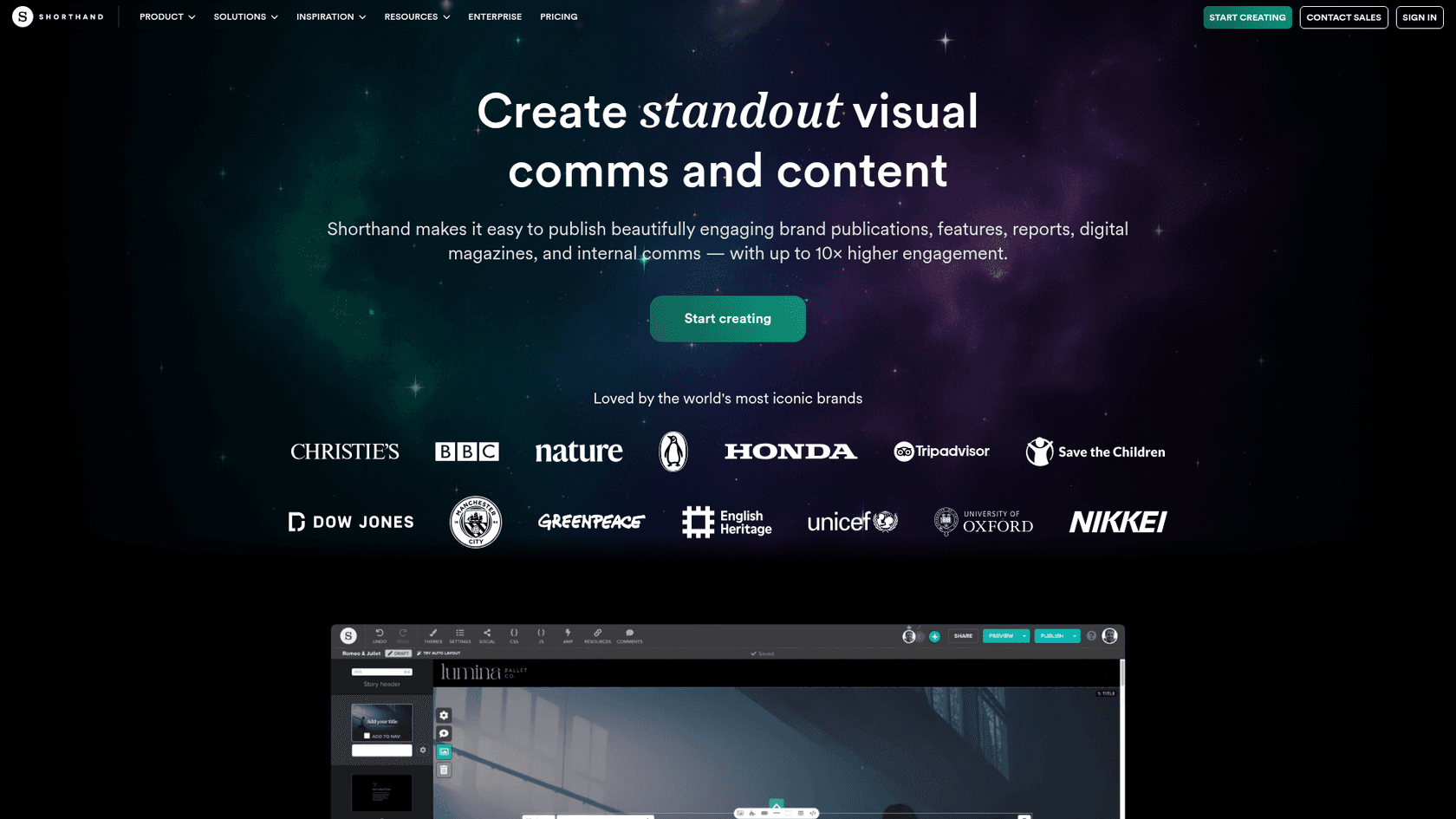
3. Shorthand
A screenshot of the Shorthand homepage, a platform for creating visually immersive content, useful for high-impact listicle blog writing.
__
Shorthand is not an AI writer, but it is included on this list for its strength in content presentation. It's a digital publishing platform designed for creating beautiful, immersive, and interactive content. If you want your listicle to look less like a blog post and more like a feature in a high-end digital magazine, Shorthand is an effective tool for this purpose. It's used by major brands like Honda and Tripadvisor for good reason.
Pros: Shorthand is all about design and interactivity. It's great for listicles that are heavy on visuals, like travel guides or year-in-review reports. You can create stunning layouts with parallax scrolling, embedded videos, and slick animations that make your content stand out. It's also enterprise-ready with SOC 2 certification, which is a big benefit for larger companies.
Cons: The main limitation is that Shorthand is only a design and publishing platform. It focuses exclusively on design, so you need to bring your fully written and edited content to the platform.
Pricing:
Starter: $60/month (billed annually).
Team, Business, and Enterprise plans are also available.
Why we chose it: For brands where visual storytelling is a major priority, Shorthand is the best tool for turning a standard listicle into a premium, memorable reading experience.
A screenshot of the BuzzSumo homepage, a content research tool for finding popular topics for listicle blog writing.
__
A listicle is only as good as its topic. If no one is searching for it or interested in it, it doesn't matter how well you write it. That's where BuzzSumo comes in. It's a content research tool that helps you find trending topics and validated ideas by showing you what's already performing well online.
Pros: With BuzzSumo, you can see which listicles in your field are getting the most social shares, engagement, and backlinks. This removes the guesswork from brainstorming. You can analyze what headlines and formats are connecting with your audience and find proven topics that people are excited to read and share. Their Chrome extension is also really useful for getting quick insights while you browse.
Cons: BuzzSumo is only for research and coming up with ideas. It won't help you write a single word of your listicle. The price can also be a bit high, especially for individual creators or small businesses.
Why we chose it: If you want to build a content strategy based on data instead of just a gut feeling, BuzzSumo is a crucial first step to ensure your listicles have a ready-made audience and a good chance of going viral.
A screenshot of the Semrush homepage, an all-in-one SEO toolkit that helps optimize content for listicle blog writing.
__
Writing a great listicle is one half of the job; getting people to find it is the other. Semrush is an all-in-one SEO toolkit that gives you everything you need to optimize your listicle so it can move up the search engine rankings.
Pros: The SEO Writing Assistant is a notable feature. It gives you real-time feedback on your writing directly in Google Docs or WordPress, offering suggestions for keyword usage, readability, and tone of voice. You can use Semrush to do deep keyword research, see what your competitors are ranking for, and find content gaps you can fill.
Cons: Semrush is a professional-level SEO suite, and it has a bit of a learning curve. The sheer amount of data can be overwhelming for newcomers. Its focus is on SEO analytics, not content creation itself, so you'll be using it alongside another writing tool.
Pricing:
Semrush One Starter:$199/month (or $165.17/mo billed annually).
More advanced plans are available for larger teams and agencies.
Why we chose it: No listicle will reach its full potential without a solid SEO foundation. Semrush provides the essential data and on-page advice you need to create listicles that can bring in serious organic traffic over time.
Best practices for effective listicle blog writing
Having the right tools is a big help, but you still need to follow some basic best practices. Here are a few quick tips:
Craft a Click-Worthy Headline: Your headline is your first impression. Use numbers and strong adjectives to make it compelling (e.g., "7 Effortless Ways to..."). Fun fact: odd-numbered lists often perform a little better.
Write a Strong Introduction: Don't just dive into the list. Hook your reader in the first few sentences and clearly explain the value they're about to receive.
Make it Scannable: Use clear, descriptive headings for each list item. Keep your paragraphs short and use bold text to highlight key points so people can skim easily.
Add Value to Each Point: Don't just name an item and move on. Explain why it's on the list and offer a unique insight or some actionable advice.
Use Quality Visuals: Break up the text. Adding relevant images, screenshots, or simple graphics for each point makes the post more engaging and easier to follow.
An infographic summarizing the five best practices for successful listicle blog writing, from crafting headlines to using visuals.
__
It’s all in the prompt man. No writer is better than the other, but they all need different prompts and processes to get the content you need.
For a more visual walkthrough of how to structure a high-ranking listicle, check out this detailed video guide. It covers a seven-step process for creating content that not only engages readers but also earns backlinks and traffic.
This video details a seven-step process for creating listicles that rank on Google and drive traffic.
Choosing the right listicle writing tool
In the end, listicles are still a powerful and flexible tool in any content marketer's toolkit. While the format itself is simple, great execution is what separates the posts that get lost from the ones that drive traffic for years.
The winning approach is a mix of data-driven research, writing, and SEO. Your goal should always be to provide real value in a format that’s easy to consume, and the right tools make that whole process faster, easier, and much more effective.
Ready to scale your content with publish-ready listicles? Try the eesel AI blog writer for free and see how you can turn your next keyword into a complete, SEO-optimized post in just a few minutes.
Frequently Asked Questions
What is the most important element of successful listicle blog writing?
A click-worthy headline is crucial. It's the first thing people see and it needs to grab their attention and clearly state the value they'll get from reading.
How can I make my listicle blog writing stand out from the competition?
Add unique value to each point. Don't just list items; explain *why* they matter, offer a personal insight, or provide an actionable tip that readers can't find elsewhere. High-quality visuals also help a lot.
Are there any SEO benefits specific to listicle blog writing?
Absolutely. The structured format of listicles makes them ideal for winning Google's featured snippets. They are also great for targeting long-tail keywords and tend to have high engagement rates (like time on page), which search engines favor.
How long should a post be when doing listicle blog writing?
There's no magic number, but focus on being comprehensive. A "Top 5" list should have more detail for each point than a "Top 25" list. The key is to fully cover each item on your list without adding unnecessary fluff.
What's a common mistake to avoid in listicle blog writing?
A common mistake is creating a weak introduction. You need to hook the reader immediately and set the stage for the list. If the intro is boring, people will bounce before they even get to your first point.
Can AI tools really handle the entire process of listicle blog writing?
Some can get you very close. Tools like the eesel AI blog writer are designed as end-to-end solutions, handling research, writing, SEO optimization, and even generating visuals. They can take you from a single keyword to a publish-ready post, saving a ton of time.
Stevia Putri is a marketing generalist at eesel AI, where she helps turn powerful AI tools into stories that resonate. She’s driven by curiosity, clarity, and the human side of technology.