Mastering in-depth blog writing: A strategic overview

Stevia Putri

Katelin Teen
Last edited January 20, 2026
Expert Verified

Let's be honest, churning out thin, 500-word blog posts just doesn't work anymore. In 2026, the internet is more crowded than ever, and readers have gotten a lot smarter. With AI chatbots changing how we find information, some predict that search volume could even drop by 25 percent by 2026. The content that actually survives and gets seen has to be the best of the best.
This is where going deep with your blog writing comes in. It’s all about creating comprehensive, authoritative content that builds real trust with your audience and, just as importantly, with search engines. It’s how you drive organic traffic that actually lasts.
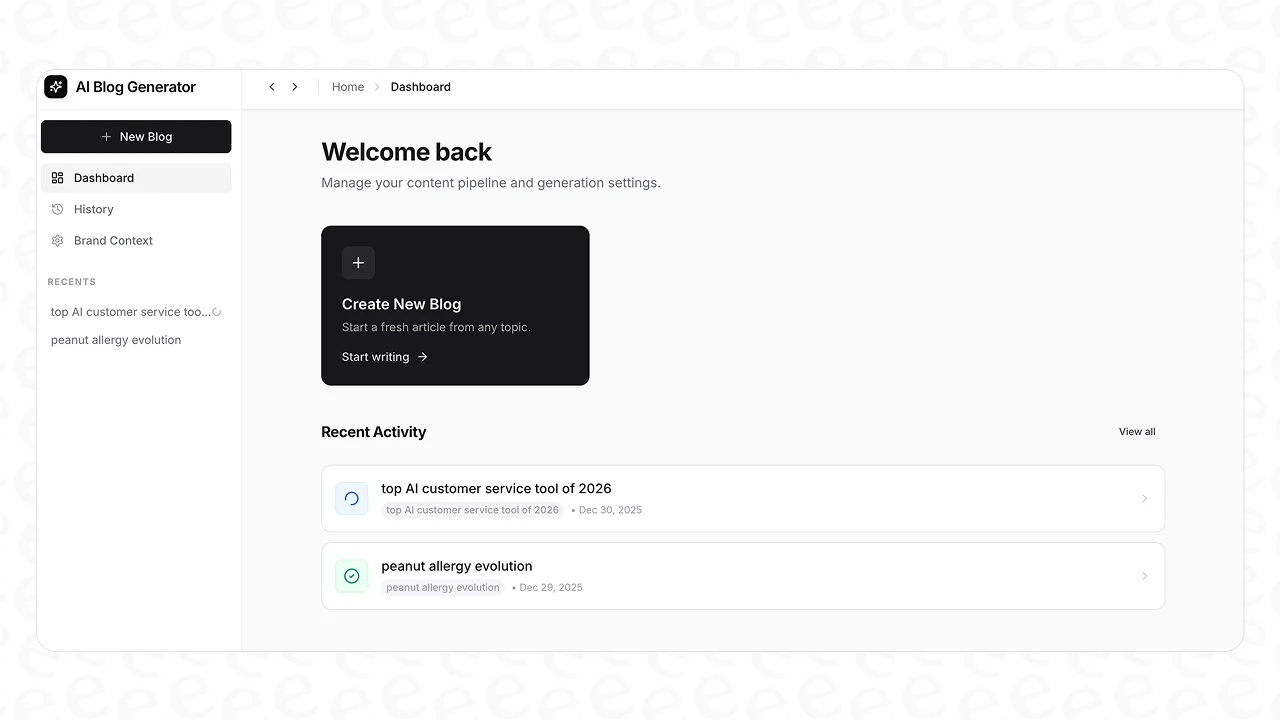
In this guide, we'll break down the three main pillars of creating blog posts that are truly in-depth. We're going to look past simple word counts and focus on quality, value, and smart optimization. We’ll also touch on how modern tools like the eesel AI blog writer can turn a process that used to take days into just a few minutes, without making your content sound like a robot wrote it.
What is in-depth blog writing?
In-depth blog writing isn’t about hitting a certain word count. It’s about covering a topic so completely that your reader has no reason to hit the back button and look for answers somewhere else. The goal is to create the single best, most helpful resource on the web for a specific question.
Think of it as the difference between a quick snack and a full meal. Shallow content is the snack, it might tide you over for a minute but leaves you wanting more. In-depth content is the whole meal, giving you everything you need in one spot.
Here are the key things that make a piece of content truly in-depth:
- Thorough Research: This isn't just a quick Google search. In-depth content pulls from multiple credible sources, often including unique data, expert quotes, or original insights you can't find anywhere else.
- Answers the Full Question: It tackles the main query and then anticipates all the follow-up questions the reader might have. It covers the topic from every important angle.
- Shows E-E-A-T: It just feels credible. It demonstrates experience (real-world examples), expertise (deep knowledge), authoritativeness (cites sources), and trustworthiness (it's accurate and honest).
- Includes Rich Media: It’s not just a wall of text. It uses images, infographics, videos, and charts to make complicated ideas easier to digest and keep the reader hooked.
- Has a Clear Structure: It's logically organized with a clear hierarchy of headings (H2s, H3s, etc.). This makes it easy for people to scan and for search engines to understand what the page is about.
Short, generic posts just can’t keep up. They don't give users what they're looking for and get completely overlooked by the new wave of AI-powered answer engines.
Pillar 1: Research and outlining
Great in-depth content doesn't just appear out of thin air. It's planned. The work you do before writing a single word is what separates a top-ranking article from one that gets buried on page ten of Google. This phase is all about understanding the landscape, finding your angle, and drawing up a solid blueprint.
Identifying content gaps
The fastest way to find topics worth writing about is to see what your competitors are already ranking for and then figure out what they’ve missed. This is called a content gap analysis, and it's a goldmine for finding opportunities.
You can use a tool like Semrush's Keyword Gap tool or Ahrefs' Content Gap tool to do this. Just plug in your own website and a few of your top competitors. The tool will then show you keywords that your competitors are ranking for, but you aren't.
From there, you can filter the results to focus on keywords with decent search volume and low difficulty. These are your quick wins, topics your audience is looking for that you can create better content for. This process helps you find not just single keywords but entire topic areas you might be ignoring.
Structuring your post with a detailed outline
Once you have your topic, don't just dive into writing. You need a blueprint. An outline makes sure your article flows logically, covers all the key points, and stops you from going off on tangents. A good outline is basically a table of contents for your post before it's even written.
It should map out all your H2 and H3 headings, along with the main points, data, and examples you want to include under each one. You should even plan where you want to place visuals like images or videos.
This whole process of manual research, gap analysis, and outlining can easily take up a few hours, if not a whole day. This is where AI can be a massive help. For example, the eesel AI blog writer can take a single keyword, analyze the top-ranking content for it, and generate a complete, SEO-optimized outline in seconds. It does the heavy lifting of structuring the post, so you can get straight to creating great content.
Pillar 2: Crafting compelling, human-first content
With your research done and your outline ready, it’s time to write. But the goal isn’t just to fill the page with facts. It's to create something that people actually want to read. This means writing like a human, for humans, with personality, empathy, and a real desire to help.
Writing an introduction that hooks the reader
You have about three seconds to convince someone to keep reading. Your introduction is everything. A great framework for writing intros that work is the AIDA model, a classic copywriting formula that’s been around for over a century.
It breaks down like this:
- Attention: Start with something that grabs them. This could be a surprising stat, a relatable question, or a bold statement that goes against a common belief.
- Interest: Now that you have their attention, build on it. Show them you get their problem or what they're trying to do.
- Desire: Hint at the solution. Let them know that by reading your post, they'll get the answer they're looking for.
- Action: Gently lead them into the rest of the article. A simple transition like, "In this guide, we'll break down exactly how to..." works just fine.
Building the body with data, stories, and social proof
A wall of text is a snooze-fest. To make your content engaging, you need to mix in different elements that make your points feel real and relatable.
Weave in statistics to back up your claims, share personal stories to build a connection, and use real-world examples to explain complex ideas. This is where your unique perspective and experience become your biggest advantage. This is a huge difference between human-led content and generic AI filler. Many AI tools just rehash the same information found online, which leads to repetitive and sometimes wrong content.

Your personal stories and carefully chosen data are what make your post stand out.
Integrating rich media
Visuals are a must for in-depth content. They break up long blocks of text, make complex information easier to grasp, and keep readers engaged. But creating custom images, infographics, and charts takes a ton of time.
This is another area where the right tool can make a huge difference. The eesel AI blog writer doesn't just write text; it builds a complete, media-rich article. It automatically generates assets like AI images, infographics, and data tables that are directly relevant to your content. It even goes a step further by finding and embedding social proof, like real quotes from Reddit threads and relevant YouTube videos, right into the post for you. It’s about building a complete resource, not just a text document.
Pillar 3: Polishing and optimizing your content
You've written the draft. You're almost there, but the job isn't done yet. This final phase is about making sure your hard work actually gets seen by the right people and performs well in search engines, both the traditional ones and the new AI-powered ones.
Optimizing for SEO and AEO
First, the basics of on-page SEO. This means making sure your target keyword is in your main headings, writing a meta description that makes people want to click, and adding internal links to other relevant content on your site.
But in 2026, you also need to think about Answer Engine Optimization (AEO). This is about optimizing your content to be featured in places like Google's AI Overviews. According to AEO best practices, this means:
- Providing super clear, direct answers to common questions.
- Using FAQ sections to break down topics into smaller, easy-to-digest chunks.
- Covering related subtopics to show you're an authority on the subject.
- Writing in a natural, conversational tone.
This might sound like a lot to keep track of, but tools like the eesel AI blog writer are designed for this. It builds both SEO and AEO best practices directly into the content it generates, so you don't have to stress about ticking all the boxes manually.
The crucial human editing stage
No matter how good your tools are, a final human review is an absolute must. This is your chance to polish your writing for clarity, check for any grammatical errors, and make sure the tone is exactly right.
More importantly, this is your fact-checking stage. AI can sometimes make things up, a problem known as "hallucination." A quick human review to verify all your data, statistics, and claims is essential. It protects your credibility and makes sure you're publishing accurate, trustworthy information.
Promoting your content after publishing
Don't just hit "publish" and hope for the best. An in-depth blog post is a valuable asset, so you need to get it out there. Share it on your social media channels, send it to your email list, and look for opportunities to build backlinks from other reputable sites. The more people who see it, the faster it will gain traction.
For a more visual walkthrough of how to put these principles into practice, from topic selection to final polish, the following video from Ahrefs offers a great step-by-step guide on creating blog content that drives consistent traffic.
A YouTube video from Ahrefs about how to perform in-depth blog writing that gets traffic.
Shift from content quantity to in-depth quality
Creating truly in-depth content is an investment, but it's one that pays off. By focusing on the three pillars, Strategic Research & Outlining, Human-First Crafting, and Thorough Optimization, you can create posts that drive real organic traffic, establish you as an authority, and build a loyal audience.
In today's crowded digital world, the only way to win is to be the best answer. It’s no longer about who can produce the most content, but who can produce the most valuable content. And by using the right tools, you can make this high-impact strategy scalable, freeing you up to focus on the unique human insights that really matter.
Your next step to effortless in-depth blog writing
The strategy we've laid out is powerful, but it’s also a lot of work. The eesel AI blog writer was built from the ground up to automate the most time-consuming parts of this process, from the initial research and outlining to asset creation and AEO optimization.
We know it works because we use it ourselves. This is the exact tool we used to grow our own blog from 70k to over 750k impressions in just three months. Instead of spending days perfecting a single post, you can generate a complete, publish-ready article in minutes.
Ready to see the difference? Try the eesel AI blog writer for free and generate your first in-depth post today.
Frequently Asked Questions

Share this post
Article by
Stevia Putri
Stevia Putri is a marketing generalist at eesel AI, where she helps turn powerful AI tools into stories that resonate. She’s driven by curiosity, clarity, and the human side of technology.