How to sell blog writing: A practical guide

Amogh Sarda

Katelin Teen
Last edited January 20, 2026
The demand for high-quality, SEO-optimized blog content is bigger than ever. Businesses know that content drives traffic, but most of them don't have the time or the in-house skill to create it consistently. That gap is a huge opportunity for writers like you.
But let's be honest. Being a great writer is one thing; turning that skill into a reliable income is a completely different challenge. A lot of talented writers get stuck on the business side of things, like how to actually find clients, figure out what to charge, and build a steady stream of work.
This guide is here to help you sort that out. We'll break down the different ways you can make money from your writing, from the classic freelance route to the more entrepreneurial world of blog flipping. We'll also show you how to use modern tools, like the eesel AI blog writer, to multiply your output and your earnings.
Understanding what it means to sell blog writing
First, there's selling a service (freelancing). This is the path most people start with. A client pays you to create content for their blog. You're trading your time and expertise for money. It's all about building a solid portfolio, nurturing client relationships, and getting that steady, predictable income.
Then there's selling an asset (blog flipping). This is a more entrepreneurial approach. Instead of writing for someone else, you build your own blog from the ground up. You grow its traffic and start making money from it through things like ads or affiliate marketing. Once it's a profitable little machine, you sell the entire website as a digital asset. This takes more than just writing skills. You also need to know your way around SEO and marketing, but the potential payoff can be huge.
The traditional path: Selling blog writing services
This is where most writers cut their teeth. The freelance model is straightforward: you write, you get paid. But finding good clients and setting the right prices can be tricky. Here’s a breakdown of how to make it work.
Using freelance platforms
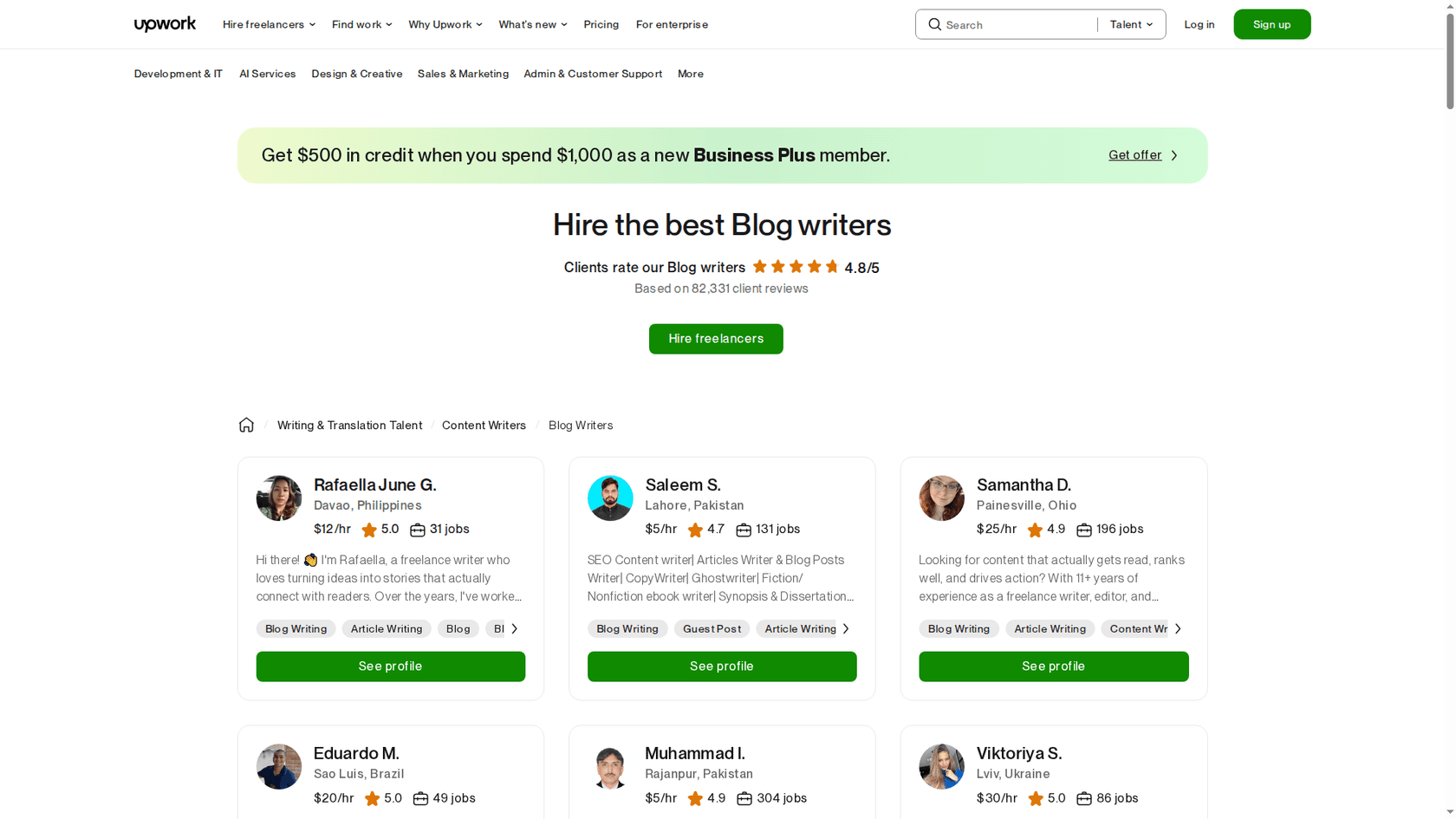
The biggest pro is that they're full of clients who are actively looking for writers right now. You don't have to go searching for them; they're already there, posting jobs.
The downside? These platforms are packed with competition, which can really push prices down. It can feel like a race to the bottom sometimes. Plus, the platforms take a big cut. For example, Upwork charges a hefty 20% fee on the first $500 you earn with each new client. That can make it tough to build momentum when you're just starting out.
Pitching clients directly and building your brand
If you want to skip the race to the bottom, pitching clients directly is the way to go. This lets you bypass the crowded platforms and command higher rates.
It starts with identifying your ideal clients. Who do you want to write for? What industries are you interested in? Once you have a list, you can craft a personalized pitch that shows you understand their business and can provide real value. A professional portfolio is a must-have here; it's your chance to show, not just tell, what you can do.
Setting your rates and packaging services
- Per-word: Super simple to calculate. Rates can start around $0.05-$0.10 for beginners and go over $1.00 for seasoned experts.
- Per-post: Clients love this because it's predictable. You agree on a flat fee for a blog post of a certain length. According to Upwork, a 1,000-word article can go for $50 for a new writer up to $175+ for an experienced one.
- Hourly: This works well for projects where the scope isn't clearly defined. Blog writers typically charge between $15 and $35 per hour, though this can vary a lot based on experience.
- Retainer: The holy grail for freelancers. A client pays you a set amount each month for a specific amount of work. This gives you stable, predictable income you can count on.
Once you know your pricing, you can create packages to make your services more attractive. Think about something like a "Monthly Content Starter Pack" that includes four blog posts and a few social media captions. Packages make it easier for clients to say "yes."
| Pricing Model | Pros | Cons | Typical Rate Range |
|---|---|---|---|
| Per Word | Simple, transparent, easy to quote | Can penalize efficiency; doesn't value research time | $0.05 - $1.00+ |
| Per Post | Predictable for both parties, values the final product | Scope creep can be an issue if not defined well | $50 - $175+ (for 1k words) |
| Hourly | Good for ongoing or unclear projects, ensures all time is paid | Clients can be wary of open-ended billing; requires tracking | $15 - $35+ |
| Retainer | Stable, predictable monthly income; builds strong client relationships | Requires a long-term commitment from the client | Varies widely based on scope |
The challenge of scaling as a freelancer
The biggest catch with the freelance model is that you are trading your time for money. There are only so many hours in a day, which means there's a hard limit on how much you can write and, ultimately, how much you can earn. This bottleneck is the biggest barrier to growing your income as a solo writer.
The asset model: Selling a blog for profit
If the time-for-money trade-off feels limiting, you might be drawn to the asset model. This is where you move from being a service provider to being a business owner.
Building and flipping a blog for profit
The idea is simple: you create a blog in a specific niche, grow it, monetize it with ads or affiliate links, and then sell the whole thing on a marketplace like Flippa.com.
How much can you sell a blog for? Valuations are typically based on a multiple of the site's annual profit. According to recent data from Flippa, content-based websites are selling for around a 3.98x annual profit multiple. So, a blog that's making just $2,000 a month ($24,000 a year) could potentially sell for over $95,000.
Of course, this isn't a get-rich-quick scheme. It's a long-term project that requires a ton of work and skills beyond just writing, like SEO, digital marketing, and monetization strategies.
The challenge with selling pre-written content bundles
This is an idea that pops up a lot: "What if I just write a bunch of articles and sell them as a package?"
It sounds good in theory, but there's a huge problem: Google penalizes duplicate content. Once an article is published on one website, its SEO value drops if it's posted somewhere else. Buyers know this, which makes pre-written, non-exclusive content a really tough sell. It’s a very niche market and far riskier than doing custom freelance work.
You'd need to reword/rewrite the posts if yours are already posted on a website. Google penalizes people for duplicate content and it would be a disadvantage for your potential buyers to repost your old posts.

For those serious about turning their blog into a valuable asset, understanding the sales process is crucial. The video below offers a detailed walkthrough of the stages involved in selling a profitable blog, from valuation to finding the right buyer.
The modern approach: Selling blog writing at scale with eesel AI
So, what if you could get the steady income of freelancing without the income ceiling? That’s where technology comes in.
Becoming a content agency of one
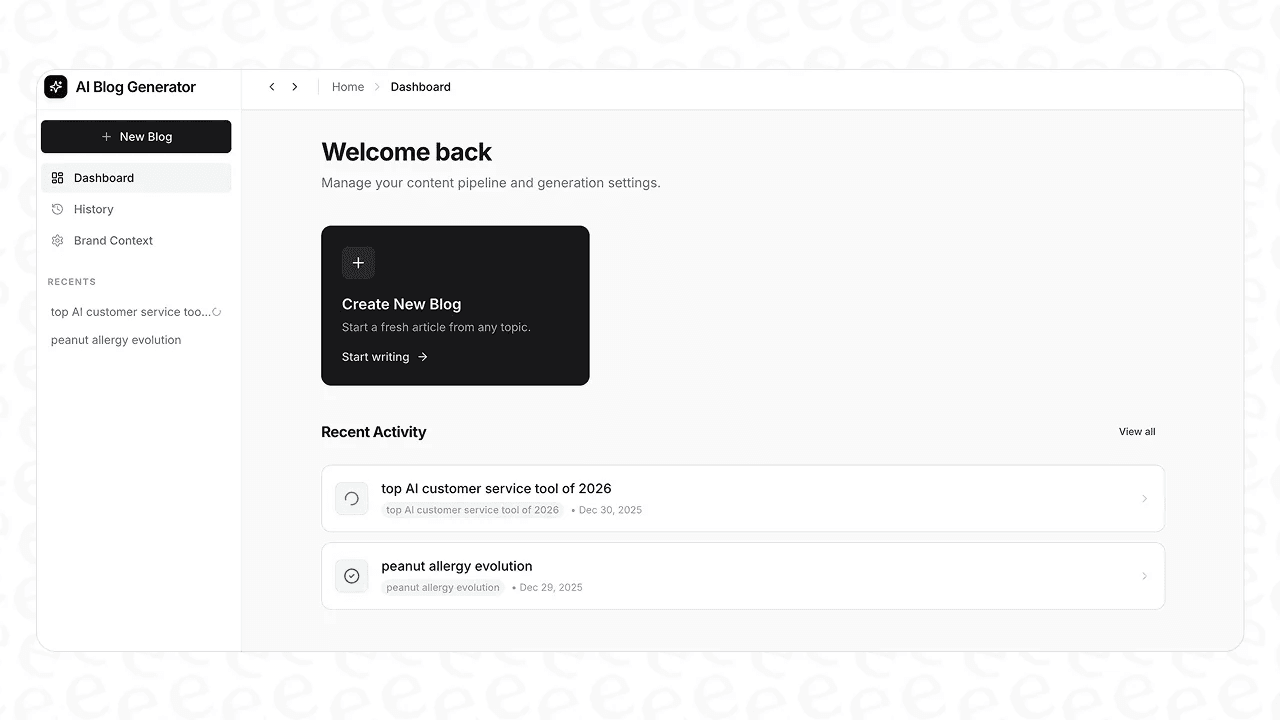
You shift from being just a writer to being a content strategist. You handle the high-value work, like keyword research, strategy, and giving the final piece a polish. Meanwhile, eesel AI does the heavy lifting, handling the time-consuming drafting and asset creation in just a few minutes.
What makes eesel AI different?
Many AI writing tools are available, but eesel AI is designed to produce a more complete first draft.
- It creates publish-ready content, not just drafts: eesel AI gives you a complete blog post. We're talking a logical structure, proper headings, AI-generated images and infographics, and even data tables. It also pulls in relevant YouTube videos and real Reddit quotes to add social proof and make your content more engaging.
- It sounds human and delivers real SEO results: We spent over a year refining our AI to produce a more natural tone. We know it works because we used this exact tool to grow our own blog from 700 to 750,000 daily impressions in just three months. We did it by publishing over 1,000 optimized articles, proving that this content ranks.
- It performs context-aware research: Unlike generic tools, our AI understands what type of article you're creating. If you're writing a product comparison, it goes out and finds pricing data. If you're doing a review, it pulls technical specs. It saves you hours of manual research on every single post.
A workflow diagram showing how eesel AI automates the process of how to sell blog writing from research to a publish-ready post.
A new business model for profitable blog writing
With a tool like the eesel AI blog writer, you can produce a complete, 2,000-word article with custom assets in about 10 minutes. Think about what that does for your business.
You can now offer comprehensive content packages at competitive prices while seriously boosting your own profit margins. You can take on five clients in the time it used to take you to handle one. This can help you move past the typical income ceiling of a freelance writer.
Our plans let you generate 50 blogs for just $99, making the cost per article incredibly low. And since it's completely free to try, you can generate your first post and see the quality for yourself with zero risk.
Choosing your path forward
So there you have it. You can sell your writing as a freelance service, build and sell a blog as a digital asset, or leverage AI to scale your services into a full-blown content machine.
While traditional freelancing is a great place to start, the most successful writers will be the ones who embrace technology to work smarter, not just harder. Tools like eesel AI aren't here to replace your creativity, they're here to unleash it at scale.
Ready to stop trading hours for dollars and start scaling your blog writing business? Try the eesel AI blog writer for free and generate your first publish-ready article in minutes.

Frequently Asked Questions
Share this article

Article by
Amogh Sarda
CEO of eesel AI. Amogh Sarda is obsessed with making the ultimate AI for customer service teams. He lives in Sydney, Australia and has previously worked at Atlassian and Intercom. Outside of work he’s usually surfing or on stage doing improv.